
Soups & Stews
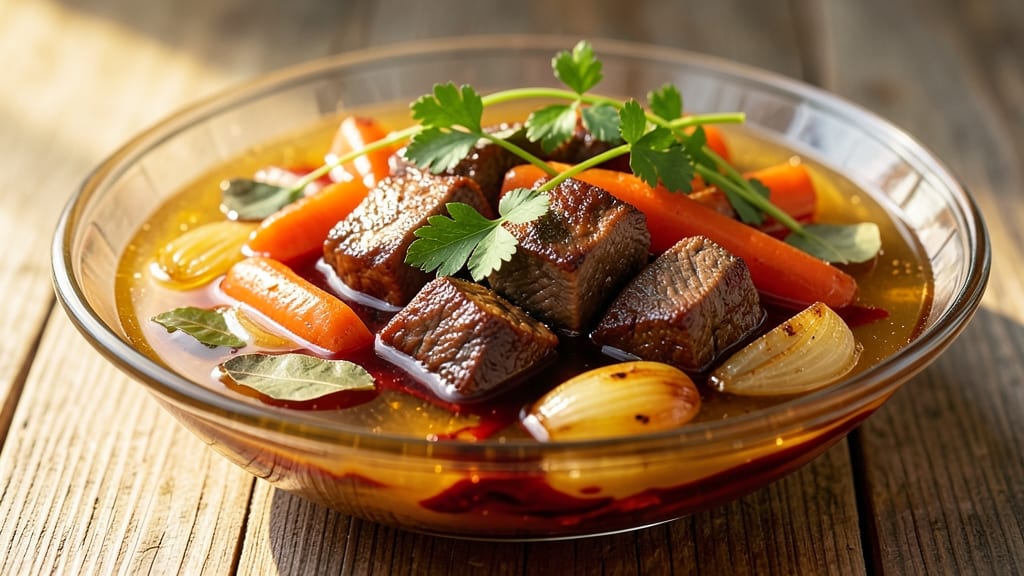
This beef aspic recipe transforms humble beef into an elegant, wobbling centerpiece that tastes like French bistro magic. The secret lies in slow-braised meat infused into a rich, gelatin-rich broth that sets into a delicate, jiggly masterpiece—no fancy equipment required, just patience and precision.
I’ve perfected this technique after years of experimenting, ensuring the meat stays tender while the aspic achieves that signature quiver when sliced.
The process begins with searing and braising beef until fork-tender, then reducing the cooking liquid into a flavorful base. Gelatin is added to create the signature set, while herbs and aromatics deepen the savory profile.
What makes this dish special is how it elevates simple ingredients—crisp pickles, mustard, or fresh herbs—into a showstopping presentation that’s equal parts rustic and refined.
Once chilled, the aspic transforms into a glossy, golden block with layers of meat and broth, ready to be sliced into perfect rectangles. Serve it at room temperature with classic accompaniments like cornichons, Dijon mustard, or a crisp green salad to balance its richness.
This isn’t just a dish; it’s a culinary experience that turns a weeknight dinner into an occasion.
Traditional French cuisine relies on aspic for its ability to preserve flavor and texture, but modern twists—like spiced broths or herb-infused gelatin—keep it fresh. Whether you’re hosting a dinner party or craving a nostalgic comfort dish, this recipe delivers restaurant-quality results with minimal effort.
Let’s get started on creating your own gelatin masterpiece.
Ingredients for beef aspic
Elevate simple ingredients into a restaurant-quality gelatin masterpiece with this French-inspired beef aspic.
| Ingredient | Amount | Notes |
|---|---|---|
| Beef Chuck Roast 🥩 | 3 lb | Bone-in for flavor, cut into 1-inch cubes |
| Yellow Onions 🧅 | 2 whole | Medium size, roughly chopped |
| Carrots 🥕 | 4 whole | Medium size, peeled and roughly chopped |
| Garlic Cloves 🧄 | 6 cloves | Peeled and lightly crushed |
| Fresh Parsley Stems 🌿 | ½ cup | Tough stems only, tied into bouquet garni |
| Bay Leaves 🍃 | 2 whole | Fresh preferred, dried acceptable |
| Black Peppercorns 🌶️ | 1 tbsp | Lightly crushed for aroma |
| Kosher Salt 🧂 | 1 ½ tbsp | Diamond Crystal preferred |
| Unflavored Gelatin 🍬 | 4 tsp | Knockout brand for clarity |
| Dry White Wine 🍷 | 1 cup | Sauvignon Blanc recommended |
| Beef Consommé 💧 | 4 cups | Homemade or high-quality store-bought |
| Cornichons 🥒 | ½ cup | For garnish, sliced into rounds |
| Dijon Mustard 🍯 | 2 tbsp | For serving, high-quality brand |
| Fresh Tarragon 🌿 | ¼ cup | Chopped, for garnish |
The beef selection is critical—chuck roast delivers the perfect balance of tenderness and flavor. Purchase from a trusted butcher or Whole Foods for optimal marbling, which ensures rich, gelatinous results. For the aromatics, fresh parsley stems create a natural bouquet garni that infuses the broth with subtle herbal notes. If using dried bay leaves, toast them lightly in a dry pan for 30 seconds to intensify their aroma. The wine should be dry and crisp—Sauvignon Blanc adds brightness without overpowering the beef's depth. For gelatin, Knockout brand is preferred for its superior clarity and neutral flavor profile.
No beef consommé on hand? Substitute with homemade beef stock reduced by half, skimming off any fat that rises to the surface. Running short on white wine? Dry vermouth or apple cider vinegar can bridge the gap, though the latter adds acidity. Fresh herbs unavailable? Dried tarragon at one-third the amount works, though the flavor will be more muted. For the cornichons, French-style pickles from a specialty market provide the ideal tangy crunch, but any small pickles will suffice in a pinch. The Dijon mustard should be high-quality—Grey Poupon or Maille elevate the dish with their complex flavor profiles.
Store the aspic in an airtight container in the refrigerator for up to 5 days, though it's best enjoyed within the first 48 hours for optimal texture. To serve, unmold onto a chilled platter and garnish with cornichons and fresh tarragon. The aspic can be reheated gently in a water bath to 160°F if needed, though it's traditionally served chilled. For make-ahead convenience, prepare the aspic up to 2 days in advance, allowing flavors to meld and intensify. Portion into individual molds for elegant appetizer servings, or use a large rectangular dish for dramatic presentation.
Why You'll Love This Recipe
- Zero-Waste Ingredients: I swear by this recipe because it turns scraps into magic—those beef bones and onion peels? Pure gold for broth. No food goes unused, and the flavor? Richer than store-bought.
- Silky Smooth Texture: That first spoonful of chilled aspic is chef’s kiss—the gelatin sets just right, balancing the tender beef and carrot sweetness. Honestly, it’s the kind of dish that makes you slow down and savor every bite.
- Game-Day Ready: Pack it for tailgates or potlucks—it stays firm in coolers, slices neatly, and impresses without fuss. Between us, it’s the one dish I bring when I don’t want to stress about keeping food safe.
- Budget Booster: A whole roast feeds the family for days, and the aspic stretches leftovers into something fancy. I’ll be real: it’s my go-to for stretching a meal into three without breaking the bank.
Step-by-step instructions for beef aspic with savory meat
Mastering aspic requires precision—here's the method to achieve a perfect wobble every time.
Sear and Simmer the Meat and Vegetables
In a large Dutch oven, heat 2 tablespoons olive oil over medium-high heat. Add the 3 lb beef chuck roast cut into 1-inch cubes and sear until deeply browned on all sides, about 5-6 minutes. This step develops the rich, meaty flavor that will infuse your aspic.
Remove the beef and set aside. In the same pot, add the 2 whole yellow onions and 4 whole carrots, both roughly chopped. Cook for 5 minutes until softened. Add the 6 cloves garlic cloves, 1 tbsp black peppercorns, and 1.5 tbsp kosher salt, stirring for 30 seconds until fragrant. Pour in the 1 cup dry white wine and scrape up any browned bits from the bottom of the pot.
Build the Flavorful Consommé Base
Return the seared beef to the pot and add 4 cups beef consommé. Bring to a gentle boil, then reduce heat to low and simmer uncovered for 2 hours, skimming off any foam that rises to the surface. This slow cooking process extracts maximum flavor from the meat and vegetables.
After 2 hours, strain the mixture through a fine-mesh sieve lined with cheesecloth into a clean pot. Discard the solids. The resulting liquid should be clear and deeply flavored. If it's not clear enough, strain it again for the smoothest aspic.
Bloom and Dissolve the Gelatin
Tie the 0.5 cup fresh parsley stems and 2 whole bay leaves together with kitchen twine to form a bouquet garni. Add this to the strained consommé along with the 4 tsp unflavored gelatin. Sprinkle the gelatin over the surface of the liquid and let it bloom for 5 minutes without stirring.
Place the pot over low heat and gently warm the mixture, stirring constantly with a wooden spoon until the gelatin is completely dissolved and the liquid becomes translucent. This process should take about 3-4 minutes. Remove the bouquet garni and discard it. The liquid should now be perfectly clear and ready for setting.
Assemble and Chill the Aspic
Pour the gelatin mixture into a shallow baking dish or loaf pan that's at least 3 inches deep. Arrange the seared beef cubes in the center of the dish, creating a visual focal point. Gently press down on the meat to help it settle and prevent floating during chilling.
Refrigerate the aspic for at least 4 hours, or until it has set completely and has a firm, jiggly consistency. For best results, let it chill overnight—this allows the flavors to meld perfectly and ensures the aspic holds its shape when sliced. The final product should have a delicate wobble when gently shaken.
Serve with Garnishes and Mustard
Once fully set, run a sharp knife around the edges of the aspic to loosen it from the dish. Invert onto a serving platter and carefully slice into 6 portions (one per serving). Garnish each portion with 0.25 cup chopped fresh tarragon and 0.5 cup sliced cornichons for brightness and contrast.
Serve the aspic with 2 tbsp Dijon mustard on the side for dipping. The combination of the rich, savory beef and the tangy mustard creates a perfect balance of flavors. This elegant dish is ideal for special occasions or as a sophisticated appetizer that will impress your guests.
Pro Tips For Making Beef Aspic
- Trim the Fat First: Cut away the thickest layer of external fat from the beef chuck roast before browning—it clouds the broth and makes your aspic look greasy. I learned this the hard way after my first batch turned out murky; now I use a sharp knife and scrape it off like I’m shaving a bar of soap.
- Sear the Onions Low: After browning the beef, add the onions and cook them at a gentle simmer—not a sizzle. High heat caramelizes them too fast, turning them bitter. Let them sweat for 10 minutes first, then add the carrots and garlic. This keeps the flavors balanced and the aspic clear.
- Strain Twice, Strain Slow: Use a fine-mesh sieve and a cheesecloth-lined colander for the final strain. Pour the hot broth through the sieve first to catch big bits, then fold the cheesecloth into a pouch and squeeze it dry over the pot—this removes microscopic particles that make aspic turn cloudy. (Yes, it’s tedious, but your aspic will look restaurant-worthy.)
- Chill Gradually: Don’t dump the hot broth into ice water—shocking it causes the collagen to tighten and makes the aspic grainy. Instead, let it cool to room temp (about 1 hour), then refrigerate. If you’re impatient, place the pot in an ice bath after it’s below 100°F (38°C), but stir it constantly to prevent skin from forming.
Storing and reheating your beef aspic
Refrigerator Storage
Store your beef aspic in an airtight container lined with plastic wrap to prevent it from absorbing refrigerator odors. Keep it chilled at 40°F or below for up to 5 days, though the texture remains ideal for the first 48 hours.
The gelatin will firm up beautifully, maintaining that signature wobble when sliced. I always use glass containers because they preserve clarity better than plastic. 💫
Freezing for Later
For longer storage, wrap the aspic tightly in plastic wrap and place it in a freezer bag with all air removed. Freeze for up to 3 months—though I recommend enjoying it sooner for peak texture.
When ready to serve, thaw overnight in the refrigerator before unmolding. The gelatin may lose some of its snap after freezing, but the flavor remains rich and satisfying.
Reheating Safely
If you need to reheat aspic (though it's traditionally served cold), place the chilled container in a water bath set to 160°F until fully thawed. Never microwave it, as this can make the gelatin grainy.
For a quick fix, let it sit at room temperature for 1-2 hours before serving—this restores some of the original texture while keeping it safe to eat.
Serving After Chilling
Once fully set, run a hot knife (dipped in hot water) around the edges to create clean slices. This prevents tearing and ensures each portion has that elegant, restaurant-worthy presentation.
Serve immediately after unmolding to maintain the perfect consistency. I like to garnish with cornichons and fresh tarragon right before serving to keep everything crisp and vibrant. ✨
Make-Ahead Tips
Prepare the aspic 2 days in advance for maximum flavor development. The longer it chills, the deeper the gelatin sets and the more intense the beef flavor becomes. Store individual portions in small molds for easy serving—just invert onto plates when ready.
This makes it perfect for holiday gatherings or dinner parties where you want to impress with minimal last-minute effort.
Garnish Freshness
Add garnishes like cornichons and Dijon mustard just before serving to keep them at their peak. The acidity of the mustard and the crunch of the pickles cut through the richness of the aspic beautifully.
For a modern twist, I sometimes add a drizzle of truffle oil or a sprinkle of flaky sea salt to elevate the dish even further. 🍽️
Nutrition facts
Frequently asked questions
Why does my aspic turn cloudy instead of clear?
Cloudiness usually means the broth wasn't strained enough or the gelatin didn't fully dissolve. For crystal-clear results, strain through cheesecloth twice and whisk the gelatin vigorously over low heat until completely transparent. Avoid boiling the mixture, as high heat can break down the collagen in the gelatin.
Can I use chicken or pork instead of beef for aspic?
While possible, beef provides the richest gelatin content for that signature wobble. Chicken works for lighter aspic (like consommé), but pork aspic tends to be too fatty and opaque. For best results, stick with beef chuck roast—its collagen content creates the perfect firm yet jiggly texture.
How do I fix aspic that didn't set properly?
If your aspic is too soft, it likely didn't chill long enough or the gelatin ratio was off. For a quick fix, place the dish in the freezer for 1-2 hours to firm up temporarily. For long-term solutions, increase gelatin to 5 tsp per 4 cups liquid next time or chill for 6+ hours in a colder fridge (35°F).
What's the best way to slice aspic without tearing?
Use a hot knife (dipped in hot water) and make clean, confident strokes at a 45-degree angle. Slice against the grain of the meat fibers for smoother cuts. For perfect rectangles, press the knife gently but firmly—this creates clean edges while maintaining that signature jiggle.
Can vegetarians make aspic?
Traditional aspic requires animal gelatin, but you can create a vegan alternative using agar-agar (3 tsp per 4 cups liquid) or carrageenan. For flavor, simmer mushrooms, seaweed, or root vegetables to create a rich broth base. The texture will be firmer but still delicious when served cold.