
Main Courses
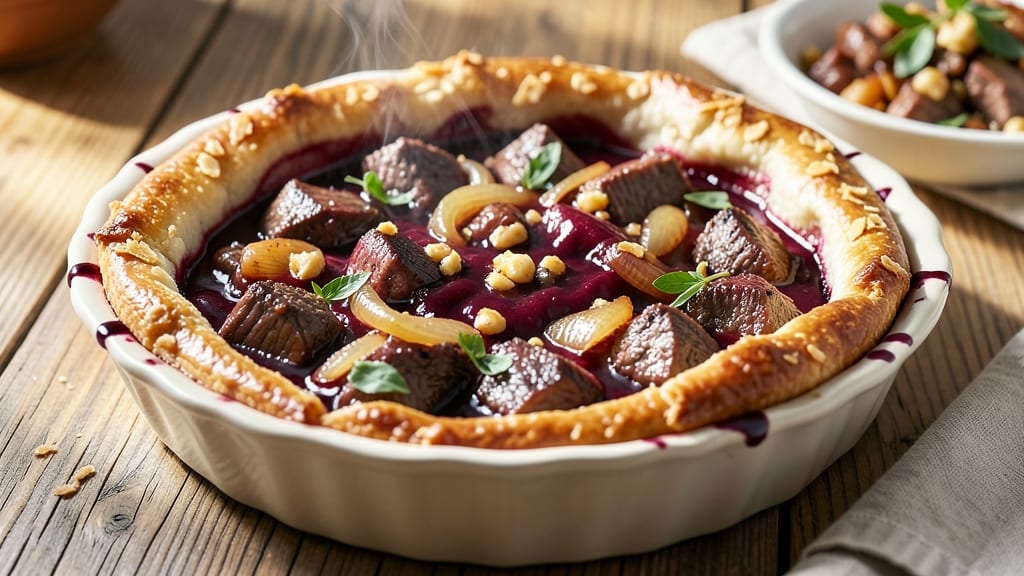
A beef and burgundy pie recipe with a flaky crust enclosing tender beef braised in deep burgundy wine transforms ordinary weeknight dinners into restaurant-worthy meals. This classic French-inspired pie delivers layers of rich, wine-infused beef surrounded by a golden, buttery crust that shatters with every bite.
The secret lies in proper crust blind-baking and slow-cooked filling that develops complex flavors as it simmers.
The process begins with searing beef to develop deep caramelized flavors, then deglazing with burgundy wine to create a velvety sauce. This technique builds the foundation for a filling so rich it practically melts in your mouth.
The crust, made with cold butter and precise folding, achieves that signature flakiness that makes all the difference between homemade and store-bought.
What you'll end up with is a pie that combines hearty beef filling with a crisp, golden crust—perfect for serving with roasted vegetables or a simple green salad.
The wine-infused sauce adds depth that elevates this dish beyond ordinary beef pies, making it ideal for special occasions or when you want to impress guests without spending hours in the kitchen.
This recipe maintains traditional techniques while simplifying the process for home cooks. The result is a dish that balances rich flavors with elegant presentation, delivering restaurant-quality results that taste even better the next day. Let's create this timeless classic together.
Ingredients for beef and burgundy pie
Sixteen ingredients transform into a restaurant-quality beef and burgundy pie with layers of rich flavor and flaky perfection.
| Ingredient | Amount | Notes |
|---|---|---|
| Beef Chuck Roast 🥩 | 2 ½ lb | Trimmed of excess fat, cut into 1-inch cubes |
| Burgundy Wine 🍷 | 1 ½ cups | Dry red wine, Cabernet Sauvignon works well |
| Beef Stock 💧 | 1 ½ cups | Homemade or high-quality store-bought |
| All-Purpose Flour 🌾 | 2 ½ cups | For filling and crust, sifted |
| Unsalted Butter 🧈 | 1 cup | Cold, cubed for crust, softened for filling |
| Yellow Onion 🧅 | 1 whole | Medium, finely diced |
| Garlic Cloves 🧄 | 4 cloves | Minced, fresh preferred |
| Tomato Paste 🍅 | 2 tbsp | Smooth, no sugar added |
| Fresh Thyme 🌿 | 1 tbsp | Leaves only, chopped |
| Fresh Parsley 🌿 | 2 tbsp | Chopped, for garnish |
| Diamond Crystal Kosher Salt 🧂 | 1 ½ tsp | For seasoning, adjust to taste |
| Ground Black Pepper 🌶️ | 1 tsp | Freshly ground, coarse |
| Allspice Berries 🌿 | 4 whole | Crushed lightly |
| Bay Leaves 🍃 | 2 whole | Dried, for filling |
The beef selection is critical—chuck roast delivers the ideal balance of tenderness and fat for slow braising. Costco and Whole Foods carry high-quality cuts with good marbling, which renders beautifully during cooking. For the burgundy wine, opt for a Cabernet Sauvignon or Pinot Noir—avoid overly fruity varieties as they can overpower the dish. Fresh thyme and allspice berries elevate the wine's complexity, so source them from Penzeys Spices or your local specialty market for superior quality. The tomato paste should be smooth and unsweetened—Bertolli or Mutti brands are reliable choices.
No burgundy wine? Substitute with a mix of red wine and beef stock, though the flavor will differ slightly. Fresh herbs unavailable? Dried thyme at one-third the amount works in a pinch, but fresh is preferred for brightness. The crust requires cold butter for flakiness—don't skip chilling the dough between folds. For a quicker version, use pre-made pie crust, but homemade yields superior texture. The allspice berries can be omitted if unavailable, though they add a subtle warmth that complements the wine. Always taste the filling before baking—adjust salt and pepper as needed for depth.
Prep the filling ingredients ahead and refrigerate until ready to use—this allows flavors to meld. The crust should be blind-baked for 15-20 minutes before adding filling to prevent a soggy bottom. Leftovers keep for 4-5 days in the fridge, though reheating may require additional wine or stock to restore moisture. For best results, serve at room temperature, allowing the pie to rest for 30 minutes after baking. Freeze portions for up to 3 months by wrapping tightly in parchment and foil.
Why You'll Love This Recipe
- One-Pot Magic: The moment you brown that chuck roast in the same pot you’ll finish with? That’s where the real work disappears. Just add wine, stock, and a quick roux—no extra pans, no stress.
- Wine-Infused Richness: That deep, earthy burgundy wine isn’t just flavor—it’s the star. It melts into the beef until every bite tastes like a slow-cooked restaurant dish, but with half the effort.
- Weeknight to Dinner Party: Same recipe, different vibes. Slap it together for a lazy Tuesday or dress it up with crusty bread and a side salad for guests. The pie itself does all the heavy lifting.
- Leftovers That Beg for More: Between us, this pie tastes better the next day. The flavors marry overnight, and you’ll find yourself reheating it for lunch—no guilt, just pure satisfaction. Plus, it stretches a budget-friendly roast into multiple meals.
Step-by-step instructions for beef and burgundy pie
A rich, wine-braised beef filling wrapped in a delicate crust—this is where technique meets indulgence.
Prepare the Beef Filling
In a large Dutch oven, combine the 2.5 lb beef chuck roast cut into 1-inch cubes, the 1 whole yellow onion diced, and the 4 cloves garlic minced. Season generously with 1.5 tsp diamond crystal kosher salt and 1 tsp ground black pepper. The beef should be well-coated but not swimming in seasoning.
Sear the beef over medium-high heat for 5-6 minutes, stirring occasionally, until deeply browned on all sides. This step develops the foundational flavor—don't rush it. Once browned, remove the beef with tongs and set aside. In the same pot, add 2 tbsp tomato paste and cook for 1 minute until fragrant. Deglaze with the 1.5 cups burgundy wine, scraping up any browned bits from the bottom of the pot.
Simmer the Wine-Braised Beef
Return the beef to the pot and add the 1.5 cups beef stock, 2 whole bay leaves, and the 4 whole allspice berries (lightly crushed). Bring to a gentle simmer, then reduce heat to low and cover partially. Let it cook for 1.5 hours, stirring occasionally, until the beef is fork-tender and the sauce has reduced slightly. The filling should be moist but not soupy—this ensures a perfect texture when baked.
Stir in the 1 tbsp fresh thyme and 2 tbsp tomato paste during the last 15 minutes of cooking. The thyme will infuse the filling with its earthy aroma, while the tomato paste adds depth. The filling should be rich, aromatic, and ready to be encased in the crust.
Prepare the Crust
In a large bowl, combine the 2.5 cups all-purpose flour and 1.5 tsp diamond crystal kosher salt. Cut in the 1 cup unsalted butter (cold and cubed) using a pastry cutter or your fingers until the mixture resembles coarse crumbs with pea-sized butter pieces. Add ½ cup ice water, 1 tablespoon at a time, mixing gently until the dough just comes together. Avoid overworking it—this keeps the crust flaky.
Divide the dough into two equal portions. On a lightly floured surface, roll one portion into a 12-inch circle (about ⅛-inch thick). Transfer it to a 9-inch pie dish, pressing gently to fit. Chill the crust in the refrigerator while you prepare the filling for assembly.
Assemble and Bake the Pie
Preheat your oven to 375°F. Spoon the warm beef filling into the chilled pie crust, mounding it slightly in the center. Roll out the second portion of dough and place it over the filling, trimming any excess dough. Seal the edges by pinching them together and crimping with a fork. Cut a few small slits in the top crust to allow steam to escape.
Brush the top crust with a beaten egg (optional, for golden color) and bake for 45-50 minutes until the crust is deep golden brown and the filling is bubbling. The pie is done when the internal temperature reaches 165°F and the crust is crisp. Let it rest for 15 minutes before slicing—this ensures clean cuts and a perfect texture.
Pro Tips For Making Beef And Burgundy Pie
- Sear the Chuck Hard: The beef chuck needs a deep, dark crust before the wine bath—don’t skimp. Hit it with high heat for 3-4 minutes per side until it’s got that caramelized armor, or the sauce will taste like it’s playing second fiddle to raw meat.
- Deglaze Like a Pro: After searing, don’t just splash in the wine and walk away. Use a wooden spoon to scrape up those browned bits—all of them—while the pan’s still smoking. That’s where the flavor lives, and skipping it means a duller sauce.
- Thicken the Sauce Slowly: The flour-butter roux is where things go wrong fast. Cook it low and slow—low—until it’s just golden, not fried. Rush it, and you’ll end up with a gluey mess instead of a velvety, wine-rich gravy that clings to every bite.
- Use Cold Butter for Crust: For the pie top, cut the butter into the flour last and keep everything cold. Press the dough in, then chill it for 20 minutes before baking. I learned this the hard way—flaky crusts don’t forgive warm butter.
Perfect pairings for beef and burgundy pie
Wine Pairings
The burgundy wine in this pie isn't just an ingredient—it's the star of the flavor profile. Pair your dish with a Burgundy Pinot Noir from the Côte de Nuits region, like Louis Jadot or Domaine Drouhin.
These wines share the same grape variety as your filling, creating a harmonious bridge between the dish and the glass. 🍷
For a lighter option, try a French Syrah from the Rhône Valley. Its peppery notes complement the allspice and thyme in the filling without overpowering the wine's natural acidity. If you prefer New World wines, a California Zinfandel with its jammy fruitiness balances the richness beautifully.
Side Dish Harmony
Roasted root vegetables like carrots, parsnips, and celery bring earthy sweetness that contrasts the wine's depth. Toss them in olive oil, salt, and thyme, then roast at 400°F for 25 minutes. The caramelization enhances the pie's flavors. 🥕
A simple arugula salad with lemon vinaigrette cuts through the richness. Add toasted walnuts for crunch and shaved Parmigiano-Reggiano for a salty finish. This bright, peppery contrast makes every bite of pie taste even more luxurious.
Beverage Alternatives
For non-alcoholic pairings, sparkling apple cider with a cinnamon stick offers refreshing acidity. The effervescence cleanses your palate between bites of rich filling. Look for Martinelli's or Woodchuck brands for quality. 🍎
If you prefer beer, a Belgian Dubbel like Westmalle Dubbel provides malty sweetness and spiced notes that mirror the pie's allspice and thyme. The alcohol content is low enough to avoid overpowering the dish.
Dessert Pairings
Finish the meal with crème brûlée or vanilla bean ice cream. The creamy texture and vanilla notes provide a smooth contrast to the pie's robust flavors. A dusting of powdered sugar on the brûlée caramel adds an elegant touch. 🍮
For a lighter option, serve dark chocolate-dipped strawberries with a sprinkle of sea salt. The tartness of the berries and bitterness of the chocolate balance the wine's richness perfectly.
Nutrition facts
Frequently asked questions
Can I substitute burgundy wine with another type of red wine?
Yes, but choose carefully! A Cabernet Sauvignon or Pinot Noir works best as they have balanced acidity and depth. Avoid overly fruity wines like Zinfandel—they can overpower the dish. For a non-alcoholic version, use grape juice reduced with beef stock in a 1:1 ratio. The flavor will be milder but still delicious.
How do I prevent a soggy bottom crust?
Always blind-bake the bottom crust for 15-20 minutes at 375°F before adding filling. Place a pie weight or dried beans inside, then remove them before adding the filling. Chill the pie completely before baking to help the crust set. This creates a barrier that keeps the filling's moisture from seeping into the crust.
What's the best way to reheat leftovers?
Slice the pie and reheat individual portions in a 350°F oven for 15-20 minutes until warmed through. For microwave reheating, cover with a damp paper towel and heat in 30-second intervals until hot. Add 1-2 tablespoons of beef stock or wine to restore moisture if the filling seems dry.
Can I make this pie ahead of time?
Assemble the pie up to 24 hours ahead and refrigerate, uncovered. Bake straight from the fridge, adding 10-15 minutes to the baking time. For longer storage, freeze the assembled (unbaked) pie for up to 3 months. Thaw overnight in the fridge before baking. The flavors actually improve after resting!
Why does my filling taste too salty?
This usually happens when the beef stock or wine is heavily salted. Taste the filling before baking and adjust with a splash of cold water or unsalted butter to dilute the salt. For future batches, use low-sodium stock and taste as you go. The wine's acidity can also make saltiness more pronounced, so balance it with a pinch of sugar if needed.