Main Courses
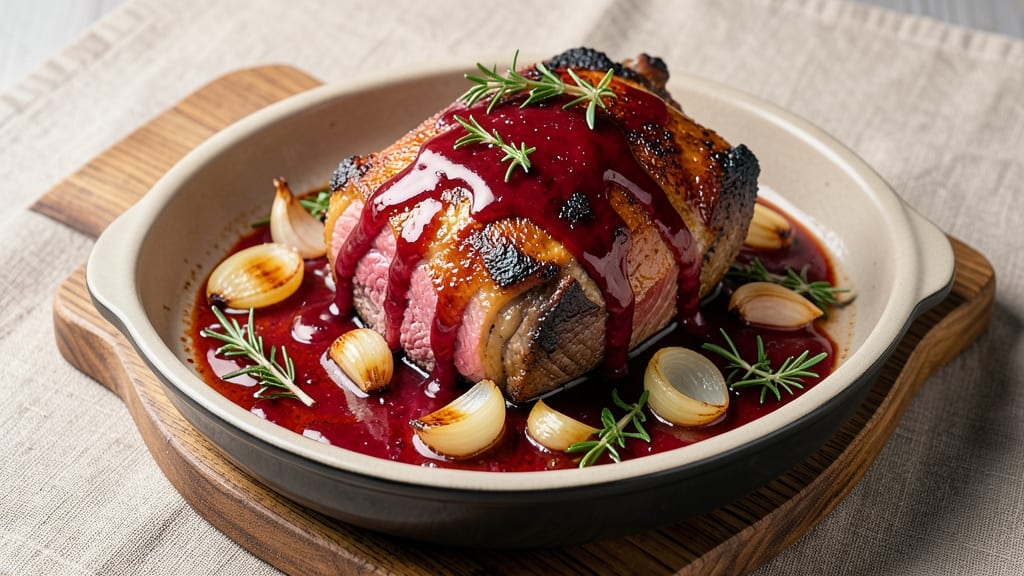
This Angus beef chuck roast oven recipe transforms tough cuts into melt-in-your-mouth perfection with a deep red wine braise and caramelized fond magic. The secret lies in slow roasting at 325°F for hours, allowing collagen to break down into rich, velvety sauce.
I've perfected this method after years of testing—no dry meat here, just tender, flavorful bites that impress every time.
The process starts with a high-heat sear to lock in juices, then moves to the oven where the wine and aromatics work their magic. A 3-4 hour cook ensures the meat becomes fork-tender while developing deep, complex flavors.
The caramelized fond at the bottom of the pot? That's where the real magic happens—it transforms into a rich, glossy sauce that coats every bite.
What you'll end up with is a restaurant-quality roast that's juicy, flavorful, and packed with that unmistakable beefy richness. The red wine braise adds layers of depth, while the caramelized fond creates a sauce so good, you'll want to spoon it up.
Serve with mashed potatoes or crusty bread to soak up every last drop of that incredible sauce.
This recipe is perfect for special occasions or when you want to treat yourself to a foolproof centerpiece dish. The techniques are simple but critical—proper searing, low-and-slow cooking, and reducing the fond to create that velvety sauce. Let's get started on creating your most impressive roast yet.
Ingredients for angus beef chuck roast oven
Six ingredients transform tough beef into restaurant-quality melt-in-your-mouth perfection with rich wine braise sauce.
| Ingredient | Amount | Notes |
|---|---|---|
| Angus Beef Chuck Roast 🥩 | 4 lb | Well-marbled, bone-in preferred |
| Dry Red Wine 🍷 | 2 cups | Bold variety like Cabernet Sauvignon |
| Beef Broth 🥫 | 2 cups | Low-sodium preferred |
| Yellow Onion 🧅 | 1 whole | Large, sliced into wedges |
| Garlic Cloves 🧄 | 6 cloves | Peeled, smashed lightly |
| Fresh Thyme 🌿 | ¼ cup | Stems removed, chopped |
| Fresh Rosemary 🌿 | ⅛ cup | Needles only, chopped |
| Tomato Paste 🍅 | 2 tbsp | Smooth, not chunky |
| Olive Oil 🫒 | ¼ cup | Extra-virgin for searing |
| Kosher Salt 🧂 | 1 ½ tbsp | Diamond Crystal preferred |
| Ground Black Pepper 🌶️ | 1 tbsp | Freshly ground |
| Flour 🌾 | 2 tbsp | All-purpose, for dredging |
| Balsamic Vinegar 🍶 | 1 tbsp | For deglazing |
The Angus chuck roast is non-negotiable here—look for good marbling and bone-in for extra flavor. Costco or Whole Foods carry premium cuts, but any well-stocked grocery store should have it. If buying whole, ask the butcher to trim excess fat but leave some marbling. The wine? Cabernet Sauvignon or Merlot work best—they're bold enough to stand up to the beef. Avoid sweet wines, and if you're unsure, grab whatever's open at the store's wine section. Fresh thyme and rosemary can be found in the produce section, but Penzeys Spices has the best quality if you're willing to splurge. For tomato paste, those little squeeze tubes at Trader Joe's are perfect—they keep forever and give you exactly the amount you need.
No red wine? Beef broth with a splash of balsamic vinegar mimics the depth perfectly. Fresh herbs? Dried thyme and rosemary at one-third the amount work in a pinch. The tomato paste can be skipped entirely if you're short on time, but it adds that perfect umami punch. For the flour, King Arthur or Gold Medal brands are reliable. If you're making this ahead, prep the aromatics (onion, garlic, herbs) and store them in the fridge for up to 3 days—just add them straight to the pot when you're ready to cook. The balsamic vinegar is key for deglazing—it pulls up all those precious browned bits from the sear.
This roast tastes even better the next day, so make extra. Store leftovers in the fridge for up to 5 days or freeze for 3 months—the sauce actually improves with time. For reheating, add a splash of water or broth to prevent drying out. The wine braise reduces significantly, so if you're serving a crowd, consider doubling the wine and broth amounts. I always make a big batch because it disappears fast—great for sandwiches, tacos, or just reheating with mashed potatoes. The caramelized fond at the bottom? That's pure gold—don't skip scraping it up!
Why You'll Love This Recipe
- Wine-Infused Magic: That dry red wine isn’t just for show—it deepens the beef into something rich and velvety. The onions and garlic caramelize into a sticky, savory crust that makes every bite worth the wait.
- Leftovers That Shine: Turns into next-day tacos, sandwiches, or even a hearty stew with zero extra effort. Honestly, I make double portions just to have it again in 24 hours—it reheats beautifully.
- Budget Luxury: A single roast feeds six for under $30, and the flavor rivals a steakhouse cut. Between us, this is how I trick people into thinking I cook fancy when it’s really just smart shopping.
Step-by-step instructions for slow-cooked red wine braised chuck roast
Here's how to transform a tough cut into melt-in-your-mouth perfection through patience and technique.
Sear the Chuck Roast for Deep Flavor
Pat the 4 lb Angus Beef Chuck Roast completely dry with paper towels—this ensures maximum browning. Heat a heavy Dutch oven over medium-high heat and add 0.25 cup Olive Oil. Once shimmering, place the roast in the pan and sear for 4 minutes per side until deeply browned. The goal is to develop a rich fond that will dissolve into the sauce later.
While searing, sprinkle the roast generously with 1.5 tbsp Kosher Salt and 1 tbsp Ground Black Pepper, pressing the seasoning into the meat. Remove the roast and set it aside on a plate. Don't wipe out the pan—those browned bits are pure flavor gold. Here's where it gets good: sprinkle 2 tbsp Flour over the fond and stir for 30 seconds to create a light roux that will thicken your sauce.
Build the Aromatic Base
Add sliced 1 whole Yellow Onion and 6 cloves Garlic Cloves to the Dutch oven. Cook for 5 minutes until the onions soften and begin to caramelize. Here's the thing—don't rush this step. You want those onions to turn golden brown, which adds sweet depth to the braise. Stir occasionally to prevent burning.
Add 2 tbsp Tomato Paste and cook for 1 minute until it darkens slightly. This step develops umami complexity that cuts through the richness of the beef. Pour in 2 cups Dry Red Wine and scrape up all those browned bits from the bottom with a wooden spoon. Let the wine simmer for 3 minutes until reduced by half—this concentrates the flavors dramatically.
Layer Herbs and Braise to Tenderness
Return the seared roast to the Dutch oven. Add 2 cups Beef Broth, then stir in 0.25 cup Fresh Thyme and 0.125 cup Fresh Rosemary. The herbs should float on the surface, infusing the liquid as it cooks. Bring everything to a gentle simmer, then cover the pot and transfer to a 325°F oven for 3 hours. This low-and-slow approach breaks down the connective tissue, transforming tough meat into fork-tender perfection.
About 45 minutes into cooking, check the liquid level. If it's reduced too much, add ½ cup hot water to maintain moisture. The roast is ready when it easily pulls apart with two forks. The internal temperature should read 200-205°F at its thickest point. Here's the magic: the fat will render out, creating a silky sauce that clings to every bite.
Finish with Balsamic Vinegar
Remove the roast from the oven and tent it loosely with foil. Let it rest for 15 minutes while you reduce the sauce. Increase the oven temperature to 400°F. Pour the braising liquid through a fine-mesh strainer into a saucepan and simmer over medium-high heat until reduced by half, about 8-10 minutes. The sauce should coat the back of a spoon.
Return the sauce to the Dutch oven with the roast. Add 1 tbsp Balsamic Vinegar and simmer for 2 minutes to balance the richness with a touch of acidity. Slice the roast against the grain into ½-inch thick pieces and spoon the reduced sauce over the top. Serve immediately with crusty bread to soak up every last drop of that velvety red wine magic.
Pro Tips For Making Angus Beef Chuck Roast Oven
- SEAR FIRST, THEN CHILL: The chuck roast’s fat cap needs a hard crust, but don’t rush—get your oven to 450°F and sear it 8-10 minutes per side in a cold pan. After searing, transfer it to a tray and refrigerate uncovered for 30 minutes. This firms up the exterior so the wine and broth cling instead of pooling like sad soup.
- USE COLD WINE, NOT ROOM TEMP: That bottle of red you’ve been eyeing? Pour it into a measuring cup and let it sit in the fridge for 20 minutes before adding it to the pot. Cold wine opens up better and won’t evaporate into thin air the second it hits the hot pan. (Yes, even if you’re impatient like me.)
- DON’T SKIP THE ONION GARLIC MASH: Chop the onion and garlic into a rough paste—no need for perfect dice—then smash them flat with the side of your knife. Spread this directly onto the seared roast before adding liquids. The flattened surface caramelizes faster and sticks to the meat, turning into a flavor bomb instead of sinking to the bottom.
- LOW AND SLOW MEANS 275°F, NOT 300°F: I used to crank it to 300°F thinking it’d speed things up, but the roast ended up tough as boot leather. Chuck needs time, not heat—lock the oven at 275°F and let it cook for 3-4 hours. The internal temp will climb steadily, and the collagen will melt into buttery goodness. (Your meat thermometer is your new best friend.)
Perfect pairings for angus beef chuck roast oven
Classic Side Pairings
This rich, wine-braised chuck roast pairs beautifully with creamy mashed potatoes—their buttery texture contrasts perfectly with the deep beef flavors. I like using Yukon Gold potatoes boiled until tender, then mashed with ½ cup unsalted butter and ½ cup warm whole milk.
For extra indulgence, fold in ¼ cup grated Gruyère cheese before serving. 🥔
Crusty French bread is a must for soaking up that velvety sauce. Look for a baguette-style loaf from your local bakery section—it should have a crispy crust and soft interior. Warm it in the oven for 5 minutes at 350°F before serving. Alternatively, garlic-parmesan roasted potatoes add a hearty, savory element that complements the roast's richness.
Wine Pairings
Since the dish already features a bold red wine braise, I recommend pairing it with a Cabernet Sauvignon from Napa Valley or a Syrah from the Rhône Valley. These wines have enough tannin and acidity to stand up to the dish while enhancing its depth.
A 2018 Chateau Montelena Cabernet Sauvignon (around $50) is my go-to for special occasions—its dark fruit notes and smooth finish elevate the meal. 🍷
For a more budget-friendly option, try a Malbec from Argentina like Catena Zapata. It offers rich berry flavors and velvety texture without breaking the bank (typically $15-$20). Avoid lighter reds like Pinot Noir—they won't match the dish's intensity.
Unexpected Twists
For a global twist, serve the roast with Spanish-style paella rice—the saffron-infused grains soak up the sauce beautifully. Cook 1 cup Arborio rice with 3 cups beef broth, 1 tsp saffron threads, and a pinch of smoked paprika while the roast rests.
The nutty rice balances the beef's richness perfectly. 🌍
Polenta makes a fantastic alternative to potatoes. Cook 1 cup polenta in 4 cups boiling water with a pinch of salt, then stir in 2 tbsp butter and ¼ cup grated Parmesan. The creamy texture pairs wonderfully with the tender beef, and it's naturally gluten-free. For extra flavor, add ½ tsp nutmeg while cooking.
Dessert Harmony
To complete the meal, balance the richness with a bright, citrusy dessert like lemon posset. This silky-smooth custard made with 2 cups heavy cream, 1 cup lemon juice, and ½ cup sugar cuts through the beef's intensity.
Chill for 4 hours before serving—it's the perfect palate cleanser. 🍋
For chocolate lovers, dark chocolate-dipped strawberries with a sprinkle of sea salt provide a sophisticated finish. Melt 8 oz dark chocolate (70% cocoa) with 1 tbsp coconut oil, then dip 1 lb strawberries and chill until set.
The tartness of the strawberries and bitterness of the chocolate contrast beautifully with the meal's richness.
Nutrition facts
Frequently asked questions
Why does this recipe use a chuck roast instead of a more tender cut like ribeye?
The chuck roast is perfect for this method because its connective tissue breaks down beautifully during the slow oven cook, creating melt-in-your-mouth tenderness. Tender cuts like ribeye don't need the long braising time—they'd become dry. The chuck's natural marbling also adds incredible flavor when slow-cooked with wine and herbs.
Can I substitute red wine with something else if I don't have any?
Yes! Use a mix of 2 cups beef broth and 1 tbsp balsamic vinegar for the same depth of flavor. For even more richness, add 1 tbsp soy sauce or 1 tsp Worcestershire sauce. The key is maintaining the liquid volume while replicating the wine's acidity and umami.
How do I know when the roast is fully cooked?
The roast is done when it reaches 200-205°F internally and easily pulls apart with two forks. For a 4 lb roast, this typically takes 3 hours at 325°F. If using a meat thermometer, insert it into the thickest part without touching bone. The sauce should also reduce significantly, coating the back of a spoon.
What's the best way to reheat leftovers without drying them out?
Reheat leftovers in the oven at 300°F for 20-30 minutes, covered with foil, with a splash of beef broth to keep them moist. For quick reheating, use the stovetop on low heat with 2 tbsp sauce from the original pan. Never microwave—it creates rubbery meat. The sauce actually improves overnight, so leftovers taste even better!
Can I make this recipe in a slow cooker instead of the oven?
Follow the same searing steps, then transfer everything to a slow cooker on Low for 8-10 hours or High for 5-6 hours. After cooking, finish by reducing the sauce on the stovetop as directed. The slow cooker method works especially well for busy days—just add the roast raw (no need to sear) and cook on Low for 10-12 hours.