
Sauces & Condiments
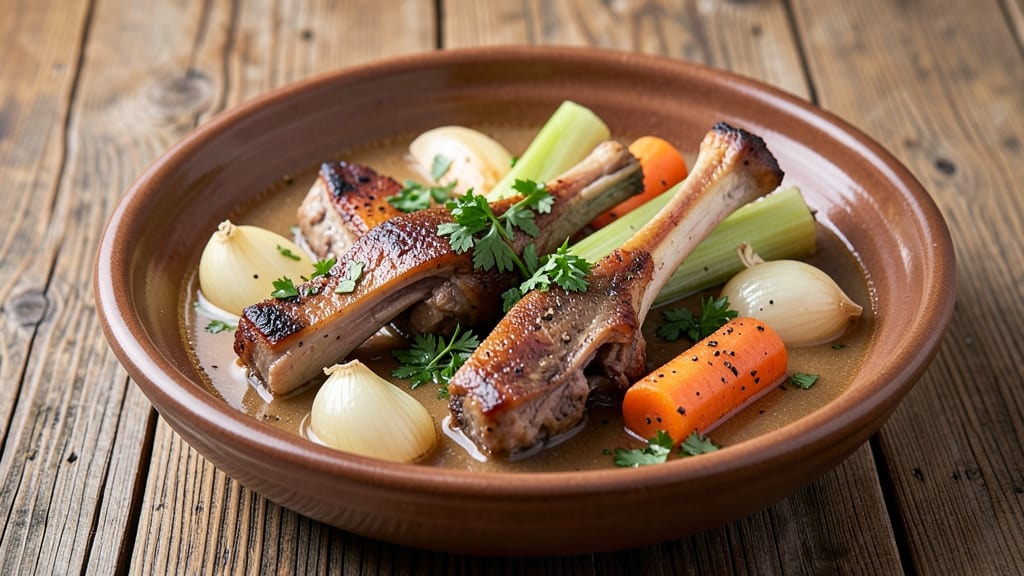
This au jus recipe with beef bones transforms simple ingredients into a rich, umami-packed sauce that elevates any beef dish. The key lies in long, slow simmering—extracting deep flavor from bones while keeping the broth crystal clear. I've perfected this technique to deliver a sauce that's restaurant-quality without the fuss, using just a few pantry staples and a little patience.
The process starts with roasting beef bones to develop a caramelized crust that adds complexity, then simmering them with aromatic vegetables and herbs. Reducing the liquid later intensifies the flavor, creating a sauce that's both bold and balanced.
This method ensures every sip delivers that perfect harmony of meaty richness and savory depth.
What you'll end up with is a velvety, golden au jus that's perfect for drizzling over steak, roasted potatoes, or even as a dipping sauce.
The beauty of this recipe is its versatility—make a big batch and store it for up to 5 days in the fridge, or freeze for future use. Each serving will taste like it came from a high-end steakhouse.
For an extra touch of elegance, finish with a sprinkle of fresh parsley or a drizzle of high-quality olive oil. The result is a sauce that's simple to make but impossible to resist. Let's get started on creating this flavorful foundation for your next beef meal.
Ingredients for au jus recipe with beef bones
Few ingredients deliver restaurant-quality depth like these carefully chosen components.
| Ingredient | Amount | Notes |
|---|---|---|
| Beef Bones 🦴 | 4 lb | Knit or marrow bones preferred |
| Yellow Onion 🧅 | 1 whole | Cut into large chunks |
| Carrots 🥕 | 2 lb | Whole, unpeeled for color |
| Celery Stalks 🌿 | 4 whole | Cut into 2-inch pieces |
| Garlic Cloves 🧄 | 8 cloves | Smashed for deeper flavor |
| Fresh Parsley 🌿 | ½ cup | Stems included for stock |
| Fresh Thyme 🌿 | 2 sprigs | Or 1 tsp dried thyme |
| Black Peppercorns 🌶️ | 1 tbsp | Crushed for aroma |
| Bay Leaves 🌿 | 2 whole | High-quality dried leaves |
| Red Wine 🍷 | 1 cup | Bold dry variety like Cabernet |
| Beef Stock 💧 | 4 cups | Homemade preferred, or high-quality |
| Apple Cider Vinegar 🍏 | 2 tbsp | For brightness and clarity |
| Cold Water 💧 | 8 cups | For final dilution |
| Unsalted Butter 🧈 | 2 tbsp | For finishing (optional) |
| Kosher Salt 🧂 | 1 ½ tsp | Adjust to taste |
The bones are the foundation—marrow or knit bones yield the richest flavor. Look for them at Whole Foods or your local butcher shop, where they'll often roast them for you. If you can't find marrow bones, short-cut knit bones work well too. The vegetables are simple but essential: onion, carrots, and celery form the classic 'mirepoix' base, while garlic and herbs amplify the umami. Fresh thyme and parsley add complexity, but dried herbs in half the amount will suffice if fresh isn't available. The key is to roast the bones first—this caramelizes the surface, creating a deeper flavor base than raw bones could ever provide.
No red wine? Substitute with beef stock plus a splash of balsamic vinegar—it'll still deliver that rich, slightly tangy depth. Short on beef stock? Water plus a bouillon cube works in a pinch, though the flavor won't be as complex. The apple cider vinegar might seem unusual, but it's what keeps the au jus crystal clear rather than cloudy. If you're making a large batch, double the vinegar and adjust the water accordingly. For extra richness, finish with a pat of cold butter, which creates an elegant, velvety sheen. The butter should be cold so it melts into the sauce rather than separating.
This au jus keeps beautifully—5 days in the fridge or 3 months in the freezer. Let it cool completely before refrigerating to prevent skin formation. For freezing, use airtight containers or silicone molds. When reheating, do so gently on low heat to preserve clarity. I always make a double batch—one for immediate use and one to freeze for future steak nights. The sauce actually improves slightly after a day or two as flavors meld, so don't hesitate to make it ahead. If you find it too rich after chilling, simply strain through a fine-mesh sieve before serving.
Why You'll Love This Recipe
- No-Chop Nightmare: I swear by the "rough chop" rule here—carrots and celery can stay in 1-inch hunks, onions in wedges. The bones do all the work while you sip wine and pretend you’re a chef.
- Deep Umami Magic: That first sip? Pure satisfaction. The beef bones melt into a rich, savory broth while the garlic and onions caramelize—no fancy spices needed, just honest, meaty depth.
- Leftovers That Shine: This stuff tastes better the next day. Use it to glaze roasted potatoes, drizzle over mashed, or even freeze for future stir-fries. My freezer’s full of it.
- Budget Bone Broth: Forget pricey stock—beef bones are cheap, and this recipe stretches into gallons. Honestly, I make it just to freeze, then pull out when I need flavor without the cost.
Step-by-step instructions for rich beef bone au jus
Transforming beef bones into velvety au jus requires patience and precision—here's how to extract maximum flavor.
🍳 Step 1: Roast the Beef Bones for Deep Flavor
Preheat your oven to 425°F and place the 4 lb beef bones on a rimmed baking sheet. Roast for 30-45 minutes until they develop a deep golden-brown crust and begin to smell intensely caramelized. This step unlocks the Maillard reaction, creating complex flavors that infuse the broth.
Turn the bones occasionally for even browning. You'll know they're ready when they release a rich, meaty aroma. Remove from oven and let cool slightly—this prevents your broth from becoming cloudy when you add them to the liquid later.
🍳 Step 2: Sauté Aromatics Until Fragrant
In a large Dutch oven, combine the 1 whole yellow onion (cut into chunks), 2 lb carrots (whole and unpeeled), and 4 whole celery stalks (cut into 2-inch pieces). Cook over medium heat with 1 cup red wine for 10-12 minutes, stirring occasionally, until the vegetables soften and the wine reduces by half.
Add the 8 smashed garlic cloves, 2 sprigs fresh thyme, 1 tbsp crushed black peppercorns, and 2 whole bay leaves. Cook for another 2 minutes until the garlic is fragrant but not browned. This aromatic base forms the flavor foundation of your au jus.
🍳 Step 3: Build the Broth Foundation
Pour in the 4 cups beef stock and 2 tbsp apple cider vinegar, scraping up any browned bits from the bottom of the pot. Bring to a gentle simmer, then add the roasted beef bones. Maintain a barely simmering temperature—this prevents the broth from becoming cloudy while extracting maximum collagen and flavor.
Simmer uncovered for 2-3 hours until the broth develops a deep, rich color and the bones are tender enough to easily pull apart. Skim off any foam or impurities that rise to the surface with a ladle during this time to ensure clarity.
🥘 Step 4: Strain and Finish the Au Jus
Strain the broth through a fine-mesh sieve into a clean pot, discarding the solids. Return the strained broth to the pot and add the 8 cups cold water to dilute to your preferred consistency. Bring to a gentle simmer again, then stir in the 1.5 tsp kosher salt and 2 tbsp unsalted butter.
Simmer for another 10 minutes to meld the flavors. The butter should melt completely, adding a silky texture. Taste and adjust seasoning—you may need to add more salt depending on the saltiness of your beef stock. The final au jus should be rich, velvety, and deeply flavorful with a perfect balance of umami and acidity.
⏰ Step 5: Serve Warm with Perfect Pairings
Keep the au jus warm over low heat until ready to serve. For best results, serve immediately with roasted beef, grilled steaks, or as a dipping sauce for crusty bread. The acidity from the apple cider vinegar brightens the rich beef flavors, while the butter adds a luxurious mouthfeel.
If making ahead, let the au jus cool completely, then refrigerate for up to 3 days or freeze for 3 months. Reheat gently on the stovetop, stirring occasionally, until warmed through. The longer it sits, the more the flavors develop and deepen.
Pro Tips For Making Au Jus Recipe With Beef Bones
- BLANCH BONES FIRST: Toss your beef bones in boiling water for 5 minutes before browning—this loosens dirt and impurities so they don’t cloud your au jus. I used to skip this and wondered why my broth always tasted off; now it’s crystal clear every time.
- CHAR THE AROMATICS HARD: Cook onions, carrots, and celery until they’re deep golden, almost caramelized—this builds flavor depth. Skip the gentle simmering, and you’ll end up with a watery, bland base instead of rich, layered taste.
- SKIP THE CELERY STALKS: Celery stalks add bitterness and take forever to soften—chop the leaves and inner ribs instead. You’ll save time and avoid that grassy aftertaste that ruins an otherwise perfect au jus.
- STRAIN TWICE, SKIM ONCE: After simmering, strain through a fine-mesh sieve, then a cheesecloth for ultra-smoothness—no one likes gummy bits. And skim fat every 30 minutes while cooking; lazy skimming leads to greasy au jus.
Dietary considerations for these flavors
Gluten-Free Adaptations
This au jus is naturally gluten-free as long as you use a certified gluten-free beef stock—brands like Pacific Foods or Annie's make excellent options. Always check labels since some commercial stocks contain hidden gluten.
The recipe relies on natural ingredients without any gluten-containing additives, so no substitutions are needed beyond the stock. 🌱
Low-Carb Considerations
For a low-carb version, skip the carrots and celery if you're strict about carbohydrate intake, though they're minimal here. The primary flavor comes from the beef bones and aromatics, so you can omit them without sacrificing depth.
The red wine and apple cider vinegar are also low-carb, making this a great pairing for keto diets when served with steak or roasted vegetables.
Dairy-Free Options
If avoiding dairy, simply omit the 2 tbsp unsalted butter at the end. The au jus will still be rich and flavorful—just slightly less velvety. For extra richness without dairy, stir in 1 tbsp olive oil instead.
The sauce's umami profile comes from the beef and wine, so the butter is purely a finishing touch, not a structural ingredient.
Allergen-Friendly Notes
This recipe is nut-free, egg-free, and soy-free by default, making it safe for most common allergies. The only potential concern is shellfish if your beef stock contains additives, but homemade or clearly labeled stocks avoid this issue.
Always double-check ingredient labels, especially for pre-made stocks or vinegars that might contain hidden allergens.
Vegetarian Substitutes
While this recipe is designed for beef bones, you can create a vegetarian version using mushroom stems or beef-free bone broth (like Imagine or Primal Kitchen). The flavor will be different but still rich.
For umami depth, add 1 tbsp soy sauce or 1 tsp miso paste to the strained broth. However, the texture and depth won't match beef bones, so expect a lighter result. 🌿
Nutrition facts
Frequently asked questions
Can I use any beef bones for this au jus?
For the best results, use marrow or knit bones—they contain rich marrow and connective tissue that create a deeper, more velvety sauce. Short-cut knit bones work well if marrow bones aren't available. Avoid bones with too much meat still attached, as they can make the broth cloudy. Your local butcher can usually recommend the best options.
Why does my au jus look cloudy?
Cloudiness usually means the broth boiled too vigorously or you didn't skim impurities during simmering. To fix it, strain through a cheesecloth-lined sieve after simmering, or add 1 tbsp cold water plus 1 tsp cornstarch to clarify. For prevention, maintain a gentle simmer (small bubbles) and skim foam regularly.
How can I make this au jus ahead of time?
This sauce actually tastes better after 24 hours! Cool completely, then refrigerate for up to 5 days or freeze for 3 months. When reheating, warm gently on low heat to preserve clarity. The flavors meld beautifully over time, making it perfect for meal prep. Just strain again before serving if needed.
Can I substitute red wine with something else?
Yes! Use 1 cup beef stock plus 2 tbsp balsamic vinegar for similar depth, or 1 cup apple juice for a sweeter profile. For umami, add 1 tsp Worcestershire sauce to any substitute. The wine's acidity helps balance richness, so ensure your replacement has some tang.
What's the secret to making it extra rich?
Roast the bones until deeply browned (425°F for 45 minutes) and add a 1-inch piece of kombu seaweed while simmering for extra umami. For finishing, whisk in 1 tbsp cold butterstrong> at the end—this creates a silky texture. The longer you simmer (up to 4 hours), the more collagen dissolves for richness.