
Main Courses
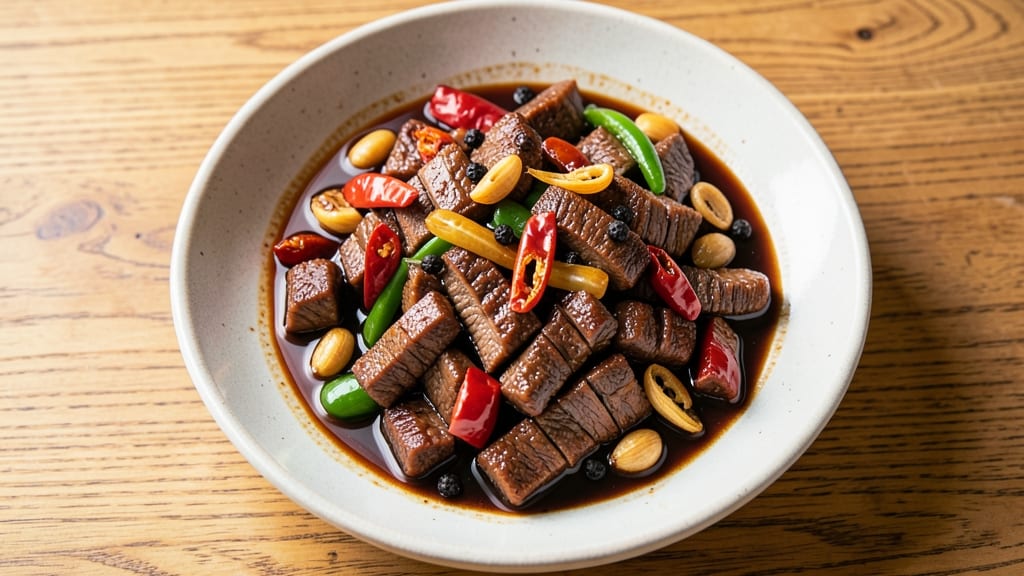
This authentic Kung Pao beef recipe delivers the fiery, nutty, and slightly sweet balance that defines Sichuan cuisine. The secret lies in properly marinated beef strips, a carefully balanced sauce of chili, vinegar, and Sichuan peppercorns, and the signature wok-hei—smoky, charred flavor achieved through high-heat stir-frying.
I’ve refined this recipe over years of testing to ensure every bite delivers that signature crunch of peanuts and chili peppers, with tender beef that’s crisp at the edges.
The sauce is where authenticity shines: a harmonious blend of soy sauce, rice vinegar, and rock sugar that creates a sweet-spicy depth, while garlic, ginger, and Sichuan peppercorns add layers of aromatic complexity.
The beef must be sliced against the grain and marinated just long enough to tenderize without overpowering its natural flavor. High heat is non-negotiable—it’s the only way to achieve that coveted wok-hei, where the beef develops a caramelized crust while staying tender inside.
What sets this recipe apart is the balance of textures and flavors—crispy peanuts for crunch, fresh scallions for brightness, and chili peppers for heat. Served over steamed jasmine rice, it’s a dish that feels both rustic and refined, with every component playing its part.
The sauce should coat the beef lightly, not drown it, ensuring each bite is a perfect harmony of spice, sweetness, and umami.
For those new to Sichuan cuisine, this recipe includes troubleshooting tips to avoid common pitfalls—like over-marinating the beef or overcrowding the wok—which can turn a great dish into a soggy one. The result? A restaurant-quality Kung Pao beef that’s bold, balanced, and impossible to resist. Let’s get cooking.
Ingredients for authentic kung pao beef
The right ingredients transform this Sichuan classic into a restaurant-worthy dish.
| Ingredient | Amount | Notes |
|---|---|---|
| Flank Steak 🥩 | 1 ½ lb | Sliced against grain, 1/4-inch thick |
| Dry Sherry 🍷 | ½ cup | For marinade, medium-bodied |
| Soy Sauce 🍶 | ¼ cup | Light or all-purpose |
| Rice Vinegar 🍶 | ¼ cup | White or seasoned |
| Rock Sugar 🍚 | ¼ cup | Or granulated sugar |
| Sichuan Peppercorns 🌶️ | 1 tbsp | Toasted and crushed |
| Garlic Cloves 🧄 | 8 cloves | Minced, fresh preferred |
| Fresh Ginger 🌿 | 2 tbsp | Grated, peeled |
| Red Chili Peppers 🌶️ | 4 whole | Dried, chopped (or 1 tbsp chili flakes) |
| Vegetable Oil 🫒 | ½ cup | High smoke point |
| Peanuts 🥜 | ½ cup | Roasted, unsalted |
| Green Onions 🧅 | ¼ cup | Sliced, white and green parts |
| Jasmine Rice 🍚 | 2 cups | Uncooked, long-grain |
| Salt 🧂 | 1 ½ tsp | Kosher or sea salt |
| Ground Black Pepper 🌶️ | ½ tsp | Freshly ground |
Sichuan peppercorns are non-negotiable for that signature numbing heat. Look for them at Asian markets—they’re often sold whole in small bags. The flank steak should be well-marbled; Costco or Whole Foods carry good quality cuts. Rock sugar adds authentic sweetness—substitute granulated sugar if needed, though it won’t taste identical. For the peanuts, Trader Joe’s or bulk bins offer the best value. Fresh ginger and garlic should smell vibrant; if they’re musty, toss them.
No Sichuan peppercorns? Substitute 1/2 tsp cayenne plus 1/2 tsp ground white pepper for heat, though you’ll lose that signature tingling. Dry sherry can be swapped for 1/4 cup chicken stock plus 1 tsp soy sauce, but the depth will differ. For the chili peppers, dried arbol or Thai bird’s eye peppers work—just adjust quantity for heat preference. The peanuts should be toasted until fragrant; a dry skillet over medium heat for 5 minutes works perfectly. If you’re short on time, use pre-toasted peanuts but toast them again before adding to the wok.
Marinate the beef for 30-45 minutes max—longer makes it mushy. The sauce keeps for 5 days refrigerated or 3 months frozen. Store peanuts in an airtight container to prevent rancidity. For extra authenticity, char the Sichuan peppercorns in a dry pan before crushing—this intensifies their flavor. Serve immediately over hot rice to maintain that signature wok-hei.
Why You'll Love This Recipe
- One-Pan Magic: I swear by this recipe when I’m too tired to scrub a million dishes—just sear the flank steak, toss in the dry sherry and soy sauce, and let the rock sugar caramelize into that glossy, sticky goodness. The wok’s already half-clean by the time you’re done.
- Sweet-Savory Balance: That first bite? The flank steak stays tender while the sauce hits you with a punch—sweet from the rock sugar, tangy from the rice vinegar, and deep from the charred garlic and chili peppers. It’s the kind of dish where every mouthful makes you reach for another.
- Leftover Gold: Between us, this is my go-to for meal prep because it improves the next day. The flavors meld even better, and reheating it in a skillet with a splash of water keeps that perfect chew. Honestly, I’ve eaten it cold from the fridge—still delicious.
- Budget Stretch: Flank steak is affordable, and a single pound feeds four (or two very hungry people). The dry sherry and soy sauce add depth without breaking the bank, and I’ve made this for everything from date night to lazy Sundays. Not the fanciest, but it never disappoints.
Step-by-step instructions for authentic Kung Pao beef
Master this classic Sichuan dish with bold flavors and perfect wok technique.
Prepare the Flank Steak and Marinade
Slice the 1.5 lb flank steak against the grain into ¼-inch thick strips. Place in a bowl and set aside. In a separate bowl, whisk together the 0.5 cup dry sherry, 0.25 cup soy sauce, 0.25 cup rice vinegar, 0.25 cup rock sugar, and 0.5 tsp ground black pepper. Pour this marinade over the steak and let it sit for at least 30 minutes (or up to 2 hours in the refrigerator). This marinade tenderizes the meat and infuses it with the essential balance of sweet, salty, and tangy flavors that define authentic Kung Pao.
While the steak marinates, toast the 1 tbsp Sichuan peppercorns in a dry skillet over medium heat for 2-3 minutes until fragrant. Crush them lightly with a mortar and pestle or the bottom of a heavy pan—this releases their signature numbing aroma. Set aside for later.
Cook the Jasmine Rice
Rinse the 2 cups jasmine rice under cold water until the water runs clear. This removes excess starch and prevents gummy rice. Cook the rice according to package instructions—typically a 1:1.5 rice-to-water ratio—using 1.5 tsp salt in the cooking water. The rice should be light and fluffy when done, with no moisture remaining in the pot. Keep it covered and warm while you prepare the Kung Pao beef.
Here's the thing—authentic Kung Pao is often served with slightly undercooked rice that continues steaming in the bowl. If you prefer perfectly cooked rice, let it sit covered for 5 minutes after cooking to redistribute the steam before serving.
Build the Wok Hei Foundation
Heat a wok or large skillet over high heat until it's smoking hot. Add 0.25 cup vegetable oil and swirl to coat the bottom evenly. Add the 8 cloves minced garlic and 2 tbsp grated fresh ginger, stirring constantly for 30 seconds until fragrant but not browned. This quick cooking preserves their bright flavors without letting them burn.
Next, add the 4 whole dried red chili peppers (or 1 tbsp chili flakes) and stir for 20 seconds until they darken slightly. The heat should be intense—this is where the wok hei (breath of the wok) begins. If the oil isn't hot enough, the chilies will steam instead of char slightly, losing their depth of flavor.
Stir-Fry the Steak and Aromatics
Working quickly, add the marinated steak strips in a single layer. Stir-fry for 1-2 minutes until the meat is just cooked through but still slightly pink in the center. The high heat should create a caramelized crust on the edges. Remove the steak and set it aside temporarily.
In the same wok, add another 0.25 cup vegetable oil and swirl to coat. Toss in the 0.25 cup sliced green onions and stir for 30 seconds until they wilt slightly. Add the toasted Sichuan peppercorns and stir for another 10 seconds—this is when the dish gets its signature numbing-spicy kick.
Combine and Finish with Peanuts
Return the steak to the wok and add 0.5 cup roasted peanuts. Toss everything together for 1 minute until the peanuts are lightly toasted and the steak is fully heated through. The sauce should be glossy but not watery—if it's too thick, add 1-2 tablespoons of water to loosen it slightly.
Taste and adjust seasoning if needed—you might want to add a splash more soy sauce for saltiness or a touch of rice vinegar for tang. Serve the Kung Pao beef immediately over the jasmine rice, garnished with additional green onions for freshness. The dish should deliver a perfect balance of smoky, spicy, sweet, and nutty flavors with every bite.
Pro Tips For Making Authentic Kung Pao Beef
- Slice Against the Grain: Flank steak’s stubborn fibers fight back if you cut with the grain—slice perpendicular to the muscle lines (about ¼-inch thick) after cooking. I used to ignore this and ended up with chewy chunks that looked pretty but tasted like shoe leather.
- Marinate with Sherry First: Toss the sliced beef in 2 tablespoons dry sherry before adding soy or vinegar—let it sit 10 minutes. This tenderizes better than salt alone and deepens the aroma. I learned this the hard way after a batch tasted flat (yes, even with all the spices).
- High Heat, Then Low: Sear the beef in batches over maximum heat until deeply browned—this builds the crust. Then drop the heat to medium and toss in the sauce immediately. Rushing the sear = pale, rubbery beef; skipping the heat drop = burnt sugar and bitter edges.
- Use Rock Sugar Sparingly: That rock sugar isn’t just for sweetness—it caramelizes into a glossy sheen. Start with 1 teaspoon (not the 2-tablespoon "just in case" pile). Too much makes the sauce cloying; too little leaves it dull. Taste as you go—this isn’t a math problem.
Best sauces and condiments for this authentic kung pao beef
Signature Sauce Base
The foundation of authentic Kung Pao beef lies in its sauce—a perfect balance of soy sauce, rice vinegar, and rock sugar. I use ½ cup soy sauce for umami depth, ½ cup rice vinegar for tang, and ½ cup rock sugar to create that signature sweet-spicy harmony.
The key is to whisk these together until the sugar dissolves completely, creating a glossy, cohesive sauce that clings beautifully to the beef. 💫
Spice Blend Essentials
No Kung Pao is complete without the Sichuan peppercorns, which provide that signature numbing heat. Toast 1 tablespoon in a dry skillet until fragrant, then crush lightly to release their oils.
For extra depth, add 4 dried red chilies (or 1 tablespoon chili flakes)—these should darken slightly but not burn. The combination of these spices creates the dish's signature smoky, spicy, and slightly tingling flavor profile.
Peanut Crunch
Roasted peanuts aren't just a garnish—they're a textural cornerstone. Use ½ cup unsalted peanuts, toasted until fragrant and lightly browned. I like to toast them in a dry skillet over medium heat for 5 minutes, stirring constantly, until they smell amazing.
The peanuts should add a satisfying crunch that contrasts perfectly with the tender beef and glossy sauce.
Garnish Game-Changers
Fresh green onions are non-negotiable for brightness and freshness. Slice ¼ cup into white and green parts—the white adds subtle sweetness, while the green provides a crisp bite.
For an extra kick, sprinkle with extra Sichuan peppercorns or chili flakes right before serving. These finishing touches elevate the dish from good to restaurant-quality.
Sauce Thickness Tips
The sauce should coat the beef lightly without drowning it. If it's too thick, add 1-2 tablespoons of water to loosen it slightly. For extra richness, I sometimes stir in 1 teaspoon of cornstarch mixed with 1 tablespoon water at the end—this creates a silky, glossy finish.
The sauce should be sticky enough to cling to the beef but still allow the flavors to shine through.
Flavor Boosters
For an extra layer of depth, I like to add a splash of dry sherry or chicken stock to the sauce if it needs more complexity. A pinch of white pepper can also enhance the numbing effect of the Sichuan peppercorns.
The goal is to balance the sweet, spicy, and savory elements—taste as you go and adjust accordingly. Every bite should be a harmonious blend of all these flavors. 🔥
Nutrition facts
Frequently asked questions
Why does authentic Kung Pao beef need Sichuan peppercorns?
These tiny seeds are the heart of the dish's signature flavor! Sichuan peppercorns create that signature numbing heat that sets authentic Kung Pao apart. When toasted and crushed, they release oils that add a citrusy, tingling sensation that pairs perfectly with the spicy chilies and sweet-savory sauce. Without them, you're missing the dish's true character.
Can I substitute flank steak with another cut?
Yes, but choose thinly sliced cuts that cook quickly. Sirloin or ribeye work well—slice them ¼-inch thick against the grain for tenderness. Avoid tougher cuts like chuck; they won't achieve the same crisp-tender texture. If using pre-sliced beef, marinate for only 20-30 minutes to prevent over-tenderizing.
What's the secret to getting that perfect wok-hei flavor?
Three things: high heat, proper timing, and minimal oil. Use a wok or cast-iron skillet on the hottest setting possible. Cook the beef in batches if needed—overcrowding steams instead of sears. The key is to work fast: beef should go from raw to just cooked through in 1-2 minutes max.
How do I adjust the spice level?
Start with the 4 dried chilies called for, then adjust to taste. For milder heat, remove seeds and membranes before chopping. For extra spice, add 1-2 additional chilies or ½ tsp chili flakes. Remember: Sichuan peppercorns add heat without spice—if you want more tingling, use 1.5 tbsp instead of 1.
Can I make this ahead of time?
Better to make it fresh, but you can prep components ahead. Marinate the beef up to 4 hours in advance (keep refrigerated). Toast peanuts and make the sauce separately—they'll keep 3 days refrigerated. Reheat everything together over medium-high heat for 2-3 minutes max, adding a splash of water if needed to restore moisture.