
Main Courses
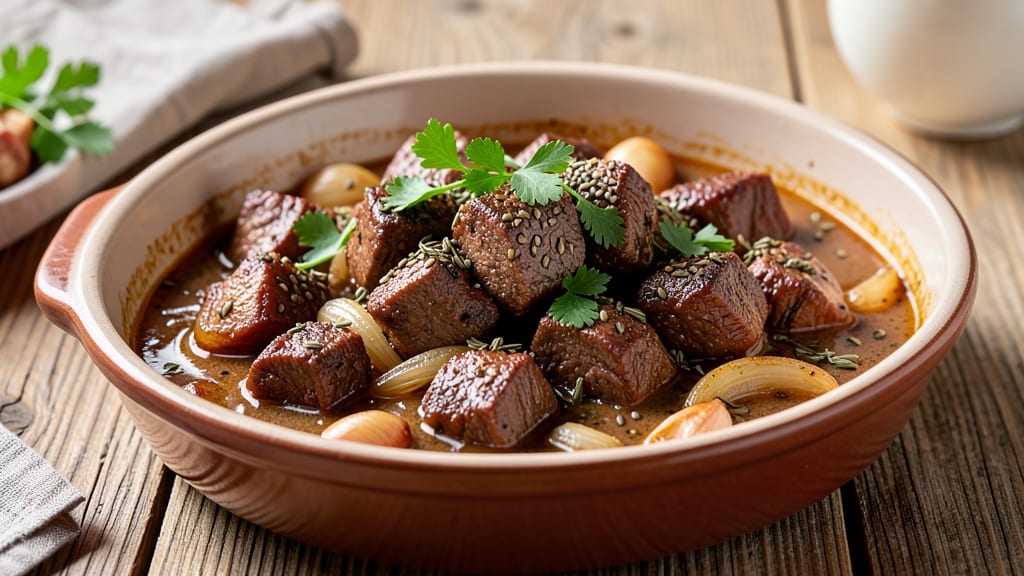
This Austrian beef goulash recipe delivers the deep, smoky richness of Central European tradition in a single pot. The secret lies in slow-browning the beef and layering spices—paprika, caraway, and marjoram—until the broth turns into a velvety, flavor-packed sauce.
Unlike quick versions, this method captures the authentic, hearty taste that makes goulash a comfort classic.
What sets this recipe apart is the balance of technique and simplicity. You’ll sear the beef in batches to develop a deep, caramelized crust before simmering it in a rich broth until fork-tender. The spices infuse the dish with warmth and complexity, while onions and tomatoes build a robust base.
It’s the kind of meal that tastes even better the next day, making it perfect for meal prep or feeding a crowd.
The result is a dish with layers of texture—tender beef, soft vegetables, and a sauce thick enough to coat every bite. Serve it with crusty bread or fluffy dumplings to soak up every last drop of that paprika-kissed richness.
This isn’t just goulash; it’s a taste of tradition, elevated for modern kitchens.
Whether you’re cooking for family or craving a cozy weeknight dinner, this one-pot goulash delivers restaurant-quality depth with minimal effort. The slow simmer ensures maximum flavor, while the spices create a warmth that lingers long after the last bite. Ready to transform simple ingredients into something extraordinary?
Ingredients for austrian beef goulash
Sixteen ingredients transform into a rich, paprika-kissed goulash with deep Central European roots.
| Ingredient | Amount | Notes |
|---|---|---|
| Beef Chuck Roast 🥩 | 3 lb | Cut into 1-inch cubes |
| Yellow Onions 🧅 | 3 whole | Medium, sliced into half-moons |
| Garlic Cloves 🧄 | 6 cloves | Minced for depth |
| Sweet Paprika 🌶️ | 2 tbsp | Hungarian preferred for authenticity |
| Ground Caraway Seeds 🌿 | 1 tbsp | Toasted for warmth |
| Dried Marjoram 🍃 | 1 tbsp | Or substitute with dried oregano |
| Tomato Paste 🍅 | ½ cup | High-quality for richness |
| Beef Broth 💧 | 4 cups | Low-sodium preferred |
| Red Wine 🍷 | 1 cup | Dry, bold variety |
| Carrots 🥕 | 4 whole | Medium, sliced into rounds |
| Potatoes 🥔 | 2 lb | Russet, cubed for heartiness |
| Bay Leaves 🍃 | 2 whole | Fresh for best flavor |
| Salt 🧂 | 2 tsp | Kosher or sea salt |
| Black Pepper 🌶️ | 1 tsp | Freshly ground for heat |
| Olive Oil 🫒 | 2 tbsp | For searing beef |
The beef is the foundation—chuck roast delivers that signature fall-apart tenderness. Costco or butcher shops often carry it pre-cut, but if buying whole, ask for a well-marbled piece. The paprika should be Hungarian sweet for that authentic smoky flavor; Penzeys or bulk bins at natural food stores are reliable sources. Caraway seeds are non-negotiable—they add that earthy depth. Toast them lightly in a dry pan before grinding for maximum punch. For the wine, any bold, dry red like Cabernet Sauvignon or Merlot works—whatever you have open in your fridge.
No Hungarian paprika? Smoked paprika at double the amount gets close, though it’ll be smokier. Out of caraway? Cumin seeds at half the quantity add warmth, but it’s not the same. The tomato paste can be a squeeze tube from Trader Joe’s for convenience—just measure carefully. Beef broth without low-sodium? Regular broth plus extra salt works, but taste as you go. The potatoes should be Russet or Yukon Gold—they hold up better during the long simmer than waxy varieties. Baby carrots or pre-sliced work fine if you’re short on time, but whole carrots add rustic texture.
This goulash tastes even better the next day—plan ahead. Store in an airtight container in the fridge for up to 5 days, or freeze portions for 3 months. The sauce thickens as it cools, so you can always add a splash of broth if it gets too stiff. For meal prep, double the recipe and freeze half—just thaw overnight in the fridge before reheating. Serve with crusty bread or egg noodles to soak up every last drop of that rich, paprika-infused sauce.
Why You'll Love This Recipe
- One-Pot Magic: I swear by this recipe because it’s literally one pot—no chopping boards, no extra pans, just dump, stir, and let it work. The onions caramelize right in the pot while the beef tenderizes, so you’re left with minimal cleanup and maximum flavor.
- Earthy Depth: That caraway and paprika combo? It’s what turns this from "beef stew" to "I’d eat this every night" territory. The sweetness of the paprika balances the caraway’s bite, and the garlic? It sneaks in like a warm hug.
- Leftovers That Shine: This goulash begs to be made extra—it tastes even better the next day, especially with crusty bread. I’ll be real: I’ve reheated it for lunch three times in a row, and no one’s complained (my kids just ask for more).
- Budget-Friendly Powerhouse: A chuck roast stretches for a week’s worth of meals, and the spices cost pennies. You’re getting restaurant-quality richness without breaking the bank—plus, the onions and garlic are cheap staples I always have on hand.
Step-by-step instructions for Austrian beef goulash
Master this hearty dish with rich flavors and tender meat in a single pot.
Sear the Beef Chuck Roast
Heat a large Dutch oven over medium-high heat until hot. Add the 2 tablespoons olive oil and swirl to coat the bottom evenly. Working in batches, add the 3 lb beef chuck roast cut into 1-inch cubes, ensuring they don't overcrowd the pan.
Sear the beef for 3-4 minutes per side until deeply browned on all sides. This step is crucial—it develops the Maillard reaction that creates deep, meaty flavor. You'll know it's ready when the edges are golden brown and the beef releases easily from the pan. Transfer the seared beef to a plate and set aside.
Sauté Onions, Carrots, and Aromatics
In the same Dutch oven, add the 3 whole yellow onions sliced into half-moons and the 4 whole carrots sliced into rounds. Cook over medium heat for 8-10 minutes, stirring occasionally, until the onions soften and the carrots begin to caramelize slightly.
Add the 6 cloves minced garlic, 1 tablespoon toasted ground caraway seeds, and 1 tablespoon dried marjoram. Stir for 30 seconds until fragrant—this releases their aromatic oils and infuses the base of your goulash. The mixture should smell warm, earthy, and slightly sweet.
Build the Sauce with Wine and Tomato Paste
Pour in the 1 cup red wine and scrape up any browned bits from the bottom of the pot with a wooden spoon. This deglazing step captures all the flavor you've built so far. Let the wine simmer for 3-4 minutes until it reduces by half and the alcohol cooks off.
Stir in the 0.5 cup tomato paste, 2 tablespoons sweet paprika, 2 teaspoons salt, and 1 teaspoon black pepper. Cook for another 2 minutes until the tomato paste darkens slightly and the mixture thickens. This forms the rich, slightly sweet base of your goulash.
Simmer with Broth and Potatoes
Return the seared beef to the Dutch oven. Add the 4 cups beef broth and 2 whole bay leaves, then bring the mixture to a boil. Once boiling, reduce heat to low and add the 2 lb russet potatoes cubed.
Cover the pot and let it simmer gently for 1 hour 15 minutes, stirring occasionally. The potatoes should be tender and the beef fork-tender. If the liquid reduces too much, add a splash of water or broth to maintain the proper consistency. The goulash should have a thick, hearty sauce that coats the back of a spoon.
Rest and Adjust Seasoning
Remove the 2 whole bay leaves and let the goulash rest off the heat for 10 minutes. This allows the flavors to meld and the meat to reabsorb any juices. Taste and adjust seasoning if needed—add more salt or pepper if the dish feels flat.
Serve the goulash hot, garnished with fresh parsley if desired. The beef should be tender enough to pull apart with a fork, and the sauce should be rich, slightly tangy, and deeply flavorful. This one-pot wonder delivers all the comforting, paprika-kissed richness of traditional Austrian goulash.
Pro Tips For Making Austrian Beef Goulash
- Sear the Chuck First: Get that Dutch oven smoking hot—like, really hot—before adding the beef. A quick 2-3 minute sear on each side locks in flavor and keeps the meat tender. I used to skip this, and the goulash always tasted flat. Trust me, the crust is worth the wait.
- Char the Paprika: Toast the sweet paprika in a dry pan for 30 seconds until it smells nutty and darkens slightly. This deepens its flavor more than just sprinkling it raw. (Yes, it’s easy to burn—watch it like a hawk, but don’t rush.)
- Don’t Crowd the Onions: Slice those yellow onions thin and cook them in batches if needed. Overcrowding steams them instead of caramelizing, and you’ll end up with a watery base. A little patience here makes the whole dish richer.
- Add Caraway Last: Toss the ground caraway seeds into the finished goulash off the heat—just a teaspoon, toasted briefly in a dry pan first. Adding them too early burns their delicate flavor. (Pro move: grind your own if you can; store-bought loses punch fast.)
Perfect pairings for this dish
Classic Side Dishes
Serve your goulash with crusty Hungarian bread or pumpernickel—the dense texture soaks up the rich sauce beautifully. I like to toast slices in the oven with a sprinkle of coarse sea salt until golden.
For a lighter option, egg noodles or spätzle add a comforting contrast to the hearty stew. 🥖
Don’t overlook pickled vegetables—sauerkraut or pickled cucumbers cut through the richness with tangy brightness. Even a simple green salad with apple cider vinaigrette balances the meal perfectly. These sides elevate the dish from a simple stew to a full, satisfying spread.
Beverage Pairings
A bold Hungarian red wine like Egri Bikavér or Kékfrankos complements the paprika and beef beautifully. The wine’s earthy notes mirror the goulash’s spices, while its acidity cleanses your palate. If wine isn’t your thing, a dark lager or pilsner works surprisingly well—the crispness contrasts the dish’s richness. 🍷
For non-alcoholic options, sparkling apple cider adds a refreshing lift, while black coffee or chocolate dessert wine (like Moscato d’Asti) pairs wonderfully with the meal’s hearty flavors. A warm mulled tea with cinnamon and orange peel is also a cozy choice for colder evenings.
Garnishes That Wow
Finish your goulash with fresh parsley or chopped chives for a pop of color and brightness. I like to sprinkle toasted breadcrumbs mixed with smoked paprika for extra crunch and depth. A drizzle of sour cream or crème fraîche adds a cooling contrast to the warm spices. 🌿
For a smoky touch, top with crumbled feta cheese or grated Parmesan—both add a salty, umami dimension. Even a few crispy fried shallots (store-bought or homemade) bring a delightful crunch. These finishing touches turn a good goulash into an unforgettable one.
Modern Twists
Swap traditional sides for roasted Brussels sprouts with balsamic glaze—their caramelized edges pair surprisingly well with the goulash’s richness. Or try mashed cauliflower for a lighter alternative to potatoes. These modern twists keep the meal exciting while staying true to the dish’s comforting roots. 🥦
For a fusion approach, serve with cornbread or jalapeño-cheddar biscuits—the slight heat and sweetness complement the paprika’s warmth. Even warm cornbread muffins with honey butter add a Southern-inspired twist that guests will love.
Nutrition facts
Frequently asked questions
Why does traditional goulash use paprika?
Paprika is the soul of goulash! The Hungarian sweet paprika used in this recipe adds warmth, depth, and a signature reddish hue. Unlike smoked paprika, sweet paprika delivers a milder, slightly sweet flavor that balances the rich beef and spices. It's been a staple in Central European cooking since the 17th century, originally brought from the Americas.
Can I make goulash without wine?
Yes, but the flavor will be different. If you skip the wine, replace it with 1 cup beef broth plus 1 teaspoon vinegar (apple cider or red wine vinegar) to mimic the acidity. The wine adds depth and helps tenderize the beef—without it, the sauce may taste flatter. For a non-alcoholic alternative, use grape juice reduced by half.
How do I fix goulash that's too thin?
Simmer it uncovered for 10-15 minutes to reduce the liquid. If it's still too thin, mix 1 tablespoon cornstarch with 2 tablespoons cold water, stir it into the goulash, and simmer for 2-3 minutes until thickened. Never add flour directly—it can make the sauce grainy. Pro tip: Skim excess fat from the surface first for a cleaner result.
What's the best cut of beef for goulash?
Chuck roast is ideal—it's affordable, flavorful, and becomes fork-tender when slow-cooked. Other good choices include stew beef or brisket. Avoid lean cuts like sirloin; they dry out during the long simmer. If using pre-cut beef, ask your butcher for well-marbled pieces (fat within the meat keeps it moist).
Can I make goulash in a slow cooker?
Brown the beef first in a skillet, then transfer everything to the slow cooker. Cook on low for 7-8 hours or high for 4-5 hours. Add potatoes in the last 30 minutes to prevent them from turning mushy. The slow cooker's gentle heat enhances the beef's tenderness and lets flavors meld beautifully. Just stir occasionally and add broth if needed.