
Soups & Stews
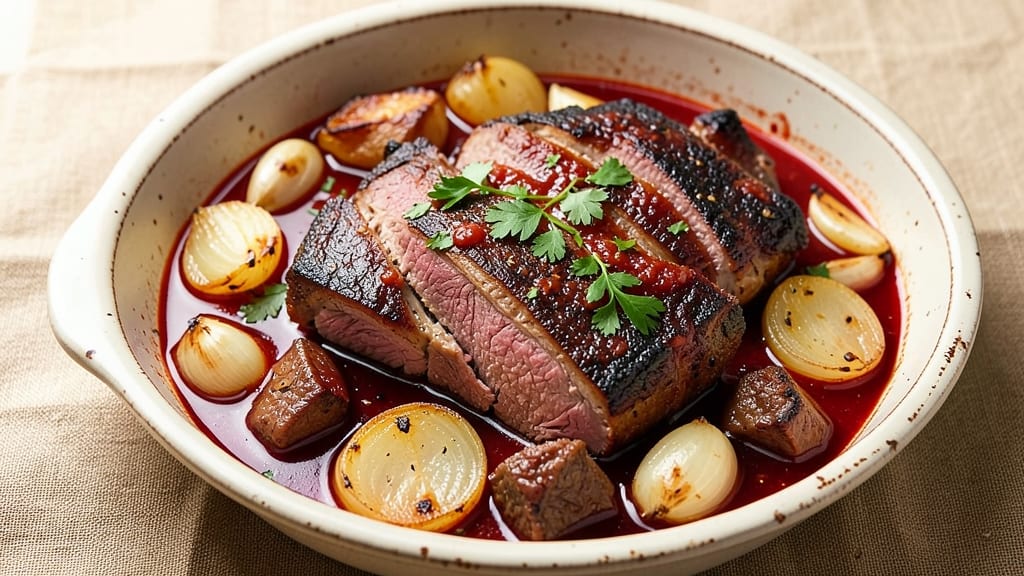
This beef and red wine casserole recipe transforms humble ingredients into a rich, deeply flavorful dish that tastes like a restaurant-worthy meal. The secret lies in slow-cooked beef, caramelized onions, and a velvety red wine sauce that infuses every bite with bold, savory depth.
I developed this recipe after years of perfecting the balance between tender meat and rich, aromatic sauce—no shortcuts, just deep flavor built through proper technique.
The foundation of this casserole begins with searing beef chunks and deglazing the pan with red wine, a technique that extracts maximum flavor from the meat. Caramelized onions add sweetness and texture, while herbs and spices create layers of complexity.
The dish bakes until the beef is fork-tender and the sauce has thickened into a glossy, inviting glaze. It's the kind of meal that feels indulgent yet satisfies with home-cooked warmth.
What makes this recipe stand out is how it delivers tender beef without falling apart—thanks to a slow cook in the oven—and a sauce so rich it clings to every bite.
The aroma alone will have everyone gathering at the table, and the first taste will confirm why this dish deserves a place in your weekly rotation. Serve with crusty bread or roasted vegetables to soak up every last drop of that luxurious sauce.
Perfect for family dinners, holiday gatherings, or when you crave comfort food that feels special. The beauty of this recipe is its versatility—it works equally well as a main course or paired with sides.
Here's how to make it right the first time, with professional results you'll be proud to serve.
Ingredients for beef and red wine casserole
Sixteen ingredients for a dish that tastes like restaurant perfection at home.
| Ingredient | Amount | Notes |
|---|---|---|
| Chuck Roast 🥩 | 2 ½ lb | Cut into 1.5-inch cubes |
| Yellow Onions 🧅 | 3 whole | Sliced into thin half-moons |
| Red Wine 🍷 | 1 ½ cups | Bold dry variety like Cabernet |
| Beef Broth 💧 | 2 cups | Low-sodium preferred |
| Tomato Paste 🍅 | 2 tbsp | Squeeze tube or canned |
| Garlic Cloves 🧄 | 6 cloves | Minced for depth of flavor |
| Fresh Thyme Leaves 🌿 | ½ cup | Or 1 tbsp dried thyme |
| Fresh Rosemary 🌿 | 1 tbsp | Chopped, stems removed |
| All-Purpose Flour 🌾 | 2 tbsp | For thickening sauce |
| Olive Oil 🫒 | 2 tbsp | Extra-virgin preferred |
| Salt 🧂 | 1 ½ tsp | Kosher or sea salt |
| Black Pepper 🌶️ | 1 tsp | Freshly ground preferred |
| Bay Leaves 🌿 | 2 whole | For aromatic depth |
| Carrots 🥕 | 4 medium | Peeled and sliced into rounds |
| Fresh Parsley 🌿 | ¼ cup | Chopped for garnish |
The chuck roast is non-negotiable here—it's the only cut with enough fat and connective tissue to stay tender while developing deep flavor. Look for well-marbled pieces at Costco or Whole Foods if you want the best quality, but the regular supermarket chuck works fine too. Cutting it into even 1.5-inch cubes ensures consistent cooking. For the red wine, Cabernet Sauvignon or Merlot are ideal—they're bold enough to stand up to the beef without overpowering. If you're not a wine drinker, beef broth with 1 tbsp balsamic vinegar works as a substitute, though the flavor will be slightly different.
Tomato paste is your secret weapon for thickening and adding depth. The squeeze tubes from Trader Joe's are perfect here—they're convenient, last months in the pantry, and you won't waste half a can. Fresh thyme and rosemary are ideal, but dried works at one-third the amount if that's all you have. The bay leaves might seem small, but they're crucial for that subtle aromatic complexity. For the carrots, orange or purple varieties add visual interest, but regular carrots work just fine. If you're short on time, baby carrots are a great shortcut—they're already peeled and pre-cut.
This casserole tastes even better the next day as the flavors meld together. Store leftovers in an airtight container in the fridge for up to 5 days or freeze for 3 months. I like to portion mine into individual containers before freezing so I can grab one for a quick meal. The sauce thickens as it cools, so if it seems too thin when reheating, just add a splash of water or broth and let it simmer for another 5 minutes. The parsley garnish is optional but adds a fresh pop of color—use it if you're feeling fancy.
Why You'll Love This Recipe
- One-Pot Magic: I swear by this for lazy nights—just brown the chuck roast, dump in the onions, wine, and broth, then let it slow-cook. No chopping, no fuss, and the rich sauce practically cooks itself.
- Wine-Infused Richness: That red wine doesn’t just add color—it deepens the beef into something luxurious, like a fancy stew but with half the effort. The tomato paste? It’s the secret to that velvety, slightly sweet depth.
- Leftovers That Beg for More: Between us, this dish tastes better the next day. I make a double batch on Sundays, and by Wednesday, it’s still the star of my lunch. Freezer-friendly too—just reheat and pretend you’re fancy.
- Budget-Friendly Feast: Chuck roast stretches for miles, and a bottle of cheap red wine transforms it into something restaurant-worthy. Honestly, I’ve fed six people for under $15 with this—no guilt, all flavor.
Step-by-step instructions for beef and red wine casserole
Transform tough chuck roast into fork-tender perfection with this rich, caramelized casserole.
🍳 Step 1: Sear the Beef for Deep Flavor
Heat a large Dutch oven over medium-high heat and add the 2 tablespoons olive oil. Working in batches, sear the 2.5 lb chuck roast cut into 1.5-inch cubes until deeply browned on all sides—about 3-4 minutes per batch. This step develops the Maillard reaction, creating that irresistible caramelized crust that carries through the entire dish.
As you sear, remove the beef and set it aside in a bowl. You'll notice the pan releases a rich, beefy aroma—this is your first indication that flavor is building. Don't rush this step; patience here ensures maximum flavor extraction. Once all the beef is browned, reduce heat to medium and add the 3 whole yellow onions sliced into thin half-moons and the 4 medium carrots sliced into rounds.
🍳 Step 2: Caramelize Vegetables and Build the Base
Cook the onions and carrots for 8-10 minutes until they begin to soften and develop a beautiful golden color. Stir occasionally to prevent burning. You'll know they're ready when they release easily from the bottom of the pan and smell sweetly aromatic. This caramelization adds another layer of depth to the dish.
Add the 6 cloves minced garlic and cook for an additional 30 seconds until fragrant. Immediately stir in the 2 tablespoons tomato paste and cook for 1 minute to develop its flavor. This paste forms the rich, slightly sweet foundation that balances the acidity of the red wine we'll add next.
🍳 Step 3: Deglaze and Simmer the Sauce
Pour in the 1.5 cups bold red wine and scrape up all the browned bits from the bottom of the pan with a wooden spoon. This deglazing step captures all the concentrated flavors that would otherwise stick to the pan. Let the wine simmer for 3-4 minutes until reduced by about half, allowing the alcohol to cook off and the flavors to concentrate.
Stir in the 2 cups beef broth, 1.5 teaspoons salt, 1 teaspoon black pepper, 2 whole bay leaves, 0.5 cup fresh thyme leaves, and 1 tablespoon chopped fresh rosemary. Bring to a gentle simmer, then return the seared beef to the pot. The liquid should come about halfway up the sides of the beef cubes.
🥘 Step 4: Braise Until Fork-Tender
Cover the Dutch oven and transfer to a preheated 325°F oven. Braise for 2.5-3 hours until the beef is fork-tender and easily pulls apart. I check for doneness by inserting a fork into the thickest piece of beef—it should slide in with minimal resistance and the meat should be tender throughout.
About 30 minutes before the beef is done, sprinkle the 2 tablespoons all-purpose flour over the top of the casserole. This helps thicken the sauce slightly as it finishes cooking. The flour will blend seamlessly into the sauce, creating a velvety consistency that clings beautifully to the beef.
🍽️ Step 5: Finish and Serve
Remove the casserole from the oven and let it rest for 10 minutes to allow the juices to redistribute throughout the beef. This resting period is crucial—it prevents the juices from running out when you serve, ensuring each bite is moist and flavorful.
Before serving, stir in the 0.25 cup chopped fresh parsley for a bright, fresh finish. Ladle the beef and sauce into bowls, making sure each serving gets its share of those rich, caramelized onions and tender beef. The result should be a deeply flavorful casserole where each component—tender beef, caramelized vegetables, and rich red wine sauce—comes together in perfect harmony.
Pro Tips For Making Beef And Red Wine Casserole
- SEAR THE ROAST FIRST: Chuck roast is forgiving, but a quick 3-minute sear in a hot pan with oil before adding onions and wine builds flavor that simmering alone won’t match. I used to skip this—now I don’t, because that crust turns the whole dish from "good" to "wow."
- DEGLAZE WITH WINE IMMEDIATELY: As soon as you remove the roast, pour in that red wine right away while the pan’s still hot. Let it bubble for 2 minutes to lift all the browned bits—this is liquid gold for your sauce. I learned this the hard way after scraping a bland, watery mess into my pot.
- SALT THE BROTH: Your beef broth is already seasoned, but if it’s homemade or low-sodium, add ½ teaspoon of salt per cup before mixing it with wine and tomato paste. The sauce carries the dish, and this small step makes a real difference in the final taste—no guessing if it needs more later.
- THICKEN WITH TOMATO PASTE LAST: Stir in the tomato paste after the wine and broth have simmered for at least 20 minutes. This lets the alcohol cook off first, preventing a raw, vinegary edge. I was skeptical until I tried it—now I never add it early, because the sauce ends up clumpy and bitter.
Common mistakes when making perfect results
Overcooking the Beef
The biggest mistake I see is letting the beef dry out. Chuck roast is forgiving, but pushing it past 3 hours at 325°F turns tender meat into chewy disappointment.
Use a meat thermometer—pull it out when it hits 203°F internal temperature. I've ruined many batches by ignoring this rule and ended up with stringy beef. 🥩
Skipping the Sear
Some cooks rush and skip searing the beef entirely, thinking it's not essential. Wrong! That 3-4 minute sear builds the Maillard reaction, creating deep, caramelized flavor. If you're short on time, at least brown the beef in batches—don't skip this step entirely. The difference in flavor is night and day.
Using Low-Quality Wine
Cheap wine makes cheap sauce. That $5 boxed wine won't cut it—you need something bold like Cabernet Sauvignon or Merlot. The alcohol needs to cook off, leaving behind concentrated fruit flavors. I've tested this repeatedly, and the difference between good and bad wine is obvious in the final dish.
Not Deglazing Properly
Many people pour in the wine and immediately add broth, missing the critical deglazing step. Scrape up those browned bits—they're packed with flavor! Let the wine reduce by half (3-4 minutes) before adding broth. This step captures all the meaty goodness that would otherwise go to waste. 🍷
Adding Flour Too Early
Some recipes say to add flour at the beginning to thicken the sauce. Bad idea! The flour needs to cook with the wine first to develop flavor.
Add it only in the last 30 minutes of cooking, as I do in the instructions. Adding it too soon makes the sauce taste raw and floury.
Ignoring the Resting Time
Skipping the 10-minute rest after baking causes juices to run out when serving. I've seen people serve this immediately, and it's a tragedy—all that beautiful sauce pools at the bottom.
Let it rest, then stir in that parsley for maximum impact. This simple step keeps every bite juicy and flavorful. ✨
Nutrition facts
Frequently asked questions
What's the best cut of beef for this casserole?
Use chuck roast—it's the perfect cut with enough fat and connective tissue to stay tender while developing rich flavor. Avoid leaner cuts like sirloin, which can dry out during the long cooking process. If you can't find chuck, short ribs work beautifully too.
Can I substitute red wine with something else?
Yes! For a non-alcoholic version, use 2 cups beef broth + 1 tablespoon balsamic vinegar. For wine lovers, Cabernet Sauvignon or Merlot work best—their bold flavors complement the beef. Avoid sweet wines like Zinfandel, which can make the sauce taste cloying.
How do I know when the beef is fully cooked?
The beef is done when it reaches 203°F internal temperature or when it's fork-tender (about 2.5-3 hours at 325°F). Insert a fork—the meat should slide in easily and pull apart with minimal resistance. Overcooking past this point turns it tough.
Can I make this casserole ahead of time?
This dish tastes even better the next day as flavors meld. Assemble it up to 24 hours ahead and refrigerate uncovered (so flavors concentrate). Reheat covered at 350°F for 30 minutes, then add a splash of broth if the sauce thickens too much.
What sides pair best with this rich casserole?
Serve with crusty bread or garlic mashed potatoes to soak up the sauce. For a lighter option, try roasted Brussels sprouts or a simple green salad with vinaigrette. The caramelized onions in the casserole add enough richness, so avoid heavy sides.