
Soups & Stews
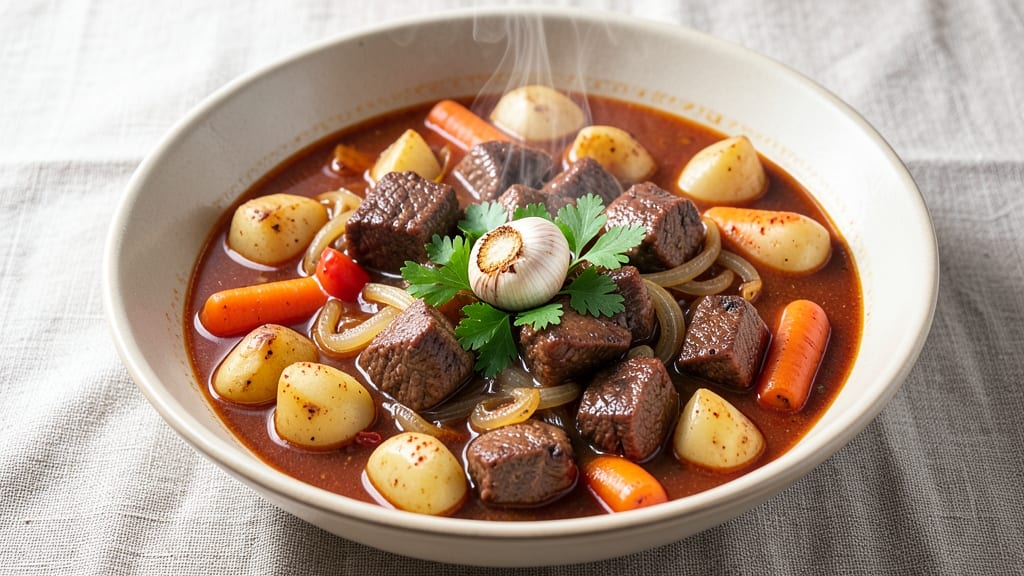
This Argentinian beef stew recipe transforms tough beef chuck into melt-in-your-mouth tenderness through slow braising and the bold depth of Malbec wine.
The secret lies in proper browning—never crowding the meat—and letting the spices bloom in hot oil before adding liquids, creating layers of flavor that simmer into a rich, aromatic broth.
What begins as a simple pot of ingredients becomes a hearty, restaurant-quality stew that pairs perfectly with crusty bread or chimichurri.
Traditional Argentinian cooking relies on patience and technique, and this recipe delivers both. The beef chuck breaks down beautifully over hours of gentle simmering, while potatoes, corn, and tomatoes absorb the deep, wine-infused sauce.
Cumin, oregano, and bay leaf form the aromatic backbone, balancing the wine's acidity with earthy warmth. The result is a stew that tastes like a home away from home—comforting, robust, and full of character.
By the time you're ready to serve, you'll have a pot of golden, fragrant stew with tender beef that practically falls apart at the touch of a fork. The sauce clings to every bite, rich with the flavors of Malbec, garlic, and slow-cooked vegetables.
This is the kind of dish that becomes a family staple, served with crusty bread to soak up every last drop of that velvety sauce.
The beauty of this recipe is its versatility—it reheats beautifully for leftovers and only gets better as the flavors meld. Whether you're feeding a crowd or meal prepping for the week, this Argentinian beef stew delivers restaurant-quality results with minimal effort.
Let's get started on creating a dish that tastes like a trip to Buenos Aires.
Ingredients for argentinian beef stew
Sixteen ingredients transform into a restaurant-quality Argentinian beef stew with deep Malbec wine flavor.
| Ingredient | Amount | Notes |
|---|---|---|
| Beef Chuck Roast 🥩 | 3 lb | Cut into 1.5-inch cubes |
| Yellow Onions 🧅 | 2 whole | Chopped into wedges |
| Garlic Cloves 🧄 | 6 cloves | Crushed for aroma |
| Carrots 🥕 | 4 whole | Cut into 1-inch chunks |
| Russet Potatoes 🥔 | 2 lb | Peeled, cut into chunks |
| Canned Tomatoes 🍅 | 2 cans | 15 oz each, crushed |
| Fresh Corn Kernels 🌽 | 1 ½ cups | Frozen or fresh |
| Dried Oregano 🍃 | 1 tbsp | Mexican oregano preferred |
| Ground Cumin 🌿 | 1 tbsp | Toasted for depth |
| Bay Leaves 🍃 | 2 whole | Fresh preferred |
| Red Wine (Malbec) 🍷 | 1 cup | Bold, dry variety |
| Beef Broth 💧 | 4 cups | Low-sodium preferred |
| Olive Oil 🫒 | ½ cup | Extra-virgin for richness |
| Salt 🧂 | 1 ½ tsp | Kosher or sea salt |
| Ground Black Pepper 🌶️ | 1 tsp | Freshly ground |
The beef chuck is non-negotiable here—look for good marbling at Whole Foods or your local butcher. Pre-cut cubes save time, but if buying whole, ask for 1.5-inch chunks. Malbec wine should be bold and dry—Catena Zapata or Trapiche are solid choices, but any Argentinian red works. The canned tomatoes? San Marzano if you want to splurge, but regular crushed tomatoes work fine. Fresh corn adds sweetness, but frozen kernels in the husk are convenient and just as delicious.
No Malbec? Cabernet Sauvignon or Merlot will do in a pinch, though the flavor won't be quite the same. Running low on beef broth? Water plus 1 tbsp soy sauce mimics the umami. The oregano matters—Mexican oregano has a distinct flavor, but regular dried works at half the amount. Toasting the cumin seeds in a dry pan for 30 seconds before grinding releases their aroma, but pre-ground is fine if you're short on time. The bay leaves? Fresh is better, but dried work too—just double the amount.
This stew tastes even better the next day as flavors meld. Store in an airtight container in the fridge for up to 5 days or freeze portions for 3 months. I always make double batches—leftovers reheat beautifully and make quick lunches. The sauce thickens as it cools, so add a splash of broth if it seems too thick when reheating. Serve with crusty bread or over rice to soak up every last drop of that wine-infused sauce.
Why You'll Love This Recipe
- Foolproof Cuts: I swear by the chuck roast—it’s the only cut that actually stays tender all the way through. No tough chews, no regrets, just melt-in-your-mouth beef that makes me want to hug the cook.
- Garlic Bomb Flavor: Between us, this stew is ridiculously good because of the garlic—roasted whole cloves until they’re soft and sweet, then mashed right into the sauce. That’s the secret. (Yes, even on a Tuesday night.)
- Leftover Luxury: I make this on Sundays because it’s the only thing that tastes better the next day. The beef gets even more fall-apart tender, and the potatoes soak up all the rich sauce—basically free, delicious meals for the week.
- Potluck Hero: Bring this to a gathering, and you’ll be the star. It’s hearty enough for a winter dinner but simple enough to throw together last-minute. Plus, everyone loves seconds—especially when it’s in a big cast-iron pot.
Step-by-step instructions for Argentinian beef stew
Here's how to create a rich, slow-braised stew with deep Malbec wine flavor.
Sear the Beef Chuck Roast
Heat the 0.5 cup olive oil in a large Dutch oven over medium-high heat until shimmering. Working in batches, add the 3 lb beef chuck roast cut into 1.5-inch cubes and sear for 2-3 minutes per side until deeply browned. This step develops the deep, meaty flavor that forms the stew's foundation.
Don't overcrowd the pan—sear in batches if needed. You'll know it's ready when the meat releases easily from the pan and has a rich mahogany crust. Remove the beef and set aside on a plate, reserving any browned bits in the pot.
Build the Flavor Base
In the same Dutch oven, add the 2 whole yellow onions chopped into wedges and cook for 5 minutes until softened and slightly caramelized. Add the 6 cloves crushed garlic cloves and cook for 30 seconds until fragrant—this prevents burning while releasing their aromatic oils.
Stir in the 4 whole carrots cut into 1-inch chunks, 2 lb russet potatoes cut into chunks, 2 cans crushed tomatoes, 1 tbsp dried oregano, 1 tbsp ground cumin, 2 whole bay leaves, 1.5 tsp salt, and 1 tsp ground black pepper. Cook for 3 minutes to allow the spices to bloom and the vegetables to soften slightly.
Deglaze and Simmer
Pour in the 1 cup red wine (Malbec) and scrape up all the browned bits from the bottom of the pot. This deglazing step captures all the meaty flavors you worked so hard to develop. Let the wine reduce by half—about 3-4 minutes—until it's nearly evaporated.
Add the 4 cups beef broth and bring the mixture to a gentle simmer. Return the seared beef to the pot, along with any accumulated juices. The liquid should just cover the beef—if it's too shallow, add a splash of water. Partially cover the pot and simmer for 1.5 hours until the beef is fork-tender.
Add Corn and Finish Cooking
After 1.5 hours, stir in the 1.5 cups fresh corn kernels. The corn adds a touch of sweetness that balances the rich, savory stew. Return the pot to a simmer and cook for another 30-45 minutes until the potatoes are tender and the stew has thickened to your desired consistency.
Taste and adjust seasoning if needed—you might need a pinch more salt or pepper to balance the flavors. The stew should be rich but not overly salty, with a perfect balance of meaty, winey, and slightly sweet notes.
Pro Tips For Making Argentinian Beef Stew
- Sear the Chuck Hard: The beef chuck roast needs a deep, dark crust to hold up through hours of cooking. Don’t rush—work in batches if needed, and use a heavy pan (cast iron is ideal). I used to skip this, and the stew always tasted underdeveloped, like it needed more time it didn’t have.
- Cut Potatoes Large: Russet potatoes break apart when stewed, turning the dish into a mushy mess. Cut them into 2-inch chunks—they’ll soften beautifully but stay intact. Smaller pieces disappear into oblivion, and nobody wants that.
- Don’t Crowd the Pot: When browning onions and garlic, leave space between them. Packing them tight steams the aromatics instead of caramelizing them, and that’s when the stew starts tasting flat. Spread them out, even if it takes longer—it’s worth it.
- Add Carrots Last: Carrots take forever to soften, and if you toss them in with the potatoes early, they’ll turn to mush while the beef stays tough. Drop them in during the final 30 minutes, and they’ll stay tender-crisp with just a hint of bite. Trust me, this small tweak changes the texture game.
Serving suggestions for leftovers
Crusty Bread Pairing
Serve this Argentinian beef stew with a warm, crusty baguette or focaccia to soak up every last drop of that rich, wine-infused sauce. I love using a Rosemary Olive Oil Bread from Trader Joe's—its crisp crust contrasts beautifully with the tender beef.
For extra authenticity, try a pan de campo, a traditional Argentinian bread with a thick crust and soft interior. 🥖
Chimichurri Garnish
Brighten the dish with a dollop of fresh chimichurri—a tangy, herbaceous sauce made with parsley, garlic, olive oil, red wine vinegar, and red pepper flakes. Spoon it over the stew just before serving to cut through the richness.
For a shortcut, buy pre-made chimichurri from Whole Foods or Goya and mix it with a splash of Malbec wine to deepen the flavor.
Rice or Gnocchi Base
For a heartier meal, serve the stew over steamed white rice or potato gnocchi. The rice absorbs the sauce beautifully, while gnocchi adds a comforting, pillowy texture.
I prefer jasmine rice for its subtle floral notes, which complement the beef and wine. For extra indulgence, top with grated Parmesan or crispy prosciutto.
Green Salad Contrast
A simple arugula salad with lemon vinaigrette balances the richness of the stew. Toss 4 cups baby arugula with 2 tbsp olive oil, 1 tbsp lemon juice, ½ tsp salt, and ¼ tsp black pepper.
Add ½ cup toasted almonds for crunch. The peppery greens cleanse your palate between bites of stew. 🥗
Malbec Wine Pairing
This stew was made for Argentinian Malbec—its bold, fruity notes mirror the dish’s depth. I recommend a Catena Zapata Malbec or Trapiche for a classic pairing. If you prefer white wine, a crisp Torrontés offers a refreshing contrast.
For beer lovers, a light lager like Quilmes keeps the meal balanced without overpowering the flavors.
Leftovers Reinvention
Transform leftover stew into beef empanadas or stuffed peppers. Use the shredded beef to fill puff pastry with a sprinkle of cheese, or stuff bell peppers with the mixture and bake until tender.
These make great handheld meals for picnics or game days. The flavors only get better as they meld overnight! 💫
Nutrition facts
Frequently asked questions
Can I use a different cut of beef instead of chuck roast?
While chuck roast is ideal for its marbling and tenderness, you can substitute with brisket or short ribs for similar results. Avoid lean cuts like sirloin—they won't break down properly. If using brisket, cut it against the grain into ½-inch slices before searing.
How do I make this stew vegetarian?
Swap the beef for mushrooms (like portobello or cremini) and lentils for protein. Use vegetable broth instead of beef broth, and add 1 tbsp soy sauce for umami depth. The wine and spices will still create rich, hearty flavors—just reduce cooking time by 30 minutes.
Why does my stew taste too salty?
This usually happens when using canned tomatoes with added salt or over-salting during cooking. To fix it, add ½ cup cold water and simmer for 10 minutes to dilute the salt. For prevention, use no-salt-added tomatoes and taste as you go—adjust gradually.
Can I prepare this stew in a slow cooker?
Sear the beef as directed, then transfer everything to a 6-quart slow cooker. Cook on low for 8 hours or high for 5 hours. The corn should go in during the last 30 minutes to prevent mushiness. The slow cooker's gentle heat enhances the wine's depth beautifully.
What's the best way to reheat leftovers?
Gently reheat on the stove over low heat with 2-3 tbsp water or broth to prevent drying. If using a microwave, cover with a damp paper towel and heat in 30-second intervals, stirring between each. Never reheat to boiling—just until steaming hot.