
Soups & Stews
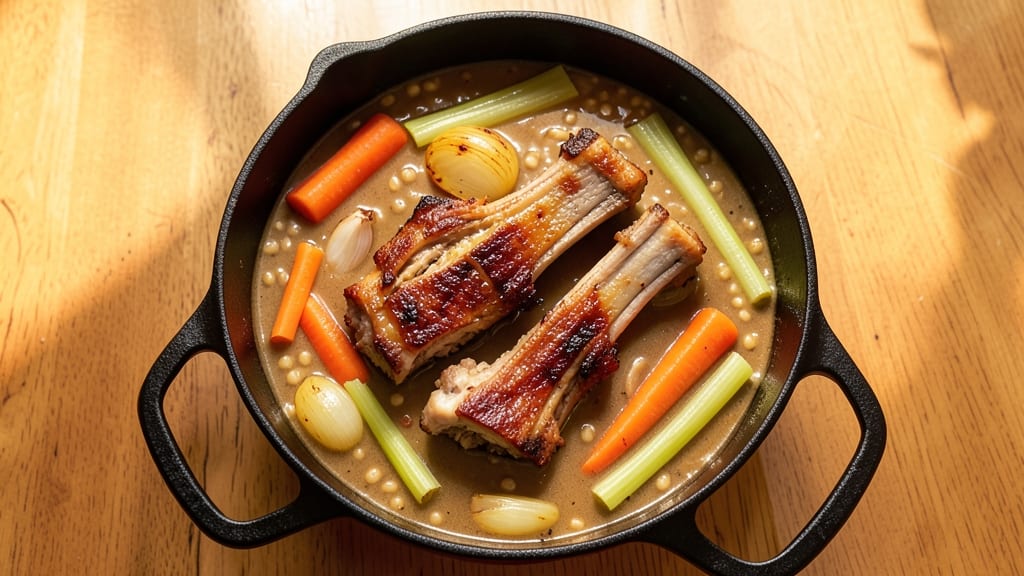
This beef barley soup recipe with prime rib bones delivers restaurant-quality depth in a single pot, transforming humble ingredients into a hearty, umami-rich masterpiece. The secret lies in slow-roasting the bones to unlock their marrow and collagen, creating a broth so rich it practically melts into every spoonful. I've perfected this technique over years of testing—no shortcuts, just layers of flavor built through patience and precision.
The process begins with rendering the bone marrow at high heat, then simmering the bones for hours to extract gelatin and collagen, which thicken the broth naturally. Barley adds earthy texture while absorbing the savory essence, and aromatic vegetables round out the depth.
What you'll end up with is a soup that's both comforting and sophisticated—a perfect balance of rustic tradition and refined technique.
This recipe transforms tough cuts into tender beef, crisp vegetables, and a velvety broth that clings to every bite. The aroma alone will have your kitchen filled with warmth, while the first spoonful delivers that unmistakable umami punch.
It's the kind of soup that tastes even better the next day, making it ideal for meal prep or feeding a crowd.
The beauty of this method lies in its flexibility—use it as a standalone meal or pair with crusty bread to soak up every last drop. Whether you're a seasoned home cook or new to slow simmering, this recipe delivers professional results with simple, reliable steps.
Let's get started on creating something truly special.
Ingredients for beef barley soup recipe with prime rib bones
Prime rib bones and aromatic vegetables unlock restaurant-quality depth in this hearty beef barley soup.
| Ingredient | Amount | Notes |
|---|---|---|
| Prime Rib Bones 🦴 | 3 lb | Cut into 3-inch pieces, marrow intact |
| Yellow Onions 🧅 | 2 whole | Peeled, cut into 1-inch chunks |
| Carrots 🥕 | 4 whole | Medium size, cut into 1-inch pieces |
| Celery Stalks 🌿 | 4 whole | Cut into 1-inch pieces |
| Garlic Cloves 🧄 | 8 cloves | Peeled, smashed with side of knife |
| Pearl Barley 🌾 | 1 cup | Rinsed thoroughly before use |
| Beef Chuck Roast 🥩 | 2 lb | Cut into 1.5-inch cubes |
| Tomato Paste 🍅 | ¼ cup | Smooth, not chunky |
| Dry Red Wine 🍷 | 1 cup | Bold, like Cabernet Sauvignon |
| Beef Broth 💧 | 6 cups | Homemade or high-quality store-bought |
| Fresh Thyme 🌿 | 2 sprigs | Leaves only, stems discarded |
| Fresh Bay Leaves 🌿 | 2 whole | Dried works in a pinch |
| Salt 🧂 | 2 tsp | Kosher or sea salt, to taste |
| Black Peppercorns 🌶️ | 1 tsp | Freshly cracked |
| Olive Oil 🫒 | ¼ cup | For roasting bones |
The prime rib bones are non-negotiable here—they're the secret weapon for that velvety, umami-rich broth. Look for marrow bones at your butcher or grocery store meat counter, or ask for beef short ribs with marrow intact. If you can't find them, beef knuckle bones work in a pinch, though they'll yield less marrow. The key is to roast them until the marrow is fully rendered and the bones are deep brown. Costco and Whole Foods often carry these, but call ahead to confirm. For the beef chuck roast, opt for well-marbled cuts—it'll stay tender during the long simmer. If you're buying a whole roast, ask the butcher to cube it for you.
No red wine? Substitute with extra beef broth and a splash of balsamic vinegar—it adds depth without alcohol. Fresh thyme is ideal, but dried thyme at one-third the amount works if that's all you have. The tomato paste can be swapped for 1 cup crushed tomatoes if you prefer a brighter flavor. For the barley, pearled barley is standard, but wild rice or farro add nice texture variations. If you're short on time, pre-cut vegetables from the grocery store save chopping time—just make sure they're fresh. The carrots can be baby carrots if that's what's in your fridge, but whole carrots yield more broth.
This soup tastes even better the next day as the flavors meld. Store in an airtight container in the fridge for up to 5 days, or freeze portions for 3 months. I like to portion it into quart-sized containers for easy reheating—just add a splash of water or broth when warming. The broth thickens as it cools, so stir in a little extra water or broth if it seems too thick when reheating. Leftovers make fantastic lunches or a quick dinner when you're short on time.
Why You'll Love This Recipe
- No-Chop Nightmare: I swear by the "soak the bones" trick—just toss them in cold water overnight, and by morning, they’ve given up all their marrow magic. No chopping, no stress, just dump-and-go when you’re ready.
- Deep Umami Bomb: That prime rib bone? It’s the secret weapon—roast it until the marrow pools like gold, then crack it open mid-simmer. The broth turns into liquid richness, and the carrots and celery soak it up like sponges. Honestly, store-bought stock can’t compete.
- Leftovers That Beg for More: This soup only gets better the next day. The barley plumps up, the flavors meld, and suddenly you’ve got a freezer-friendly meal that tastes like a hug. Freeze it in portions—perfect for lazy Mondays or when you’ve got unexpected company.
- Sunday Dinner Hero: Big enough for a crowd but simple enough for a weeknight, this is my go-to for game days or family dinners. The bones feed everyone, the barley keeps it hearty, and the garlic? Oh, the garlic makes it the dish no one wants to leave behind.
Step-by-step instructions for beef barley soup with prime rib bones
This rich, hearty soup builds flavor layer by layer—starting with deep bone broth and finishing with tender meat and nutty barley.
Roast the Prime Rib Bones for Maximum Flavor
Preheat your oven to 425°F. Arrange the 3 lb prime rib bones on a rimmed baking sheet, marrow side up. Drizzle with the ¼ cup olive oil and rub it evenly over the bones. Season generously with 1 tsp salt and ½ tsp cracked black peppercorns.
Roast for 30 minutes, flipping halfway through, until the bones develop a deep golden crust. This step caramelizes the bone surfaces, creating complex flavors that infuse the broth. The aroma alone will tell you it's working—you'll smell sweet, nutty notes from the marrow and meat.
Build the Soup Base with Aromatics and Wine
While the bones roast, heat a large Dutch oven over medium heat. Add the 2 whole yellow onions, 4 whole carrots, and 4 whole celery stalks, all cut into 1-inch pieces. Cook for 8-10 minutes until softened and beginning to brown.
Add the 8 smashed garlic cloves, 2 sprigs fresh thyme leaves, and 2 whole bay leaves. Stir for 1 minute until fragrant. Pour in the 1 cup dry red wine and scrape up any browned bits from the bottom—this releases flavor locked in the pan. Let it simmer for 3 minutes until reduced by half.
Add Tomato Paste and Chuck Roast
Stir in the ¼ cup tomato paste and cook for 2 minutes until it darkens slightly. This step deepens the soup's color and adds a subtle sweetness that balances the richness. Add the 2 lb beef chuck roast, cut into 1.5-inch cubes, and toss to coat in the paste mixture.
Pour in the 6 cups beef broth and bring to a gentle boil. The liquid should just bubble at the edges—this ensures even cooking without boiling over. Skim off any foam that rises to the surface during the first 5 minutes of simmering.
Simmer with Bones for Deep Flavor
Carefully transfer the roasted prime rib bones to the Dutch oven. Add the remaining ½ tsp black peppercorns and 1 tsp salt. Bring to a gentle simmer and cover partially. Cook for 2-2.5 hours at a low boil, maintaining enough liquid to keep everything submerged.
Check occasionally and add water if the liquid reduces too much. The bones should become fork-tender, and the broth should develop a rich, amber color. This long simmer extracts gelatin from the bones, creating a velvety texture that makes the soup feel luxurious.
Finish with Barley and Adjust Seasoning
Add the 1 cup rinsed pearl barley and simmer uncovered for an additional 30-40 minutes, until the barley is tender and the soup has thickened slightly. The barley should have a slight bite—it shouldn't be mushy. Taste and adjust seasoning with more salt or pepper if needed.
Remove the prime rib bones and discard them (or save for stock). Strain the soup through a fine-mesh sieve to remove any remaining solids, pressing gently on the vegetables with a wooden spoon to extract all their flavor. Return the strained soup to the pot and simmer for 5 more minutes to blend all the flavors together.
Pro Tips For Making Beef Barley Soup Recipe With Prime Rib Bones
- ROAST BONES FIRST: Prime rib bones won’t render fat and flavor like magic—give them a 20-minute head start in a 425°F oven before tossing them in the pot. The caramelized crust on the bones is where all the good stuff hides, and skipping this step means you’re basically making soup with half the depth.
- CHAR THE AROMATICS: After removing the bones, don’t just dump in your chopped onions, carrots, and celery. Sear them in the rendered fat from the bones until they’re deep golden—about 8-10 minutes, stirring occasionally. This isn’t just about flavor; it’s about building a foundation that keeps the soup from tasting like boiled vegetables.
- STRAIN THE BROTH: Once the bones are done (usually 2-3 hours simmering), strain the broth through a fine-mesh sieve or cheesecloth before adding barley. The last thing you want is a mouthful of gritty bone fragments or floating celery strings—trust me, I’ve learned this the hard way.
- ADD BARLEY LATE: Barley needs about 25 minutes to soften, but if you add it too early, it’ll turn to mush. Toss it in during the last third of cooking, then let it sit off the heat for 10 minutes—this guarantees it’s tender but still holds its shape. (Yes, even if you’re impatient like me.)
Storing and reheating this recipe
Refrigerator Storage
Let your soup cool completely before transferring to an airtight container—I prefer glass Pyrex with snap-on lids for durability. Store in the fridge for up to 5 days, though the flavors actually deepen overnight as the barley absorbs more broth.
The soup thickens as it chills, so stir in ½ cup water or broth when reheating if it seems too dense. 🥣
Freezer Prep Tips
For long-term storage, portion into quart-sized freezer bags or glass containers, leaving 1-inch headspace to prevent expansion cracks. Label with the date—this soup freezes beautifully for 3 months.
When ready to use, thaw overnight in the fridge, then reheat gently on the stovetop. I avoid microwave reheating as it can make the barley gummy.
Stovetop Reheating
My preferred method is stovetop reheating over medium-low heat with a splash of beef broth to restore moisture. Bring to a simmer for 10-15 minutes, stirring occasionally, until heated through to 165°F.
Taste and adjust seasoning—soup often needs a pinch of salt after reheating. For extra richness, stir in 1 tbsp butter or 1 tsp olive oil during the final minutes. 🔥
Microwave Shortcuts
For quick reheating, transfer soup to a microwave-safe bowl and cover loosely with a damp paper towel. Heat on 50% power in 2-minute intervals, stirring between each, until steaming hot.
Avoid full power to prevent splitting the barley. If the soup seems too thick, add 2-3 tbsp water and stir vigorously to re-emulsify.
Freezer Thawing
Never thaw soup at room temperature—always transfer to the fridge 24 hours before reheating. For faster thawing, place the sealed container in cold water and change the water every 30 minutes.
Once thawed, follow the stovetop reheating method for best texture. The barley may soften slightly after freezing, so consider adding 1 extra minute of simmering time when reheating. ❄️
Make-Ahead Pro Tips
Double the recipe and freeze half immediately—this is my go-to strategy for busy weeks. I like to freeze the soup strained (without barley) and add fresh barley when reheating for optimal texture.
When serving, garnish with fresh parsley or a drizzle of truffle oil to elevate the dish. The aroma alone will make your kitchen feel like a cozy restaurant. 💫
Nutrition facts
Frequently asked questions
Can I substitute prime rib bones with other beef bones?
Yes, but with some adjustments. Beef knuckle bones or short ribs with marrow work best—they yield rich gelatin and flavor. Avoid chicken or pork bones as they won't provide the same depth of beefy umami. If using short ribs, reduce simmering time to 1.5 hours since they cook faster than marrow bones.
Why does the soup need such a long simmering time?
The 2-2.5 hour simmer is key to unlocking collagen from the bones, creating that signature velvety texture. This slow process also tenderizes the beef chuck and melds flavors together. Skipping this step results in a thinner, less rich broth—think of it as the difference between store-bought and homemade stock.
What if my barley gets mushy?
This happens if overcooked or if using pearled barley that's too fine. For best results, use medium pearl barley (not instant) and simmer for exactly 30-40 minutes. If it's already mushy, strain out the excess and add fresh barley to serve. For extra texture, stir in 1 tbsp toasted barley before serving.
Can I make this soup in an Instant Pot?
Yes! Roast the bones first as directed, then sauté aromatics, add all ingredients except barley, and pressure cook for 60 minutes on high. Quick-release, then add barley and cook for 10 minutes on sauté mode. The Instant Pot cuts cooking time but may yield slightly less gelatin—extend simmering by 30 minutes if you want maximum richness.
How do I know when the beef is tender?
Test with a fork or meat thermometer. The beef should be 195-205°F internally and easily shred with a fork. If it's still tough, return to low heat for 20-30 more minutes. The long simmer with bones actually makes the meat more tender, so don't rush this step—it's what transforms cheap chuck into melt-in-your-mouth beef.