
Soups & Stews
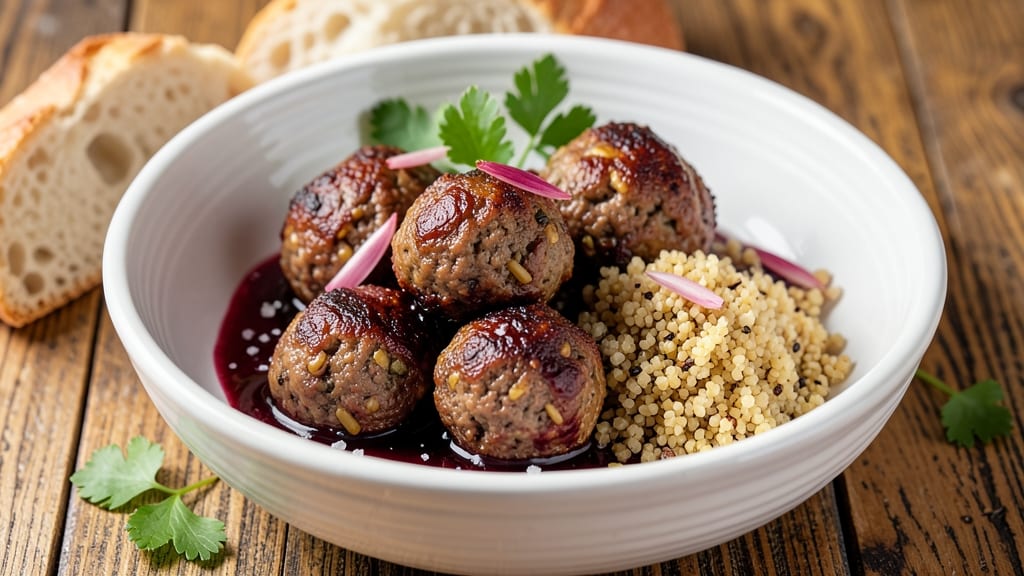
This beef and quinoa meatballs recipe transforms simple ingredients into protein-packed bites that deliver both hearty satisfaction and nutty depth. The secret lies in blending cooked quinoa with ground beef, creating meatballs that stay tender yet firm—no more dry, crumbly disappointments.
I developed this recipe after years of testing, and the quinoa makes all the difference, adding texture and nutritional value without compromising flavor.
The process is straightforward but yields restaurant-quality results: mix cooked quinoa with ground beef, eggs, and a blend of aromatic spices, then form into uniform balls. Bake until golden brown, and you’ll have meatballs that hold their shape while delivering rich, savory flavor.
The quinoa’s nutty notes complement the beef beautifully, creating a depth you won’t find in traditional meatballs.
These meatballs shine in marinara sauce, but they’re equally versatile—serve them on skewers, over pasta, or as a standalone appetizer with a tangy chimichurri or yogurt dip. The combination of quinoa and beef ensures each bite is satisfying, with a perfect balance of protein and texture.
Whether you're meal prepping for the week or hosting a dinner party, this recipe delivers results that impress.
What sets these meatballs apart is their adaptability. Use them in soups, salads, or even as a hearty breakfast hash. The quinoa keeps them moist and flavorful, while the beef provides that classic meatball richness.
Ready in under an hour, this recipe is perfect for busy weeknights or special occasions—without sacrificing quality.
Ingredients for beef and quinoa meatballs
These ingredients blend quinoa's nutty depth with beef's hearty satisfaction for meatballs that impress.
| Ingredient | Amount | Notes |
|---|---|---|
| Ground Beef (80/20 Lean-to-Fat Ratio) 🥩 | 1 lb | Chilled for better texture |
| Uncooked Quinoa 🌾 | ½ cup | Rinsed thoroughly before cooking |
| Large Eggs 🥚 | 2 whole | Room temperature for even mixing |
| Garlic Cloves 🧄 | 3 cloves | Minced finely for depth |
| Shallots 🧅 | 2 whole | Finely diced, not chopped |
| Fresh Parsley 🌿 | ¼ cup | Stems removed, chopped fine |
| Extra-Virgin Olive Oil 🫒 | 1 tbsp | For moisture and richness |
| Diamond Crystal Kosher Salt 🧂 | 1 tsp | Adjust to taste after cooking |
| Ground Black Pepper 🌶️ | ½ tsp | Freshly cracked for intensity |
| Dried Oregano 🍃 | 1 tsp | Mediterranean blend preferred |
| All-Purpose Flour 🌾 | 2 tbsp | For binding texture |
| Marinara Sauce 🍅 | 2 cups | High-quality, low-sugar preferred |
| Fresh Basil Leaves 🌿 | 0.15 cup | Chopped for garnish |
| Grated Parmesan Cheese 🧀 | ¼ cup | Freshly grated from block |
The ground beef's fat ratio is non-negotiable—80/20 ensures juiciness without greasiness. Costco or Trader Joe's carry pre-portioned chubs that save time, but avoid pre-ground beef with additives. Quinoa must be white or tri-color—black quinoa has a bitter edge. Rinse it thoroughly to remove saponins, then cook until just tender (about 12 minutes in 1:2 liquid ratio). The shallots should be finely diced, not chopped, for even distribution. For parsley, flat-leaf has more flavor than curly—worth the extra 50 cents at Whole Foods.
No quinoa? Cooked brown rice or finely chopped mushrooms add moisture but lack the nutty depth. Substitute fresh thyme for oregano if you prefer herbal notes, but reduce to half the amount. The marinara can be homemade (San Marzano tomatoes are ideal) or a high-quality jarred brand like Rao's or Barilla. For extra richness, stir 1 tbsp of tomato paste into the sauce. If your olive oil smells stale, replace it—California Olive Ranch or Colavita are reliable choices. The Parmesan should be real Parmigiano-Reggiano, not pre-grated (it contains anti-caking agents that alter texture).
Cooked meatballs reheat beautifully—350°F for 10 minutes in the oven restores their golden crust. Store leftovers in an airtight container for 4-5 days in the fridge or freeze for 3 months in a single layer before transferring to a bag. For meal prep, bake an extra batch and portion into glass containers with sauce. The quinoa mixture can be prepped ahead and refrigerated for 2 days before forming into balls, which helps prevent dryness. Garnish with fresh basil just before serving—it wilts quickly when added earlier.
Why You'll Love This Recipe
- No-Mix Needed: I swear by this trick—just pulse the raw quinoa in a food processor until it’s dusty, then fold it into the beef. No pre-cooking, no extra steps, and the meatballs stay juicy. (Yes, even my picky teenager doesn’t complain.)
- Umami Bomb: That 80/20 beef? Rich. The raw quinoa? Earthy. The shallots and garlic? Chef’s kiss. The flavor builds in layers—crispy outside, tender inside, with a depth that’s hard to resist. Honestly, it’s the kind of dish that makes you want to eat it straight from the pan.
- Meal Prep MVP: These hold up perfectly in the fridge for five days—ideal for busy weeks. Toss them into salads, pasta, or even breakfast burritos. I make a double batch every Sunday and never run out of lunch ideas. (Between us, the freezer version is just as good.)
- Budget-Friendly Powerhouse: Ground beef stretches further with quinoa, and uncooked grains cut costs without sacrificing texture. Plus, you’re using pantry staples—no fancy ingredients, just solid flavor. My wallet and my family’s taste buds both win. (Not the prettiest, but the taste makes up for it.)
Step-by-step instructions for beef and quinoa meatballs
Here's the precise method for creating meatballs with exceptional texture and flavor balance.
Cook the Quinoa to Perfect Texture
Rinse the 0.5 cup uncooked quinoa thoroughly under cold water in a fine-mesh strainer to remove any bitterness. Transfer it to a small saucepan and add 1 cup water (or broth for extra flavor). Bring to a boil over medium-high heat, then reduce to a simmer, cover, and cook for 12-15 minutes until the water is completely absorbed and the quinoa is tender but still slightly firm.
Resist the urge to peek during cooking—the steam is what helps the quinoa cook evenly. Once done, remove from heat and let it cool completely. The quinoa should be warm to the touch but not hot when you handle it, as this prevents the meatball mixture from becoming greasy. Fluff with a fork to separate the grains before using.
Build the Meatball Mixture with Precision
In a large mixing bowl, combine the 1 lb ground beef (80/20 lean-to-fat ratio) with the cooled quinoa, 2 whole large eggs, 2 tbsp all-purpose flour, 1 tsp diamond crystal kosher salt, 0.5 tsp ground black pepper, and 1 tsp dried oregano. Use your hands to gently mix everything together until just combined—overmixing develops gluten and makes the meatballs tough.
In a separate small bowl, finely dice the 2 whole shallots and mince the 3 cloves garlic until you have a smooth paste. Add these to the meat mixture along with the 0.25 cup finely chopped fresh parsley and 0.25 cup grated parmesan cheese. Mix gently again, being careful not to overwork the mixture. The texture should be moist but not sticky, with the quinoa adding a pleasant nutty depth.
Form and Sear the Meatballs
Using your hands (or a small cookie scoop for uniform size), form the mixture into 1.5-inch diameter meatballs, rolling them gently but firmly to ensure they hold their shape. You should get about 12 meatballs from this quantity. Place them on a parchment-lined baking sheet and refrigerate for 15 minutes to firm up slightly.
Heat 1 tbsp extra-virgin olive oil in a large skillet over medium-high heat until shimmering. Working in batches to avoid crowding, add the meatballs and sear for 2-3 minutes per side until they develop a deep golden-brown crust. This step is critical—it creates the Maillard reaction that gives your meatballs their rich flavor. Remove the meatballs and set aside on a clean plate.
Simmer in Marinara Sauce
In the same skillet, reduce heat to medium-low and add the 2 cups marinara sauce, scraping up any browned bits from the bottom of the pan. Return the meatballs to the skillet and spoon the sauce over them completely. Bring to a gentle simmer, then reduce heat to low and cover partially with a lid. Cook for 15-20 minutes, stirring occasionally, until the meatballs are cooked through and the sauce has thickened slightly.
To check doneness, cut one meatball in half—it should be 160°F internally with no pink remaining. The sauce should coat the meatballs beautifully, creating a glossy finish. If the sauce is too thin, uncover and simmer for an additional 2-3 minutes to reduce it to your preferred consistency.
Finish and Serve
Transfer the meatballs and sauce to a serving dish. Garnish with 0.15 cup chopped fresh basil leaves and an additional sprinkle of grated parmesan cheese for brightness and depth. Serve immediately with crusty bread or over your choice of pasta to soak up every bit of that rich, nutty sauce.
These meatballs deliver a perfect balance of textures—tender yet firm from the quinoa, rich from the beef fat, and bright from the fresh herbs. The nutty depth of the quinoa makes them stand out from traditional meatballs, while the crispy sear ensures each bite is satisfying.
Pro Tips For Making Beef And Quinoa Meatballs
- COOK THE QUINOA FIRST: Toss uncooked quinoa into the meatball mix raw, and you’ll end up with a gummy center. Rinse it first, then spread it on a baking sheet and toast in a dry pan for 3-4 minutes until slightly crisp—this prevents mushiness and adds texture. (Yes, even if you’re impatient like me.)
- CHILL THE MIX FOR 15: I learned this the hard way—skipping the rest makes meatballs fall apart when rolling. After mixing everything, pop the bowl in the fridge for 15 minutes. The fat firms up just enough to hold shape, and the quinoa absorbs moisture better. No, you can’t rush this.
- SALT THE SHALLOTS: Thinly sliced shallots? Toss them with a pinch of salt and let them sit while you prep. The salt draws out moisture, so they caramelize faster and add depth instead of turning soggy. (Your future self will notice the difference.)
- USE WET HANDS TO ROLL: Dry hands make meatballs stick to your fingers and flatten. Dip your hands in cold water before shaping, and the mix will hold together without cracking. Works like a charm—no extra binder needed.
Wine and beer pairings for this beef and quinoa meatballs
Red Wine Classics
A bold Chianti Classico from Tuscany is my go-to pairing for these meatballs—its bright acidity and cherry notes cut through the richness while complementing the quinoa's nutty depth. Look for a 100% Sangiovese with 12-15% ABV like Castello di Volpaia or Ruffino Chianti Classico.
The wine's earthy undertones mirror the oregano and garlic in the meatballs, creating harmony. Serve slightly chilled (60-64°F) to enhance its freshness. 🍷
Crisp White Options
For a lighter approach, try a Vermentino from Sardinia—its citrus and mineral notes provide refreshing contrast to the beef's richness. Brands like Cantina Mesa or Argiolas offer excellent quality at reasonable prices.
Alternatively, a dry Riesling from Germany (like Dr. Loosen Blue Slate) balances the meatballs' savory depth with its bright acidity and peach undertones. Serve at 48-50°F to preserve its crispness.
Beer Pairings
A Belgian Witbier like Hoegaarden or Stella Artois works beautifully—its subtle coriander and orange peel notes complement the parsley and basil garnishes. For a heartier option, try an amber ale such as Fat Tire or Leinenkugel's Summer Shandy, which balances the meatballs' richness with malty sweetness.
Keep beers well-chilled (40-45°F) to enhance their refreshing qualities. 🍺
Unexpected Sparkling
Don't overlook Prosecco or Cava for a festive touch—their effervescence cleanses the palate between bites. A dry Prosecco like La Marca Prosecco or a Reserva Cava from Spain (such as Freixenet Elyssia) adds a celebratory note while cutting through the dish's richness.
Serve at 45-50°F to preserve its bubbles and acidity.
Regional Adaptations
In Italy, these meatballs would traditionally pair with a Chianti, but in Spain, consider a Tempranillo like Muga Reserva—its dark fruit and leather notes complement the quinoa's earthiness. For a German twist, a Spätburgunder (Pinot Noir) from Bernhard Huber offers a lighter, fruit-forward match that highlights the herbs.
Always let the wine breathe for 10-15 minutes before serving to release its full aroma.
Nutrition facts
Frequently asked questions
Why does this recipe use quinoa instead of breadcrumbs?
The quinoa adds nutty depth and extra protein while keeping the meatballs moist and tender. Unlike breadcrumbs, it doesn't absorb excess fat, resulting in a lighter texture. Plus, quinoa's high fiber content makes these meatballs more satisfying and nutritious than traditional versions.
Can I make these meatballs ahead of time?
Form the meatballs and refrigerate them on a tray for up to 24 hours before cooking. For longer storage, freeze uncooked meatballs for 3 months—thaw overnight in the fridge before searing. Cooked meatballs reheat beautifully in the oven at 350°F for 10 minutes to restore their crispy exterior.
What's the best way to prevent dry meatballs?
Keep your ingredients cool (especially the quinoa and beef) and avoid overmixing the mixture. The 15-minute chill before cooking helps firm them up, and searing first creates a protective crust. If your meatballs still seem dry, add 1 extra tablespoon of olive oil to the mixture for extra moisture.
Can I use ground turkey or chicken instead of beef?
Yes, but the texture will differ slightly. Ground turkey (85/15) works well and reduces fat content, while chicken will be leaner and more delicate. For best results, add 1 extra tablespoon of olive oil to compensate for the lack of fat. The quinoa still provides moisture, but these versions will be lighter and less rich than beef-based meatballs.
How can I make these meatballs vegetarian?
Replace the beef with 1 lb of lentils or crumbled tempeh, and increase the quinoa to 1 cup for better binding. Add 1 extra egg or 2 tablespoons of flaxseed meal mixed with 3 tablespoons water as a binder. The flavor profile will shift toward earthy and nutty, but the texture remains satisfying.