
Soups & Stews
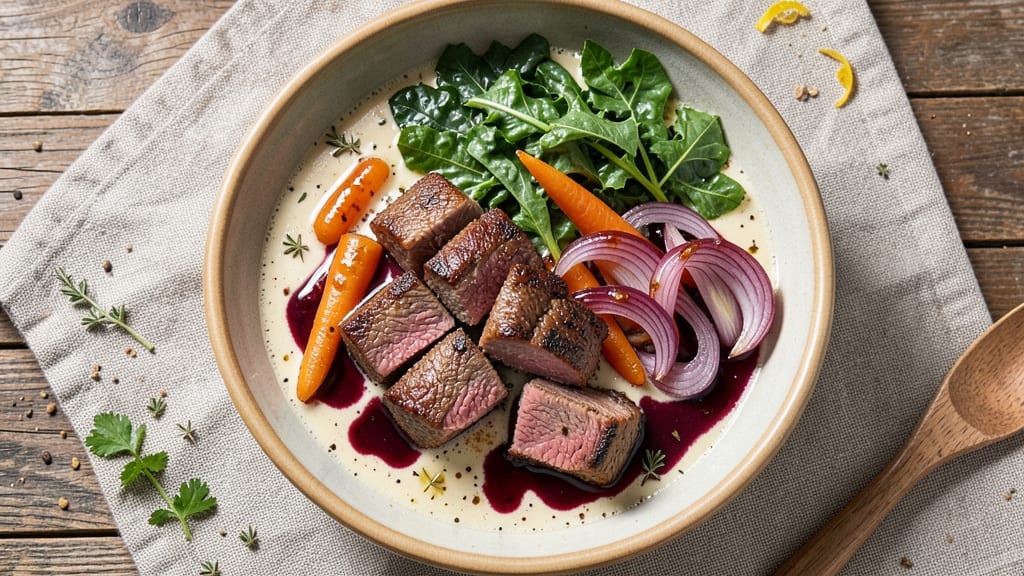
This beef and kale soup recipe delivers the ultimate comfort food experience—rich, hearty, and packed with iron-rich greens that transform a simple meal into a nourishing centerpiece. The secret lies in slow-simmered beef that melts into tender perfection while kale wilts into vibrant, nutrient-dense bites. I developed this recipe after years of perfecting the balance between deep savory flavors and the earthy sweetness of kale, ensuring every spoonful feels like a warm embrace on a chilly evening.
The foundation begins with aromatics—caramelized onions and garlic—that build a fragrant base before adding beef for a deep, meaty richness. A splash of red wine and beef broth creates a velvety simmer that infuses the kale with subtle complexity.
What sets this apart is the foolproof technique of adding kale late in the cooking process, preserving its vibrant color and crisp texture while allowing it to absorb the soup’s robust flavors. The result is a bowl that’s both satisfying and wholesome, with every ingredient playing its part.
By the time you’re stirring in the final touches—fresh herbs for brightness and a drizzle of olive oil for richness—you’ll have a soup that’s restaurant-quality at home.
The beef becomes fork-tender, the kale retains its natural sweetness, and the broth is thickened just enough to coat every spoonful without being heavy. This isn’t just a soup; it’s a meal that feels like a hug, perfect for cozy nights in or sharing with loved ones.
Serve it with crusty bread to soak up every last drop, or pair it with a simple green salad for a balanced plate.
The beauty of this recipe is its versatility—adjust the spices to your taste, swap in other greens like spinach or Swiss chard, or even use a pressure cooker to cut the simmering time in half. Let’s get cooking!
Ingredients for beef and kale soup
Rich, hearty ingredients that create a comforting bowl of beef and kale goodness.
| Ingredient | Amount | Notes |
|---|---|---|
| Chuck Roast 🥩 | 1 ½ lb | Cut into 1-inch cubes |
| Yellow Onions 🧅 | 1 whole | Medium size, sliced |
| Carrots 🥕 | 4 whole | Medium size, chopped |
| Garlic Cloves 🧄 | 4 cloves | Peeled, minced |
| Kale Leaves 🥬 | 12 oz | Tough stems removed |
| Red Wine 🍷 | ½ cup | Dry variety preferred |
| Beef Broth 🥄 | 4 cups | Low-sodium preferred |
| Tomato Paste 🍅 | 2 tbsp | Smooth, not chunky |
| Olive Oil 🫒 | 2 tbsp | Extra-virgin preferred |
| Dried Thyme 🌿 | 1 tsp | Or 1 tbsp fresh |
| Bay Leaves 🌿 | 2 whole | Fresh preferred |
| Salt 🧂 | 1 ½ tsp | Kosher or sea salt |
| Black Pepper 🌶️ | ½ tsp | Freshly ground |
| Fresh Parsley 🌿 | ¼ cup | Chopped, for garnish |
The chuck roast is non-negotiable—it's what gives this soup that deep, meaty richness. Look for well-marbled cuts at your butcher or the meat department, and ask for it pre-cubed to save time. Costco or Whole Foods usually carry high-quality chuck roast in bulk. Kale should be vibrant green with no brown spots—organic is ideal if you want to avoid dirt, but regular works too. For the red wine, any dry variety like Cabernet or Merlot will do, but avoid sweet wines. The beef broth matters too—low-sodium options like Pacific Foods or Swanson give you more control over seasoning.
No red wine on hand? Substitute with 1 cup beef broth plus 1 tbsp balsamic vinegar for depth. Fresh thyme isn't essential, but if you've got it, use it—dried works at one-third the amount. The tomato paste can be skipped if you dislike tomato flavor, but it adds a nice umami depth. For the kale, Swiss chard or spinach work perfectly as substitutes, but add them just before serving to keep them vibrant. The carrots can be baby carrots if that's what you've got, but regular carrots add more natural sweetness when chopped and simmered.
This soup tastes even better the next day as flavors meld together. Store leftovers in an airtight container in the fridge for up to 5 days, or freeze for 3 months in portion-sized containers. For a quick lunch, reheat portions in a saucepan with a splash of water or broth. The kale wilts down significantly when cooked, so don't be surprised if your 12 oz ends up being just a handful in the finished soup—that's normal and delicious.
Why You'll Love This Recipe
- Slow-Cooker Simplicity: I swear by this when I forget to thaw the chuck roast—just toss it in raw, turn the dial, and walk away. The onions and carrots soften into sweet, melt-in-your-mouth bits while the garlic infuses everything like a cozy hug.
- Umami Bomb: That first bite of tender beef with the briny kale? It’s like a flavor explosion. The chuck roast gets so rich and juicy, while the garlic and onions caramelize just enough to make your whole kitchen smell like Sunday dinner.
- Leftovers That Win: Between us, this soup only gets better the next day. I make a double batch on Sundays, and by Wednesday, the beef is falling apart—perfect for quick lunches or freezing for those "I can’t decide what to eat" nights.
- Budget Hero: Chuck roast is my go-to for stretching meals without breaking the bank. A single cut feeds four for under $15, and the kale adds that "I cooked something fancy" vibe without costing extra. Honestly, it’s my wallet’s favorite recipe.
Step-by-step instructions for beef and kale soup
This method delivers deep, rich flavors through slow cooking—where every ingredient transforms into comforting depth.
Sear the Chuck Roast for Maximum Flavor
Heat the 2 tablespoons olive oil in a large Dutch oven over medium-high heat until shimmering. Pat the 1.5 lb chuck roast dry with paper towels—this ensures a proper sear. Working in batches if needed, add the roast cubes and sear for 3-4 minutes per side until deeply browned. You're building flavor through the Maillard reaction here, so don't rush this step.
Once browned, transfer the roast to a plate. You'll notice the meat releases easily from the pan when properly seared. This is your first layer of flavor—don't skip it. The browned bits left in the pot will form the base of your rich soup broth.
Sauté Aromatics and Deglaze the Pot
In the same Dutch oven, add the 1 whole yellow onion and 4 whole carrots, both chopped into ½-inch pieces. Cook for 5-6 minutes until the onions soften and the carrots begin to caramelize. Stir occasionally to prevent burning.
Add the 4 cloves garlic cloves and 1 teaspoon dried thyme, stirring for 30 seconds until fragrant. Pour in the ½ cup red wine and scrape up all the browned bits from the bottom of the pot with a wooden spoon. This deglazing step captures all the meaty flavor you worked so hard to create. Let the wine simmer for 2-3 minutes until reduced by half.
Build the Rich Broth Base
Stir in the 2 tablespoons tomato paste and cook for 1 minute until it darkens slightly. Add the 4 cups beef broth, 2 whole bay leaves, 1.5 teaspoons salt, and ½ teaspoon black pepper. Return the seared chuck roast to the pot. Bring everything to a gentle boil, then reduce heat to low and cover partially. Simmer for 1 hour until the beef is fork-tender and pulls apart easily.
Here's where the magic happens—the slow simmer breaks down the tough chuck roast into tender, melt-in-your-mouth pieces while infusing the broth with deep, meaty flavor. You'll know it's ready when you can easily pierce the largest piece with a fork and see the meat begin to flake.
Add Kale and Finish the Soup
Remove the chuck roast pieces and shred them with two forks, discarding any large connective tissue. Return the shredded beef to the pot. Stir in the 12 oz kale leaves (stems removed) and simmer uncovered for 5-7 minutes until the kale wilts and becomes tender. The soup should have a vibrant green color and the kale should be soft enough to eat easily.
Taste and adjust seasoning—you might need a pinch more salt or pepper. The kale will add iron-rich nutrition and a pleasant bitterness that balances the richness of the beef. If the soup is too thick, stir in ½ cup water to reach your desired consistency.
Serve with Fresh Garnish
Remove the 2 whole bay leaves from the soup. Ladle the soup into bowls and garnish each serving with 1 tablespoon chopped fresh parsley. The parsley adds a bright, fresh finish that cuts through the richness of the beef and kale. Serve immediately with crusty bread to soak up every last drop of that flavorful broth.
This soup tastes even better the next day as the flavors continue to meld. The beef will be even more tender, and the broth will develop even deeper complexity. Store leftovers in an airtight container in the refrigerator for up to 4 days or freeze for up to 3 months**.
Pro Tips For Making Beef And Kale Soup
- Brown the Chuck Roast: Chuck roast needs a deep, caramelized crust to hold up in soup—don’t skimp on the sear. Cut it into 1.5-inch chunks, pat them dry, and cook in batches over medium-high heat for 3-4 minutes per side until golden. I used to rush this, and the soup always tasted flat until I realized the crust carries the flavor.
- Slice Kale Like a Pro: Kale’s thick stems won’t soften properly if left whole—strip them out first, then slice the leaves crosswise into ½-inch ribbons. Toss the stems in a little oil and roast at 400°F for 10 minutes before adding to the soup; they’ll break down without bitterness. (Yes, even if you’re impatient like me.)
- Don’t Overcrowd the Pot: Dumping everything in at once steams the onions and carrots instead of browning them. Sauté onions and garlic until soft, then remove half before adding carrots—this keeps the pot hot enough to develop real color. I learned this the hard way when my soup tasted like mushy vegetables.
- Use the Meat Twice: After shredding the chuck roast, return the bones (if any) and any juicy bits to the pot with a splash of broth. Simmer for 10 minutes to extract extra collagen and deepen the flavor. It’s not fancy, but it makes a real difference in richness. (Your future self will thank you.)
Storing and reheating this recipe
Refrigerator Storage
Let your beef and kale soup cool completely before transferring to airtight glass containers—I love using Pyrex with snap-on lids for easy stacking. Store in the fridge for up to 4 days, but I find the flavors actually deepen overnight as the beef continues to tenderize.
The kale will soften further but remains delicious. Always leave ½-inch headspace to prevent spills when reheating. 🥣
Freezer Storage
For longer storage, freeze portions in quart-sized freezer bags or glass containers with plastic wrap pressed directly on the surface to prevent ice crystals. Label with the date—this soup keeps for 3 months without losing quality.
Thaw overnight in the fridge before reheating. I recommend freezing in 2-cup portions for easy single-servings later. 🧊
Stovetop Reheating
My preferred method is stovetop because it restores the soup's texture beautifully. Transfer to a pot and heat over medium-low for 10-15 minutes, stirring occasionally. Add ¼ cup water or broth if the soup looks too thick.
The kale will re-wilt slightly, and the beef will regain its tender perfection. Taste and adjust seasoning—you might need a pinch more salt after reheating. 🔥
Microwave Reheating
For quick meals, use the microwave on 50% power in 2-minute intervals, stirring between each. Cover with a microwave-safe lid or damp paper towel to prevent splattering. The kale will soften more than on the stovetop, so I recommend reheating only what you'll eat immediately.
Add a splash of water if needed to restore consistency. ⏱️
Pressure Cooker Revival
If you made this soup in a pressure cooker originally, revive leftovers the same way! Add ½ cup water, seal, and cook on high pressure for 5 minutes, then quick-release.
The high heat ensures even reheating without overcooking the kale. This method works especially well for large batches. 💨
Garnish Refresh
Before serving reheated soup, brighten it with fresh chopped parsley or a drizzle of olive oil. The parsley adds freshness that cuts through any reheated richness, while the oil enhances the soup's natural flavors. A sprinkle of fresh black pepper also wakes up the dish beautifully. 🌿
Nutrition facts
Frequently asked questions
Can I substitute beef with another protein?
For a lighter version, use chicken thighs (simmer for 25 minutes instead of 1 hour) or pork shoulder (follow the same cooking time). If you prefer vegetarian, swap the beef for mushrooms or lentils—just reduce the simmering time to 20 minutes and add them with the kale. The key is ensuring your protein is fully tender before adding delicate greens.
Why does my kale turn mushy?
Overcooking is the most common culprit! Kale wilts quickly—add it only in the last 5-7 minutes of simmering. If using frozen kale, thaw and drain it first, then add it 2 minutes before serving. For extra protection, blanch the kale in boiling water for 1 minute before adding to the soup. The stems should always be removed to prevent bitterness.
How can I make this soup spicier?
Add ½ teaspoon smoked paprika with the thyme, or stir in 1-2 teaspoons hot sauce at the end. For heat lovers, brown 1 diced jalapeño with the onions. A pinch of cayenne pepper (start with ¼ teaspoon) also works well. Remember, spices build flavor—add them gradually to taste.
Can I make this in a slow cooker?
Yes! Follow the same steps for searing the beef, then transfer everything to your slow cooker. Cook on low for 6-8 hours or high for 3-4 hours. Add the kale in the last 30 minutes of cooking. The slow cooker's gentle heat ensures tender beef without drying out the broth. Perfect for hands-off cooking during busy days!
What if I don't have red wine?
No problem! Use 1 cup beef broth plus 1 tablespoon balsamic vinegar for depth, or substitute with ½ cup apple cider for a subtle sweetness. If you prefer dryness, ½ cup white wine works too. The key is balancing acidity—just taste as you go and adjust with extra broth or vinegar if needed.