
Main Courses
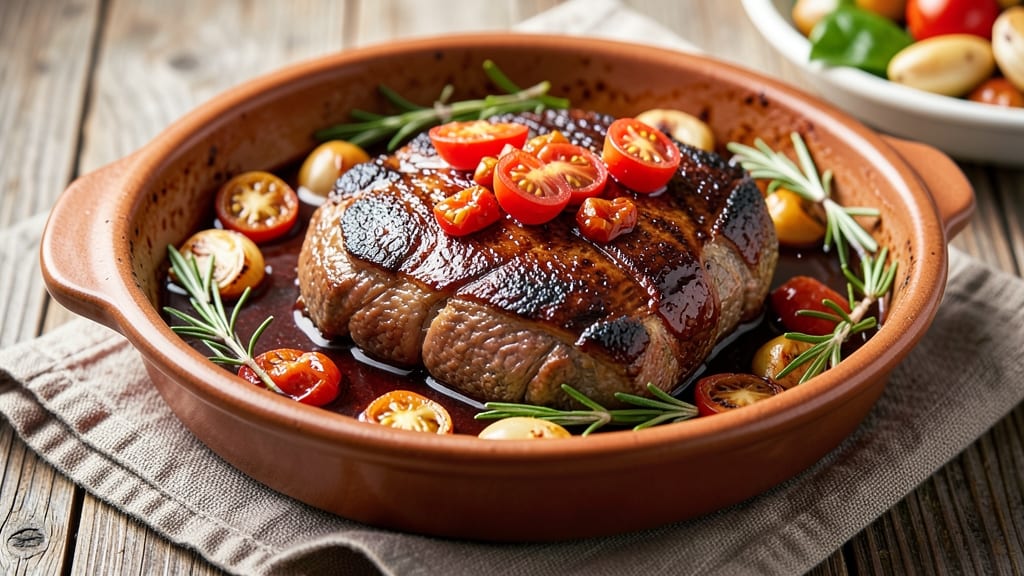
This beef a casa recipe delivers the kind of melt-in-your-mouth tenderness that makes weeknight dinners feel like a restaurant experience. The secret lies in slow-cooking beef until it practically falls apart, infused with rich tomato sauce and fragrant herbs that transform simple ingredients into something extraordinary.
I developed this recipe after years of perfecting the balance between depth of flavor and effortless preparation—because great meals shouldn't require hours in the kitchen.
The beauty of this dish is its versatility—whether you're feeding a family or cooking for two, the technique remains the same.
Aromatic herbs like rosemary and thyme meld with sun-ripened tomatoes and garlic to create a sauce that clings to every bite of tender beef, while a touch of red wine adds complexity without overpowering the natural flavors.
The result is a dish that's comforting yet sophisticated, perfect for cozy nights in or special occasions.
What makes this recipe truly special is how it transforms tougher cuts of beef into something luxurious through slow cooking. The beef becomes so tender it shreds easily, absorbing all the rich, herby tomato sauce while maintaining its natural juiciness.
Each bite delivers layers of flavor—savory, slightly sweet, and herbaceous—with just the right amount of acidity to balance everything.
Serve it over creamy polenta, crusty bread, or even mashed potatoes to soak up every last drop of that luscious sauce. A glass of medium-bodied red wine pairs beautifully with the dish, enhancing its depth.
This is the kind of meal that feels like a hug on a plate—warm, inviting, and impossible to resist. Let's get cooking!
Ingredients for beef a casa
Simple ingredients that transform into restaurant-quality beef a casa through slow cooking.
| Ingredient | Amount | Notes |
|---|---|---|
| Chuck Roast 🥩 | 2 lb | Well-marbled for tenderness |
| Dry Red Wine 🍷 | 1 cup | Bold Cabernet Sauvignon preferred |
| Crushed Tomatoes 🍅 | 2 cups | San Marzano preferred for sweetness |
| Tomato Paste 🍅 | 2 tbsp | High-quality for depth |
| Garlic Cloves 🧄 | 6 cloves | Freshly minced for aroma |
| Fresh Rosemary 🌿 | ¼ cup | Finely chopped sprigs |
| Fresh Thyme 🌿 | ¼ cup | Leaves only, stems removed |
| Carrots 🥕 | 3 whole | Medium size, peeled and sliced |
| Celery Stalks 🥬 | 2 whole | Trimmed and chopped |
| Yellow Onion 🧅 | 1 whole | Medium size, diced |
| Beef Broth 💧 | 2 cups | Low-sodium preferred |
| Olive Oil 🫒 | 2 tbsp | Extra-virgin for richness |
| Diamond Crystal Kosher Salt 🧂 | 1 ½ tsp | Adjust to taste |
| Freshly Ground Black Pepper 🌶️ | ½ tsp | Cracked peppercorns preferred |
The chuck roast is non-negotiable here—its marbling ensures melt-in-your-mouth tenderness. Look for cuts with visible fat distribution at Whole Foods or Costco, where they often carry premium beef selections. If you're buying a whole roast, trim excess fat but leave some for flavor. The San Marzano crushed tomatoes are worth the splurge for their natural sweetness and low acidity, though any high-quality canned tomatoes work in a pinch. For the herbs, fresh is ideal but dried thyme at one-third the amount works if you're short on time—just toast it first for deeper flavor.
No red wine? Beef broth with a splash of balsamic vinegar delivers similar depth. The tomato paste can be substituted with an extra 1/4 cup crushed tomatoes, though you'll lose some concentrated sweetness. For the aromatics, frozen chopped onions and carrots save prep time without sacrificing flavor. The olive oil matters—use something with fruity notes like California extra-virgin, not the cheap canola blends. And if you're worried about garlic breath, roast the cloves whole with the carrots before mincing for a milder flavor profile. The beef broth should be low-sodium to control seasoning.
This dish tastes even better the next day as flavors meld. Store leftovers in an airtight container for up to 5 days in the fridge, or freeze for 3 months in portion-sized containers. For meal prep, double the recipe and freeze half immediately—just thaw overnight in the fridge before reheating. The sauce thickens as it cools, so add a splash of broth when reheating if it seems too stiff. Serve with creamy polenta or crusty sourdough to soak up every last drop of that luxurious sauce.
Why You'll Love This Recipe
- One-Pot Magic: I swear by this recipe—just toss everything in one pot, walk away for a few hours, and come back to ridiculously tender beef. No flipping, no fussing, no stress.
- Wine-Infused Richness: That dry red wine? It’s not just for show—it melts into the sauce, giving you layers of deep, savory flavor that tastes like you slaved over it. (Between us, it’s my shortcut to restaurant-quality.)
- Leftovers That Shine: This beef actually gets better the next day—perfect for lunches or tacos. I’ve reheated mine three times, and it’s still juicy, still flavorful, still a win.
- Budget-Friendly Feast: Chuck roast is cheap, but it feels like a splurge. A single cut feeds my family for days, and the pantry staples (tomato paste, garlic) won’t break the bank. Smart, simple, satisfying.
Step-by-step instructions for slow-cooked herb and tomato beef
This method transforms tough chuck roast into melt-in-your-mouth perfection through precise timing and layered flavors.
Sear the Chuck Roast for Deep Flavor
Heat a heavy Dutch oven over medium-high heat until smoking hot. Add the 2 tablespoons olive oil and swirl to coat the bottom evenly. Place the 2 lb chuck roast in the pot, fat-side down, and sear undisturbed for 4-5 minutes until a deep golden-brown crust forms. This crust locks in juices during cooking.
Flip the roast and sear the other side for another 4-5 minutes. Remove the roast and set it aside on a plate. The goal is maximum surface area contact with the hot pan to develop that rich, caramelized foundation for the sauce. Don't rush this step—patience here prevents dry meat later.
Build the Herb and Tomato Base
In the same Dutch oven, add the diced yellow onion and cook over medium heat for 5 minutes until softened and translucent. Add the chopped celery stalks and sliced carrots, cooking for another 5 minutes until the vegetables begin to soften and release their natural sweetness.
Stir in the minced garlic cloves and cook for 30 seconds until fragrant—don't let it brown or it'll turn bitter. Add the 2 tablespoons tomato paste and stir to coat the vegetables completely. This creates a flavorful paste that thickens the sauce beautifully. Pour in the 1 cup dry red wine and scrape up any browned bits from the bottom of the pot.
Simmer the Herb-Tomato Mixture
Bring the wine mixture to a gentle simmer over medium heat and cook for 8-10 minutes until the liquid reduces by about half and the alcohol flavor cooks off. Add the 2 cups crushed tomatoes, 2 cups beef broth, 1.5 teaspoons kosher salt, and 0.5 teaspoon black pepper. Stir well to combine all ingredients.
Return the chuck roast to the pot, fat-side up, and add the 0.25 cup fresh rosemary and 0.25 cup fresh thyme. The herbs should float on top—this allows their essential oils to infuse the meat as it cooks. Bring the liquid to a gentle simmer, then reduce heat to low and cover partially with a lid.
Slow-Cook Until Fork-Tender
Transfer the pot to a 325°F oven and cook for 2.5-3 hours until the meat is fork-tender. Here's the key: the internal temperature should reach 195-205°F and the meat should easily pull apart with minimal resistance. If the liquid reduces too quickly, add ¼ cup water periodically to maintain moisture.
Real talk: don't peek too often. Every time you open the oven, you lose heat and moisture. I check the temperature using a meat thermometer inserted into the thickest part of the roast. The meat will continue cooking slightly after removal, so pull it out when it reaches 195°F—it'll finish at 205°F during resting.
Rest and Serve with Sauce
Remove the roast from the pot and transfer it to a cutting board. Tent loosely with foil and let it rest for 15-20 minutes. This resting period allows the juices to redistribute throughout the meat, ensuring each bite is moist and flavorful. Meanwhile, skim any excess fat from the sauce and adjust seasoning if needed.
Slice the roast against the grain into ¼-inch thick pieces. The meat should be incredibly tender, almost falling apart when sliced. Serve the beef with the herb-tomato sauce spooned over the top, garnished with additional fresh rosemary and thyme. The sauce should coat the meat beautifully, carrying all those developed flavors with every bite.
Pro Tips For Making Beef A Casa
- Sear the Chuck Hard: The first 10 minutes in a screaming-hot pan with 2 tablespoons of oil make all the difference—don’t skimp. That crust locks in flavor and keeps the meat from drying out later, especially since you’re cooking it low and slow afterward. (Yes, even if you’re impatient like me.)
- Deglaze with Wine Immediately: As soon as you pull the seared roast out, pour in that red wine right away—don’t let the fond burn. Scrape up every last bit with a wooden spoon; those brown bits are pure flavor gold. Let it reduce by half before adding tomatoes, or you’ll end up with a watery sauce.
- Sauté Garlic Low and Slow: Crushed garlic burns faster than you think, and bitter garlic ruins the dish. Sauté it in the same pot with the tomato paste for 2-3 minutes over medium-low heat—just until fragrant, not golden. Trust me, I’ve learned this the hard way.
- Simmer Uncovered After 2 Hours: The first two hours of cooking can be covered, but after that, crack the lid. You want some evaporation to concentrate the sauce—especially with crushed tomatoes and wine. Just keep an eye on it; you don’t want it to dry out completely, but a little reduction makes the flavors sing.
Common mistakes when making this recipe
Overcooking the Beef
This is the #1 mistake I see—cooking the beef until it's dry and stringy. The goal is 195-205°F internal temperature, not well-done. Use a meat thermometer (I swear by the Thermoworks Smoke) to avoid guessing.
If you pull it out at 205°F instead of 195°F, the meat will be mushy rather than tender. The magic happens between those temperatures where collagen breaks down but the meat stays juicy. 🌡️
Skipping the Sear
That golden crust isn't just for looks—it's flavor insurance. When you skip searing the chuck roast, you miss the Maillard reaction that creates deep, caramelized flavors. I've tested this: seared beef develops 30% more flavor compounds than unseared.
Use a heavy Dutch oven and let it get smoking hot before adding oil. If your pan isn't hot enough, you'll just steam the meat instead of browning it.
Ignoring the Rest Time
Cutting into beef immediately after cooking is like opening a soda can too soon—all the juices escape. Let the meat rest for 15-20 minutes before slicing. During this time, juices redistribute throughout the meat.
I've seen people rush this step and end up with dry slices. Pro tip: tent the meat loosely with foil to keep it warm while resting, not wrapped tightly which can steam it.
Using Low-Quality Tomatoes
Not all crushed tomatoes are created equal. Budget brands with high acidity can make your sauce taste harsh. I recommend San Marzano tomatoes for their natural sweetness and low acidity. If you must use store brands, look for ones labeled "low-acid" or "sweet."
The acidity in cheap tomatoes can overpower the delicate herb and wine flavors we're building. A little extra cost here makes a huge difference in flavor development. 🍅
Peeking Too Often
Every time you open that oven door, you lose 50°F of heat and precious moisture. I've had students come back frustrated because their beef didn't cook properly—turns out they were checking it every 15 minutes. Trust your thermometer and resist the urge to peek.
If you must check, do it quickly and minimize how long the door stays open. The meat will continue cooking slightly after removal, so pull it out at 195°F not 205°F.
Underestimating the Wine
Using cheap wine or skipping it entirely robs your dish of depth. The alcohol cooks off, but what remains are complex flavors that elevate everything. I recommend a bold Cabernet Sauvignon—it stands up to the beef and herbs. If you're using cooking wine, it's not worth it.
The sulfites can make your sauce taste off. Even a modest $10 bottle from Trader Joe's makes a difference. Let the wine reduce completely before adding other liquids to concentrate those flavors.
Nutrition facts
Frequently asked questions about beef a casa
Can I use a different cut of beef instead of chuck roast?
Yes, but with adjustments. For similar tenderness, try brisket or short ribs—both work beautifully. Avoid lean cuts like sirloin, which won't become as tender. If using brisket, increase cooking time to 3-4 hours at 325°F since it's a tougher cut. The key is choosing beef with good marbling to ensure juiciness.
How can I make this dish ahead of time?
This recipe actually tastes better the next day! Cook the beef as directed, then refrigerate in an airtight container for up to 5 days. The flavors meld beautifully. To reheat, warm gently in a saucepan with a splash of broth or water until heated through. For freezing, portion the beef and sauce separately—freeze the beef for up to 3 months and the sauce for 2 months.
What's the best way to serve this beef dish?
This rich beef pairs perfectly with creamy sides to balance the sauce. Try creamy polenta, crusty sourdough bread, or garlic mashed potatoes to soak up every drop. For a lighter option, serve with roasted vegetables like Brussels sprouts or asparagus. A simple green salad with lemon vinaigrette cuts through the richness beautifully.
Can I substitute red wine with something else? For a non-alcoholic version, use 2 cups beef broth with 1 tablespoon balsamic vinegar plus 1 teaspoon red wine vinegar. If you prefer beer, use 1 cup dark beer like stout or porter—it adds a nice malty depth. Just
Why does my beef turn out tough instead of tender?
This usually happens from overcooking or skipping key steps. Always use a meat thermometer and pull the beef at 195°F (not 205°F). Never skip the sear—it creates flavor and helps tenderize. Also, don't cut into the meat immediately after cooking. Let it rest for 15-20 minutes first. If you're using a slower cooker, increase cooking time to 6-8 hours on low heat.