
Main Courses
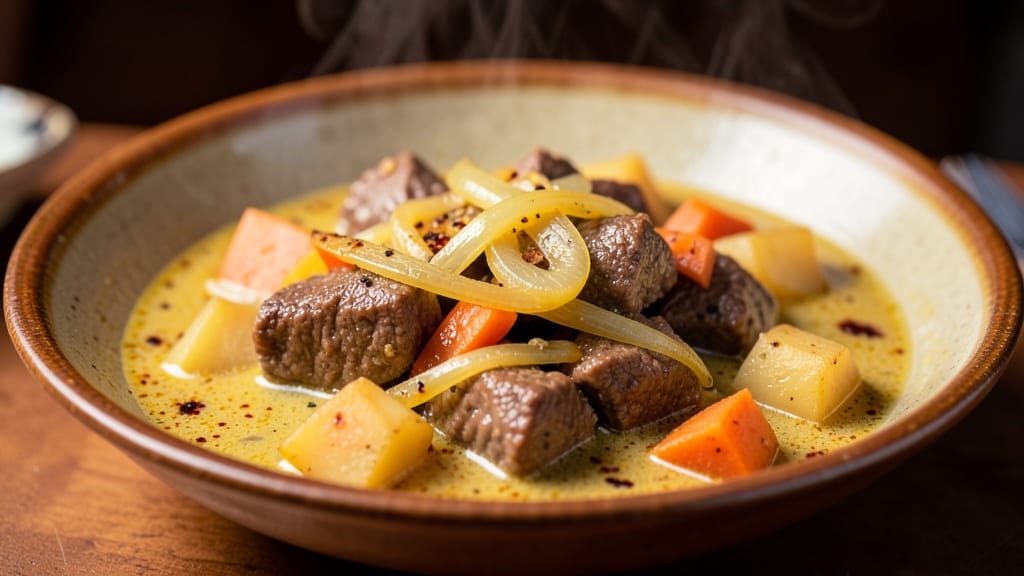
This Batangas beef caldereta recipe delivers the rich, tangy-sweet stew that defines Filipino comfort food—where tender beef simmers in coconut milk, vinegar, and aromatic spices until every bite is velvety and deeply flavorful.
The secret lies in slow cooking, which transforms tough cuts like chuck or short ribs into melt-in-your-mouth perfection while blending the sharpness of vinegar with the creaminess of coconut.
What sets this version apart is the inclusion of local Batangas touches, like laurel leaves and annatto, which add earthy depth and a signature golden hue.
The dish begins with searing beef to develop a deep, caramelized crust before deglazing with vinegar and coconut milk—a technique that builds layers of flavor as it simmers for hours. Potatoes, carrots, and eggplant absorb the rich sauce, becoming tender and infused with the stew’s complex profile.
Unlike other caldereta recipes, this version balances sweetness and acidity precisely, ensuring the sauce remains luscious without overpowering the beef’s natural richness.
By the time it’s done, you’ll have a stew that’s hearty enough for a family dinner but elegant enough for gatherings—served with steamed rice to soak up every last drop of that aromatic sauce.
The slow simmer not only tenderizes the beef but also allows the spices to meld into a cohesive, restaurant-quality dish. This is the kind of meal that tastes even better the next day, as flavors deepen and the sauce thickens into a velvety embrace.
Ready to master this Filipino classic? The process is straightforward but requires patience—each step, from searing the beef to reducing the sauce, is essential for achieving that signature Batangas richness. Let’s get started on creating a stew that’s as comforting as it is unforgettable.
Ingredients for batangas beef caldereta
Sixteen ingredients transform tough beef into velvety, aromatic stew perfection through slow simmering.
| Ingredient | Amount | Notes |
|---|---|---|
| Beef Chuck Roast 🥩 | 3 lb | Cut into 1.5-inch cubes |
| Coconut Milk 🥥 | 2 cans | Full-fat, 13.5 oz each |
| White Vinegar 💧 | ½ cup | Distilled preferred |
| Bay Leaves 🌿 | 4 whole | Dried, standard size |
| Laurel Leaves 🌿 | 4 pieces | Fresh or dried |
| Annatto Seeds 🌶️ | 1 tbsp | Ground for color |
| Yellow Onions 🧅 | 2 whole | Sliced into wedges |
| Garlic Cloves 🧄 | 8 cloves | Minced finely |
| Russet Potatoes 🥔 | 2 lbs | Cut into 2-inch chunks |
| Carrots 🥕 | 4 whole | Cut into 2-inch pieces |
| Eggplant 🍆 | 1 lb | Cut into 1-inch cubes |
| Tomato Paste 🍅 | 2 tbsp | Smooth, no sugar added |
| Ground Black Pepper 🌶️ | 1 tsp | Freshly cracked |
| Salt 🧂 | 2 tsp | Kosher or sea salt |
| Olive Oil 🫒 | ¼ cup | Extra-virgin preferred |
| Sugar 🍚 | 1 tbsp | White granulated |
The beef is the heart of this dish—chuck roast delivers the best texture when cut into even cubes. Look for well-marbled cuts at local butcher shops or the meat department at Whole Foods for optimal quality. If you can't find chuck, short ribs or brisket work well too, but increase simmering time by 30 minutes. The coconut milk should be full-fat for richness; Thai Kitchen or Goya brands are reliable. Laurel leaves and annatto seeds might require a special trip to an Asian market—if unavailable, omit annatto (the stew will still taste amazing) but keep the laurel leaves for depth. Fresh laurel leaves are ideal, but dried work in a pinch at half the quantity.
No coconut milk? Heavy cream or evaporated milk can substitute in a bind, though the flavor will differ slightly. Running short on vinegar? Lemon juice or apple cider vinegar both work, but adjust to taste—the vinegar's acidity balances the richness. The eggplant can be swapped for zucchini if preferred, though it won't absorb the sauce as well. For extra sweetness, add 1 extra tablespoon of sugar if your vinegar is particularly sharp. The tomato paste is non-negotiable for that umami depth—Trader Joe's or Mutti brands are excellent choices. If you're using dried bay leaves, crush them lightly between your fingers before adding to release their aroma. The sugar might seem odd, but it rounds out the acidity beautifully—don't skip it.
This stew tastes even better the next day as flavors meld. Store in an airtight container in the fridge for up to 5 days, or freeze portions for 3 months. The sauce thickens as it cools, so add a splash of water or coconut milk when reheating. For meal prep, double the recipe and freeze half—just thaw overnight in the fridge before reheating. The beef will be fork-tender, and the vegetables will soak up all that rich, tangy sauce. Serve with steamed white rice to soak up every last drop of that velvety goodness.
Why You'll Love This Recipe
- One-Pot Magic: I swear by this recipe when I’m too tired to dirty a million dishes. The beef chucks away in the same pot where everything simmers—no chopping, no fuss—just a deep, rich sauce that tastes like it bubbled all day.
- Tangy-Creamy Balance: That vinegar splash cuts through the coconut milk’s richness in the best way. It’s not sweet, not bland—it’s got a bright, almost funky depth that makes every bite feel special, like a hug from my abuela’s kitchen.
- Leftovers That Beg for More: This stew only gets better the next day. The beef falls apart tender, the sauce thickens just right, and I’ve caught myself reheating it three times because it’s that good—no sad, dry reheats here.
- Budget-Friendly Crowd-Pleaser: A single chuck roast feeds my whole family (and sometimes the neighbors). The coconut milk and vinegar stretch the flavor without breaking the bank, and honestly? It’s the kind of meal that makes people ask for seconds before they’ve even finished their first plate.
Step-by-step instructions for Batangas beef caldereta
This rich, slow-simmered dish transforms humble ingredients into a deeply flavorful stew.
Sear the Beef and Build the Base
Heat the 0.25 cup olive oil in a large Dutch oven over medium-high heat until shimmering. Add the 3 lb beef chuck roast cut into 1.5-inch cubes, working in batches if needed, and sear until deeply browned on all sides—about 4-5 minutes per batch. This step develops the deep, caramelized flavor that forms the foundation of the dish.
Remove the beef and set aside. In the same pot, add the 2 whole yellow onions sliced into wedges and cook for 5 minutes until softened and beginning to caramelize. Stir in the 8 cloves garlic cloves and cook for 30 seconds until fragrant. Be careful not to burn the garlic—it should smell sweet and nutty, not bitter.
Develop the Vinegar-Coconut Sauce
Reduce the heat to medium-low and add the 2 tbsp tomato paste, stirring to coat the onions and garlic. Cook for 2 minutes until the tomato paste darkens slightly. Pour in the 0.5 cup white vinegar and scrape up any browned bits from the bottom of the pot—this is where the flavor concentrates.
Add the 2 cans coconut milk, stirring well to combine. Bring the mixture to a gentle simmer, then add the 4 whole bay leaves, 4 pieces laurel leaves, 1 tbsp annatto seeds, 1 tbsp sugar, 2 tsp salt, and 1 tsp ground black pepper. Return the beef to the pot, ensuring it's fully submerged in the liquid. The annatto seeds will infuse the dish with its signature golden color as it simmers.
Simmer the Vegetables
Add the 2 lbs russet potatoes cut into 2-inch chunks, 4 whole carrots cut into 2-inch pieces, and 1 lb eggplant cut into 1-inch cubes. Bring the mixture to a gentle boil, then reduce the heat to low and cover partially. Let it simmer for 45-50 minutes, stirring occasionally, until the beef is tender and the vegetables are fork-tender.
During this time, the flavors will meld beautifully—the vinegar will mellow, the coconut milk will thicken slightly, and the annatto will deepen in color. The potatoes and carrots should be soft enough to pierce easily with a fork, but still hold their shape. If the liquid reduces too much, add ½ cup water to maintain the proper consistency.
Finish and Adjust Seasoning
Once the beef and vegetables are tender, remove the bay leaves and laurel leaves. Taste the stew and adjust the seasoning if needed—add more salt if it's bland, or a splash of vinegar if it needs more tang. The dish should balance rich, sweet, and slightly sour flavors with a touch of earthy eggplant and tender beef.
Let the caldereta sit off the heat for 5 minutes to allow the flavors to settle. Serve hot with steamed rice, ensuring each spoonful delivers the perfect harmony of textures and flavors that make this dish a Batangas classic.
Pro Tips For Making Batangas Beef Caldereta
- Sear the Beef First: Don’t skip browning that chuck roast—high heat for 3-4 minutes per side until deep golden. I learned this the hard way: skipping the sear means flavor hiding in the sauce instead of coating every bite. Use a heavy pot and don’t crowd the meat, or you’ll steam it instead of crisp it.
- Deglaze with Vinegar Early: After searing, pour in ¼ cup white vinegar immediately while the pan’s still hot. This cuts through the fond and brightens the sauce before adding coconut milk—trust me, it makes a real difference. If you wait, you’ll just be scraping burnt bits later.
- Simmer Slow and Low: Once the coconut milk’s in, drop the heat to a bare simmer (tiny bubbles, not rolling). I used to rush it, and the sauce would split or turn greasy. Let it cook uncovered for 1.5–2 hours—patience here turns tough chuck into melt-in-your-mouth beef.
- Use Whole Spices, Not Ground: Toss in 2–3 whole bay leaves and 2 laurel leaves (yes, whole—no crushing). My grandmother swore by this, and she was right: whole spices infuse flavor without bitterness. Strain them out before serving, or you’ll get chewy surprises.
Health benefits of this dish
Protein Powerhouse
Batangas beef caldereta delivers high-quality protein from the 3 lbs of beef chuck roast, providing about 45 grams of protein per serving—ideal for muscle repair and satiety. The slow cooking process breaks down connective tissue, making the protein more bioavailable and easier to digest than raw beef.
This dish is perfect for post-workout meals or hearty family dinners where protein is a priority. 💪
Healthy Fats
The 2 cans of full-fat coconut milk add rich, medium-chain triglycerides (MCTs) that support brain function and provide sustained energy. Unlike processed fats, these healthy fats help reduce inflammation and improve cholesterol profiles when consumed as part of a balanced diet.
The vinegar in the recipe also contains acetic acid, which may help regulate blood sugar levels. 🥥
Fiber-Rich Vegetables
This recipe includes potatoes, carrots, and eggplant, all excellent sources of dietary fiber that aid digestion and promote gut health. The 2 lbs of russet potatoes provide 5 grams of fiber per serving, while the 4 carrots contribute 3 grams.
Eggplant adds 2 grams of fiber and is rich in antioxidants like nasunin, which protects cells from oxidative damage. 🥕
Antioxidant Boost
The annatto seeds and laurel leaves in this dish aren't just for flavor—they're packed with antioxidants. Annatto contains bixin, a compound linked to reduced inflammation, while laurel leaves provide eugenol, which has antimicrobial properties. Together, they enhance the stew's nutritional profile while adding depth to the flavor. 🌿
Balanced Nutrition
With its combination of lean protein, healthy fats, and fiber-rich vegetables, this caldereta offers a balanced meal that keeps you full and energized. The vinegar and coconut milk also contribute vitamin C and B vitamins, supporting immune function and metabolism.
It's a comforting dish that doesn't compromise on nutrition—perfect for anyone looking for hearty, wholesome meals. ✨
Nutrition facts
Frequently asked questions
Can I substitute chuck roast with another beef cut?
Yes! For this recipe, you can use short ribs or brisket instead of chuck roast. Just increase the simmering time by 30 minutes to ensure the meat becomes tender. Tougher cuts like these actually benefit from the long cooking process, making them perfect for caldereta's rich, slow-simmered style.
Why does the recipe call for vinegar and sugar together?
The vinegar adds tangy brightness while the sugar balances its sharpness, creating a harmonious sweet-sour profile. This combination is classic in Filipino stews—it prevents the dish from tasting overly acidic while enhancing the umami depth from the beef and coconut milk. Think of it like a flavor bridge that makes every bite more complex.
How do I know when the beef is fully tender?
The beef should easily pull apart with a fork and feel soft when pressed with tongs. For chuck roast, this typically takes 45-50 minutes of simmering after adding vegetables. If using tougher cuts like short ribs, check at 1 hour—they'll need that extra time to break down completely.
Can I make this recipe in a slow cooker?
Brown the beef first in a skillet, then transfer everything to your slow cooker. Cook on low for 6-7 hours or high for 4-5 hours until the beef is fork-tender. The slow cooker's gentle heat will develop the flavors beautifully while keeping the vegetables intact. Just add a splash of water if the sauce gets too thick.
What if I can't find annatto seeds?
Don't worry—the stew will still taste amazing! Annatto adds color and subtle flavor, but it's not essential. If you want to replicate the golden hue, try ½ teaspoon of turmeric (though it has a different taste) or simply omit it. The dish's rich coconut and vinegar flavors will shine through.