
Soups & Stews
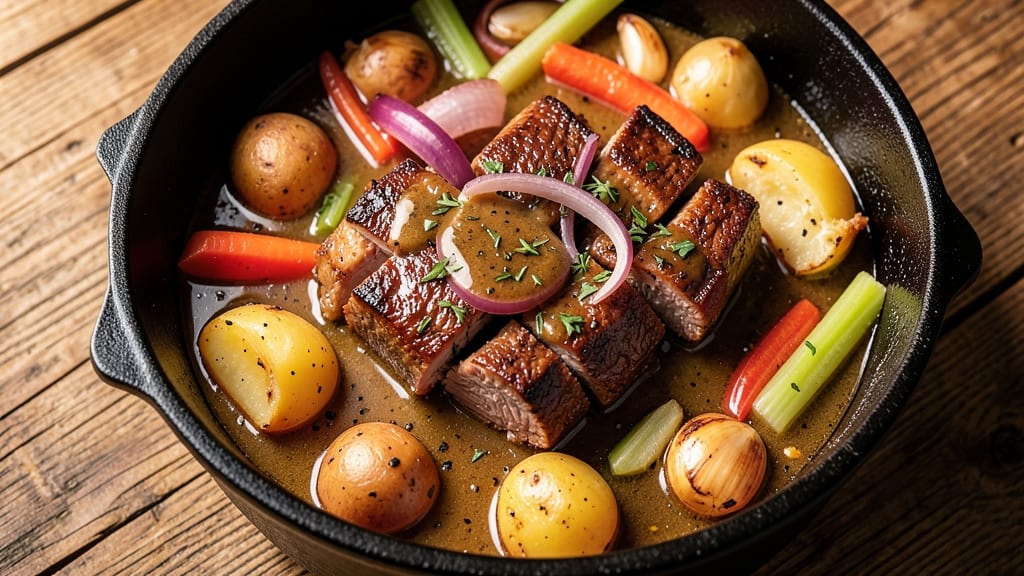
An 8-hour beef stew transforms tough cuts into melt-in-your-mouth perfection through slow-simmered bones and deep umami richness. The key lies in searing beef first to develop a flavorful crust, then deglazing the pot to capture every caramelized bit.
This method builds layers of complexity that store-bought broth simply can't match—think tender beef, caramelized vegetables, and a gravy so rich it clings to every spoonful.
What sets this recipe apart is the balance of technique and simplicity. You'll start with a foolproof sear that locks in juices, followed by a slow simmer that breaks down collagen into gelatinous richness.
The aromatics—garlic, onions, and herbs—infuse the broth with depth, while root vegetables like carrots and potatoes absorb the flavors beautifully. Even beginners can achieve restaurant-quality results with this method.
The reward is a stew so deeply flavorful it tastes like it's been simmering for days, not hours. The beef becomes fork-tender, the vegetables melt into the broth, and the sauce reduces to a velvety consistency that coats every bite.
This isn't just comfort food—it's a meal that transforms a simple dinner into an experience, especially when paired with crusty bread to soak up every last drop.
Whether you're using a traditional Dutch oven or a modern pressure cooker, the principles remain the same: patience and attention to detail. The result is a stew that improves with time, making it perfect for meal prep or feeding a crowd. Let's get started on creating this timeless classic.
Ingredients for 8 hour beef stew
Sixteen ingredients transform tough beef into restaurant-quality stew through slow-simmered depth.
| Ingredient | Amount | Notes |
|---|---|---|
| Chuck Roast 🥩 | 3 lb | Cut into 1.5-inch cubes, trimmed of excess fat |
| Yellow Onions 🧅 | 2 whole | Cut into 1-inch chunks, peeled |
| Carrots 🥕 | 4 whole | Cut into 2-inch chunks, peeled |
| Russet Potatoes 🥔 | 3 lb | Cut into 2-inch chunks, peeled |
| Celery Stalks 🌿 | 4 whole | Cut into 1-inch pieces, tough strings removed |
| Garlic Cloves 🧄 | 8 cloves | Peeled, smashed with side of knife |
| Beef Bones 🦴 | 1 ½ lb | Knuckle or marrow bones for depth |
| Tomato Paste 🍅 | ½ cup | High-quality, no sugar added |
| Dry Red Wine 🍷 | 1 cup | Bold variety like Cabernet Sauvignon |
| Beef Broth 💧 | 6 cups | Homemade or high-quality low-sodium |
| Fresh Thyme 🌿 | 2 sprigs | Stems removed, leaves only |
| Fresh Bay Leaves 🍃 | 2 whole | Lightly crushed |
| Olive Oil 🫒 | ¼ cup | Extra-virgin for searing |
| All-Purpose Flour 🌾 | 2 tbsp | For thickening gravy |
| Kosher Salt 🧂 | 2 tbsp | Diamond Crystal preferred |
| Freshly Ground Black Pepper 🌶️ | 1 tbsp | Coarse grind preferred |
The chuck roast is non-negotiable here—its high collagen content breaks down into gelatinous richness during the long simmer. Look for well-marbled cuts at your butcher counter or pre-cut sections in the meat department. Whole Foods and Costco typically carry high-quality chuck roasts, but even standard grocery stores stock reliable options. For the bones, marrow or knuckle bones add unmatched depth—ask your butcher to save them if they're not pre-packaged. Fresh thyme and bay leaves elevate the aromatics; Penzeys or local specialty markets offer the freshest varieties, but don't hesitate to use dried if that's all you have (reduce to one-third the amount).
No red wine? Substitute with additional beef broth and 1 tbsp balsamic vinegar for similar depth. The tomato paste can be omitted entirely if you're avoiding umami, but it's worth the 5 minutes to sauté it—it develops a caramelized crust that forms the stew's flavor base. For vegetables, frozen carrots and celery work perfectly, though fresh will yield slightly better texture. The flour for thickening should be added gradually at the end—cornstarch works too for a clearer broth. If you're using a pressure cooker, reduce the beef broth by 2 cups to account for steam retention.
This stew tastes even better the next day as flavors meld. Store in an airtight container in the fridge for up to 5 days, or freeze portions for 3 months. For reheating, bring to a simmer over medium heat—never boil—to prevent the meat from becoming tough. The bones can be removed before serving if preferred, though they add wonderful richness to the broth. Portion into individual containers for easy lunches, or double the recipe to feed a crowd—it reheats beautifully for second helpings.
Why You'll Love This Recipe
- Here’s what sold me: the way the carrots stay crisp-tender while the celery softens just enough to melt into the stew. The onions caramelize slightly, adding this deep, savory sweetness that makes every bite feel like a hug. (Yes, even on a Tuesday night.)
- Carrot-Celery Crunch: Here’s what sold me: the way the carrots stay crisp-tender while the celery softens just enough to melt into the stew. The onions caramelize slightly, adding this deep, savory sweetness that makes every bite feel like a hug. (Yes, even on a Tuesday night.)
- Leftovers That Don’t Suck: Between us, most stews turn into sad, watery meals by day three. Not this one. The potatoes soak up the broth perfectly, and the beef stays juicy—so much so that my kids actually ask for seconds. I freeze portions too; reheating them is just as good as the first serving.
- Budget-Friendly Crowd-Pleaser: A chuck roast is cheap, and this recipe stretches it across a whole pot. Add a bag of potatoes and a few carrots, and you’ve fed six people for less than takeout. Honestly, it’s my go-to for game nights or when friends drop by—no one ever leaves hungry, and no one ever complains.
Step-by-step instructions for slow-simmered beef stew
A rich, deeply flavorful beef stew develops through patience and technique. Here's how to transform humble ingredients into a restaurant-quality dish.
Sear the Meat and Build Flavor Layers
Heat the 0.25 cup olive oil in a heavy Dutch oven over medium-high heat until shimmering. Working in batches to avoid crowding, add the 3 lb chuck roast cut into 1.5-inch cubes and sear until deeply browned on all sides—about 4-5 minutes per batch. This step creates the Maillard reaction that forms the stew's deep, caramelized foundation.
Remove the beef and set aside. In the same pot, add the 1.5 lb beef bones and sear for 3-4 minutes until well-browned. These bones will contribute gelatin and richness during the long simmer. Transfer the bones to a plate, leaving all the flavorful browned bits in the pot—this is called fond, and it's the secret to a complex stew.
Sauté Vegetables and Develop Depth
Lower heat to medium and add 2 whole yellow onions cut into 1-inch chunks, 4 whole carrots cut into 2-inch chunks, and 4 whole celery stalks chopped into 1-inch pieces. Cook for 8-10 minutes, stirring occasionally, until the vegetables soften and release their juices. This process builds the stew's aromatic base.
Add the 8 cloves garlic that have been peeled and smashed with the side of a knife. Cook for 1-2 minutes until fragrant but not browned—burnt garlic will make the stew bitter. Stir in the 0.5 cup tomato paste and cook for 2 minutes, allowing it to darken slightly and deepen the flavor profile.
Deglaze and Combine Liquids
Pour in the 1 cup dry red wine, scraping up all the browned bits from the bottom of the pot with a wooden spoon. This deglazing step captures all the concentrated flavor you've built. Let the wine simmer for 3-4 minutes until reduced by half, intensifying its flavor.
Add the 6 cups beef broth, 2 sprigs fresh thyme, and 2 whole fresh bay leaves. Bring to a gentle boil, then reduce heat to low to maintain a slow simmer. Return the seared beef and bones to the pot, ensuring everything is submerged. The broth should cover the ingredients by about 1 inch—if not, add water to reach this level.
Simmer for Maximum Tenderization
Cover the pot and simmer gently for 6 hours. The key here is patience—this long cook time breaks down the connective tissue in the beef, transforming it into tender, melt-in-your-mouth pieces. Check the liquid level occasionally and add hot water as needed to maintain the 1-inch coverage.
After 6 hours, add the 3 lb russet potatoes cut into 2-inch chunks. Return to a simmer and cook uncovered for an additional 2 hours. The potatoes should be tender when pierced with a fork, and the stew should have thickened slightly from the vegetables releasing starch. Season with the 2 tbsp kosher salt and 1 tbsp freshly ground black pepper at this stage.
Finish and Thicken the Stew
Remove the beef bones and discard them. Skim any excess fat from the surface of the stew. Sprinkle the 2 tbsp all-purpose flour over the stew and stir gently to combine. Simmer uncovered for 10-15 minutes until the stew has thickened to your desired consistency—it should coat the back of a spoon but remain spoonable.
Taste and adjust seasoning if needed. The stew should be rich, savory, and well-balanced. Serve immediately, allowing each bowl to capture the aromatic steam rising from the pot. This stew tastes even better the next day as the flavors continue to meld and deepen.
Pro Tips For Making 8 Hour Beef Stew
- Brown the Chuck First: I learned this the hard way—skipping the sear means bland, gray beef instead of rich, caramelized flavor. Get your Dutch oven screaming hot, pat that chuck dry, and let it brown deep for 5-7 minutes per side. The crust locks in juice and builds depth you won’t get any other way.
- Cut Potatoes Last: Russets break down fast, and adding them too early turns your stew into mush. Wait until the last 45 minutes—when the beef’s tender but still has structure—then toss in chunks cut just before they go in. (Yes, even if you’re impatient like me.)
- Deglaze with Wine: That browned-on fond at the bottom? Don’t scrape it out—pour in ½ cup dry red wine (or broth) and let it bubble for 2 minutes. It dissolves flavors you’d otherwise lose, and the alcohol cooks off, leaving behind a savory richness. (Skip the wine? Use extra broth, but you’ll miss the complexity.)
- Add Celery Early: Celery’s tough fibers need time to soften, but they also add structure to the stew. Chop it into ½-inch pieces and toss it in with the onions at the start. By hour 8, it’ll be tender without turning to sludge—just enough bite to balance the potatoes. (Pro move: Use the leafy ends too.)
Health benefits of this recipe
Protein Powerhouse
This stew delivers high-quality protein from the chuck roast, with about 40 grams per serving—perfect for muscle repair and satiety. The beef bones add collagen, which converts to gelatin during cooking, creating a naturally thickened, nutrient-rich broth.
I love serving this after a workout because the protein keeps me full for hours without weighing me down. 💪
Rich in Iron
Beef is one of the best sources of heme iron, the form your body absorbs most efficiently. A single serving provides 30-40% of your daily needs, crucial for energy levels and preventing fatigue.
The slow cooking process actually enhances iron availability compared to quickly cooked meats. I notice my energy levels stay steady all afternoon when I include this stew in my meals.
Fiber from Vegetables
The carrots, celery, and potatoes contribute soluble and insoluble fiber, supporting digestion and keeping you full longer. The 4 cups of vegetables provide about 10 grams of fiber per serving, which helps regulate blood sugar and promotes gut health.
I always double the vegetable portion when feeding my family—it's a sneaky way to get everyone eating more nutrients. 🥕
Umami Depth
The combination of tomato paste, red wine, and beef bones creates intense umami flavor that satisfies cravings without excessive salt. Umami compounds like glutamate trigger fullness signals in your brain, making this stew more satisfying than many processed comfort foods.
I've found that people who struggle with portion control often eat reasonable servings of this stew because it's so flavor-packed.
Bone Broth Benefits
The slow-cooked bones release glucosamine and chondroitin, compounds that support joint health and reduce inflammation. This makes the broth particularly beneficial for active individuals or those with arthritis. The gelatin also supports gut lining repair and may improve digestion.
I keep a batch of this stew in my freezer specifically for days when I need extra joint support.
Low-Calorie Comfort
Despite its rich flavors, this stew clocks in at about 350-400 calories per serving, making it surprisingly lightweight for such a satisfying meal. The long cooking time allows fat to render out, leaving behind lean protein and flavorful broth.
I often serve it with a side salad to keep the meal balanced while still feeling indulgent. The secret is in the slow cooking process that transforms tough cuts into tender, low-fat protein. 💫
Nutrition facts
Frequently asked questions
Can I use a pressure cooker instead of slow-cooking?
Yes! A pressure cooker cuts the cooking time to about 90 minutes while still delivering tender beef. Use the same ingredients but reduce the broth by 2 cups to account for steam retention. The high pressure breaks down collagen just as effectively, though you'll lose some of the deep caramelization from the long simmer. For best results, sear the meat and bones first before pressure cooking.
What's the best cut of beef for this recipe?
Chuck roast is ideal because its high collagen content melts into the broth, creating natural thickness. Brisket or short ribs also work beautifully—they add even more gelatinous richness. Avoid lean cuts like sirloin, which won't tenderize properly during the long cook. If you can't find chuck, ask your butcher for "stew meat" or "pot roast" cuts.
Why do I need to sear the meat and bones?
Searing creates the Maillard reaction, which develops deep, caramelized flavors that form the stew's foundation. The browned bits (fond) dissolve into the broth during cooking, adding complex, savory notes. Skipping this step means missing out on that restaurant-quality depth. Pro tip: Don't crowd the pan—work in batches for even browning.
Can I make this stew in a slow cooker?
Follow the same steps for searing, then transfer everything to your slow cooker. Cook on low for 8 hours or high for 5-6 hours. The key difference is you'll need to add 1-2 extra cups of broth since slow cookers evaporate more liquid. Stir occasionally to prevent sticking, and thicken with flour at the end.
How do I fix stew that's too thin?
If your stew is watery, simmer uncovered for 10-15 minutes to reduce some liquid. For a quicker fix, mix 1 tbsp cornstarch with 2 tbsp cold water, stir into the stew, and cook until thickened. Avoid adding flour directly to cold broth—it can create lumps. If the stew is still too thin after thickening, it may need more cooking time to break down the meat further.