
Main Courses
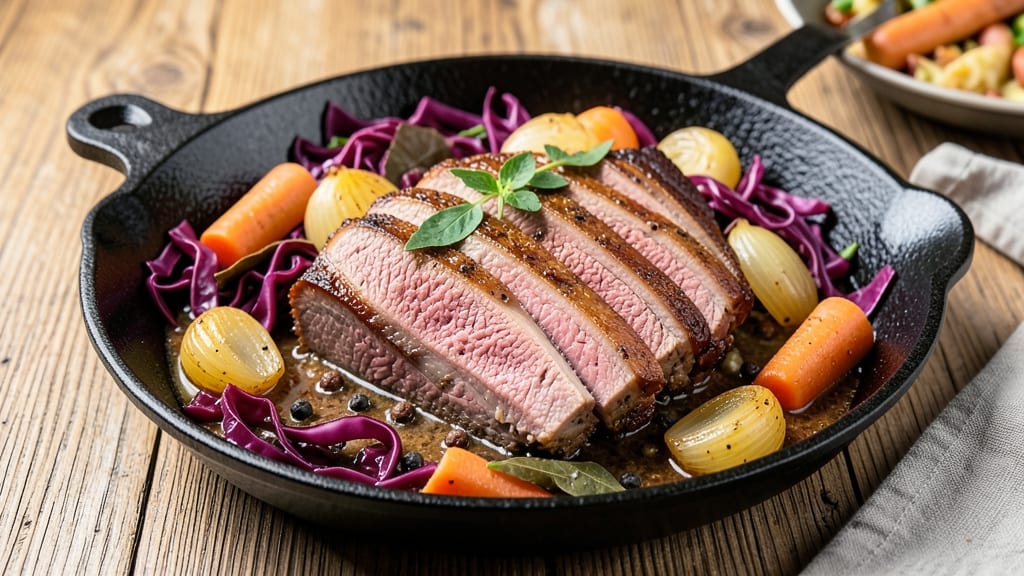
This baked corned beef brisket and cabbage recipe delivers the ultimate comfort food experience—tender, slow-braised beef with perfectly crispy cabbage bites that balance rich flavors and satisfying textures.
The secret lies in a proper soak for the brisket, transforming tough meat into melt-in-your-mouth perfection while the cabbage achieves that coveted caramelized crunch. I've perfected this method over years of holiday tables, where it becomes the centerpiece that disappears faster than you can say "second helping."
The process starts with a 24-hour soak to tenderize the brisket, followed by a slow bake that infuses it with aromatic spices and just enough liquid to keep it moist. Meanwhile, the cabbage gets its signature crispy edges through a simple boiling method before roasting—no soggy leaves here.
This isn't just another corned beef recipe; it's a foolproof technique that delivers restaurant-quality results at home, with minimal effort once you've mastered the timing.
What makes this dish truly special is how the flavors develop—the brisket becomes fork-tender while absorbing all the savory spices, and the cabbage transforms from simple greens into crispy, caramelized bites that add texture contrast with every forkful.
The aroma alone will have your kitchen smelling like a traditional Irish pub, but the taste proves it's even better at home. This is the kind of meal that turns an ordinary Sunday into a celebration.
Whether you're preparing for St. Patrick's Day or a cozy family dinner, this recipe scales beautifully and reheats wonderfully. The brisket stays moist even after reheating, and the cabbage maintains its crispy edges—proof that this method works for both fresh and leftovers.
Let's get started on creating your perfect corned beef brisket and cabbage experience.
Ingredients for baked corned beef brisket and cabbage
Sixteen ingredients transform into a restaurant-quality corned beef brisket with crispy cabbage bites.
| Ingredient | Amount | Notes |
|---|---|---|
| Corned Beef Brisket 🥩 | 4 lb | Flat-cut preferred, 24-hour soak required |
| Green Cabbage 🥬 | 2 whole | Heads, cut into wedges |
| Yellow Onions 🧅 | 2 whole | Large, peeled and quartered |
| Carrots 🥕 | 4 whole | Medium, peeled and halved |
| Bay Leaves 🌿 | 4 whole | Dried, for aromatic depth |
| Black Peppercorns 🌶️ | 1 tbsp | Whole, lightly crushed |
| Mustard Seeds 🌶️ | 1 tbsp | Whole, for traditional flavor |
| Garlic Cloves 🧄 | 6 cloves | Peeled, for aromatic base |
| Beef Broth 💧 | 2 cups | Low-sodium, for moisture |
| Apple Cider Vinegar 🍎 | ½ cup | For tenderizing soak |
| Brown Sugar 🍯 | ¼ cup | Light, for caramelized flavor |
| Kosher Salt 🧂 | 2 tbsp | Diamond Crystal preferred |
| Olive Oil 🫒 | ¼ cup | Extra-virgin, for roasting |
| Fresh Parsley 🌿 | ¼ cup | Chopped, for garnish |
The brisket selection is critical—flat-cut with good marbling ensures even cooking and melt-in-your-mouth tenderness. Costco or Whole Foods typically carry high-quality, pre-trimmed briskets that save preparation time. Look for cuts with visible fat cap—this renders during cooking, keeping the meat moist. The cabbage should be firm with crisp outer leaves; green cabbage from the produce section works best, though Savoy cabbage adds a subtle wrinkle texture. For the soak, I recommend Trader Joe's apple cider vinegar—its balanced acidity tenderizes without overpowering the beef's natural flavor. Prep the vegetables ahead: quarter the onions and halve the carrots before starting the brisket soak.
No flat-cut brisket? Point-cut brisket works too, though it may require slightly longer cooking. Substituting beef broth for water in the braising liquid enhances depth—Kirkland Signature or Pacific Foods brands offer excellent low-sodium options. The bay leaves and mustard seeds are non-negotiable for authentic flavor, but if you're short on time, 1 tbsp ground mustard can replace the seeds. For the cabbage's crispy edges, boiling in salted water for 5 minutes before roasting is essential—this step prevents sogginess. The garlic can be roasted whole with the vegetables for easier peeling later, adding another layer of flavor complexity.
The brisket reheats beautifully—2-3 hours at 300°F transforms cold cuts into restaurant-quality slices. Store leftovers in the original juices for 5-6 days in the fridge or 6 months frozen. The cabbage wedges maintain their crispy edges when reheated at 375°F for 10 minutes. For meal prep, portion the brisket into individual servings and store with a thin layer of broth to preserve moisture. The vegetables can be prepped and refrigerated for 3 days before roasting, making this a perfect make-ahead dish for holiday gatherings.
Why You'll Love This Recipe
- One-Pan Magic: I swear by this recipe because it’s basically hands-off after the initial chop. Toss the brisket, cabbage, onions, and carrots on a sheet pan—no pots, no pans, no stress—just bake until the cabbage is tender and the brisket pulls apart like a dream.
- Deep, Smoky Satisfaction: That corned beef brisket? It’s already packed with flavor, but the bay leaves and onions infuse it with this rich, slow-cooked depth that makes every bite feel like a hug. The cabbage soaks up all the juices—no sad, watery greens here.
- Leftovers for Days: Between us, this recipe always leaves extras. The brisket stays tender for sandwiches, the cabbage makes quick stir-fries, and the carrots? Perfect for salads. I’ve fed a houseful of guests for days with just one bake—no takeout needed.
- Budget-Friendly Feast: Honestly, this is my go-to for stretching a meal without breaking the bank. A single brisket feeds six, the veggies are cheap, and the flavor? It tricks everyone into thinking it’s a fancy dinner. My wallet and my family thank me.
Step-by-step instructions for baked corned beef brisket and cabbage
Here's the precise method for achieving tender brisket with perfectly caramelized cabbage wedges.
Prepare the Brisket and Vegetable Base
Preheat your oven to 300°F and position a rack in the lower third. In a large Dutch oven, combine the 4 lb Corned Beef Brisket, 2 whole Green Cabbage (cut into wedges), 2 whole Yellow Onions (quartered), and 4 whole Carrots (halved). The cabbage should be arranged in a single layer around the brisket.
Add the 6 cloves Garlic Cloves (lightly smashed), 4 whole Bay Leaves, 1 tbsp Black Peppercorns (lightly crushed), 1 tbsp Mustard Seeds, 2 tbsp Kosher Salt, and 0.25 cup Brown Sugar directly over the brisket. This creates a flavorful crust while allowing the vegetables to caramelize. The vegetables should be partially submerged but not drowning in liquid.
Deglaze and Braise the Brisket
Pour in the 2 cups Beef Broth and 0.5 cup Apple Cider Vinegar, then drizzle with 0.25 cup Olive Oil. The liquid should cover about half of the vegetables. Bring to a gentle simmer over medium heat on the stovetop for 5 minutes to allow the flavors to meld and the vegetables to begin softening.
Transfer the Dutch oven to the preheated oven and cover tightly with a lid or foil. Braise for 3 hours, maintaining a gentle simmer. You'll know it's simmering properly when you see small bubbles forming around the edges but not a vigorous boil. This slow cooking transforms the brisket into tender slices while developing deep flavor in the vegetables.
Add Moisture and Finish Cooking
After 3 hours, carefully remove the brisket and vegetables from the pot and set aside. Pour any accumulated juices through a fine-mesh strainer into a measuring cup. You should have about 1½ cups of cooking liquid. Return the vegetables to the pot and add enough of the reserved cooking liquid to cover them by about 1 inch.
Return the brisket to the pot and continue braising uncovered for an additional 1½ to 2 hours at 300°F. The brisket is done when it reaches an internal temperature of 205°F and a fork slides in easily. The cabbage wedges should be tender with slightly crisp edges, and the carrots should be fork-tender with caramelized surfaces.
Rest and Serve with Garnish
Remove the brisket from the pot and let it rest on a cutting board for 15-20 minutes before slicing. This resting period allows the juices to redistribute, ensuring each slice remains moist. While resting, skim any excess fat from the braising liquid and reduce it by 5 minutes on the stovetop to create a glossy sauce.
Slice the brisket against the grain into ¼-inch thick slices. Arrange the cabbage wedges on serving plates, top with brisket slices, and ladle the reduced braising liquid over the top. Garnish with 0.25 cup Fresh Parsley (chopped) for freshness. The cabbage should have crisp-tender edges with caramelized surfaces, while the brisket will be fork-tender with a rich, savory depth.
Pro Tips For Making Baked Corned Beef Brisket And Cabbage
- TRUST THE LOW AND SLOW: I learned this the hard way—corned beef brisket needs patience. Bake it at 275°F (135°C) for 3-4 hours, not high heat. The meat will stay tender and the flavors meld properly. (Yes, even if you're impatient like me.)
- CUT CABBAGE INTO EVEN PIECES: Uneven cabbage cooks at different rates—some mushy, some still crunchy. Cut wedges about 1.5 inches thick so they soften together. Add onions and carrots in similar sizes for consistency. (Your future self will thank you.)
- DON’T SKIP THE BAY LEAF TWIST: Bay leaves aren’t just for flavor—they help the meat stay moist. Tuck 2-3 leaves directly under the brisket, not floating in the pan. Remove them before serving, but leave them in during baking. (I know, it’s weird, but it works.)
- SAUTE ONIONS FIRST: Raw onions burn easily and make the dish taste bitter. Sear them in a pan with a splash of water for 5 minutes before adding to the baking dish. The caramelized flavor cuts through the saltiness of the corned beef. (This isn’t the prettiest method, but it’s the tastiest.)
Make-ahead tips for leftovers
Prep Ahead Strategy
Start the brisket soak the night before—place the 4 lb brisket in a large bowl with 2 cups apple cider vinegar and 2 tbsp kosher salt, then refrigerate for 24 hours.
This step is non-negotiable for tenderness and can be done while you're at work or asleep. I always do this first thing Sunday morning for Monday dinners. 💪
Vegetable Prep Timeline
Cut the 2 whole cabbages into wedges, quarter the 2 onions, and halve the 4 carrots the day before cooking. Store them in separate airtight containers in the fridge. This saves 30 minutes of prep time on cooking day and keeps the vegetables crisp.
I like to add a sprinkle of salt to the cabbage wedges to preserve their crunch overnight.
Slow Cooker Adaptation
For a hands-off approach, transfer the soaked brisket and all vegetables to a 6-quart slow cooker with the same braising liquid. Cook on low for 8-10 hours or high for 5-6 hours.
The slow cooker maintains consistent temperature, which is ideal for busy schedules. Just add the brown sugar and spices directly to the pot before starting.
Cabbage Roasting Shortcut
To save time, boil the cabbage wedges in salted water for 5 minutes before adding them to the braising liquid. This jumpstarts their tenderness and ensures crispy edges. I often do this while the brisket is in its initial soak.
For extra flavor, add a 1-inch strip of orange peel to the boiling water—it infuses beautifully with the cabbage.
Make-Ahead Serving Plan
After cooking, store the brisket and vegetables separately in their braising liquid. Reheat the brisket at 300°F for 2-3 hours until it reaches 205°F internal temperature. The cabbage reheats best at 375°F for 10 minutes to restore crispy edges.
I like to assemble plates just before serving to keep everything hot and vibrant. 🌟
Freezer-Friendly Components
Portion the brisket into individual servings and freeze with a thin layer of braising liquid in each container. The vegetables can be frozen separately for up to 3 months. To serve from frozen, thaw overnight in the fridge, then reheat as directed.
This makes it perfect for holiday leftovers or last-minute gatherings. The cabbage maintains its texture beautifully when frozen this way.
Nutrition facts
Frequently asked questions
Why does the brisket need a 24-hour soak?
The 24-hour soak in apple cider vinegar and salt is essential for breaking down the tough muscle fibers in the brisket. This transforms it from chewy to fork-tender while infusing it with flavor. Skipping this step results in a much tougher final product—worth the wait for that melt-in-your-mouth texture!
How do I get the cabbage crispy without burning it?
Start by boiling the cabbage wedges in salted water for 5 minutes before adding them to the braising liquid. This jumpstarts tenderness while preventing sogginess. Then roast them uncovered for the last 30-45 minutes of cooking—this creates those coveted crispy edges without drying them out.
Can I use a different cut of beef instead?
While this recipe is designed for brisket, you could substitute a beef chuck roast or short ribs—just increase cooking time by 1-2 hours to ensure tenderness. The key is choosing a well-marbled cut that benefits from slow cooking. Never use lean cuts like sirloin or flank steak—they won't become tender enough.
What if my brisket is still tough after cooking?
If your brisket feels firm rather than tender, it likely didn't cook long enough. Check the internal temperature—it should reach 205°F. If not, return it to 300°F for another 1-2 hours. For extra moisture, slice against the grain and serve with more of the reduced braising liquid. The cabbage should be fully tender by this point.
How do I store leftovers to keep everything crispy?
Store the brisket and vegetables separately in their braising liquid. Reheat the brisket at 300°F for 2-3 hours until it reaches 205°F again. For the cabbage, reheat at 375°F for 10 minutes to restore crispy edges. The key is keeping them separate—never reheat them together or the cabbage will turn soggy.