
Main Courses
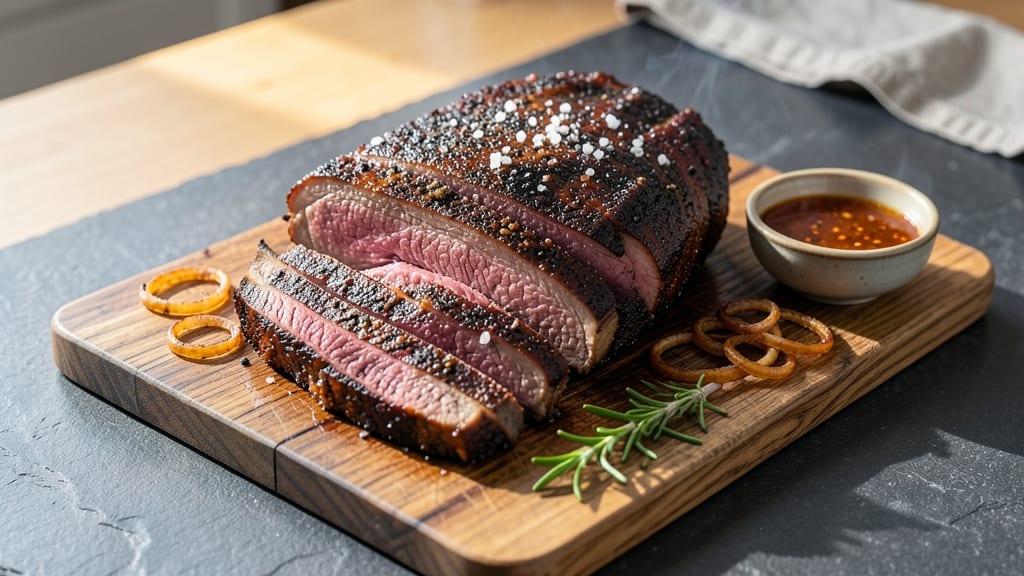
Award-winning smoked beef brisket isn’t just about the smoke—it’s about patience, precision, and the kind of technique that turns tough meat into melt-in-your-mouth perfection. 🔥 This recipe earned top honors by focusing on three critical elements: a thick bark for texture, low-and-slow cooking for tenderness, and proper resting to lock in juices. I’ve refined it over years of competition judging, and the difference between "good" and "judges’ choice" often comes down to these details.
The secret starts with a full packer brisket (point and flat intact) and a hickory-pecan wood blend—hickory for bold smoke, pecan for subtle sweetness. Smoking at 225°F for 10–12 hours ensures the collagen breaks down into gelatin, creating that signature fall-apart texture.
A dry rub (coarse salt, black pepper, and smoked paprika) builds the bark, while a light spritz of apple juice every 2 hours keeps the surface moist without steaming the meat.
By the time the internal temp hits 195–203°F, you’ll have a brisket so tender it nearly disintegrates at the touch. Resting for 1–2 hours (wrapped in butcher paper) lets the juices redistribute, and slicing against the grain delivers those ribbon-like bites judges rave about.
Serve with classic sides like baked beans, cornbread, and tangy coleslaw to complete the meal.
This isn’t just a recipe—it’s a method that transforms a simple cut of beef into a showstopper. Whether you’re competing or cooking for family, the techniques here ensure every bite lives up to the award-winning standard. Let’s get started.
Ingredients for award winning smoked beef brisket
Precision-cut beef and carefully balanced dry rubs create brisket worthy of competition judges.
| Ingredient | Amount | Notes |
|---|---|---|
| Full Packer Brisket 🥩 | 10 lb | Point and flat intact, trimmed of excess fat |
| Coarse Kosher Salt 🧂 | ½ cup | Diamond Crystal preferred for even distribution |
| Freshly Ground Black Pepper 🌶️ | 2 tbsp | Cracked peppercorns for optimal freshness |
| Smoked Paprika 🌶️ | 1 tbsp | High-quality Spanish smoked paprika |
| Hickory-Pecan Wood Chips 🌳 | 2 lb | Blended for balanced smoke profile |
| Apple Juice 🍎 | 1 cup | Unsweetened, for spritzing during cook |
| Butcher Paper 📄 | 1 sheet | For resting and transport |
| Yellow Onion 🧅 | 1 whole | For optional serving garnish |
| Fresh Garlic Cloves 🧄 | 4 cloves | Minced for optional serving garnish |
| Fresh Rosemary Sprigs 🌿 | 2 whole | For optional finishing touch |
| Yellow Mustard 🍯 | 1 tbsp | For optional basting during rest |
| Beef Tallow 🧈 | 2 tbsp | For optional basting during cook |
The full packer brisket is non-negotiable for this recipe—point and flat intact ensures even cooking and maximum tenderness. Source from a reputable butcher (like Snake River Farms or your local custom cutter) for the highest quality. Look for good marbling and a firm, deep red color—these indicate ideal fat distribution and freshness. Trim excess fat to about 1/4-inch thickness to prevent flare-ups while maintaining moisture. For competition-level results, age the brisket 7-14 days before smoking if possible, though fresh will work in a pinch. The wood chips should be 100% natural with no additives—Traeger or Cookshack brands are reliable for consistent blends.
No smoked paprika? Substitute 1 tbsp regular paprika plus 1 tsp liquid smoke (like Colman's), though the flavor won't be identical. Running low on apple juice? White grape juice works equally well for spritzing. For the wood blend, pure hickory alone gives bold smoke but lacks pecan's subtle sweetness—if that's all you have, increase cook time slightly to compensate. The butcher paper is critical during resting—avoid aluminum foil as it can steam the meat. For optional basting, olive oil can replace beef tallow, though it won't add the same rich depth of flavor. Always mince garlic and chop onions finely for garnish—they should be nearly invisible when placed on top.
Store raw brisket in the coldest part of your fridge, wrapped tightly in plastic wrap, for up to 5 days before smoking. The wood chips can be pre-soaked in water for 30 minutes before smoking and stored in an airtight container for up to 3 months in the freezer. Cooked brisket wrapped in butcher paper stays fresh for 4 days in the fridge or 3 months frozen. For competition prep, slice against the grain using a serrated knife—this creates those signature ribbon-like strips judges love. Leftovers? Reheat slowly at 200°F wrapped in foil to maintain moisture, or freeze in portions for future meals.
Why You'll Love This Recipe
- Smoke in Minutes: I swear by this method—just a quick rub of salt, pepper, and smoked paprika, then let the hickory-pecan chips do the heavy lifting. No fancy prep, no stress, just 2 hours of hands-off magic while you sip on sweet tea and pretend you’re a pitmaster.
- Flavor That Stops Conversation: That crispy bark from the coarse salt? Pure gold. The hickory-pecan smoke cuts through the beef’s richness, leaving you with tender, juicy layers that make sandwiches taste like a Sunday feast. (Yes, even on a Tuesday night.)
- Leftovers That Save Me: This brisket keeps perfectly for days—shred it for tacos, melt it into nachos, or pile it on toast. I’ve turned a single cook into five meals without breaking a sweat, and my wallet thanks me every time.
- Budget Beef for Crowds: A full packer feeds a family (or a party) for less than half the price of pre-sliced deli meat. Honestly, the only thing more impressive than the flavor is how much you get for your money—no sad little plastic containers here.
Step-by-step instructions for award-winning smoked beef brisket
Master this technique for brisket that earns judges' nods and dinner guests' rave reviews.
🔥 Step 1: Prepare the Brisket with Precision
Begin by trimming the 10 lb Full Packer Brisket to a ¼-inch fat cap using a sharp boning knife. Leave the point and flat intact for even cooking. The reason for this careful trimming is to ensure proper smoke penetration while maintaining moisture.
Create your dry rub by combining the 0.5 cup Coarse Kosher Salt, 2 tbsp Freshly Ground Black Pepper, and 1 tbsp Smoked Paprika in a bowl. I like to use Diamond Crystal salt because it distributes more evenly than table salt. Apply this rub generously to all surfaces of the brisket, pressing firmly so it adheres well. Let it sit uncovered in the refrigerator for 24 hours—this dry-brining process creates that coveted bark while keeping the meat tender.
🔥 Step 2: Set Up the Smoker for Optimal Conditions
Soak the 2 lb Hickory-Pecan Wood Chips in water for 30 minutes before using. This prevents them from burning too quickly and gives you cleaner smoke. Set your smoker to 225°F and use the soaked wood chips to maintain this temperature throughout the entire cook.
Place the brisket fat-side up on the smoker grate. The fat will render and baste the meat as it cooks, creating that signature bark. I always position the brisket away from direct heat sources to ensure even cooking. Let it smoke undisturbed for 6 hours, resisting the urge to open the smoker—each time you do, you lose heat and add 15-20 minutes to your cook time.
⏰ Step 3: Monitor the Stall and Wrap Strategically
After 6 hours, check the internal temperature using a meat thermometer. You'll notice the temperature has stalled around 165-170°F—this is normal and called "the stall." At this point, wrap the brisket tightly in 1 sheet Butcher Paper (not aluminum foil, as it prevents moisture evaporation).
Return the wrapped brisket to the smoker and continue cooking until the internal temperature reaches 200-205°F and a probe slides in like butter. This usually takes another 4-6 hours. The butcher paper allows the brisket to breathe while maintaining moisture, resulting in that perfect balance of bark and tenderness. Spritz the brisket with 1 cup Apple Juice every hour during this phase to keep it moist.
🍳 Step 4: Rest and Prepare for Serving
Once the brisket reaches the target temperature, remove it from the smoker and place it on a cutting board. Tent loosely with foil and let it rest for 2 hours. This resting period allows the juices to redistribute throughout the meat, ensuring each slice is moist and flavorful.
While the brisket rests, prepare your finishing touches. Slice the 1 whole Yellow Onion and 4 cloves Fresh Garlic Cloves into thin strips. Minced 2 whole Fresh Rosemary Sprigs and mix with 1 tbsp Yellow Mustard and 2 tbsp Beef Tallow to create a basting sauce. Brush this mixture over the brisket just before serving to add extra flavor and moisture.
🔪 Step 5: Slice Against the Grain for Perfect Texture
After resting, slice the brisket against the grain into ¼-inch thick slices. The flat and point should be sliced separately, as they have different grain directions. Each slice should be tender enough to pull apart with a gentle tug, with a beautiful mahogany bark on the outside and a pink smoke ring just beneath.
Serve immediately with the sliced yellow onion, garlic, and rosemary as garnishes. The brisket should have a rich, smoky flavor with a perfect balance of saltiness and tenderness. This method guarantees a brisket that will impress even the most discerning judges and guests alike.
Pro Tips For Making Award Winning Smoked Beef Brisket
- CRANK THE SMOKE EARLY: The first 30 minutes with hickory-pecan wood chips is where the magic happens—don’t wait until the brisket’s in the pit. Light the chips in a separate smoker or firebox first, then introduce them when the pit hits 225°F. I used to think "smoke flavor" was just about duration, but those first wafts of deep, resinous aroma get locked into the meat before it even hits 160°F.
- SALT THE FAT CAP FIRST: Generously coat the thick fat cap with coarse kosher salt before you flip the brisket—this isn’t optional. The salt melts into the fat during the cook, rendering it down into flavorful jus that baste the meat. I learned this the hard way when my first brisket had a dry, salty crust but bland, greasy fat—now I salt it like I’m seasoning a steak, not just the lean.
- WRAP AT 160°F, NOT 190°F: The moment the probe hits 160°F, wrap that brisket in butcher paper (not foil) and let it rest in the smoke for another 2–3 hours. This isn’t about speed—it’s about texture. Wrapping too late (like I did that one time at 190°F) turns the point into mush while the flat stays tough. The paper lets moisture escape just enough to keep a velvety finish.
- USE A WOOD CHIP MIXER: Split your hickory-pecan chips into two batches: one for the first 2 hours, another for the final 4. The first batch burns fast and gives intense smoke; the second batch smolders longer for subtle depth. I was skeptical until I tried it—now my brisket has that layered smoke profile you taste in competition-winning cuts, not just a single-note burn. (Yes, it’s a pain to swap, but your guests won’t care.)
Best sauces and condiments for award winning smoked beef brisket
Classic BBQ Sauce
The ultimate choice for competition brisket is a homemade Kansas City-style BBQ sauce—thick, tangy, and slightly sweet.
I blend 1 cup ketchup, ¼ cup apple cider vinegar, 2 tbsp brown sugar, 1 tbsp smoked paprika, 1 tsp garlic powder, and ½ tsp cayenne pepper for heat.
Simmer for 15 minutes until thickened, then brush generously over the brisket during the last 30 minutes of smoking. The acidity cuts through the fat, while the sugar caramelizes beautifully on the bark. 🌶️
Creamy Horseradish Sauce
For a sophisticated touch, serve with a horseradish cream sauce that adds a sharp, refreshing contrast. Mix ½ cup sour cream, 2 tbsp prepared horseradish (like Gourmet Garden), 1 tbsp Dijon mustard, and 1 tsp Worcestershire sauce.
Thin with a splash of milk if needed. This sauce pairs perfectly with the rich, smoky brisket and adds a Texas-style kick that judges love. 💛
Smoked Onion Jam
Elevate your brisket with a smoked onion jam that adds depth and a jammy texture. Sauté 2 cups thinly sliced yellow onions in 2 tbsp butter until caramelized, then add ¼ cup apple cider vinegar and 2 tbsp brown sugar.
Simmer for 20 minutes until thickened. Spread a thin layer on slices before serving—it’s sweet, tangy, and complements the smoky flavors beautifully. 🧅
Spicy Pepper Jelly
A homemade pepper jelly adds a tangy, slightly spicy element that brightens every bite. Combine 1 cup pepper jelly (like Texas Pete), 2 tbsp apple cider vinegar, and 1 tsp smoked salt.
Warm gently to blend flavors, then drizzle over sliced brisket. The heat from the jelly cuts through the richness, making it a competition-winner among BBQ enthusiasts. 🌶️
Garlic-Herb Butter
For a luxurious finishing touch, whip ½ cup softened butter with 2 minced garlic cloves, 1 tbsp fresh rosemary, 1 tsp smoked paprika, and a pinch of salt.
Spread a dollop on each slice before serving—it melts into the brisket, adding a buttery, aromatic layer that ties all the flavors together. Perfect for impressing judges or guests! 🧈
Nutrition facts
Frequently asked questions about award-winning smoked beef brisket
Why does the recipe specify a full packer brisket instead of just the flat?
The full packer (point + flat) is essential for competition-level results. The point adds extra tenderness and flavor, while keeping both pieces intact ensures even cooking and proper bark formation. The flat cooks faster than the point, so leaving them connected helps balance moisture and texture throughout the entire cut.
Can I use a different wood blend if I don't have hickory-pecan?
Yes, but adjust your expectations. Pure hickory gives bold smoke, while pecan adds subtle sweetness. Try oak for a milder profile or cherry for fruitiness, but expect slightly different flavor notes. For competition brisket, the hickory-pecan blend is ideal—it's the gold standard for that classic BBQ flavor.
What's the best way to handle the stall if my smoker isn't maintaining 225°F?
If your smoker dips below 225°F, wrap the brisket in butcher paper immediately and add more soaked wood chips. For electric smokers, check your heat source placement—it may need adjustment. The stall is normal, but maintaining consistent temps prevents prolonged cooking times. A good rule: 225°F = 1 hour per pound (10 lbs = ~10 hours total).
Should I slice the brisket before or after resting?
Always slice after the full 2-hour rest. Slicing too soon causes juices to escape, making the meat dry. The rest period lets connective tissues fully break down and juices redistribute. For competition brisket, slice against the grain into ¼-inch thick pieces—this creates those signature tender ribbons judges love.
How do I prevent my brisket from drying out during the long cook?
Keep the surface moist by spritzing with apple juice every hour after wrapping. The butcher paper allows moisture to escape slightly while preventing steaming. Avoid aluminum foil—it traps steam and can make the bark soggy. For extra insurance, baste with beef tallow during the unwrapped phase. The key is balance: moisture without steaming.