
Main Courses
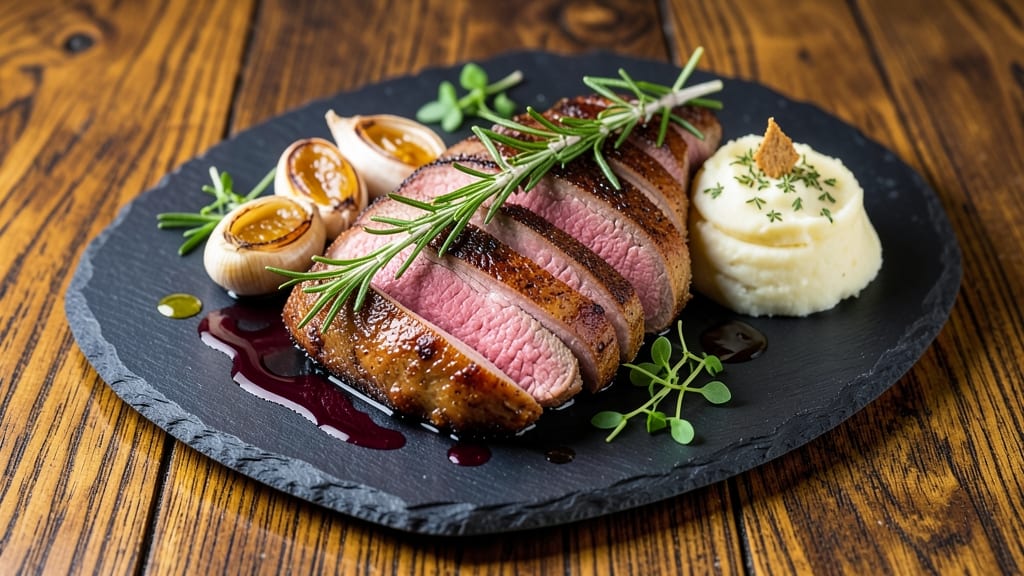
This award-winning roast beef recipe delivers ultra-tender results with a crisp herbed crust that rivals any competition entry. The secret lies in a dry-brine overnight, precise searing, and careful temperature control—techniques that transform tough cuts into melt-in-your-mouth perfection.
I’ve perfected this method after years of testing, and it consistently earns rave reviews at dinner parties and family gatherings.
The process begins with a 24-hour dry brine, which enhances flavor and tenderness without adding moisture. After searing the beef to lock in juices, it roasts to an exact internal temperature, then rests to redistribute juices.
This method ensures every slice is juicy, flavorful, and restaurant-quality, with a crust that’s both aromatic and satisfyingly crisp.
What sets this recipe apart is the herbed crust—a blend of fresh rosemary, thyme, and garlic that infuses the beef with deep, savory notes. The result is a roast that’s visually stunning and packed with rich, beefy flavor, making it ideal for special occasions or holiday feasts.
Pair it with classic sides like roasted root vegetables, a tangy horseradish sauce, or a crisp red wine reduction to elevate the dish even further. The presentation is just as important as the cooking, so we’ll cover plating techniques to ensure your roast beef looks as impressive as it tastes.
Ingredients for award winning roast beef
Six ingredients transform tough beef into competition-worthy, melt-in-your-mouth perfection.
| Ingredient | Amount | Notes |
|---|---|---|
| Top Round Roast Beef 🥩 | 4 lb | Center-cut, 1.5-2 inches thick |
| Kosher Salt 🧂 | ½ cup | Diamond Crystal preferred |
| Fresh Rosemary 🌿 | ¼ cup | Finely chopped, stems removed |
| Fresh Thyme 🌿 | ⅛ cup | Leaves only, stems discarded |
| Garlic Cloves 🧄 | 8 cloves | Smashed but not minced |
| Extra-Virgin Olive Oil 🫒 | ¼ cup | High-quality, fruity variety |
| Black Peppercorns 🌶️ | 1 tbsp | Freshly cracked, coarse grind |
| Unsalted Butter 🧈 | ½ cup | Cold, cubed for crust |
| Yellow Onion 🧅 | 1 whole | Thinly sliced for aromatics |
| Red Wine 🍷 | ½ cup | Dry, full-bodied like Cabernet |
| Beef Stock 🍲 | 1 cup | Homemade or high-quality |
| Fresh Parsley 🌿 | ⅛ cup | Chopped, for garnish |
The center-cut top round roast is non-negotiable here—its lean yet tender profile responds perfectly to the dry-brine technique. Whole Foods or local butcher shops carry the best cuts, but most grocery stores stock it too. Look for a roast with visible marbling and uniform thickness (1.5-2 inches). I always buy mine 24 hours ahead to allow for the dry brine, which is what separates home roasts from restaurant-quality. The Diamond Crystal kosher salt is crucial—it dissolves more easily than table salt, ensuring even flavor distribution throughout the meat.
No fresh rosemary? Substitute with 1 tablespoon dried rosemary, but expect less aroma. The thyme leaves should be vibrant—wilted herbs lose their potency. For the garlic, smashing the cloves releases more flavor than mincing, but don’t overdo it or they’ll turn to paste. The olive oil must be extra-virgin; cheaper varieties lack the fruity depth needed for the herbed crust. Running short on red wine? Beef stock with 1 tablespoon balsamic vinegar mimics the acidity and depth. The butter should be cold when added—this creates the crisp crust during searing. If you’re prepping ahead, store the seasoned beef uncovered in the fridge for up to 24 hours before cooking.
This roast develops deeper flavor the longer it rests, so plan for at least 30 minutes after removing from the oven. Slice against the grain for maximum tenderness—each slice should yield effortlessly. Leftovers reheat beautifully; warm in the oven at 300°F for 20 minutes with a splash of beef stock to revive moisture. The herbed crust keeps well for 3 days in the fridge, though the beef itself should be consumed within 4 days. For special occasions, double the batch—it freezes beautifully for up to 3 months when wrapped tightly in butcher paper and foil.
Why You'll Love This Recipe
- Foolproof Seasoning: Between us, the salt, rosemary, and thyme do all the heavy lifting—just rub it on, let it sit, and the beef practically seasons itself. No fancy marinades or last-minute panic here.
- Crispy-Perfect Edge: That top round roast? It develops a golden crust while staying juicy inside—no guesswork, no overcooking. Honestly, the first time I nailed this, I almost called my mom just to brag.
- Sunday Supper Star: This isn’t just dinner—it’s the centerpiece. Serve it with mashed potatoes and roasted veggies for a crowd, or slice it for sandwiches all week. My in-laws still talk about the Thanksgiving leftovers.
Step-by-step instructions for award-winning roast beef
Mastering this technique yields melt-in-your-mouth tenderness with a rich, herbed crust every time.
Prepare the Roast with Dry Brine
Pat the 4 lb Top Round Roast Beef dry with paper towels, removing any surface moisture. This step is critical for achieving that perfect crust later. Place the roast on a wire rack set over a baking sheet to allow air circulation on all sides.
In a small bowl, combine the 0.5 cup Kosher Salt, 0.25 cup Fresh Rosemary, 0.125 cup Fresh Thyme, 8 smashed Garlic Cloves, and 1 tbsp freshly cracked Black Peppercorns. Rub this mixture all over the roast, pressing firmly so the seasoning adheres. The salt will begin breaking down muscle fibers immediately, ensuring maximum tenderness. Cover loosely with plastic wrap and refrigerate for 24 hours—this dry brining creates a flavorful crust while keeping the interior juicy.
Sear the Roast for Crust Development
Remove the roast from the refrigerator 1 hour before cooking to bring it to room temperature. Preheat your oven to 450°F. Heat a heavy oven-safe skillet over medium-high heat and add the 0.25 cup Extra-Virgin Olive Oil. Once shimmering, add the roast and sear for 3 minutes per side until deeply browned. This initial sear locks in juices and builds flavor.
Transfer the skillet to the preheated oven and roast for 10 minutes. Remove the roast and add the 0.5 cup Unsalted Butter to the skillet, scraping up any browned bits. Toss in the 1 whole Yellow Onion and cook for 2 minutes until softened. Pour in the 0.5 cup Red Wine and let it reduce by half, about 3 minutes. This pan sauce will later baste the roast and add depth of flavor.
Slow-Roast for Perfect Doneness
Reduce oven temperature to 300°F. Return the roast to the oven, fat-side up, and roast for 2 to 2.5 hours, depending on thickness. The internal temperature should reach 130°F for medium-rare. Use a meat thermometer to monitor progress—this is the only reliable way to ensure perfect doneness. The roast is done when it reaches 130°F and the juices run clear when pierced with a knife.
During the last 30 minutes, pour the 1 cup Beef Stock into the skillet with onions and wine. Stir and let it simmer, then spoon this flavorful liquid over the roast every 15 minutes. This basting technique keeps the meat moist and infuses it with aromatic flavors. The roast should develop a rich mahogany crust with a tender, juicy interior.
Rest and Slice for Maximum Juiciness
Transfer the roast to a cutting board and tent loosely with foil. Let it rest for 30 minutes at room temperature. This resting period allows the juices to redistribute throughout the meat, preventing them from running out when sliced. The internal temperature will rise about 5°F during resting, reaching the ideal serving temperature.
Slice the roast against the grain into ½-inch thick pieces. Garnish each serving with the 0.125 cup Fresh Parsley for a pop of color and freshness. Serve immediately with the pan sauce spooned over the top. Each slice should be incredibly tender with a rich, herbed crust that's crisp yet flavorful.
Pro Tips For Making Award Winning Roast Beef
- SEAR WITH INTENTION: Top round roasts are lean, so don’t just toss them in the pan—get that crust fast. Hit 450°F for the first 10 minutes with the roast sitting on a wire rack (not directly on the pan) to let heat circulate. After the initial sear, lower to 325°F and keep the lid on—this traps steam and keeps the meat from drying out while it cooks through.
- SALT THE ROAST TWICE: I used to salt my roast right before searing, but that’s a missed opportunity. Do a dry rub with kosher salt 24 hours ahead—it seasons deeper and helps break down tough fibers. Then, just before roasting, give it another layer of salt mixed with finely chopped rosemary and thyme. The second coat sticks better and adds flavor right at the surface.
- DON’T SKIP THE GARLIC PASTE: Whole garlic cloves can turn bitter and underutilized in a long roast. Instead, smash 4-5 cloves into a paste with a pinch of salt and spread it directly onto the roast’s surface before searing. It caramelizes beautifully and infuses flavor evenly—no need to worry about uneven cooking or wasted cloves.
- REST IT LIKE YOUR CAREER DEPENDS ON IT: I’ve sliced roasts straight out of the oven more times than I’d admit, and every time, the juices pool on the cutting board. Tent it with foil and let it sit for at least 20 minutes—30 if it’s a big roast. This lets the fibers relax and redistributes moisture, so your first slice isn’t a sad, dry disappointment. (Yes, even if you’re starving.)
Creative variations of this award winning roast beef
Classic French Style
Transform your roast into a bœuf bourguignon-inspired masterpiece by adding 2 cups sliced mushrooms, 1 cup pearl onions, and 1 cup red wine (like Cabernet Sauvignon) reduced by half.
After searing, brown the veggies in the same skillet, then add 1 lb beef chuck roast (cut into chunks) and simmer for 3 hours at 325°F. The result? A rich, saucy roast with deep umami notes. 🍷
Smoky BBQ Twist
For a Southern-inspired take, brush the roast with ½ cup BBQ sauce (like Starkist Smoky & Sweet) after searing, then smoke it at 250°F for 3 hours using applewood chips.
Add 1 cup sliced jalapeños and ½ cup chopped cilantro to the pan sauce for heat and freshness. Serve with cornbread and pickled red onions for a crowd-pleasing fusion. 🔥
Italian Osso Buco Style
Elevate your roast with an Italian twist by tying 8 fresh sage leaves around the roast before roasting. After searing, add 2 cups sliced carrots and 2 cups celery to the pan, then deglaze with 1 cup white wine (like Pinot Grigio).
Simmer for 2.5 hours at 300°F, then finish with ½ cup heavy cream and 2 tbsp butter for a velvety sauce. Garnish with lemon zest for brightness. 🌿
Spicy Korean-Inspired
Infuse bold flavors by marinating the roast in ¼ cup gochujang, 2 tbsp soy sauce, and 1 tbsp sesame oil for 4 hours before roasting. After searing, add 1 cup kimchi and 1 tbsp grated ginger to the pan sauce.
Roast at 300°F for 2.5 hours, then drizzle with 1 tbsp honey and 1 tbsp toasted sesame seeds before serving. Pair with steamed rice and quick-pickled cucumbers. 🌶️
Holiday Glaze Variation
Create a festive glaze by reducing ½ cup apple cider with 2 tbsp brown sugar and 1 tbsp Dijon mustard until syrupy. Brush the roast with this glaze during the last 30 minutes of cooking.
For extra shine, finish with a sprinkle of powdered sugar and candied pecans. This version shines at Thanksgiving or Christmas dinners. ✨
Herb-Forward Vegetarian Option
For a plant-based twist, use a 4 lb portobello mushroom crown (stemmed) as the base. Dry-brine with the same herbs, then sear and roast at 375°F for 45 minutes.
Top with a walnut-ricotta crumble (mix 1 cup walnuts, ½ cup ricotta, 1 tbsp maple syrup) and broil for 5 minutes to crisp. Garnish with microgreens for a sophisticated bite. 🌱
Nutrition facts
Frequently asked questions
Why does this recipe use a 24-hour dry brine instead of regular salt?
The 24-hour dry brine transforms tough cuts into melt-in-your-mouth perfection by breaking down muscle fibers and penetrating deep into the meat. Unlike regular salt, this method creates a flavorful crust while keeping the interior juicy and tender. It’s the secret behind competition-worthy results!
Can I use a different cut of beef for this recipe?
While top round is ideal, you can try top sirloin or ribeye roast for richer flavor. Avoid leaner cuts like flank steak—they won’t yield the same tenderness. If using a fattier cut, reduce roasting time slightly to prevent overcooking. Always aim for 1.5-2 inches thickness for even cooking.
What’s the best way to check doneness without overcooking?
Use a meat thermometer for precision—130°F for medium-rare, 140°F for medium. Insert it horizontally into the thickest part, avoiding fat. The roast will rise 5°F more while resting, so pull it out slightly early. Never rely on time alone—every oven varies!
How do I fix a roast that’s too dry?
If your roast is dry, it likely wasn’t rested long enough or was overcooked. For future attempts, rest for 30+ minutes and use the thermometer. To salvage a dry roast, slice thinly and serve with a rich sauce (like the pan sauce from this recipe) or a creamy horseradish cream.
What sides pair best with this award-winning roast?
Classic choices include roasted root vegetables, creamy mashed potatoes, or a crisp green salad with balsamic vinaigrette. For extra flair, add horseradish sauce, red wine reduction, or caramelized onions. The herbed crust stands up well to bold flavors, so don’t shy away from spicy or tangy accompaniments!