
Main Courses
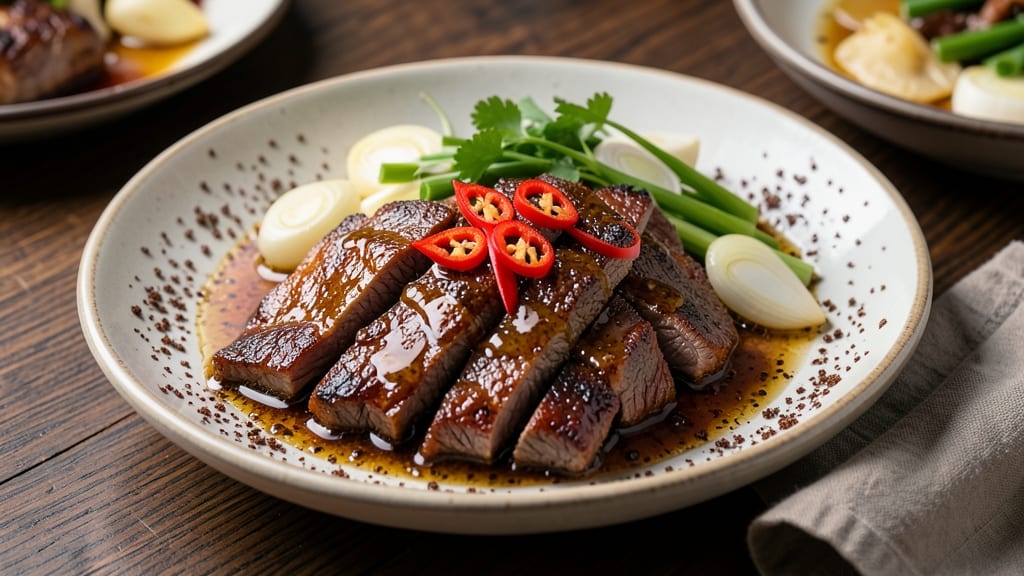
This authentic beef lok lak recipe brings the bold flavors of Singaporean street food to your kitchen with its signature wok-fired beef and tangy peanut sauce. 🔥 The secret lies in the perfect balance of sweet, spicy, and umami—achieved through a marinade of tamarind, soy sauce, and chili, followed by a quick sear in a screaming-hot wok.
I’ve perfected this dish over years of testing, ensuring every bite delivers that crispy exterior and tender interior that makes it irresistible.
The beauty of lok lak is in its simplicity yet depth—just a few ingredients transform ordinary beef into something extraordinary. You’ll start with thinly sliced beef marinated in a zesty tamarind-glazed mixture, then sear it in a wok until caramelized and crispy.
The sides—steamed jasmine rice and crispy fries—complete the meal, while the peanut sauce ties everything together with its creamy, nutty, and slightly spicy profile.
What sets this recipe apart is the authenticity: no shortcuts, just the traditional techniques that give lok lak its signature flavor. The tamarind glaze adds a tangy depth, the peanut sauce brings richness, and the crispy fries add a satisfying crunch.
This isn’t just a dish—it’s an experience that transports you to a bustling Singaporean hawker stall with every bite.
Serve it family-style with lime wedges, fried shallots, and fresh lemongrass for garnish, and you’ll have a meal that’s as visually stunning as it is delicious.
The balance of textures and flavors makes it perfect for sharing, whether you’re hosting a dinner party or treating yourself to a taste of Southeast Asia.
Ingredients for authentic beef lok lak
Just 15 ingredients transform ordinary beef into Singapore street food gold.
| Ingredient | Amount | Notes |
|---|---|---|
| Top-Round Beef 🥩 | 1 ½ lb | Thinly sliced against grain |
| Tamarind Paste 🍈 | ½ cup | Unadulterated, block preferred |
| Soy Sauce 🥄 | ½ cup | Light or regular, not low-sodium |
| Dark Brown Sugar 🍚 | ¼ cup | Packed, not granulated |
| Garlic Cloves 🧄 | 6 cloves | Minced, aromatic intensity |
| Bird's Eye Chilies 🌶️ | 4 whole | Stemmed, finely chopped |
| Lime Juice 🍋 | ¼ cup | Freshly squeezed, no pulp |
| Vegetable Oil 🫒 | ½ cup | High smoke point for wok |
| Roasted Peanuts 🥜 | 1 cup | Unsalted, lightly crushed |
| Peanut Butter 🥜 | ½ cup | Natural, no added sugar |
| Coconut Milk 🥥 | ½ cup | Full-fat, canned preferred |
| Shallots 🧅 | 3 whole | Minced, for sauce depth |
| Jasmine Rice 🍚 | 1 ½ cups | Uncooked, long-grain |
| French Fries 🍟 | 1 lb | Fresh, crispy preferred |
| Lime Wedges 🍋 | 4 whole | For garnish, fresh |
The beef is everything here—top-round gives that perfect balance of tenderness and chew. Look for well-marbled cuts at your local Asian market or butcher shop; Costco or H Mart often carry pre-sliced lok lak beef, but if you're slicing yourself, go against the grain for those signature thin strips. Tamarind paste can be tricky to find—check the Southeast Asian aisle or order it online. Fresh tamarind blocks are ideal, but paste works too. The chilies? Bird's eye is traditional, but if you can't find them, Thai bird's eye chilies are a solid sub. Always remove the stems first—they're bitter.
No tamarind? A mix of lime juice and brown sugar (equal parts) mimics the tangy-sweet balance. Running short on peanuts? Cashews or almonds work in a pinch, though texture will differ. The peanut butter should be natural, no added sugar—Smucker's Natural is my go-to. For the sauce, coconut milk matters—full-fat canned (like Thai Kitchen) adds richness. Fresh shallots are best, but jarred minced shallots in the Asian aisle save time. The jasmine rice? Don't skimp on quality—Thai or Vietnamese brands from the international aisle have that signature fragrance. And those crispy fries? Fresh is non-negotiable—frozen won't cut it for that hawker-stall crunch.
Marinate the beef for at least 30 minutes (overnight is better)—this lets the tamarind and soy work their magic. Store the tamarind paste in the fridge for up to 3 months once opened. Peanut butter and coconut milk keep for 6 months unopened in the pantry. The fried shallots? Freeze extras in a sealed bag—they'll keep for 3 months and add instant crunch to any dish. This recipe reheats beautifully—wok-seared beef tastes even better the next day, just warm through in a hot pan with a splash of water. Portion the peanut sauce into small jars for 1 week of quick meals.
Why You'll Love This Recipe
- No-Fuss Protein: I swear by thin-sliced top-round beef—it’s lean, affordable, and cooks in minutes. No tenderizing, no waiting; just quick sear and done.
- Tangy-Sweet Magic: That tamarind paste and brown sugar combo? Chef’s kiss. It’s not too sweet, not too sour—just the right balance to make every bite addictive.
- Weeknight to Party: Same sauce, endless uses. Slap it on rice for a quick dinner or serve with noodles for a crowd. Even my picky uncle loves it.
- Budget-Friendly Leftovers: A pound of beef stretches for four meals. The sauce keeps for weeks, and reheating? Just a splash of water and stir—no fuss.
Step-by-step instructions for authentic beef lok lak
Here's how to recreate that signature Singaporean wok-fired crunch with vibrant tamarind sauce.
🍳 Step 1: Marinate and Slice the Beef for Maximum Tenderness
Slice the 1.5 lb top-round beef thinly against the grain using a sharp knife—you want paper-thin strips that cook quickly. In a bowl, combine the sliced beef with 0.5 cup soy sauce, 0.25 cup dark brown sugar, 6 cloves minced garlic, and 4 whole finely chopped bird's eye chilies. Mix well and let it marinate for at least 30 minutes (I like to do this up to 2 hours ahead). The sugar will begin breaking down the beef fibers, ensuring silky texture.
Here's the thing—don't skip the marinating. The acidity from the soy sauce and tamarind later will tenderize further, but this initial step guarantees the beef stays juicy during the high-heat wok cooking. The chilies should be finely chopped but not pulverized—you want visible flecks for texture and heat.
🔥 Step 2: Wok-Fry the Beef Until Crispy and Caramelized
Heat 0.5 cup vegetable oil in a wok or large skillet over high heat until shimmering. Add the marinated beef in batches (don't overcrowd) and stir-fry for 2-3 minutes until the edges turn deep golden brown and the beef is cooked through. Remove and set aside—this is the moment that matters: the Maillard reaction creates that signature lok lak crunch.
If the beef releases easily from the wok, it's ready. If it sticks, add another 1 tablespoon vegetable oil and let it heat again before continuing. The beef should be nearly done by now—it'll finish cooking in the sauce. Work in batches if needed to avoid steaming the beef instead of searing it.
🍳 Step 3: Build the Tangy Tamarind-Peanut Sauce
In the same wok, reduce heat to medium and add 3 whole minced shallots, cooking for 1 minute until fragrant. Pour in 0.5 cup tamarind paste and 0.5 cup coconut milk, stirring constantly for 3-4 minutes until the sauce thickens slightly. Add 0.5 cup peanut butter and 0.25 cup lime juice, mixing until smooth. The sauce should coat the back of a spoon with a glossy sheen—this is your tamarind gloss.
Taste and adjust seasoning—you might need an extra splash of soy sauce or lime juice to balance the sweet-tangy flavors. Here's where it gets fun: the peanut butter adds richness while the tamarind provides that signature tangy depth. If the sauce looks too thick, whisk in 1-2 tablespoons hot water to loosen it.
🥘 Step 4: Assemble the Dish with Crispy Fries and Garnishes
Return the crispy beef to the wok and toss to coat in the sauce. Add 1 cup lightly crushed roasted peanuts and stir for 1 minute to incorporate. Serve immediately over 1.5 cups cooked jasmine rice, topped with 1 lb crispy french fries arranged artfully around the plate. Garnish with 4 whole lime wedges and an extra sprinkle of crushed peanuts for texture.
For that authentic touch, squeeze fresh lime juice over each serving just before eating—the acidity cuts through the richness and brightens all the flavors. The contrast between the crispy fries, tender beef, and silky sauce is what makes this dish so special. Serve with extra chili slices on the side for those who crave more heat.
Pro Tips For Making Authentic Beef Lok Lak
- SLICE THIN, SLICE EVEN: Cut the top-round beef against the grain into paper-thin strips—no thicker than ¼-inch—so it cooks fast and stays tender. I used to eyeball it and ended up with chewy slices; now I measure with a ruler for consistency.
- MIX TAMARIND FIRST: Dissolve the tamarind paste in ½ cup warm water before adding other sauces—it thickens when cold. Skipping this step means clumpy sauce; I learned after making a mess in my first batch.
- SEAR IN BATCHES: Don’t crowd the pan—work in single layers so the beef gets a proper crust. I tried cooking all at once and ended up steaming instead of searing, which ruins the texture.
- UPGRADE WITH GARLIC OIL: Infuse 3 minced garlic cloves in 2 tablespoons neutral oil until fragrant (30 seconds) before cooking the beef. Sounds fussy, but it adds depth without overpowering the tamarind-sweet balance.
Regional styles of this authentic beef lok lak
Singaporean Hawker Style
In Singapore, lok lak is all about that street-food energy—quick, flavorful, and served family-style with crispy fries and steamed rice. The beef is sliced thin against the grain for that signature tenderness, then seared in a screaming-hot wok until caramelized.
I’ve seen vendors toss the beef in the air to coat it evenly in the tamarind sauce—a technique that’s both impressive and effective. 🔥
At hawker stalls, the peanut sauce is often slightly thicker than what you’d find in restaurants, making it perfect for dipping fries. The key is balancing the sweet tamarind, peanut richness, and lime tang—just like how street vendors adjust to crowd preferences.
For extra authenticity, serve with fried shallots on top of the sauce for crunch.
Malaysian Peranakan Twist
In Malaysia, lok lak takes on a Peranakan fusion flavor, often incorporating turmeric and candlenut (a local nut) into the marinade. The beef might also be marinated with grated ginger and lemongrass paste for a fragrant depth.
I’ve adapted this by adding ½ teaspoon ground turmeric to the marinade—it adds warmth without overpowering the tamarind’s tang. 💛
The peanut sauce here leans lighter, sometimes even omitting the peanut butter entirely and using ground peanuts for a coarser texture. Garnish with cucumber slices and pickled red onions for a refreshing contrast that’s distinctly Malaysian. This version pairs beautifully with ketupat (rice cakes) instead of just jasmine rice.
Indonesian Rendang-Inspired
In Indonesia, lok lak sometimes gets a rendang-inspired upgrade, where the beef is first simmered in a spiced coconut milk broth before the wok-frying step. I’ve experimented with this by adding 1 teaspoon ground coriander and ½ teaspoon cinnamon to the marinade, then finishing with a quick sear.
The result? A deeper, earthier flavor that still keeps the signature crispy texture. 🌶️
For the sauce, swap ½ cup of the coconut milk for coconut cream to make it richer. Top with crispy fried lemongrass (blanched and fried until golden) for an aromatic touch that’s pure Indonesian street-food magic. This version works especially well with sambal matah (Balinese chili dip) on the side.
Modern Fusion Adaptations
For a modern twist, I’ve seen lok lak reinvented with umami bomb ingredients like miso paste (1 tbsp) in the marinade or fish sauce (1 tbsp) in the sauce.
The miso adds a savory depth that pairs perfectly with the peanut sauce, while fish sauce brings a briny punch. This works surprisingly well with sweet potato fries instead of traditional fries for a vibrant, colorful plate. ✨
Another fun adaptation? Spicy peanut butter—mix ½ tsp gochujang (Korean chili paste) into the peanut sauce for a fiery kick. Serve with kimchi on the side for a Korean-Indonesian fusion that’s unexpected but delicious.
The key is keeping the tamarind tang as the anchor flavor—no matter how you remix it.
Nutrition facts
Frequently asked questions
Can I substitute tamarind paste if I can't find it?
Yes! Mix ¼ cup lime juice with ¼ cup brown sugar for a similar tangy-sweet balance. For deeper flavor, add ½ teaspoon MSG or a pinch of salt to mimic tamarind's umami. The sauce will be slightly less complex but still delicious.
How do I get the beef as crispy as in restaurants?
Use a screaming-hot wok or cast-iron skillet and cook in batches—never overcrowd. Sear for 2-3 minutes per side until deep golden brown. A quick tip: Pat the beef dry before cooking and add 1 tablespoon cornstarch to the marinade for extra crispiness.
What's the best way to store leftovers?
Store the beef and sauce separately in airtight containers. The beef stays fresh for 3 days in the fridge, while the sauce keeps for 5 days. Reheat gently in a pan with 1 tablespoon water to prevent drying. The fries are best eaten fresh, but you can reheat them in the oven at 400°F for 5 minutes.
Can I make this vegetarian?
Swap the beef for thinly sliced tofu or seitan marinated in the same sauce. For extra texture, pan-fry king oyster mushrooms until crispy. The peanut sauce and fries will still shine—just ensure your protein cooks through completely.
Why does my peanut sauce turn out too thick?
Add 1-2 tablespoons hot water while stirring to loosen the sauce. If it's still too thick, whisk in ½ teaspoon cornstarch mixed with 1 tsp water until smooth. The sauce should coat the back of a spoon but still be pourable.