
Main Courses
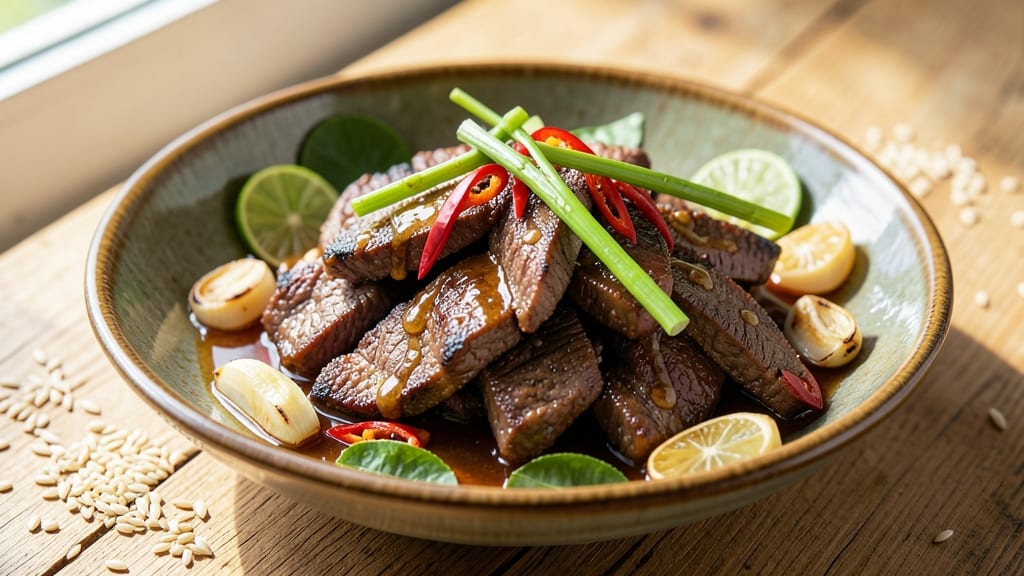
This authentic Thai beef recipe delivers the bold, aromatic flavors of street-side Thai cuisine right to your kitchen. The secret lies in balancing sweet, sour, spicy, and umami—just like the dishes you’d find in Bangkok’s bustling markets.
I’ve perfected this wok-fired version with galangal, kaffir lime leaves, and fish sauce, ensuring every bite carries the depth of tradition without sacrificing simplicity.
What sets this dish apart is the marinating technique: tender beef absorbs a fragrant paste of lemongrass, garlic, and chili, then cooks quickly over high heat to lock in juiciness.
The coconut milk base simmers until thick and velvety, while a splash of palm sugar and lime juice brightens the rich flavors. Serve it over fragrant jasmine rice for the full experience—each forkful is a harmony of textures and tastes.
The result is a restaurant-quality curry with caramelized beef, fragrant herbs, and a sauce that clings perfectly to the rice. The aroma alone will transport you to Thailand, but the first bite confirms it’s a dish worth mastering.
Whether you’re feeding a crowd or treating yourself to a weeknight feast, this recipe delivers authenticity with minimal fuss.
Pair it with a simple cucumber salad to cut through the richness or extra lime wedges for brightness. The beauty of this dish is its versatility—adjust the spice level to your taste while keeping the soul of Thai cuisine intact. Ready to cook?
Ingredients for authentic thai beef
These aromatic ingredients bring Bangkok’s bustling markets to your wok—just a few stops at the Asian aisle.
| Ingredient | Amount | Notes |
|---|---|---|
| Beef Sirloin 🥩 | 1 ½ lb | Thinly sliced against grain |
| Fresh Lemongrass 🌿 | 3 whole | Bottom 6 inches only, bruised |
| Galangal 🌿 | 1 piece | About 3 inches long, peeled |
| Kaffir Lime Leaves 🍋 | 4 whole | Bruised slightly for aroma |
| Red Chili Peppers 🌶️ | 2 whole | Bird's eye or Thai chili |
| Garlic Cloves 🧄 | 6 cloves | Minced, not pre-minced |
| Shallots 🧅 | 4 whole | Peeled, sliced thin |
| Coconut Milk 🥥 | 1 can | Full-fat, 13.5 oz can |
| Fish Sauce 🍶 | 2 tbsp | Red Boat preferred |
| Palm Sugar 🍯 | 2 tbsp | Or light brown sugar |
| Lime Juice 🍋 | ½ cup | Freshly squeezed |
| Olive Oil 🫒 | 2 tbsp | For wok searing |
| Salt 🧂 | 1 tsp | Kosher or sea salt |
| Black Pepper 🌶️ | ½ tsp | Freshly cracked |
The galangal and kaffir lime leaves are non-negotiable for that authentic Thai punch. Asian markets have the best selection—look for galangal with firm, pale flesh and kaffir leaves that smell citrusy. If you can’t find fresh galangal, ginger at half the amount works in a pinch, but it won’t be the same. The lemongrass should be vibrant green with no brown spots. I always grab extra—half goes in the marinade, half gets chopped for the sauce. For the beef, sirloin is leaner than chuck but stays tender when sliced thin against the grain. Pre-sliced beef at Trader Joe’s saves time, but ask for it cut fresh at an Asian butcher shop if you want the best texture.
No galangal? Ginger plus a pinch of cardamom mimics some of its earthy notes. Running out of kaffir lime leaves? Lemon zest plus a dash of lime juice gets you close, though it’s not identical. The fish sauce is where the magic happens—Red Boat is the gold standard, but any reputable brand works. Want to cut the fishiness? Add a splash of coconut milk to the marinade. The chili peppers can be adjusted to taste—start with 1 if you’re sensitive to heat, but trust me, Thai food is meant to be spicy. For the shallots, red or yellow work best—white shallots are milder. If you’ve got a food processor, pulse the lemongrass, galangal, and garlic together for the marinade—it’s a game-changer.
The marinade keeps for 3 days in the fridge, but the beef absorbs flavors best within 24 hours. Coconut milk separates when refrigerated? Stir it well before using. This dish reheats beautifully—just add a splash of water or coconut milk to loosen the sauce. For leftovers, store in an airtight container with a layer of plastic wrap pressed against the sauce to prevent skin. Freezes for 3 months, though the texture changes slightly. I always make extra—it’s perfect for lunch boxes or meal prep.
Why You'll Love This Recipe
- Here’s what sold me: the galangal’s peppery bite, the lime leaves’ floral whisper, and the chili’s slow heat building as you eat. It’s not just spicy—it’s layered, like a secret sauce you can’t stop thinking about. (Yes, even on a Tuesday night when you’re exhausted.)
- Pantry Powerhouse: I swear by this recipe because it uses exactly what’s in my freezer and spice rack—no last-minute grocery runs. That galangal? I buy it frozen in bulk and keep it in a ziplock; same with the kaffir lime leaves. The beef sirloin stays tender without fuss, and the lemongrass? Just bruise the stalks—no fancy julienne skills needed.
- Flavor Bomb: Here’s what sold me: the galangal’s peppery bite, the lime leaves’ floral whisper, and the chili’s slow heat building as you eat. It’s not just spicy—it’s layered, like a secret sauce you can’t stop thinking about. (Yes, even on a Tuesday night when you’re exhausted.)
- Leftovers That Shine: This dish actually improves the next day. The beef gets even more tender, and the sauce thickens into something richer—perfect for quick lunches or tossing into rice bowls. I portion it into containers with steamed jasmine rice before it cools, so every bite stays vibrant.
Step-by-step instructions for authentic Thai beef recipe
Here's how to create restaurant-quality Thai beef with bold, balanced flavors.
Prepare the Aromatic Base
Heat the 2 tablespoons olive oil in a wok over medium-high heat until shimmering. Add the 4 whole shallots and cook for 2-3 minutes until they begin to soften and turn translucent. This is your flavor foundation—don't rush it.
Next, add the 6 cloves minced garlic and the 2 whole red chili peppers (halved lengthwise if large). Stir constantly for 30 seconds until the garlic turns golden and the chilies begin to soften. The aroma should fill your kitchen—this is where the magic starts.
Build the Thai Paste
Push the aromatics to one side of the wok and add the bottom 6 inches of 3 whole fresh lemongrass (bruised), 1 piece peeled galangal (about 3 inches), and 4 whole kaffir lime leaves (bruised). Stir these for 1 minute until fragrant—this releases their essential oils and creates the authentic Thai flavor profile.
Add the 2 tablespoons palm sugar and let it caramelize slightly for 30 seconds. Then pour in the 2 tablespoons fish sauce and stir vigorously to combine. The sauce should look glossy and aromatic—this is your umami base that will carry the dish.
Sear the Beef
Add the 1.5 lb thinly sliced beef sirloin (sliced against the grain) to the wok in a single layer. Let it sear undisturbed for 2 minutes until it develops a beautiful crust. This initial sear locks in the juices and creates that perfect wok-fired texture.
Stir the beef and cook for another 2 minutes until it's just cooked through but still tender. The beef should be light brown with a slight char in spots. Remove the beef to a plate and set aside—it will continue cooking in the sauce.
Simmer the Coconut Sauce
Return the wok to medium heat and pour in the 1 can full-fat coconut milk. Stir to scrape up any browned bits from the bottom of the wok—this adds depth to the sauce. Bring to a gentle simmer and let it cook for 3-4 minutes until slightly thickened.
Add the ½ cup freshly squeezed lime juice, 1 teaspoon salt, and ½ teaspoon black pepper. Taste and adjust seasoning—you want a balance of sweet, sour, salty, and spicy. The sauce should coat the back of a spoon with a rich, velvety texture.
Finish and Serve
Return the beef to the wok and toss gently to coat in the coconut sauce. Cook for another 1-2 minutes just to heat through. The beef should be tender but still hold its shape—it will continue cooking slightly from residual heat.
Serve immediately over steamed jasmine rice, garnished with additional kaffir lime leaves if desired. Each bite should deliver a perfect harmony of spicy, sweet, tangy, and creamy flavors with tender beef that practically melts in your mouth.
Pro Tips For Making Authentic Thai Beef
- Slice the Galangal Thin: I learned this the hard way—thick chunks of galangal just sit there like stubborn guests. Use a sharp knife to shave it into paper-thin slices (about 1/16-inch thick) so it releases its peppery heat into the sauce instead of turning to mush. If you can’t find fresh, freeze-dried works in a pinch, but it won’t have the same depth.
- Char the Lemongrass First: Hit the lemongrass stalks with a blowtorch or sear them directly in a dry pan for 10 seconds per side before pounding. The smoky char adds a complexity that raw lemongrass alone can’t match—it’s the thing that makes your dish taste like it came from a Bangkok street stall, not a textbook.
- Don’t Overcrowd the Pan: I used to throw everything in at once, and the beef would steam instead of sear. Work in batches: cook the beef in a single layer over high heat for 2–3 minutes per side until deeply browned, then set aside before adding the aromatics. Crowding turns your stir-fry into a sad, greasy mess.
- Toast the Chili Peppers: Dry-toast your red chilies in a separate pan for 30 seconds until they darken slightly—this mellows their raw heat and deepens their flavor. Toss them with the lemongrass and galangal while you’re prepping; it’s a 30-second upgrade that makes the sauce taste like it simmered for hours. (Yes, even if you’re impatient like me.)
Serving suggestions for authentic thai beef
Rice Pairings
Jasmine rice is the classic choice—its delicate floral aroma complements the dish without overpowering it. Cook 1 cup jasmine rice with 1.5 cups water and a pinch of salt for perfectly fluffy grains.
For a heartier option, try thai fragrant rice from Thai Kitchen, which has a subtle nutty sweetness that enhances the coconut sauce. 💛
Fresh Salad Contrast
A simple cucumber salad cuts through the richness beautifully. Toss 1 English cucumber, ¼ cup thinly sliced red onion, and 2 tbsp rice vinegar with ½ tsp sugar and a pinch of salt. Add 1 tbsp chopped cilantro for brightness. The cool crunch balances the spicy-sweet curry perfectly.
Garnishing Essentials
Finish with fresh Thai basil leaves and extra kaffir lime wedges for authentic presentation. The basil adds a peppery note, while lime brightens each bite. For extra flair, sprinkle toasted sesame seeds or crushed peanuts on top—they add texture and a nutty depth that elevates the dish.
Drink Pairings
Serve with a cold Thai iced tea (like Ocha) for a sweet, creamy contrast. For alcohol lovers, a crisp Thai lager (such as Singha) or a light white wine like Pinot Grigio complements the dish beautifully. Avoid heavy reds—they’ll clash with the coconut and lime flavors.
Leftovers Strategy
Store leftovers in an airtight container with a layer of plastic wrap pressed against the sauce to prevent skin. Reheat gently on the stove with a splash of water or coconut milk.
Serve over steamed white rice or as a filling for Thai spring rolls—the flavors only get better the next day! ✨
Family-Style Serving
For gatherings, serve in a large wok or cast-iron skillet at the table. Let everyone add their own garnishes—extra chili, lime, or herbs—to customize their bowl. The communal style makes it feel like a true Thai street-food experience, even at home. 🌟
Nutrition facts
Frequently asked questions
Can I substitute beef with chicken or pork?
This recipe works beautifully with chicken thighs (bone-in for extra flavor) or pork shoulder, both sliced thin against the grain. Chicken cooks faster—reduce time to 1-2 minutes per side. For pork, increase marinating time to 1-2 hours to tenderize the meat. The sauce ratios stay the same, but adjust cooking times based on protein type.
What if I can't find galangal or kaffir lime leaves?
No problem! For galangal, use ginger plus ½ teaspoon cardamom (per 1 piece galangal). For kaffir lime leaves, substitute lemon zest + 1 tablespoon lime juice. The dish will still taste amazing—just slightly different. These swaps work best in a pinch, but fresh ingredients create the most authentic flavor.
How spicy should this dish be?
The recipe assumes medium heat with 2 Thai chilies. For mild, reduce to 1 chili or remove seeds. For extra spicy, add 1 more chili or a dash of chili flakes. Taste the sauce before serving—balance heat with more lime juice or sugar if needed. Thai cuisine embraces spice, but adjust to your crowd's tolerance!
Can I make this recipe in a regular skillet?
Yes, but use a 12-inch skillet for best results. A wok gives the perfect high-heat sear, but a skillet works too. Keep the heat at medium-high and stir frequently to prevent burning. For extra wok-like flavor, add 1 teaspoon soy sauce to the marinade. The texture will be slightly different but still delicious!
Why does my sauce separate when I add coconut milk?
This happens when coconut milk sits too long or gets cold. Stir well before using and warm it gently over low heat. For extra insurance, whisk in 1 teaspoon cornstarch mixed with 1 tablespoon water to thicken. The sauce should be smooth and velvety—never curdled. If it still separates, simmer longer until fully combined.