
Main Courses
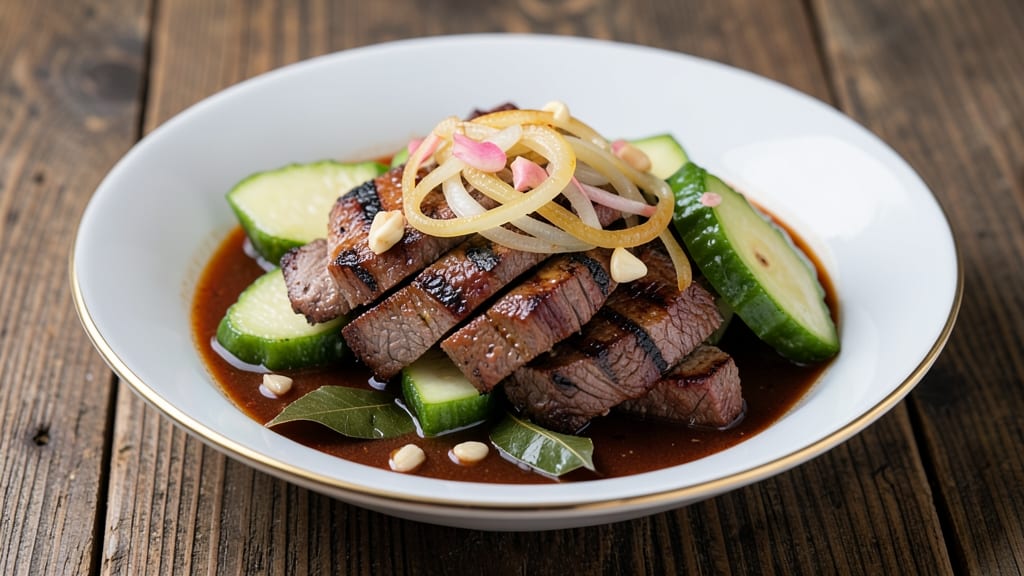
This ampalaya with beef Pinoy recipe transforms bitter melon into a crispy, savory centerpiece that steals every Filipino dinner table. 🌟 The secret lies in balancing the vegetable's natural bitterness with rich beef broth and aromatic spices, creating a dish that's both comforting and restaurant-worthy.
I've perfected this technique over years of family gatherings, where it's always the first dish to disappear.
The magic happens in two stages: first, the beef is simmered until tender in a flavorful broth, then the ampalaya is added and cooked just until it reaches that perfect crisp-tender texture—never mushy.
The combination of garlic, ginger, and bay leaves builds layers of warmth that complement the melon's unique flavor profile. This dish proves that Filipino cuisine can be both homey and sophisticated.
What you'll end up with is a pot of golden, aromatic stew where each bite delivers tender beef and perfectly crispy ampalaya pieces floating in a rich, savory sauce.
The aroma alone will have everyone gathering around the table, and the taste will remind them why this dish is a Filipino classic. It's the kind of meal that feels like coming home.
Serve with steamed rice to soak up every last bit of that flavorful broth, or pair with garlic fried rice for a complete meal. The leftovers reheat beautifully, making this an ideal recipe for meal prep. Let's get cooking!
Ingredients for ampalaya with beef pinoy
Rich beef broth, crispy ampalaya, and aromatic spices—this Filipino classic needs just 15 ingredients.
| Ingredient | Amount | Notes |
|---|---|---|
| Ampalaya (Bitter Melon) 🍉 | 2 lbs | Fresh, whole, sliced into 1-inch pieces |
| Beef Chuck Roast 🥩 | 1 ½ lbs | Cut into 1.5-inch cubes, marbled for tenderness |
| Yellow Onion 🧅 | 1 whole | Medium, thinly sliced |
| Garlic Cloves 🧄 | 8 cloves | Minced, for aromatic depth |
| Fresh Ginger 🌿 | 1 ½ tbsp | Grated, for zesty kick |
| Bay Leaves 🌿 | 2 whole | Dried, for subtle earthiness |
| Tomato Paste 🍅 | 2 tbsp | Smooth, for rich sauce base |
| Soy Sauce 🥄 | 3 tbsp | Regular, for umami depth |
| Calamansi or Lemon Juice 🍋 | 2 tbsp | Freshly squeezed, for brightness |
| Cooking Oil 🫒 | ½ cup | Vegetable or canola, for frying |
| Salt 🧂 | 1 ½ tsp | Kosher or sea salt, for seasoning |
| Black Pepper 🌶️ | ½ tsp | Freshly ground, for heat |
| Green Bell Pepper 🌶️ | 1 whole | Thinly sliced, for crunch |
| Water 💧 | 4 cups | For beef broth base |
| White Wine (optional) 🍷 | ½ cup | Dry, for depth (substitute with beef broth) |
The beef is the heart of this dish—chuck roast gives the best tenderness, but brisket works too. Look for cuts with good marbling at your local butcher or Filipino grocery stores like 99 Ranch or Golden Gate, where they often carry pre-cut beef for Pinoy dishes. Ampalaya can be tricky to find outside Filipino markets, but Asian grocery stores usually stock it. If you can't find it, zucchini or eggplant in a pinch—though nothing replaces the authentic texture. For the garlic and ginger, freshly grated or minced makes all the difference; pre-minced tends to turn bitter.
No white wine? Substitute with an extra 0.5 cup beef broth—it won’t be identical, but the dish will still shine. Soy sauce can be swapped for fish sauce if you prefer a stronger umami kick, but reduce to 2 tbsp since it’s more potent. For the ampalaya, if you’re using zucchini, slice it thinner and cook it half the time to avoid mushiness. The green bell pepper is optional but adds a nice crunch—skip it if you’re avoiding extra prep. Tomato paste is key for that rich, savory base, so don’t skip it unless you’re using a store-bought beef stew base instead.
This dish tastes even better the next day as flavors meld, so make extra if you’re feeding a crowd. Store leftovers in the fridge for up to 5 days, or freeze for 3 months—the sauce thickens beautifully when reheated. For meal prep, portion into containers with rice for easy grab-and-go lunches. The ampalaya loses crispness when reheated, so it’s best served fresh or lightly warmed. If you’re short on time, par-cook the beef ahead and finish it on the stovetop when ready to serve.
Why You'll Love This Recipe
- One-Pot Magic: I swear by this recipe for lazy nights—just slice the ampalaya, sear the beef, and let the onions and garlic do their thing in the same pot. No chopping boards to scrub, no extra pans to wash.
- Beefy Bitter Balance: The beef chuck roast turns tender while the ampalaya’s natural bitterness mellows into something rich and satisfying. Honestly, the ginger and garlic make it taste like a restaurant dish without the fuss.
- Lunchbox Hero: Between us, this is my go-to for meal prep. The flavors deepen overnight, and I pack it cold or reheat it for lunch—still tastes fresh, even days later. My kids actually eat their veggies this way.
- Budget-Friendly Feast: Ampalaya and beef chuck are cheap but pack serious flavor. Stretch it into two meals with minimal extra cost, and you’ll have leftovers that don’t taste like yesterday’s dinner. (Yes, even on a Tuesday night.)
Step-by-step instructions for ampalaya with beef Pinoy recipe
Master this Filipino classic with perfectly crispy bitter melon and tender beef cubes.
🔥 Step 1: Prepare and Fry the Ampalaya
Slice the 2 lbs Ampalaya (Bitter Melon) into 1-inch pieces and immediately soak in cold water for 10 minutes to remove bitterness. Drain and pat completely dry with paper towels—this prevents excess moisture in the oil.
Heat 0.25 cup of the 0.5 cup Cooking Oil in a large skillet over medium-high heat until shimmering. Add the ampalaya in a single layer and fry for 3-4 minutes per side until deep golden brown and crispy. Remove and set aside on a paper towel-lined plate to drain excess oil. The ampalaya should be tender-crisp with a slight crunch.
🍳 Step 2: Sear the Beef Chuck Roast
Cut the 1.5 lbs Beef Chuck Roast into 1.5-inch cubes and pat dry with paper towels. In the same skillet (no need to clean), add the remaining 0.25 cup Cooking Oil and heat over medium-high heat. Working in batches if needed, sear the beef for 2-3 minutes per side until deep brown and slightly caramelized. Remove and set aside with the ampalaya.
This searing step develops deep flavor in the beef. Don't overcrowd the pan or the temperature will drop, resulting in steamed rather than seared meat. The beef should have a rich, caramelized crust while remaining slightly pink in the center.
🥘 Step 3: Build the Flavorful Base
In the same skillet, reduce heat to medium and add the thinly sliced Yellow Onion and thinly sliced Green Bell Pepper. Sauté for 3-4 minutes until softened but not browned. Add the minced Garlic Cloves and grated Fresh Ginger, cooking for 30 seconds until fragrant.
Stir in the 2 tbsp Tomato Paste and cook for 1 minute until it darkens slightly. Pour in the 4 cups Water and 0.5 cup White Wine (optional), scraping up any browned bits from the bottom of the pan. This deglazing captures all the meaty flavors you've built up.
🔪 Step 4: Simmer the Beef and Ampalaya Together
Return the seared beef and crispy ampalaya to the skillet. Add the 2 whole Bay Leaves, 1.5 tsp Salt, and 0.5 tsp Black Pepper. Bring to a gentle simmer, then reduce heat to low and cover partially. Let it cook for 45-50 minutes, stirring occasionally, until the beef is fork-tender and the sauce has thickened slightly.
You'll know the beef is ready when it easily pulls apart with a fork but still holds its shape. The ampalaya should be tender with a slight bite. If the sauce reduces too much, add 2-3 tablespoons of water to maintain the right consistency.
🍽️ Step 5: Finish with Brightness and Serve
Remove the 2 whole Bay Leaves and stir in the 3 tbsp Soy Sauce and 2 tbsp Calamansi or Lemon Juice. Simmer for an additional 2-3 minutes to let the flavors meld. Taste and adjust seasoning—you might need a touch more salt or acid to balance the flavors.
Serve immediately with steamed rice. The dish should have a perfect balance of crispy ampalaya, tender beef, and a rich, slightly tangy sauce. The calamansi or lemon juice brightens the dish, cutting through the richness of the beef and oil.
Pro Tips For Making Ampalaya With Beef Pinoy
- SEAR THE BEEF FIRST: Ampalaya’s bitterness needs rich, caramelized beef to balance it—don’t skip the crust. Slice the chuck roast thin (¼-inch) and sear in batches over medium-high heat until deep brown (3-4 minutes per side). Crowd the pan? You’ll steam the meat instead of building flavor.
- PEEL THE AMPALAYA LAST: Bitter melon bruises fast—cut it just before cooking. Use a sharp knife to halve lengthwise, then scoop out seeds with a spoon (no need to peel if skin’s tender). Soak slices in cold water for 10 minutes to mellow the bitterness, but drain well—soggy ampalaya turns to mush.
- LOW AND SLOW FOR TENDERNESS: Chuck roast needs patience. After searing, drop heat to low (or use a 275°F oven) and simmer with onions, garlic, and ginger for at least 2 hours—until fork-tender. Rush it? You’ll end up with chewy beef and a bitter, watery sauce.
- SAUTE GINGER UNTIL FRAGRANT: Fresh ginger’s heat and aroma are non-negotiable here. Mince it thin (no need to peel) and cook on medium-high for 30 seconds until the pan smells like a spice market. Burn it? The dish tastes medicinal—trust your nose, not the color.
Best sauces and condiments for this recipe
Classic Soy Sauce Base
This dish relies on a simple yet powerful sauce foundation using 3 tbsp soy sauce and 2 tbsp calamansi or lemon juice. The soy sauce provides that essential umami depth that Filipino cooking thrives on, while the citrus brightens everything up.
I always use regular soy sauce (not low-sodium) for maximum flavor impact—it's the secret to that restaurant-quality taste. For extra authenticity, a splash of patis (fish sauce) can replace 1 tbsp of the soy sauce, adding a funky depth that balances the bitterness of the ampalaya beautifully. 🥄
Tomato Paste Magic
The 2 tbsp tomato paste is non-negotiable here—it creates that rich, caramelized base that makes the sauce sing. I recommend using smooth tomato paste (like Muir Glen) and cooking it just until it darkens slightly. This step develops complex flavors that would be missing if you skipped it.
For a shortcut, you could substitute with 1 cup beef broth reduced by half, but you'll lose some of that deep, savory character. The paste also helps thicken the sauce naturally as it simmers.
Garlic-Ginger Infusion
Freshly minced 8 garlic cloves and 1.5 tbsp grated ginger are the aromatic backbone of this dish. I always toast them briefly in the oil until fragrant—this releases their natural oils and makes them pop. For extra zing, add a pinch of ground white pepper along with the black pepper.
If you're short on time, pre-minced garlic works in a pinch, but freshly grated ginger makes all the difference. The combination of these two aromatics cuts through the bitterness of the ampalaya while adding warmth to the beef.
White Wine Deglaze
The optional 0.5 cup dry white wine (like Sauvignon Blanc) serves two purposes: it deglazes the pan to capture all those meaty browned bits, and it adds a subtle acidity that brightens the dish.
If you skip it, don't worry—just add an extra splash of beef broth (about 0.25 cup) to maintain the same effect. The wine should cook off completely, leaving behind just a hint of its fruity notes. For a non-alcoholic version, use white grape juice reduced by half.
Bay Leaf Secret
Those 2 whole bay leaves might seem insignificant, but they're crucial for that earthy depth that defines Filipino stews. I like to crush them slightly between my fingers before adding to release more flavor. Remove them before serving—they can be bitter if overcooked.
If you're using dried bay leaves, make sure they're fresh (not old and brittle). For a different twist, add 1 cinnamon stick along with the bay leaves for a warm, spiced note that pairs beautifully with the beef.
Final Brightening Touch
The 2 tbsp calamansi or lemon juice at the end is what elevates this dish from good to unforgettable. Calamansi (Filipino lime) is ideal, but regular lemon works in a pinch. This final splash cuts through the richness of the beef and oil, balancing all the flavors.
I like to add it just before serving so the brightness isn't lost to prolonged cooking. For extra zing, finish with a sprinkle of chili flakes or a few drops of hot sauce on the side for those who love heat. 🌶️
Nutrition facts
Frequently asked questions about ampalaya with beef
Why does the recipe call for soaking ampalaya first?
Soaking the bitter melon for 10 minutes removes some of its natural bitterness while keeping its crisp texture. The cold water draws out bitter compounds from the skin and seeds, making the flesh more palatable. Don't skip this step—it's what makes the final dish taste balanced rather than overly bitter. Rinse thoroughly after soaking to remove any lingering bitterness.
Can I use regular zucchini instead of ampalaya?
Yes, but the texture and flavor will differ. For the closest substitute, use 2 lbs zucchini sliced ½-inch thick and cook it for only 2-3 minutes per side when frying. Zucchini lacks ampalaya's natural bitterness, so you might want to add ½ tsp salt to the soaking water to mimic the flavor profile. The dish will still be delicious but won't have that authentic Filipino taste.
How do I know when the beef is fully cooked?
The beef should be fork-tender with no pink center when cut into. For 1.5-inch cubes, this typically takes 45-50 minutes of simmering at low heat. If you're unsure, use a meat thermometer—beef should reach 160°F (165°F for well-done). Overcooking can make it dry, so remove it from the heat as soon as it's tender and let it rest for 5 minutes before serving.
What's the best way to store leftovers?
Store in an airtight container in the fridge for up to 5 days or freeze for 3 months. For reheating, warm gently on the stovetop over medium-low heat with a splash of water or broth to prevent drying. The ampalaya will lose some crispness when reheated, so it's best enjoyed fresh. For meal prep, portion with rice in separate containers to keep everything warm evenly.
Can I make this dish in a slow cooker?
Brown the beef and fry the ampalaya first, then transfer everything to the slow cooker with all ingredients except the calamansi/lemon juice. Cook on Low for 6-7 hours or High for 3-4 hours. Add the citrus juice at the end and adjust seasoning. The slow cooker method is perfect for busy days—just skip the final crisping of the ampalaya (it'll be tender rather than crispy).