
Soups & Stews
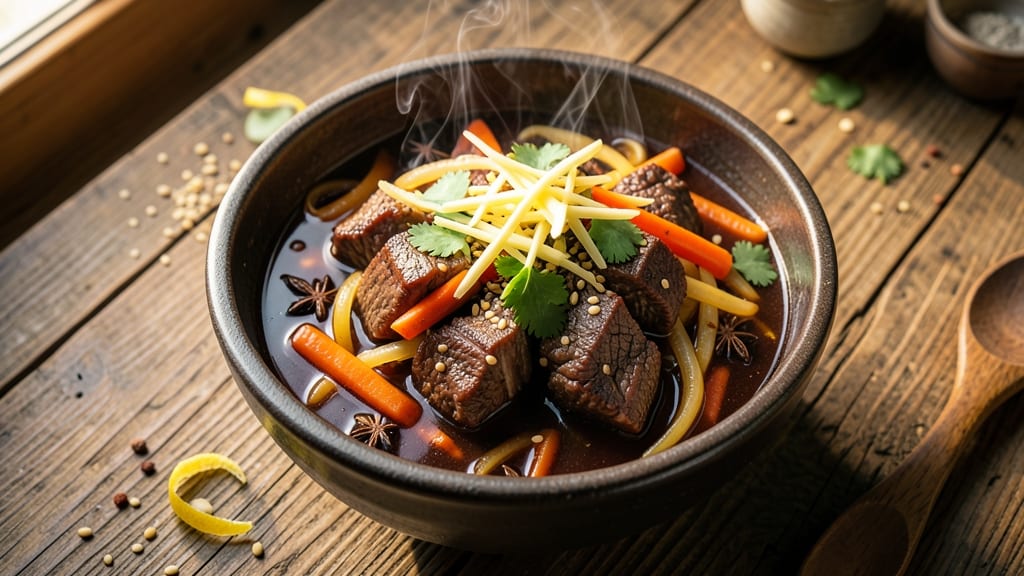
This Asian-style beef stew recipe transforms tough cuts into melt-in-your-mouth tenderness with a silky soy-ginger braise that balances sweet, salty, and umami flavors. The secret lies in wok-searing beef for deep caramelization before slow simmering with aromatic spices—star anise, ginger, and garlic—that infuse every bite with restaurant-quality depth.
What starts as a simple pot of ingredients becomes a rich, fragrant stew where the beef practically falls apart at the touch of a spoon.
Unlike traditional Western beef stews, this version embraces Asian techniques: a quick sear in a hot wok creates irresistible crunch, while soy sauce and ginger build layers of complexity. The stew thickens naturally as it simmers, creating a velvety broth that clings to the beef and vegetables.
It’s the kind of dish that smells like home before it even hits the table—warm, inviting, and packed with flavor that lingers long after the last bite.
Perfect for feeding a crowd or meal prepping, this stew delivers restaurant-quality results with minimal effort. The beef becomes fork-tender while maintaining structure, and the aromatics—ginger, garlic, and star anise—create a symphony of flavors that’s both comforting and exciting.
Serve it over steamed rice or with pickled vegetables to balance the richness, and watch it disappear faster than you can say "seconds, please."
Whether you’re recreating a Japanese nikujaga or a Korean-inspired galbi jjigae, this recipe adapts beautifully while keeping the soul of Asian comfort food intact. The beauty lies in its versatility—use chuck roast for budget-friendly tenderness or ribeye for a richer, more decadent experience. Let’s get cooking!
Ingredients for asian style beef stew
Six aromatic ingredients transform tough beef into melt-in-your-mouth perfection with restaurant-quality depth.
| Ingredient | Amount | Notes |
|---|---|---|
| Chuck Roast 🥩 | 2 ½ lb | Cut into 1-inch cubes for even cooking |
| Yellow Onion 🧅 | 1 whole | Sliced into half-moons, outer skin removed |
| Fresh Ginger 🌿 | ½ cup | Julienned (about 2-inch piece), skin removed |
| Garlic Cloves 🧄 | 6 cloves | Minced, skin removed |
| Star Anise Pods 🌟 | 2 whole | Lightly crushed for aroma release |
| Carrots 🥕 | 1 ½ lb | Cut into 1-inch chunks, peeled |
| Celery Stalks 🌿 | 4 whole | Cut into 1-inch pieces, leaves reserved |
| Light Soy Sauce 🥢 | ½ cup | Kikkoman preferred for balance |
| Dark Soy Sauce 🥢 | 2 tbsp | For depth and color |
| Sesame Oil 🫒 | 2 tbsp | Toasted, for finishing aroma |
| Honey 🍯 | 2 tbsp | Wildflower preferred for floral notes |
| Dry Sherry 🍷 | ¼ cup | Or substitute with dry white wine |
| Beef Broth 💧 | 2 cups | Homemade or high-quality low-sodium |
| Vegetable Oil 🫒 | 2 tbsp | High smoke point for wok-searing |
| Diamond Crystal Kosher Salt 🧂 | 1 ½ tsp | Adjust to taste at the end |
| Freshly Ground Black Pepper 🌶️ | ½ tsp | Cracked peppercorns preferred |
The chuck roast is your canvas here—look for cuts with good marbling at Whole Foods or your local butcher for that melt-in-your-mouth texture. Pre-cut cubes save time, but if buying whole, ask for 1-inch pieces. Fresh ginger and garlic are non-negotiable for authentic flavor; Asian markets often carry larger roots and heads. Star anise pods should be whole and plump—none of that dusty spice aisle stuff. For the soy sauces, Kikkoman light soy and a quality dark soy like Lee Kum Kee deliver that perfect umami balance without overpowering. The sherry adds complexity, but dry white wine works in a pinch—just reduce by a tablespoon if using.
No star anise? Anise seeds or a pinch of fennel seeds mimic the aroma, though not the exact flavor. Substituting honey with maple syrup cuts the floral notes slightly, but the sweetness remains. For the sherry, dry vermouth or even apple cider vinegar (reduce first) can stand in. The beef broth? Vegetable broth works perfectly if you're avoiding meat-based liquids. Celery leaves add subtle bitterness—don't toss them! And if you're using pre-cut vegetables, pat them dry first to prevent a watery stew. The carrots can be baby carrots if that's what's in the fridge, but whole carrots yield better flavor when cut into even chunks.
This stew tastes even better the next day as flavors meld. Store in an airtight container in the fridge for up to 5 days, or freeze portions for 3 months. For meal prep, double the recipe and portion into glass containers—they keep flavors fresher longer. The wok-seared beef bits add irresistible crunch when reheated, but if you prefer softer textures, skip the initial sear and braise everything together. Leftovers reheat beautifully; just add a splash of water or broth if it's too thick. Serve over steamed jasmine rice to soak up every last drop of that silky ginger-soy broth.
Why You'll Love This Recipe
- I’ll be real: my freezer is packed with this stuff. Reheat it for lunch, toss it into noodles, or serve it over rice—it’s always a hit. Even my picky teenage son grabs seconds when he thinks I’m not looking.
- One-Pot Magic: Between us, I’ve made stews that required three pots and a prayer. This? Just a Dutch oven, a few chops, and 30 minutes of hands-off simmering. The chuck roast practically melts into tender perfection while you sip your tea.
- Ginger-Garlic Bomb: That fresh ginger and garlic combo—sizzled whole before simmering—builds layers of warmth. Honestly, the star anise adds this subtle, woodsy depth that turns "stew" into "I’d drive 20 minutes for this."
- Leftovers That Beg: I’ll be real: my freezer is packed with this stuff. Reheat it for lunch, toss it into noodles, or serve it over rice—it’s always a hit. Even my picky teenage son grabs seconds when he thinks I’m not looking.
Step-by-step instructions for Asian style beef stew
Transform tough chuck roast into tender, aromatic beef with this precise braising method.
Prepare the Vegetables and Aromatics
Begin by cutting the 2.5 lb chuck roast into 1-inch cubes using a sharp chef's knife. Set aside. Peel and slice the 1 whole yellow onion into half-moons, removing any outer skin. For the 0.5 cup fresh ginger, peel and julienne into thin matchsticks (about a 2-inch piece). Mince the 6 cloves garlic and lightly crush the 2 whole star anise pods between your palms to release their aroma.
Cut the 1.5 lb carrots into 1-inch chunks and peel them first. Trim the 4 whole celery stalks into 1-inch pieces, reserving the leaves for garnish. This prep ensures everything cooks evenly and infuses the stew with balanced flavors. Keep all prepped ingredients in separate bowls until ready to use.
Wok-Sear the Beef for Maximum Flavor
Heat a large Dutch oven over medium-high heat until hot. Add 2 tablespoons vegetable oil and swirl to coat. Working in batches, add the chuck roast cubes without overcrowding the pan. Sear for 2-3 minutes per side until deeply browned and caramelized. This step develops the rich, meaty foundation of the stew.
Transfer the seared beef to a plate and set aside. In the same pot, add 1 tablespoon vegetable oil and sauté the onion half-moons for 3 minutes until softened. Add the ginger, garlic, and star anise, cooking for 1 minute until fragrant. This aromatic base will carry through the entire dish.
Build the Braising Liquid
Deglaze the pot by pouring in the 0.25 cup dry sherry, scraping up any browned bits with a wooden spoon. Let it simmer for 2 minutes to cook off the alcohol. Add the 0.5 cup light soy sauce, 2 tablespoons dark soy sauce, and 2 tablespoons honey, stirring to combine. This creates the sweet-savory base that balances the stew.
Pour in the 2 cups beef broth, scraping the bottom again to incorporate all the flavor. Add the carrots, celery, celery leaves, and the seared beef back into the pot. Bring to a gentle simmer and cover partially with a lid. The liquid should nearly cover the beef—if not, add 1-2 tablespoons water.
Braise Until Tender and Flavorful
Transfer the Dutch oven to a 325°F oven and braise for 2.5 to 3 hours until the beef is fork-tender and easily pulls apart. The vegetables should also be tender but still hold their shape. Check periodically and add 1-2 tablespoons water if the liquid reduces too much.
About 30 minutes before the stew finishes, stir in the 2 tablespoons sesame oil and 1.5 teaspoons diamond crystal kosher salt. Taste and adjust seasoning with additional salt or pepper if needed. The sesame oil adds a nutty aroma that elevates the dish.
Finish and Serve with Crunch
Remove the stew from the oven and let it rest for 10 minutes before serving. The resting period allows the flavors to meld and the juices to redistribute. Ladle the stew into bowls, ensuring each serving includes tender beef, carrots, and celery. Garnish with extra sesame oil and cracked black pepper for a finishing touch.
Serve immediately with steamed jasmine rice to soak up the rich, aromatic braising liquid. The contrast between the silky beef and the slight crunch of the celery leaves makes this stew a standout dish. Store leftovers in the refrigerator for up to 4 days or freeze for 3 months.
Pro Tips For Making Asian Style Beef Stew
- SEAR THE ROAST FIRST: Hit that chuck roast with a screaming-hot pan—no oil needed, just the meat’s own fat—until it’s deep brown in spots. I used to skip this and wondered why my stew tasted flat; that crust locks in flavor and keeps the meat from turning mushy later.
- GRATE THAT GINGER FINE: Skip the mincer and use a microplane or the side of your knife to shave ginger into matchsticks. Too much chunky ginger means you’ll taste it like a wallop instead of a whisper—this recipe needs it to melt into the sauce, not sit as puzzles in your mouth.
- STAR ANISE: CRUSH IT: Smash those pods with the flat side of your knife before tossing them in—just enough to crack the shell, not pulverize. Whole pods? You’ll just chew on them later. Cracked? The aroma blooms into the stew like a secret handshake.
- LOW AND SLOW WINS: After the initial sear, drop the heat to a simmer and walk away. I learned this the hard way when I babied mine on high heat—it turned out tough as boot leather. Two hours minimum, lid on tight, let the meat fall apart on its own.
Storing and reheating this recipe
Fridge Storage Tips
Let your Asian-style beef stew cool to room temperature (about 30 minutes) before storing to prevent bacterial growth. Transfer to an airtight container—I love glass Pyrex with snap-on lids—and refrigerate for up to 5 days.
The flavors actually deepen overnight as the spices meld together. Always leave 1-inch headspace for expansion, and press plastic wrap directly on the surface to minimize exposure to air. 💫
Freezer Prep Guide
For long-term storage, portion the stew into quart-sized freezer bags or glass containers (they reheat better). Label each with the date and freeze for up to 3 months. Lay bags flat to save space, and squeeze out excess air to prevent freezer burn.
When ready to use, thaw overnight in the fridge—never at room temperature. The wok-seared beef bits maintain their texture beautifully after freezing. ❄️
Reheating Methods
My preferred method is stovetop reheating: transfer stew to a pot over medium-low heat and add 2-3 tablespoons water or beef broth to prevent sticking. Simmer for 10-15 minutes, stirring occasionally, until heated through (165°F).
For microwave reheating, cover with a damp paper towel and heat in 1-minute intervals on 70% power, stirring between each interval. The sesame oil may separate slightly—just stir it back in before serving. 🔥
Texture Preservation
To maintain the stew's signature crunch from the wok-seared beef, avoid over-reheating. If the stew thickens too much, add 1-2 tablespoons water or broth while reheating. For extra richness, finish with a drizzle of toasted sesame oil and a sprinkle of black pepper.
The celery leaves add a fresh, bright contrast—reserve them until serving to keep their crispness. 🌿
Meal Prep Hacks
Double the recipe and store in individual glass meal prep containers for easy grab-and-go lunches. The stew reheats beautifully for 3-4 days without losing its depth. For a quick assembly, prep all ingredients ahead of time and store them in separate containers in the fridge.
When ready to cook, simply combine everything and follow the braising instructions. This method saves 1-2 hours of prep time during busy weeks. 💡
Serving Leftovers
Leftovers taste even better the next day—just reheat and serve with freshly steamed jasmine rice or noodles to soak up the rich broth. For extra flavor, top with quick-pickled vegetables (thinly sliced cucumbers or carrots tossed in rice vinegar and sugar) to cut through the richness.
The contrast of cool pickles with warm stew is pure comfort food magic. 🍚
Nutrition facts
Frequently asked questions
Can I use a different cut of beef for this Asian-style stew?
While chuck roast is ideal for its marbling and tenderness, you can substitute with brisket (add 1 extra hour of braising) or stew meat (like short ribs) for richer flavor. For quicker cooking, try flank steak or sirloin (slice thinly and reduce braising time to 1.5 hours). The key is choosing a cut with good fat content for that melt-in-your-mouth texture.
How can I make this stew spicier?
Add 1-2 teaspoons of gochugaru (Korean chili flakes) or 1 tablespoon of sambal oelek when you add the soy sauce and honey. For deeper heat, include 1-2 slices of fresh red chili or ½ teaspoon of chili paste during the initial sear. Adjust to taste—Asian-style stews often balance heat with sweetness, so the honey will help mellow the spice.
What’s the best way to thicken the broth if it’s too watery?
Simmer the stew uncovered for 10-15 minutes to reduce the liquid naturally. For instant thickening, mix 1 tablespoon cornstarch with 2 tablespoons cold water, stir into the stew, and simmer for 2-3 minutes until it gels. Alternatively, mash some of the cooked carrots or celery with a fork and stir back in—their starches will help thicken the broth.
Can I make this stew in an Instant Pot or slow cooker?
Yes! For the Instant Pot, follow the same prep steps but skip the oven braising. Sear the beef in batches, then add all ingredients (except sesame oil and salt) and cook on high pressure for 45 minutes, followed by a 10-minute natural release. For a slow cooker, combine everything (including broth) and cook on low for 6-8 hours or high for 4 hours. Finish with sesame oil and salt before serving.
Why does my stew taste bland after reheating?
Reheating can mute flavors, especially if the stew sits too long before reheating. Boost flavor by adding a splash of soy sauce, a pinch of sugar, or a drizzle of sesame oil while reheating. For extra depth, stir in 1 teaspoon of fish sauce or ½ teaspoon of MSG (if you use it) to restore umami. Always reheat gently over low heat to avoid overcooking the beef.