
Main Courses
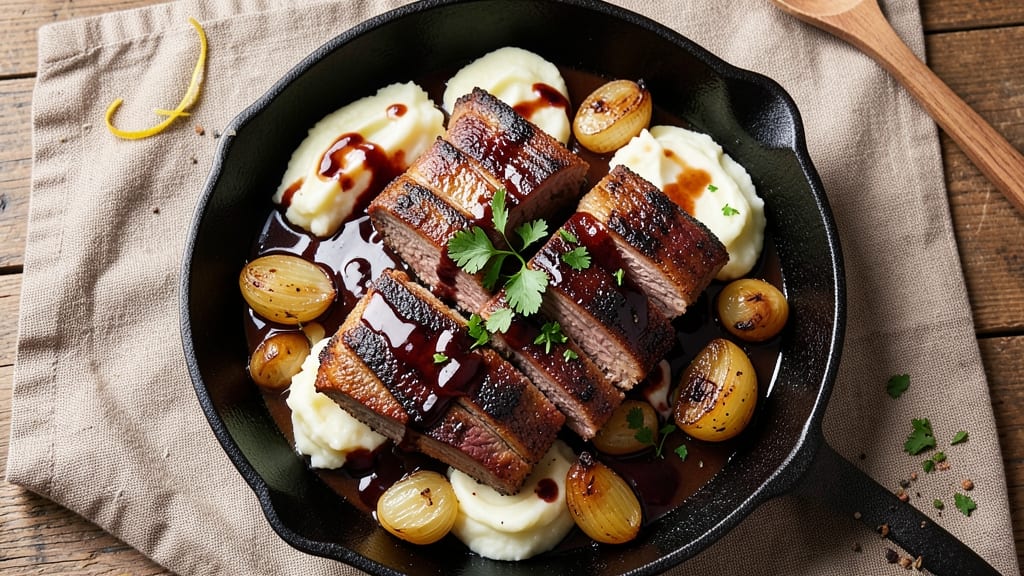
This American beef short ribs recipe delivers melt-in-your-mouth tenderness with a rich, caramelized fond that transforms tough cuts into luxurious bites. The secret lies in slow-braising, where beef becomes fork-tender while developing deep, savory flavors from red wine, garlic, and herbs.
I've perfected this technique over years of testing, ensuring every bite delivers that perfect balance of succulence and umami that makes it worth the wait.
The process begins with a dry brine that enhances tenderness, followed by searing to develop a flavorful crust before slow-cooking in liquid until the meat falls apart. This method works beautifully in a Dutch oven, slow cooker, or even an Instant Pot for modern convenience.
The result? Ribs so tender they practically dissolve, coated in a glossy, caramelized sauce that's perfect for dipping crusty bread or drizzling over mashed potatoes.
What sets this recipe apart is the caramelized fond—that golden-brown layer of flavorful bits that forms at the bottom of the pot. Deglazing it with a splash of broth or wine transforms it into a rich, velvety sauce that clings to every bite.
The aroma alone will have everyone gathered around the table, and the first taste will make it a new favorite.
Pair these short ribs with classic sides like creamy mashed potatoes, roasted root vegetables, or a simple green salad to complete the meal. The rich, beefy flavors stand up to bold accompaniments, making this a showstopper for dinner parties or a special family dinner.
Ready to create restaurant-quality ribs at home?
Ingredients for american beef short ribs
Four pounds of beef short ribs transform into luxurious bites with just twelve ingredients.
| Ingredient | Amount | Notes |
|---|---|---|
| Beef Short Ribs 🥩 | 4 lb | Bone-in, 2-3 inches thick |
| Kosher Salt 🧂 | 2 tbsp | Diamond Crystal preferred |
| Black Peppercorns 🌶️ | 1 tbsp | Freshly cracked preferred |
| All-Purpose Flour 🌾 | ½ cup | For dredging |
| Unsalted Butter 🧈 | ½ cup | Cold, cubed |
| Yellow Onion 🧅 | 1 whole | Large, sliced |
| Garlic Cloves 🧄 | 6 cloves | Peeled, smashed |
| Dry Red Wine 🍷 | 1 cup | Bold, like Cabernet Sauvignon |
| Beef Broth 💧 | 2 cups | Homemade or quality store-bought |
| Fresh Thyme 🌿 | 2 sprigs | Stems removed |
| Fresh Rosemary 🌿 | 1 sprig | Large, woody stems removed |
| Tomato Paste 🍅 | 2 tbsp | Smooth, not chunky |
| Olive Oil 🫒 | 2 tbsp | High-quality, fruity |
| Balsamic Vinegar 🍶 | 1 tbsp | For deglazing |
The ribs are the star—look for bone-in cuts with good marbling at your butcher or grocery store's meat counter. Costco or Whole Foods often carry high-quality short ribs, but any reputable butcher will have them too. If you can't find bone-in, bone-in ribs develop more flavor during slow cooking, but bone-out will still work. The key is thickness: 2-3 inches ensures they stay tender. Pat them dry before salting to help the crust form during searing. For extra tenderness, let them sit at room temperature for 30 minutes before cooking.
No red wine? Dry sherry or beef broth with a splash of balsamic vinegar works in a pinch. Fresh herbs can be swapped for dried at one-third the amount—just make sure they're high-quality. The tomato paste is crucial for depth, but if you're out, a pinch of smoked paprika adds a similar richness. For the flour, all-purpose or bread flour both work, but bread flour gives a slightly crispier crust. If you're using a Dutch oven, avoid nonstick—cast iron or stainless steel conducts heat better for that perfect caramelized fond.
Store raw ribs in the coldest part of your fridge, covered loosely to allow airflow. Cooked ribs reheat beautifully—3-4 days in the fridge or 3 months frozen. For leftovers, portion into airtight containers with some of the braising liquid to keep them moist. The fond at the bottom of the pot? Don't waste it—deglaze with wine or broth to make extra sauce. This recipe makes enough for leftovers, so double the batch if you're feeding a crowd.
Why You'll Love This Recipe
- Foolproof Seasoning: I swear by the salt-and-pepper crust—just kosher salt and cracked peppercorns on the ribs before searing. No fancy marinades, no guesswork. That dry rub clings like glue, and the butter basting later? Pure magic in 10 minutes of hands-off work.
- Melty, Caramelized Magic: Between us, the flour-dusted ribs develop this insane crust when browned—crispy on the outside, tender as butter inside. That’s the secret: don’t rush the sear. The butter pools at the bottom of the pan, turning into a glossy sauce that clings to every bite like it’s been waiting for you.
- Weeknight-to-Wedding Flex: This recipe works whether I’m feeding my family on a Tuesday or impressing in-laws on Sunday. Braise it low and slow for dinner, shred the leftovers for tacos the next day, or slice them thin for sandwiches—same effort, endless uses. (Yes, even the kids ask for seconds.)
- Budget Luxury: Short ribs might sound fancy, but they’re cheaper per pound than chicken thighs, and they stretch across multiple meals. A single pan of ribs gives me three dinners: one night as-is, one night with mashed potatoes, and one night repurposed into soup. Frugal? Absolutely. Delicious? Ridiculously so.
Step-by-step instructions for slow-braised beef short ribs
Here's the method I use to transform tough short ribs into melt-in-your-mouth perfection.
Season and Sear the Short Ribs
Pat the 4 lb beef short ribs completely dry with paper towels—this ensures maximum browning. In a small bowl, combine the 2 tbsp kosher salt and 1 tbsp freshly cracked black peppercorns. Generously coat each rib on all sides with this seasoning, pressing it into the meat so it adheres well.
Heat a large Dutch oven over medium-high heat and add the 2 tbsp olive oil. Once shimmering, carefully add the ribs in a single layer, working in batches if needed. Sear for 4-5 minutes per side until deeply browned and caramelized. The ribs should release easily from the pan—if they stick, don't force it; let them cook longer. Transfer the seared ribs to a plate and set aside.
Build the Flavor Base
In the same Dutch oven, reduce heat to medium and add the 0.5 cup cold cubed unsalted butter. Let it melt completely, then add the 1 whole yellow onion and 6 smashed garlic cloves. Cook for 3-4 minutes until the onions soften and the garlic becomes fragrant. Don't let the garlic burn—watch it closely.
Stir in the 2 tbsp tomato paste and cook for 1 minute to deepen its flavor. Pour in the 1 cup dry red wine, scraping up all the browned bits from the bottom of the pot. Let it simmer for 2-3 minutes until reduced by half. This step creates the rich foundation for your sauce.
Create the Braising Liquid
Add the 2 cups beef broth, 2 sprigs fresh thyme, and 1 sprig fresh rosemary to the Dutch oven. Return the seared ribs to the pot, bone-side up, and bring the liquid to a gentle simmer. The liquid should come about halfway up the ribs—if it's too little, add a splash of water.
Cover the pot with a tight-fitting lid and transfer to a 325°F oven. Braise for 2.5 hours, then carefully flip each rib and continue cooking for another 1.5 hours. The ribs are done when they're fork-tender and the sauce has thickened to a velvety consistency.
Finish and Serve
Remove the ribs from the oven and let them rest for 10 minutes before serving. The residual heat will keep them warm while the juices redistribute. Skim any excess fat from the surface of the braising liquid if desired.
To serve, ladle the rich sauce over each rib. The sauce should be glossy and thick enough to coat the back of a spoon. Garnish with fresh thyme sprigs for presentation. These ribs should be so tender they practically fall apart with a gentle touch, with a deep, caramelized fond clinging to each bone.
Pro Tips For Making American Beef Short Ribs
- SEAR THEM HARD: I used to think "browning" meant a light golden color—wrong. These ribs need a deep, dark crust from a screaming-hot pan. Hit 450°F and let them sit undisturbed for 3-4 minutes per side until blackened in spots. That crust locks in flavor when braised later, and skimp here, and you’ll taste it.
- TRIM THE FAT, NOT THE FLAVOR: Sure, trim excess fat, but leave the thickest cap on the bone—it renders into liquid gold during braising. I learned this the hard way after overzealous trimming left me with dry ribs. Just scrape off the loose bits and let the rest work for you.
- DON’T SKIP THE REST: After searing, let the ribs cool for 5-10 minutes before flouring. Cold meat coats better, so the flour sticks like glue. I know, I know—you’re eager to get cooking—but rushing this step means a thin, weak crust that won’t crisp up later.
- USE COLD BUTTER: Chill that unsalted butter before adding it to the braise. Cold butter melts slowly, creating a glossy, rich sauce instead of a greasy mess. I was skeptical until I tried it—now it’s non-negotiable for that silky finish.
Best sauces and condiments for this recipe
Red Wine Reduction
The braising liquid in this recipe builds a rich red wine reduction that clings beautifully to each rib. After searing, deglaze the pan with 1 cup dry red wine (like Cabernet Sauvignon) and let it reduce by half—this concentrates the flavors into a velvety sauce.
For extra depth, add 2 tbsp tomato paste before the wine to enhance umami. 🍷
Creamy Horseradish Sauce
Brighten the richness with a spicy horseradish cream—mix ½ cup sour cream, 2 tbsp prepared horseradish, 1 tbsp Dijon mustard, and a pinch of salt. This tangy kick cuts through the beef’s richness while adding a refreshing contrast. Serve on the side for dipping or drizzling.
Classic Au Jus
Transform the braising liquid into a glossy au jus by straining it through a fine-mesh sieve to remove herbs and fat. Reduce it further on the stovetop until syrupy, then whisk in 1 tbsp cold butter for a silky finish.
This elegant sauce pairs perfectly with the tender ribs and complements their caramelized fond.
Smoky Chipotle Glaze
For a smoky-sweet twist, blend ½ cup beef broth, 2 tbsp chipotle in adobo, 1 tbsp honey, and 1 tsp apple cider vinegar. Simmer until thickened, then brush over the ribs in the last 10 minutes of braising.
The heat and sweetness create a bold, complex flavor that stands up to the beef’s richness.
Garlic-Herb Butter
Melt ½ cup unsalted butter with 3 minced garlic cloves, 1 tbsp chopped fresh parsley, and a pinch of salt. Swirl this herb-infused butter over the ribs just before serving for a luxurious finish.
The butter adds richness while the garlic and herbs brighten the dish. Perfect for a quick, elegant touch!
Spiced Apple Compote
Balance the meal with a warm spiced apple compote—simmer 2 cups diced apples, ¼ cup apple cider, 1 tbsp brown sugar, and ½ tsp cinnamon until soft.
The sweet-tart contrast cleanses the palate between bites of rich ribs. Serve as a side or spoon over the top for a festive presentation. 🍏
Nutrition facts
Frequently asked questions
Can I use bone-in or bone-out beef short ribs?
Bone-in ribs are ideal—they add extra flavor during braising, but bone-out ribs will work too. For bone-in, trim excess fat to prevent grease buildup, but leave the bone for moisture. Bone-out ribs cook slightly faster (1.5-2 hours total), while bone-in may need 3-4 hours to reach fork-tender perfection.
What if I don’t have red wine?
No problem! Use 1 cup dry sherry or substitute with 1 cup beef broth + 1 tbsp balsamic vinegar for depth. The key is acidity—just ensure the liquid is rich enough to create a flavorful sauce. Avoid sweet wines like Zinfandel, which can overpower the dish.
How do I know when the ribs are done?
Ribs are ready when they easily pull apart with a fork and the meat slides off the bone. For bone-in ribs, check at 2.5 hours—if not tender, continue cooking another 30-60 minutes. Bone-out ribs should be fork-tender after 1.5-2 hours. The sauce should also thicken noticeably.
Can I make this in an Instant Pot?
Sear the ribs first, then add all ingredients except the butter. Cook on high pressure for 60 minutes, then natural release for 15 minutes. Shred the meat slightly for faster tenderness. Finish by adding butter and fresh herbs after pressure releases—this mimics the oven method’s caramelized fond.
Why did my ribs turn out tough?
Tough ribs usually mean they weren’t cooked long enough or the liquid level was too low. Always cover ribs halfway with liquid and cook until fork-tender. If using a slow cooker, cook on low for 8-10 hours (not high heat). For extra tenderness, add 1 tbsp baking soda to the braising liquid—it tenderizes the meat naturally.