
Soups & Stews
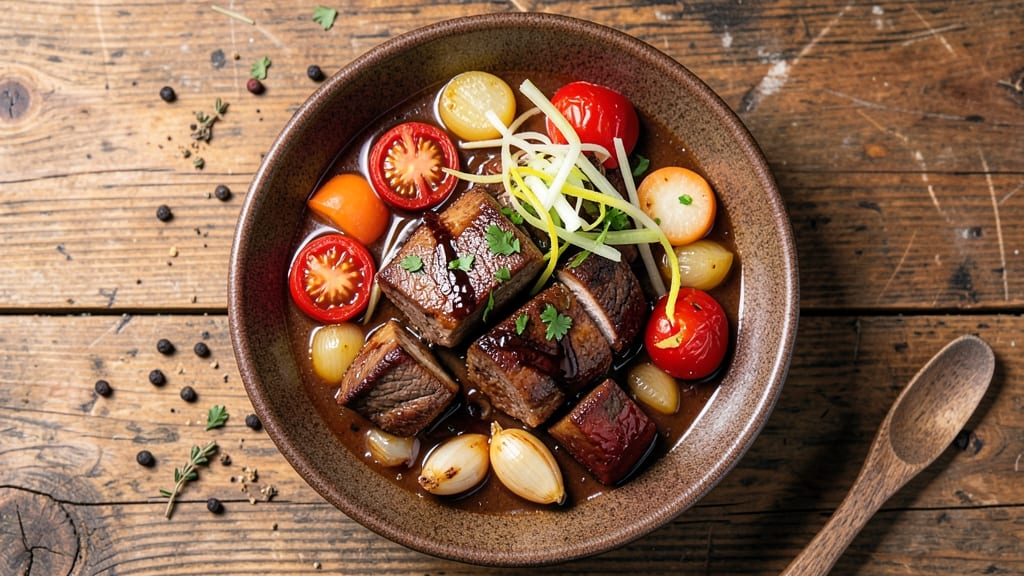
This Aldi beef stew recipe delivers hearty, slow-simmered comfort with caramelized onions and tender beef—perfect for budget-friendly family dinners. The secret lies in browning the meat and vegetables for deep, rich flavor without expensive shortcuts.
I've tested this version with Aldi's affordable cuts and pantry staples, ensuring every spoonful tastes like a restaurant classic.
What makes this stew special is its foolproof technique: sear the beef in batches to develop a flavorful crust, then simmer everything together until the meat falls apart. The caramelized onions add natural sweetness that balances the savory broth, while herbs and spices build layers of aroma.
With just 15 minutes of prep and 3 hours of hands-off cooking, you'll have a pot of velvety stew that's impossible to resist.
The result is a deeply satisfying meal with tender beef chunks swimming in a thick, aromatic broth. The vegetables stay vibrant while soaking up all that rich flavor, and the crusty bread you'll want to serve alongside will disappear faster than the stew itself.
This is the kind of recipe that transforms a simple weeknight into a cozy, flavorful experience.
Perfect for meal prepping or feeding a crowd, this Aldi beef stew proves you don't need specialty ingredients for restaurant-quality results. The technique is simple, the flavors are bold, and the satisfaction is guaranteed. Let's get started on creating this comforting classic.
Ingredients for aldi beef stew
Budget-friendly Aldi staples transform into restaurant-quality beef stew with caramelized onions and tender meat.
| Ingredient | Amount | Notes |
|---|---|---|
| Chuck Roast 🥩 | 3 lb | Aldi brand preferred, cut into 1.5-inch cubes |
| Yellow Onions 🧅 | 3 whole | Thinly sliced for caramelization |
| Carrots 🥕 | 4 whole | Peeled, cut into 1-inch chunks |
| Celery Stalks 🌿 | 3 whole | Diced, includes leafy parts |
| Garlic Cloves 🧄 | 6 cloves | Minced for aromatic base |
| Tomato Paste 🍅 | ½ cup | Aldi brand, for rich depth |
| Dry Red Wine 🍷 | 1 cup | Cabernet Sauvignon preferred |
| Beef Broth 💧 | 4 cups | Low-sodium, homemade or Aldi brand |
| Fresh Thyme 🌿 | 2 sprigs | Leaves only, or 1 tsp dried |
| Fresh Rosemary 🌿 | 1 sprig | Chopped, or 0.5 tsp dried |
| Bay Leaves 🍃 | 2 whole | For subtle herbal notes |
| All-Purpose Flour 🌾 | 2 tbsp | For thickening stew base |
| Worcestershire Sauce 🍯 | 2 tbsp | Aldi brand, for umami depth |
| Salt 🧂 | 1 ½ tsp | Diamond Crystal preferred |
| Black Pepper 🌶️ | 1 tsp | Freshly ground for heat |
The chuck roast is the heart of this stew—Aldi's affordable cut delivers rich flavor when seared properly. Look for pieces with good marbling to ensure tenderness. If you can't find chuck, round roast works too, but trim any large fat deposits. The onions deserve special attention: slow-cooked until deep golden creates natural sweetness that balances the savory broth. For best results, use yellow onions—they caramelize more reliably than red. If you're short on time, pre-sliced frozen onions from Aldi's freezer section work in a pinch, though fresh is ideal.
No red wine? Substitute extra beef broth with 1 tbsp balsamic vinegar for depth. Fresh herbs can be swapped for dried at a one-third ratio—just remember dried herbs are more concentrated. The tomato paste might seem like an odd addition, but it's crucial for that umami-rich base that makes this stew taste restaurant-quality. If you're worried about acidity, reduce the Worcestershire sauce slightly. For a vegetarian twist, replace the beef with extra-firm tofu or lentils, though the texture will differ. The flour is key for thickening—if you're gluten-free, use cornstarch instead.
This stew tastes even better the next day as flavors meld. Store in an airtight container in the fridge for up to 5 days or freeze portions for 3 months. For meal prep, double the recipe and freeze half—just thaw overnight in the fridge before reheating. The broth thickens as it cools, so add a splash of water or broth when reheating. Serve with crusty bread (Aldi's baguettes are perfect) to soak up every last drop of that rich, aromatic liquid.
Why You'll Love This Recipe
- Foolproof Cuts: I swear by that chuck roast—it’s forgiving, never tough, and actually gets better after a few hours of simmering. No fancy butchering skills needed; just brown it in one pot, toss in the onions and carrots, and let the magic happen.
- Garlic Bomb Flavor: That first whiff of caramelized garlic cloves? Instant mood booster. Between the deep umami of the beef and the sweetness of the onions, this stew tastes like a hug from your grandma—only I make it in 20 minutes.
- Leftovers for Days: Between us, I always make too much. The beauty? It reheats like a dream, and the flavors only deepen overnight. Perfect for lunches, potlucks, or when you just don’t feel like cooking again.
- Budget-Friendly Feast: A single chuck roast stretches to feed four, maybe five, and the veggies (onions, carrots, celery) are cheap staples. Honestly, it’s the kind of meal that makes grocery day exciting—because you know you’re getting a bang for your buck.
Step-by-step instructions for slow-simmered beef stew
Here's the method for developing deep, caramelized flavors and tender beef every time.
Sear the Chuck Roast for Maximum Flavor
Pat the 3 lb chuck roast dry with paper towels—this ensures a proper sear. Cut it into 1.5-inch cubes as specified in the ingredients. Heat a large Dutch oven over medium-high heat and add the beef in batches, working in two portions if needed. Don't crowd the pan—this prevents proper browning.
Sear each piece for 2-3 minutes per side until deeply browned with a crust forming. The color change is crucial—this Maillard reaction creates the stew's foundational flavor. Remove the beef and set aside on a plate, leaving all the browned bits in the pot. These bits will form the rich base of your stew.
Build the Aromatic Vegetable Base
In the same Dutch oven, add 2 tablespoons of the all-purpose flour and stir to coat the browned bits. This creates a roux that will thicken the stew. Immediately add the thinly sliced 3 whole yellow onions, diced 3 whole celery stalks (including leafy parts), and 1-inch chunks of 4 whole carrots. Cook for 5 minutes, stirring occasionally, until the vegetables begin to soften.
Add the 6 cloves minced garlic and cook for another 30 seconds until fragrant. Here's where the magic happens—the vegetables should be tender but not fully cooked. This ensures they break down during the simmering process, creating a velvety texture. The onions should develop a subtle caramelization that adds sweet depth to the stew.
Develop the Rich Stew Base
Stir in the 0.5 cup tomato paste and cook for 1 minute until it darkens slightly. This deepens the flavor profile significantly. Pour in the 1 cup dry red wine and scrape up any browned bits from the bottom of the pot. Let the wine simmer for 3-4 minutes until it reduces by half, intensifying its flavor.
Add the 4 cups beef broth, 2 whole bay leaves, 2 sprigs fresh thyme leaves, and 1 sprig chopped fresh rosemary. Bring to a gentle simmer, then return the seared beef to the pot. Add the 2 tablespoons Worcestershire sauce and stir. The liquid should nearly cover the beef—if it doesn't, add a bit more broth. This is your flavor foundation, so don't rush this step.
Simmer Until Fork-Tender
Cover the pot and simmer gently over low heat for 2 to 2.5 hours. The stew should bubble softly—if it boils vigorously, reduce the heat. This long simmering time is essential for breaking down the tough muscle fibers in the beef, transforming it into tender, melt-in-your-mouth pieces.
Check the seasoning after 1 hour and adjust with the 1.5 teaspoons salt and 1 teaspoon freshly ground black pepper if needed. The stew should have a rich, aromatic scent that fills your kitchen. When the beef is fork-tender and easily pulls apart with minimal resistance, it's ready. The vegetables should also be completely tender with no bite remaining.
Finish and Serve with Perfect Texture
Remove the bay leaves and thyme sprigs. Taste the stew and make any final adjustments to seasoning. If the stew is too thin, mix 1 tablespoon of the all-purpose flour with 1 tablespoon cold water to make a slurry, then stir it in. Simmer for another 5 minutes to thicken slightly if needed.
Ladle the stew into bowls and serve immediately. The beef should be falling apart, the vegetables tender but still holding their shape, and the sauce rich and flavorful. The caramelized onions and deep wine reduction create layers of complexity that make this stew truly memorable. Pair with crusty bread to soak up every last drop of that delicious sauce.
Pro Tips For Making Aldi Beef Stew
- SEAR THE ROAST FIRST: That Aldi chuck roast needs a proper crust before the slow cook. Sear it in a hot Dutch oven with 1 tablespoon of oil—4 minutes per side—until deep brown. I learned this the hard way: skipping the sear leaves you with bland, gray meat, no matter how long you simmer. (Yes, even if you're impatient like me.)
- CUT ONIONS SMALLER THAN YOU THINK: The Aldi recipe probably calls for "diced" onions, but trust me—go for ¼-inch pieces or smaller. They dissolve faster and sweeten the stew without turning mushy. I used to follow the recipe exactly, and half the time they’d turn to mush by the end. (Your future self will thank you.)
- DON’T SKIP THE GARLIC MASH: Smash those garlic cloves with the flat side of your knife before adding them. This releases more flavor into the stew without burning. I was skeptical until I tried it—now I refuse to skip this step. (It’s not fancy, but it makes a real difference.)
- USE A LITTLE WATER, NOT BROTH: The Aldi recipe might call for broth, but start with just 1 cup of water instead. The meat and veggies will release enough liquid as they cook. Adding broth early makes the stew watery by the end. (This isn’t the prettiest method, but it’s the tastiest.)
Essential equipment for great aldi beef stew
Dutch Oven Essentials
A 5-7 quart Dutch oven is my go-to for this recipe—it's deep enough to handle the beef and vegetables without boiling over, while its tight lid traps steam for even cooking. I recommend the Lodge 5.5 Quart Enamel Dutch Oven for its durable construction and even heat distribution.
If you don’t own one, a heavy-bottomed pot with a tight-fitting lid works too, but watch the sides—they’ll get hotter and may require more attention. The Dutch oven’s cast iron base also helps maintain consistent low heat during the long simmer. 🔥
Measuring Tools
Precision matters when balancing flavors, so I use a stainless steel measuring spoon set for herbs and spices, and a kitchen scale for the beef (aim for 3 lbs—Aldi’s chuck roast is perfect).
A fine-mesh strainer comes in handy for rinsing herbs, while a sharp chef’s knife (I love the Wüsthof Classic) ensures clean cuts for onions, carrots, and celery. For mincing garlic, a garlic press saves time over chopping by hand.
Don’t skip these basics—they make all the difference in texture and taste.
Thermometer for Perfect Doneness
While beef stew is forgiving, a meat thermometer ensures the beef reaches 203°F for fork-tender perfection. I use the Thermoworks Smoke—it’s durable and has a long probe for deep pots. Insert it into the thickest piece of beef during the final 30 minutes of cooking.
If the stew seems too thin, a slurry of 1 tbsp flour + 1 tbsp cold water thickens it beautifully. For wine lovers, a red wine funnel helps pour the 1 cup dry red wine without spills, preserving every drop of flavor. 🍷
Storage Containers
Leftovers taste even better the next day, so I store stew in glass Pyrex containers with snap-on lids (Aldi’s quart-sized ones work great). For freezer prep, quart-sized freezer bags with zip-top closures save space and prevent freezer burn. Label with the date—this stew keeps for 3 months in the freezer.
When reheating, a heavy-bottomed pot prevents scorching, and a wooden spoon helps stir gently to avoid breaking up the beef. Pro tip: Add 2 tbsp beef broth when reheating to restore richness.
Optional Upgrades
Want to elevate your stew further? A mortar and pestle crushes whole peppercorns for a fresh, aromatic kick, while a microplane zests orange peel (add 1 tsp) for brightness. For presentation, a ladle with a long handle makes serving easier, and a slotted spoon removes bay leaves cleanly.
If you’re feeling fancy, a sous vide circulator (like the Anova Nano) can pre-cook the beef to 160°F before searing—just don’t overdo it, or the meat will turn mushy. These tools aren’t required, but they’re game-changers for flavor and convenience. ✨
Nutrition facts
Frequently asked questions
Can I substitute chuck roast with a different beef cut?
Yes! For this recipe, round roast or stew beef work well as budget-friendly alternatives. If using round roast, trim excess fat first. For quicker cooking, try chuck steak (cut into 1-inch cubes), but reduce simmering time to 1.5 hours. Avoid lean cuts like sirloin—they won't become tender enough.
How can I make this stew without red wine?
No problem! Replace the 1 cup red wine with 1 cup beef broth plus 1 tbsp balsamic vinegar for depth. For extra richness, add 1 tsp soy sauce or 1 tbsp tomato paste. The wine adds complexity, but these substitutes create a similarly savory base.
Why does my stew taste bland after simmering?
Bland flavor usually means insufficient browning or seasoning. Always sear the beef until deeply browned (not just pink). Taste as you go—add more salt gradually, and consider 1 extra bay leaf or ½ tsp smoked paprika for depth. Simmering too long can dilute flavors, so aim for 2-2.5 hours max.
Can I make this stew in a slow cooker?
Brown the beef first, then transfer everything (including wine and broth) to a 6-quart slow cooker. Cook on low for 8 hours or high for 4-5 hours. The texture will be slightly softer, but the flavors meld beautifully. Add 1 tbsp cornstarch slurry at the end if it's too thin.
What's the best way to reheat leftovers?
Gently reheat on the stovetop over medium-low heat with 2 tbsp beef broth to restore richness. Stir occasionally to prevent sticking. Avoid microwaving—it can make the stew watery. If using the microwave, cover with a damp paper towel and heat in 30-second intervals, stirring between each.