
Soups & Stews
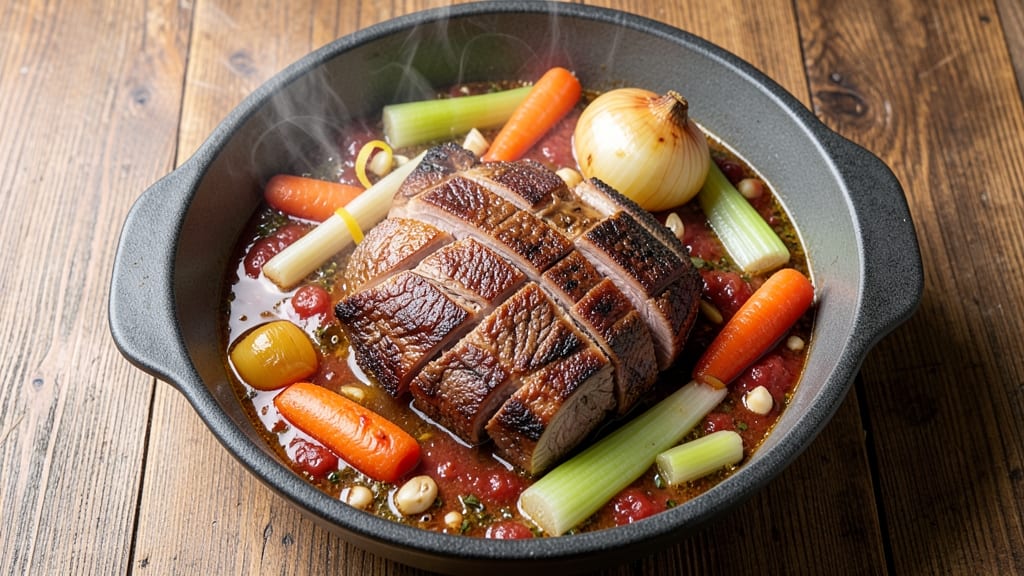
The absolute best beef stew recipe transforms tough cuts into melt-in-your-mouth perfection with a slow-simmered broth that's rich, aromatic, and packed with deep flavor.
This isn't your grandmother's stew—it's a restaurant-quality dish where tender beef, caramelized vegetables, and a velvety sauce come together through precise techniques like proper searing and slow cooking. The secret lies in patience and layering flavors, ensuring every spoonful delivers that hearty, comforting taste we crave on cold days.
What sets this recipe apart is the method: browning the beef in batches for maximum flavor development, then deglazing the pot to capture every savory bit. A touch of tomato paste deepens the sauce, while aromatic vegetables like carrots and celery form the flavor base.
The result is beef that practically falls apart at the touch, swimming in a sauce so rich it coats every forkful. This is the kind of stew that makes people linger at the table, savoring each bite.
By the time you serve this, you'll have a pot of golden, bubbling stew with tender beef chunks, perfectly softened vegetables, and a sauce that's thick enough to cling to crusty bread.
The aroma alone will have everyone gathering around the table, and the first taste will confirm why this is the best beef stew you've ever made. It's a dish that feels like a hug on a chilly evening, yet it's simple enough for weeknight dinners.
Serve with crusty bread for soaking up every last drop, or pair it with roasted root vegetables for a complete meal. The leftovers reheat beautifully, making this an ideal recipe for meal prep or feeding a crowd.
Here's how to make it—step by step, with all the professional techniques that make the difference between good stew and the absolute best.
Ingredients for absolute best beef stew
These rich, flavorful ingredients transform tough beef into melt-in-your-mouth perfection.
| Ingredient | Amount | Notes |
|---|---|---|
| Chuck Roast 🥩 | 3 lb | Well-marbled for tenderness |
| Yellow Onion 🧅 | 2 whole | Chopped into 1/2-inch pieces |
| Carrots 🥕 | 4 whole | Cut into 1-inch chunks |
| Celery Stalks 🌿 | 4 whole | Chopped into 1/2-inch pieces |
| Garlic Cloves 🧄 | 6 cloves | Minced for depth of flavor |
| Tomato Paste 🍅 | 2 tbsp | For rich sauce color |
| Dry Red Wine 🍷 | 1 cup | Bold variety like Cabernet |
| Beef Broth 💧 | 4 cups | Homemade or high-quality store-bought |
| All-Purpose Flour 🌾 | 2 tbsp | For thickening sauce |
| Bay Leaves 🍃 | 2 whole | Fresh for best aroma |
| Fresh Thyme 🌿 | 1 tbsp | Leaves only, chopped |
| Fresh Parsley 🌿 | ¼ cup | Chopped for garnish |
| Olive Oil 🫒 | 2 tbsp | Extra-virgin for searing |
| Salt 🧂 | 1 ½ tsp | Kosher or sea salt |
| Ground Black Pepper 🌶️ | 1 tsp | Freshly ground preferred |
The beef is everything here—chuck roast with good marbling melts like butter after slow cooking. Grab the biggest piece you can find at Costco or your local butcher shop; pre-cut roasts work too, but a whole piece lets you trim excess fat for a cleaner pot. Look for bright red meat with visible white flecks—those are the flavor goldmines. Fresh thyme and bay leaves might seem small, but they're the aromatic backbone of this stew. Trader Joe's or Whole Foods carry them in bulk if you want to stock up.
No red wine? Dry sherry or extra beef broth works in a pinch—just add a splash of vinegar for acidity. The tomato paste can be swapped for 1/4 cup crushed tomatoes if you prefer, though it won't deepen the sauce as much. Fresh carrots and celery are ideal, but frozen chopped veggies in a bag save time. The key is browning the beef well—don't rush this step, or you'll miss out on the Maillard reaction that makes the sauce sing. If you're short on time, pre-chopped mirepoix from the store cuts prep by half.
This stew tastes even better the next day as flavors meld. Portion into containers with a little extra sauce on top—freezes beautifully for up to 3 months. For serving, keep the pot warm on low heat with a lid, or reheat gently on the stove. The crusty bread soaks up every last drop, so have plenty on hand. Leftovers reheat best in a pot with a splash of broth to loosen the sauce—microwaving makes it watery. Trust me, you'll want to make this twice.
Why You'll Love This Recipe
- One-Pot Magic: I swear by this—just toss everything in one pot, walk away, and come back to rich, fall-apart beef with zero extra dishes. The chuck roast practically melts into itself, and the onions caramelize right in the broth. (Yes, even on a Tuesday night.)
- Deep Umami Bomb: That slow-cooked chuck roast with garlic and onions? It’s ridiculously flavorful—like a hug in a bowl. The carrots stay crisp-tender, and the celery adds this earthy backbone that makes every bite worth lingering over.
- Leftovers That Don’t Suck: Honestly, this stew tastes better the next day. I make a double batch on Sundays, freeze half, and pull it out for lazy nights or when company drops by. The flavors only deepen, and reheating takes two minutes—just stir and serve.
- Budget Win: A chuck roast is cheap, but it feels fancy. You get three or four meals out of this—feed the family, pack lunches, or share with neighbors. The veggies stretch the filling, and the garlic makes it taste like you slaved over it. (Between us, it’s my secret weapon.)
Step-by-step instructions for the absolute best beef stew
Here's how to create melt-in-your-mouth beef that falls apart with tender vegetables and rich, velvety sauce.
Sear the Chuck Roast for Maximum Flavor
Pat the 3 lb chuck roast completely dry with paper towels—this ensures a perfect sear. Heat a large Dutch oven over medium-high heat and add 2 tablespoons olive oil. Once shimmering, place the roast in the pot and sear for 4-5 minutes per side until deeply browned. You want that crust—it's packed with flavor that will infuse into your stew.
Real talk: don't rush this step. If you see the oil smoking before the meat browns, reduce the heat slightly. The goal is a rich, caramelized crust, not burnt edges. Once browned, remove the roast and set it aside on a plate—you'll come back to it in a moment.
Build the Flavor Base with Vegetables and Aromatics
In the same Dutch oven, add 2 whole yellow onion, 4 whole carrots, and 4 whole celery stalks—all chopped as specified. Cook for 8-10 minutes until the vegetables soften and begin to caramelize. This is where the magic happens—the natural sugars in the vegetables will develop deep, sweet flavors that form the foundation of your stew.
After the vegetables have softened, add the 6 cloves minced garlic and cook for another 30 seconds until fragrant. Here's the thing—don't let the garlic burn. It goes from aromatic to bitter in seconds. Then stir in 2 tablespoons tomato paste and cook for 1 minute to deepen the color and add richness to the sauce.
Deglaze and Develop the Sauce
Pour in the 1 cup dry red wine and scrape up all those browned bits from the bottom of the pot with a wooden spoon. This deglazing step captures all the flavor you worked so hard to create. Let the wine simmer for 3-4 minutes until it reduces by about half, intensifying its flavor.
Next, sprinkle the 2 tablespoons all-purpose flour over the mixture and stir vigorously for 1-2 minutes until the flour is completely incorporated and the mixture thickens slightly. This creates a roux that will help thicken your stew as it simmers. Don't walk away—you want to cook the flour just enough to remove its raw taste.
Simmer for Tender Perfection
Return the seared chuck roast to the Dutch oven. Add 4 cups beef broth, 2 whole bay leaves, and 1 tablespoon chopped fresh thyme. Bring the mixture to a gentle simmer, then reduce the heat to low. Here's where patience pays off—cover the pot and let it cook for 2.5 to 3 hours until the meat is fork-tender and falls apart easily.
I know it's tempting to check constantly, but resist the urge. Every time you lift the lid, you lose heat and moisture. Instead, trust the process. The stew should be rich and flavorful, with the meat so tender it practically melts in your mouth. If the sauce gets too thin during cooking, you can always thicken it later with a cornstarch slurry.
Finish and Serve with Fresh Herbs
Once the meat is tender, remove the chuck roast and shred it right in the pot with two forks. Return the shredded meat to the stew and discard the bay leaves. Taste and adjust the seasoning with 1.5 teaspoons salt and 1 teaspoon ground black pepper as needed. The stew should be rich and well-seasoned, but not overly salty.
For the final touch, stir in the 0.25 cup chopped fresh parsley and let the stew sit off the heat for 10 minutes to allow the flavors to meld together. Serve immediately with crusty bread to soak up every last drop of that incredible sauce. This isn't just beef stew—it's a hearty, comforting masterpiece that will have everyone asking for seconds.
Pro Tips For Making Absolute Best Beef Stew
- SEAR THE ROAST UNTIL IT BROWNS: I used to rush this step, thinking a quick sear would do—wrong. Get that chuck roast deep brown on all sides (5-7 minutes per side) with a hot, dry pan. The crust locks in flavor and keeps the meat from turning mushy later. (Yes, even if you’re impatient like me.)
- CUT VEGETABLES LARGE AND UNIFORM: Tiny diced carrots and celery turn to mush in hours of simmering. Cut them into 1-inch chunks instead—big enough to stay intact but small enough to soften properly. Onions? Halve them lengthwise and leave the skin on for cleaner slices.
- DEGLAZE WITH BEER AND BONE BROTH: After searing, don’t just splash in water—use a mix of ½ cup dark beer (stout or porter) and ½ cup beef bone broth. The beer adds depth, and the broth cuts through the richness. (Skip the wine unless you’re making a fancy version—this is beef stew, not coq au vin.)
- LOW AND SLOW MEANS 3 HOURS MINIMUM: I learned this the hard way—rushing the cook time leaves the chuck tough. Cover the pot and simmer at actual low heat (180–200°F) for at least 3 hours, stirring occasionally. The meat will fall apart when you poke it with a fork. (No, 1.5 hours won’t cut it.)
Essential equipment for great absolute best beef stew
Dutch Oven
The Dutch oven is my non-negotiable choice for this stew—it's the only pot that can handle searing, simmering, and even baking all in one. I recommend a 5-6 quart enameled cast iron Dutch oven like the Lodge 5.5 Quart or Le Creuset Signature for its even heat distribution and durability.
The enamel coating prevents rust and makes cleanup a breeze. If you don't have one, a heavy-bottomed pot with a tight-fitting lid will work, but you'll miss out on the Dutch oven's superior heat retention. 🔥
Instant-Read Thermometer
An instant-read thermometer is a game-changer for ensuring your beef reaches perfect doneness. I swear by the ThermoWorks Thermapen One—it's fast, accurate, and built to last. Insert it into the thickest part of the roast when you think it's done, and aim for an internal temperature of 203°F.
This ensures the meat will be fork-tender without turning mushy. A cheaper alternative is the Taylor Precision Digital Thermometer, which still delivers reliable readings for under $20.
Wooden Spoon
A sturdy wooden spoon is essential for deglazing and stirring without scratching your Dutch oven. I prefer a long-handled, heat-resistant wooden spoon like the OXO Good Grips or a simple maple or hickory spoon from a kitchen supply store.
Wood won't conduct heat like metal, so it won't burn your hands or damage your pot. Plus, it helps scrape up all those flavorful browned bits during deglazing—don't skip this step! 🥄
Chef's Knife
A sharp chef's knife is crucial for chopping onions, carrots, celery, and garlic efficiently. I use an 8-inch Wüsthof or Shun Premier for precision and control. A dull knife makes prep frustrating and unevenly chopped veggies.
If you're on a budget, the Mercer Culinary Genesis is a great mid-range option. Keep your knife sharp with a whetstone or honings steel—it makes all the difference in speed and safety. 🔪
Measuring Spoons
Precise measurements matter, especially for the tomato paste, flour, and spices. Invest in a set of stainless steel measuring spoons like the OXO Good Grips for accuracy and durability. These spoons are easy to read and won't rust over time.
For the 2 tablespoons tomato paste and 2 tablespoons flour, using a spoon ensures you get the right amount without over or under-measuring. A small error here can throw off the balance of your stew's sauce. ✨
Slow Cooker Option
If you prefer hands-off cooking, a 6-quart slow cooker like the Hamilton Beach Programmable works beautifully for the simmering phase. Brown the beef and veggies in a skillet first, then transfer everything to the slow cooker.
Cook on low for 8-10 hours or high for 5-6 hours until the meat is tender. The slow cooker maintains a consistent temperature, so you won't have to monitor it closely. Just
Nutrition facts
Frequently asked questions
Can I use a different cut of beef for this stew?
While chuck roast is ideal for its marbling and tenderness, you can substitute with round roast or stew meat if needed. Avoid lean cuts like sirloin—they won't become tender enough. For best results, look for a cut with visible fat marbling. If using a tougher cut, increase the cooking time by 30-60 minutes.
How do I fix a stew that's too thin?
If your stew's sauce is too thin, mix 1 tablespoon cornstarch with 2 tablespoons cold water to create a slurry. Stir it into the simmering stew and cook for 2-3 minutes until thickened. For a quicker fix, whisk 1 tablespoon flour with 2 tablespoons broth and add it directly to the pot. Always thicken at the end to preserve texture.
Can I make this stew in an Instant Pot?
Sear the beef in the Instant Pot pot first, then add all ingredients except the parsley. Cook on high pressure for 60 minutes, then quick-release the pressure. Shred the beef and stir in the parsley. The Instant Pot cuts cooking time significantly while keeping the meat tender. For extra richness, add 1/2 cup red wine during the pressure cooking phase.
Why does my beef stew taste bland?
Bland stew often results from skipping the searing step or not deglazing the pot. Always brown the beef well to develop flavor, and scrape up every browned bit when adding wine. Boost flavor with 1 teaspoon Worcestershire sauce or 1/2 teaspoon smoked paprika. Fresh herbs like thyme and bay leaves add depth—never use dried herbs in place of fresh for this recipe.
How long can I store leftovers?
This stew keeps beautifully for 4-5 days in the refrigerator. For longer storage, freeze portions for up to 3 months. Reheat gently on the stove with a splash of broth to restore the sauce's richness. Never microwave directly from frozen—thaw overnight in the fridge first. The flavors actually improve after the first day!