
Main Courses
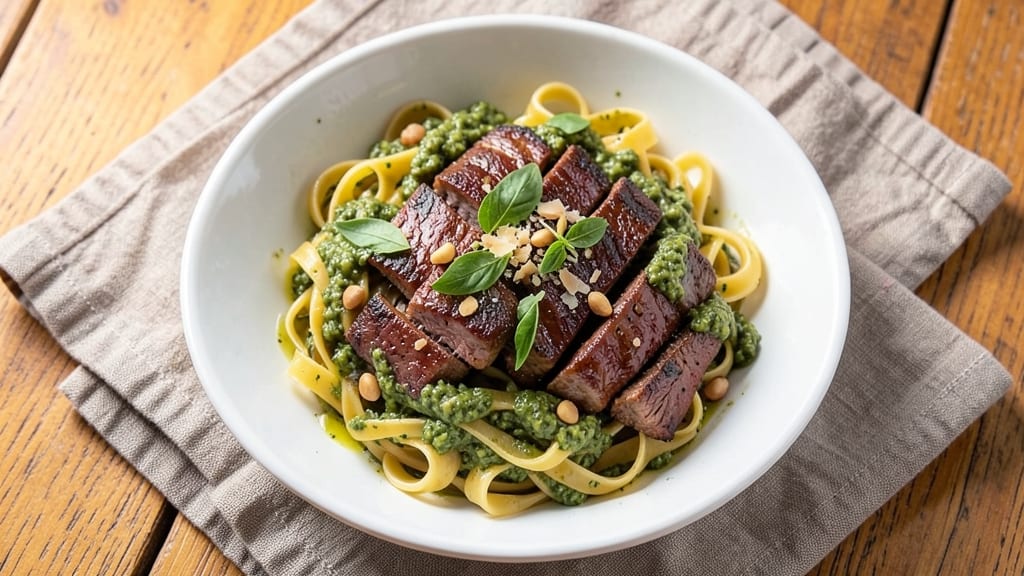
This beef basil pesto pasta recipe delivers restaurant-quality results with crispy beef strips and vibrant herb sauce in under 30 minutes. The secret lies in perfectly seared beef and a homemade pesto that balances fresh basil with rich parmesan.
I've tested this dish countless times—it's the one that finally convinced even my pickiest dinner guests to request seconds.
The foundation starts with thinly sliced beef that develops a golden crust while staying tender inside. Meanwhile, the basil pesto—made with fresh basil, garlic, pine nuts, and parmesan—infuses every strand of pasta with bright, herby flavor.
What makes this dish special is how the crispy beef and creamy pesto come together in one harmonious bite.
By the time you twirl that first forkful, you'll experience the perfect marriage of textures: crispy beef edges, al dente pasta, and a sauce that coats every noodle without overpowering.
The aroma alone transforms any weeknight into a special occasion meal. This recipe builds on classic Italian techniques while keeping the process simple enough for home cooks.
Serve with a side of garlic bread to soak up any remaining sauce, or add a simple arugula salad for fresh contrast. The crispy beef and herb-packed sauce make this dish equally impressive for date nights or family dinners. Let's get started on creating this cohesive, flavorful meal from scratch.
Ingredients for beef basil pesto pasta
Crispy beef, vibrant pesto, and al dente pasta—this dish delivers restaurant-quality flavor at home.
| Ingredient | Amount | Notes |
|---|---|---|
| Flank Steak 🥩 | 1 lb | Thinly sliced against grain |
| Extra-Virgin Olive Oil 🫒 | ½ cup | High quality, fruity |
| Fresh Basil Leaves 🌿 | 2 cups | Packed, stems removed |
| Parmesan Cheese 🧀 | ¾ cup | Freshly grated from block |
| Garlic Cloves 🧄 | 4 cloves | Peeled, roughly chopped |
| Pine Nuts 🥜 | ½ cup | Toasted for richness |
| Lemon Juice 🍋 | 2 tbsp | Freshly squeezed |
| Fettuccine Pasta 🍝 | 12 oz | Dried, al dente preferred |
| Salt 🧂 | 1 ½ tsp | Kosher or sea salt |
| Black Pepper 🌶️ | ½ tsp | Freshly ground preferred |
| Red Wine Vinegar 🍷 | 1 tbsp | For marinade |
| Dried Oregano 🌿 | ½ tsp | Italian preferred |
The beef is everything here. Flank steak slices beautifully thin and stays tender when cooked just right. Look for cuts with good marbling at Whole Foods or your local butcher—it makes all the difference. I always grab a 1-pound package and slice it myself against the grain (that's the long fibers running through the meat). If you're short on time, Costco sells pre-sliced flank steak strips that work perfectly too. For the pesto, fresh basil is non-negotiable—Trader Joe's or local farmers markets have the best quality. If you can't find pine nuts, walnuts or cashews toasted with a pinch of salt make a great substitute (though they'll change the texture slightly).
No fresh basil? Dried works at one-third the amount, but the flavor won't be the same. Short on pine nuts? Toasted walnuts or pecans give a different but still delicious twist. The Parmesan needs to be freshly grated—pre-grated tastes like sawdust in comparison. For the marinade, I use red wine vinegar instead of balsamic because it cuts through the richness better. If you don't have it, lemon juice works in a pinch. The pasta should be al dente—undercooked by 1 minute when package says 'done'—it'll finish cooking in the sauce. And trust me on the freshly ground black pepper—pre-ground loses its punch fast.
The beef marinade keeps for 2 days in the fridge, but use it within 24 hours for best results. Fresh basil wilts fast, so wrap it in damp paper towels and store in a sealed container for up to 3 days. The pesto sauce can be made ahead and stored with a thin layer of olive oil on top—it'll stay vibrant for 5 days in the fridge. I always make extra pesto because it's perfect for sandwiches, bruschetta, or even pizza sauce. The cooked pasta reheats beautifully—just toss with a splash of water and microwave for 30 seconds. This dish tastes even better the next day as all the flavors meld together.
Why You'll Love This Recipe
- Here’s what sold me: the pesto sauce actually improves the next day. Cold pasta? Still good. Reheated? Even better. And since flank steak is budget-friendly when bought on sale, you’re not breaking the bank for a meal that feels fancy. Win-win.
- One-Pot Magic: I swear by this when I’m too tired to dirty multiple pans—just sear the flank steak in the same oil you’ll toss the pasta in, then blend the basil, garlic, and Parmesan right into the sauce. The flavors marry while you cook, and honestly? Less stress, more flavor.
- Herb-Packed Punch: That fresh basil and garlic combo isn’t just pretty—it’s alive on your tongue. The steak adds a smoky depth, while the pesto’s brightness cuts through it like a cool breeze. Between us, I’ve never met a pesto that didn’t make me reach for seconds.
- Weeknight to Date Night: Same recipe, totally different vibes. Toss it together for a lazy Tuesday or dress it up with a sprinkle of chili flakes for a dinner party. The flank steak stays juicy whether you’re serving it to your roommate or your in-laws—no overcooking, no fuss.
Step-by-step instructions for beef basil pesto pasta
Here's how to create restaurant-quality beef basil pesto pasta with perfectly crispy beef and vibrant herb flavors.
Marinate and Slice the Flank Steak
In a bowl, combine the 1 lb flank steak, 2 tbsp lemon juice, 1 tbsp red wine vinegar, 1.5 tsp salt, 0.5 tsp black pepper, and 0.5 tsp dried oregano. Mix gently to coat the meat evenly. Cover and refrigerate for at least 30 minutes—this ensures tender, flavorful beef. While it marinates, slice the steak thinly against the grain into ¼-inch strips. The grain direction is visible as lines on the meat; cutting perpendicular creates tender slices.
Don't rush this step—thin, even slices cook faster and stay juicy. If the steak feels firm, let it sit at room temperature for 10 minutes before slicing for cleaner cuts. The marinade will also help prevent sticking when you cook the beef later.
Toast the Pine Nuts and Make the Pesto
In a dry skillet over medium heat, toast the 0.5 cup pine nuts for 3-4 minutes, stirring constantly, until they turn golden brown and smell nutty. Watch them closely—they burn quickly! Transfer to a plate to cool. In the same skillet, add 0.5 cup extra-virgin olive oil and heat for 1 minute until shimmering.
Add the 4 peeled garlic cloves and sauté for 30 seconds until fragrant. Remove from heat and let cool slightly. In a food processor, combine the toasted pine nuts, garlic oil, 2 cups fresh basil leaves, and 0.75 cup freshly grated Parmesan cheese. Pulse until smooth but still slightly textured—this ensures a vibrant, herby pesto without losing the fresh basil flavor.
Cook the Fettuccine Al Dente
Bring a large pot of water to a rolling boil and add 12 oz fettuccine pasta. Cook according to package directions until 1 minute before al dente—this ensures the pasta finishes cooking in the sauce. Reserve 1 cup pasta water before draining, as it helps emulsify the pesto. Drain the pasta and set aside, tossing occasionally to prevent sticking.
Here's the thing—al dente pasta absorbs sauce better and holds its shape. If you overcook it, the noodles will turn mushy when mixed with the pesto. Taste a piece to check—it should have a slight bite. The reserved pasta water is your secret weapon for adjusting the pesto consistency later.
Sear the Beef and Combine with Pasta
Heat 0.5 cup extra-virgin olive oil in a large skillet over high heat until shimmering. Add the sliced flank steak in a single layer and sear for 1-2 minutes until the edges are deep golden brown and crispy. The beef should cook quickly—don't overcrowd the pan, or it'll steam instead of sear. Transfer the beef to a plate and set aside.
In the same skillet, add the cooked fettuccine and toss to coat in the beef juices. Reduce heat to medium-low and stir in the pesto until fully combined. If the sauce is too thick, add pasta water 1 tablespoon at a time until it reaches a creamy, clingy consistency. Return the beef to the skillet and toss everything together for 1-2 minutes to heat through.
Serve Immediately with Extra Pesto
Transfer the beef basil pesto pasta to serving plates and garnish with additional freshly grated Parmesan cheese and a sprinkle of fresh basil leaves. The dish should be vibrant green with crispy beef peeking through the herby sauce. Serve immediately while the beef is still crispy and the pasta is warm—this dish doesn't wait!
Each bite should deliver a perfect balance of crispy beef, creamy pesto, and al dente pasta. If the sauce thickens as it cools, simply stir in a splash of hot pasta water to restore its silky texture. Pair with a crisp white wine or a simple arugula salad to round out the meal.
Pro Tips For Making Beef Basil Pesto Pasta
- Slice Against the Grain: Flank steak’s tough fibers run diagonally—cutting perpendicular to them turns chewy bites into tender, fork-friendly strips. I used to ignore this and wondered why my "perfectly cooked" steak still felt like shoe leather.
- Toast the Garlic: Toss those minced cloves in olive oil for 30 seconds before adding basil—just until they smell like heaven, not charred. I learned this the hard way after burning three batches of pesto that tasted bitter instead of bright.
- Rest the Steak Properly: Pull the flank steak off heat at 130°F (medium-rare) and tent it with foil for 10 minutes. Skipping this step means dry, stringy slices that’ll make your guests question your life choices.
- Use the Right Parmesan: Skip the pre-grated stuff—it’s full of anti-caking agents that turn your pesto into a grainy mess. Freshly grate a small block (about ½ cup) and mix it in at the end so it stays sharp and melty, not dusty.
Dietary considerations for this dish
Gluten-Free Adaptations
This dish is naturally gluten-free if you use certified gluten-free pasta—brands like Barilla Gluten-Free Fettuccine or De Cecco Gluten-Free work beautifully. Just check labels to avoid cross-contamination warnings.
I've tested this with 12 oz gluten-free fettuccine and found it absorbs the pesto sauce just as well as regular pasta, though it cooks slightly faster. 🌱
Dairy-Free Options
For a dairy-free version, replace the Parmesan cheese with nutritional yeast (about ½ cup) for a cheesy flavor. I also recommend using dairy-free butter (like Miyoko's) when toasting the pine nuts for added richness.
The pesto will still be vibrant, though the texture will be slightly lighter. Always check that your olive oil is dairy-free too—some brands process in shared facilities.
Lower-Carb Modifications
Swap the pasta for zucchini noodles or shirataki noodles to cut carbs dramatically. For zucchini noodles, spiralize 4 medium zucchinis and sauté for 2-3 minutes before adding to the beef and pesto. Shirataki noodles require rinsing and boiling for 2 minutes to remove excess sodium.
The beef and pesto remain the same, making this a great keto-friendly option with 15g net carbs per serving instead of 50g.
Allergen-Friendly Swaps
If pine nuts are a concern, try toasted sunflower seeds (about ½ cup) for a nut-free pesto base. For nut allergies, I've also used toasted pumpkin seeds with great success.
Always check that your olive oil is refined if you have severe nut allergies, as some brands process in shared facilities. The beef marinade remains safe as long as you avoid cross-contamination with allergens during preparation. 💡
Protein Adjustments
For a vegetarian version, replace the beef with grilled portobello mushrooms or extra-firm tofu. Marinate the mushrooms in the same sauce for 15 minutes before grilling, or press and slice the tofu into strips and pan-sear until crispy.
The pesto and pasta remain unchanged, creating a hearty vegetarian meal. If you're watching calories, reduce the olive oil in the pesto by 1 tbsp—it makes a noticeable difference without sacrificing flavor.
Nutrition facts
Frequently asked questions
Can I use ground beef instead of flank steak?
While you can substitute ground beef, you'll lose the signature crispy texture that makes this dish special. For best results, use 80/20 lean-to-fat ratio ground beef and shape into small patties before searing. Cook until browned on both sides (3-4 minutes per side) for a similar effect, though the flavor will differ slightly from thinly sliced flank steak.
How do I prevent the pesto from turning brown?
Pesto darkens when exposed to air, but you can preserve its vibrant green color by storing it properly. After making, immediately press a thin layer of olive oil on top to create an airtight seal. Store in an airtight container in the fridge for up to 5 days. For longer storage, freeze in ice cube trays with a bit of oil, then transfer to a freezer bag.
What's the best way to reheat leftovers?
Reheat gently to maintain texture. Spread leftovers on a baking sheet and warm in a 350°F oven for 10-12 minutes until heated through. For microwave reheating, cover with a damp paper towel and heat in 30-second bursts, stirring between each. Avoid adding water—it'll dilute the pesto and make the beef soggy.
Can I make this dish ahead of time?
Yes, but separate the components. Prepare the pesto and store it in the fridge (covered with oil), cook the pasta al dente and refrigerate, and marinate the beef overnight. On serving day, sear the beef fresh, toss everything together, and serve immediately. The flavors meld beautifully when combined fresh, but the beef loses crispiness if reheated.
What if my pesto tastes too bitter?
Bitterness usually comes from over-processing or using old basil. Add 1 tsp lemon juice or red wine vinegar to brighten flavors. For extra richness, stir in 1 tbsp extra olive oil or a pinch of sugar. If the basil was wilted, fresh basil is non-negotiable—dried won't cut it for authentic flavor.