
Soups & Stews
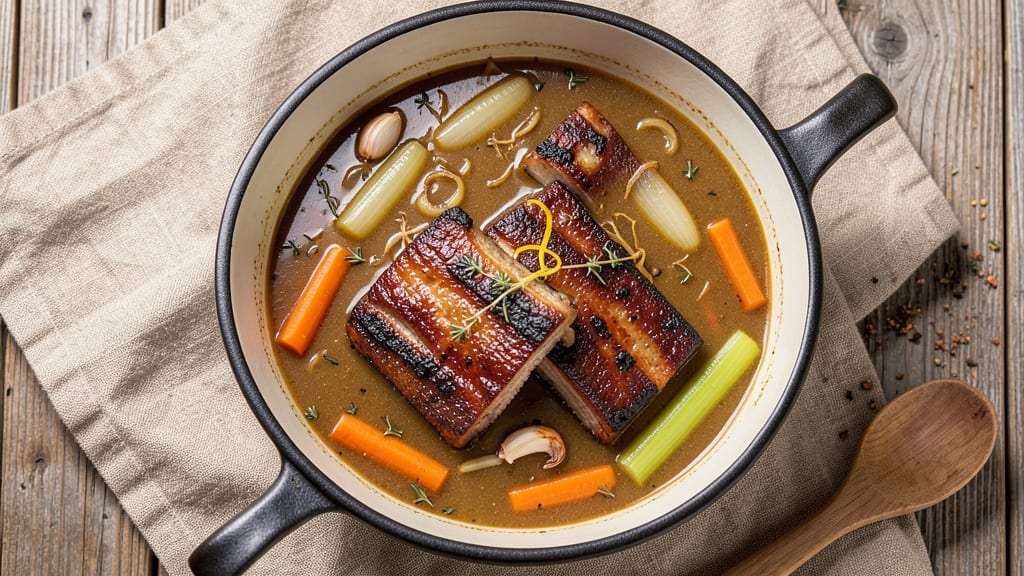
This beef back ribs soup recipe transforms tough cuts into melt-in-your-mouth luxury with a rich, smoky broth that clings to every bone. The secret lies in slow-cooking ribs until they fall apart, releasing collagen that thickens the broth into velvety perfection.
I developed this recipe after years of experimenting with braising techniques—each simmer layer deepens the flavor, creating a soup that tastes like a labor of love without requiring hours at the stove.
The process begins with a 3-hour braise that tenderizes the ribs while building a flavorful base of onions, garlic, and aromatic herbs. As the ribs break down, they infuse the broth with meaty depth, while carrots and celery add natural sweetness.
The result isn’t just soup—it’s a hearty, satisfying meal with meat-on-the-bone indulgence that rivals your favorite restaurant dish.
What sets this recipe apart is the balance of textures: tender ribs that pull apart at the touch, caramelized vegetables for sweet contrast, and a silky broth that coats every spoonful.
The slow cooking ensures maximum flavor extraction, while a final simmer with fresh herbs brightens the dish. Serve with crusty bread to soak up every last drop of that luxurious broth.
Perfect for cold evenings or as a comforting centerpiece for gatherings, this soup proves that homemade can outshine takeout. The technique is straightforward, but the results are restaurant-quality—rich, smoky, and deeply satisfying. Let’s get started on creating your next favorite weeknight dinner.
Ingredients for beef back ribs soup
Sixteen ingredients for a soup that tastes like a labor of love—smoky, rich, and packed with meaty goodness.
| Ingredient | Amount | Notes |
|---|---|---|
| Beef Back Ribs 🥩 | 4 lb | Bone-in, meaty, cut into 2-inch pieces |
| Yellow Onions 🧅 | 2 large | Chopped, roughly 2 cups total |
| Carrots 🥕 | 4 medium | Whole, peeled, cut into 1-inch chunks |
| Celery Stalks 🧄 | 4 whole | Cut into 1-inch pieces, including leaves |
| Garlic Cloves 🧄 | 8 cloves | Peeled, smashed for deep flavor |
| Fresh Thyme Sprigs 🌿 | 4 whole | Or 2 tsp dried thyme if fresh unavailable |
| Fresh Rosemary 🌿 | 1 tbsp | Chopped, or 1 tsp dried rosemary |
| Bay Leaves 🌿 | 2 whole | Remove before serving |
| Tomato Paste 🍅 | ½ cup | High-quality, no sugar added |
| Red Wine 🍷 | 1 cup | Bold dry red, like Cabernet Sauvignon |
| Beef Broth 💧 | 6 cups | Homemade or high-quality store-bought |
| Olive Oil 🫒 | ¼ cup | Extra-virgin for richness |
| Salt 🧂 | 2 tsp | Kosher salt, adjust to taste |
| Black Peppercorns 🌶️ | 1 tsp | Freshly cracked, not pre-ground |
| Crusty Bread 🍞 | 1 loaf | For serving, optional but recommended |
| Fresh Parsley 🌿 | ¼ cup | Chopped, for garnish |
The beef back ribs are the star here, so look for well-marbled cuts at your butcher. Costco or Whole Foods usually have great options, but any grocery store with a meat counter will work. If you're buying pre-cut ribs, check for visible fat and connective tissue—that's where the flavor hides. The carrots and celery should be firm with no soft spots, and the onions should smell sweet, not bitter. Fresh herbs are ideal, but dried will work in a pinch—just use half the amount. For the tomato paste, Rao's or Bertolli are solid choices if you're not making your own from San Marzano tomatoes.
No red wine? Substitute with beef broth plus a splash of balsamic vinegar—it gives that same tangy depth. Running short on thyme? Dried oregano or marjoram works in a bind, though fresh thyme is ideal for that bright herbal note. The tomato paste can be skipped entirely if you're avoiding it, but I don't recommend it—the acidity helps balance the richness. For the olive oil, use something fruity and peppery like California Extra Virgin. It makes a difference in the final broth. If you're making this ahead, the ribs can be pre-braised and frozen for up to 3 months—just thaw and finish cooking.
This soup tastes even better the next day as the flavors meld, so make a double batch if you can. Store leftovers in the fridge for up to 5 days or freeze for 3 months. For serving, tear the crusty bread into chunks—it soaks up the broth beautifully. The parsley is just for garnish, but it adds a fresh pop of color. If you're feeling fancy, top each bowl with a drizzle of the reserved cooking fat from the ribs—it's pure flavor gold. And trust me, the extra effort of slow-cooking those ribs is worth every smoky, meaty bite.
Why You'll Love This Recipe
- Here’s what sold me: ribs on sale? Buy them. Carrots and celery wilted in the crisper? Use them. This soup turns tough cuts and forgotten veggies into something luxurious without breaking the bank. I’ve fed six people for under $15 using this recipe—no joke.
- No Chopping Chaos: I swear by this one—just dice the onions, chop the celery into rough chunks (no need for precision), and toss in the ribs. The carrots? Leave them whole or halve them—either way, they soften beautifully. Honestly, I’ve made this while scrolling through my phone because the prep is that simple.
- Rich, Deep Umami Bomb: That first sip of broth? Chef’s kiss. The beef ribs melt into the pot, releasing their collagen into a velvety base while the onions and garlic caramelize just enough to add layers. Between us, I’ve never met a soup that balances hearty and delicate better—especially when the celery adds that bright, fresh cut.
- Leftovers That Beg for More: Between us, this soup only gets better the next day. The flavors meld overnight, and the ribs? They practically fall off the bone when reheated. I make a double batch on Sundays because by Wednesday, I’m already planning Thursday’s lunch—no question asked.
Step-by-step instructions for beef back ribs soup
Transform tough ribs into tender, flavorful morsels with this rich, aromatic broth.
Sear the Ribs for Deep Flavor
Heat the 0.25 cup olive oil in a large Dutch oven over medium-high heat. Arrange the 4 lb beef back ribs in a single layer, meaty-side down, and sear undisturbed for 8-10 minutes until deeply browned. This Maillard reaction creates the foundation for your soup's rich, caramelized depth.
Flip the ribs and repeat on the other side. Once browned, transfer them to a plate. Here's the thing—don't rush this step. The ribs need that crispy crust to release their collagen into the broth later. If you notice the oil smoking excessively, reduce the heat slightly to maintain control without losing the sear.
Build the Aromatic Base
In the same Dutch oven, add the 2 large yellow onions, 4 medium carrots, and 4 whole celery stalks. Cook for 5-6 minutes, stirring occasionally, until the vegetables begin to soften. The onions should turn translucent, and the carrots should release their natural sweetness.
Add the 8 cloves garlic cloves, 4 whole fresh thyme sprigs, 1 tbsp fresh rosemary, and 2 whole bay leaves. Stir for 30 seconds until fragrant. This aromatic trio forms the soul of your soup, infusing every spoonful with herbal complexity. Don't skip this step—these ingredients work together to create layers of flavor that transform simple beef broth into something extraordinary.
Deglaze and Simmer the Broth
Pour in the 1 cup red wine and scrape up all the browned bits from the bottom of the pot with a wooden spoon. This deglazing step captures all the concentrated flavor you built during searing. Let the wine simmer for 3-4 minutes until reduced by half, intensifying its richness.
Add the 0.5 cup tomato paste, 6 cups beef broth, and 2 tsp salt. Stir well to combine, then return the ribs to the pot. Bring to a gentle boil, then reduce heat to low and cover partially. Simmer for 2.5-3 hours, maintaining a gentle simmer—not a rolling boil. This slow cooking time is crucial; it allows the collagen in the ribs to break down into gelatin, creating a velvety texture that defines this luxurious soup.
Finish with Pepper and Fresh Herbs
After 2.5-3 hours, the ribs should be fork-tender, falling off the bone easily. Remove the ribs from the broth and let them cool slightly. Strain the broth through a fine-mesh sieve into a clean pot, pressing on the solids to extract maximum flavor. Discard the solids and return the broth to the pot.
Add the 1 tsp black peppercorns and stir in the 0.25 cup fresh parsley. Taste and adjust seasoning if needed—the broth should be rich but balanced, with the herbs adding brightness. Return the ribs to the pot and warm through for 2-3 minutes. This final step ensures the ribs are heated through while keeping the broth at its peak temperature.
Serve with Crusty Bread
Ladle the soup into bowls, placing 2-3 rib pieces in each serving. The meat should be tender enough to pull apart with a fork, and the broth should coat the back of a spoon with a silky, almost custard-like texture. Serve immediately with slices of the 1 loaf crusty bread for dipping.
Here's the magic: as you eat, the ribs will continue to release their gelatinous goodness into the broth, creating an even richer experience with each bite. This soup is at its best when enjoyed fresh, so gather your guests around the table and prepare for a meal that feels like a hug in a bowl.
Pro Tips For Making Beef Back Ribs Soup
- Sear the Ribs First: I learned this the hard way—skipping the sear means flavorless broth. Pat the ribs dry, then hit them with high heat in a pot for 3-4 minutes per side until deep brown. That crust locks in meaty richness when it simmers later.
- Cut Celery into Matchsticks: This isn’t just about looks—smaller pieces soften faster and blend into the soup instead of sitting like chewy twigs. Use a knife to slice celery into ¼-inch sticks (yes, even if it feels tedious). Your future self will notice the difference.
- Simmer Low and Slow: After adding ribs and veggies, keep the heat at a bare simmer—just enough to see tiny bubbles at the edges. Too much heat = tough meat and cloudy broth. Trust me, 2-3 hours at this pace makes all the difference for tender ribs.
- Brown Onions Before Adding Liquids: I was skeptical until I tried it—caramelized onions add depth that raw ones never will. Cook sliced onions in the same pot (with a splash of water if needed) until golden, about 8-10 minutes. The extra effort pays off in every spoonful.
Best sauces and condiments for these flavors
Smoky Tomato Sauce
This ½ cup tomato paste infused with 1 cup red wine creates the perfect smoky base for your soup. Simmer the wine for 3-4 minutes until reduced by half to concentrate its depth. For extra smokiness, add ½ tsp smoked paprika or 1 chipotle pepper in adobo sauce when deglazing.
The acidity brightens the rich beef flavors while adding a subtle tang that balances the meaty intensity. 🍅
Herb-Infused Olive Oil
Finish your soup with a drizzle of herb-infused olive oil for added richness. Heat 2 tbsp extra-virgin olive oil with 1 tsp fresh rosemary and 1 tsp fresh thyme until fragrant, then strain and drizzle over each bowl.
This step elevates the dish with a fragrant aroma and silky texture. For a smoky twist, infuse the oil with ½ tsp liquid smoke instead of fresh herbs.
Creamy Mustard Sauce
For a creamy contrast, whip together ¼ cup Greek yogurt (or sour cream) with 1 tbsp Dijon mustard and 1 tsp apple cider vinegar. Dollop this sauce on top of each serving just before eating—it cuts through the richness while adding a tangy kick.
The mustard’s sharpness complements the smoky broth beautifully. 🌟
Crispy Bread Topping
Toast 1 cup crusty bread cubes in the oven at 375°F for 8-10 minutes until golden and crisp. Sprinkle with 1 tsp garlic powder and ½ tsp dried oregano before toasting.
Serve these croutons on top of the soup for a satisfying crunch that contrasts the silky broth. This adds texture and makes every spoonful more exciting.
Spicy Pepper Relish
Mix ¼ cup finely diced jalapeños with 2 tbsp chopped red onion, 1 tbsp chopped cilantro, and 1 tbsp lime juice for a fresh, spicy garnish. This relish adds a bright, zesty contrast to the rich soup.
For extra heat, add ½ tsp cayenne pepper or a dash of hot sauce. Serve on the side for those who love a little kick. 🌶️
Nutrition facts
Frequently asked questions
Can I use regular beef broth instead of homemade?
While homemade broth adds depth, high-quality store-bought beef broth works perfectly. Look for brands with no added preservatives or excess salt. For extra richness, add 1 tsp beef bouillon powder to each cup of broth. The key is to use enough liquid (about 6 cups) to create a velvety consistency after simmering.
How do I know when the ribs are tender enough?
Ribs are ready when they easily pull apart with a fork or two forks. Test a piece after 2 hours of simmering—if it's still tough, return them to the broth for another 30-45 minutes. The broth should also thicken noticeably as collagen breaks down, creating that signature silky texture. Pro tip: The longer you cook, the richer the broth becomes!
Can I make this soup in a slow cooker?
Yes! Sear the ribs first (as directed), then transfer everything to a 6-quart slow cooker. Cook on low for 6-7 hours or high for 4-5 hours. The ribs will become fork-tender and infuse the broth beautifully. Just add the fresh herbs and parsley at the very end to preserve their brightness. The slow cooker method is perfect for hands-off flavor development.
Why does my broth look cloudy instead of clear?
Cloudiness is normal and actually desirable! It means collagen from the ribs has fully dissolved, creating that luxurious, almost gelatinous texture. For a clearer broth, strain it through a fine-mesh sieve after simmering. However, the cloudy version is richer in flavor—many chefs prefer it for its velvety mouthfeel. If you want extra clarity, skim off any fat first before straining.
What if I don't have red wine?
No problem! Substitute with 1 cup beef broth + 1 tbsp balsamic vinegar for acidity, or use ½ cup apple cider + ½ cup beef broth. The vinegar or cider adds brightness to balance the richness. For a non-alcoholic option, try 1 cup cranberry juice—it mimics the tangy depth of wine while keeping the dish family-friendly.