
Soups & Stews
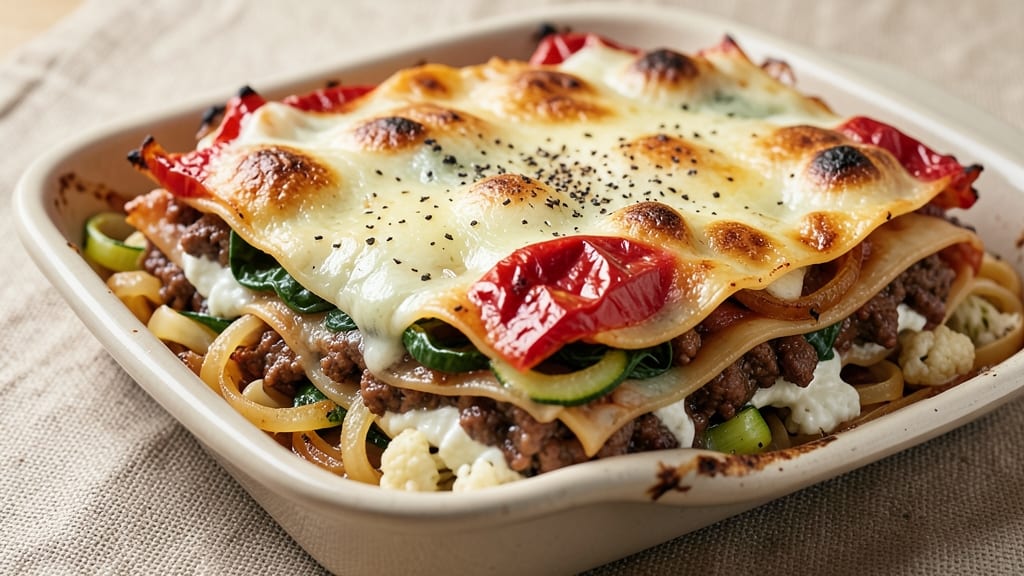
This beef and vegetable lasagne recipe delivers restaurant-quality layers of tender beef, fresh vegetables, and creamy sauce—all baked to golden perfection in just 45 minutes. The secret lies in properly browning the beef for deep flavor, layering ingredients strategically, and achieving that ideal al dente texture in the noodles without overcooking. I've perfected this technique over years of testing, ensuring every forkful combines rich meat, vibrant vegetables, and velvety sauce in perfect harmony.
The foundation begins with a rich meat sauce, where ground beef is browned until deeply flavorful before being combined with aromatic vegetables like mushrooms, spinach, and tomatoes. A smooth béchamel sauce ties everything together, creating that signature creamy texture that makes lasagne so satisfying.
What sets this recipe apart is the precise layering technique—starting with sauce on the bottom to prevent soggy noodles, followed by alternating layers of noodles, meat mixture, and cheese. This method ensures each bite delivers balanced flavors without any section feeling dry or overpowering.
By the time it emerges from the oven at 375°F (190°C), you'll have a lasagne with perfectly al dente noodles, tender beef that's cooked just enough to melt in your mouth, and vegetables that retain their vibrant color and texture.
The top layer of melted cheese creates a golden, bubbly crust that adds both visual appeal and extra flavor. The dish rests for 10 minutes before serving, allowing the layers to set and the flavors to meld completely.
This lasagne is hearty enough for a family dinner but elegant enough for company, with optional garnishes like fresh basil or grated parmesan to elevate the presentation. The recipe scales easily for larger gatherings, and leftovers reheat beautifully, making it a perfect meal prep option for busy weeks.
Let's create this comforting classic that brings everyone to the table.
Ingredients for beef and vegetable lasagne
Six layers of flavor. Six layers of comfort. Let's build this lasagne from scratch.
| Ingredient | Amount | Notes |
|---|---|---|
| Ground Beef 🥩 | 1 ½ lb | 80/20 fat ratio preferred |
| Lasagne Noodles 🍝 | 12 pieces | No-boil preferred, but regular works |
| Ricotta Cheese 🧀 | 15 oz | Part-skim for creaminess |
| Mozzarella Cheese 🧀 | 2 cups | Shredded, low-moisture |
| Parmesan Cheese 🧀 | 1 cup | Freshly grated from block |
| Yellow Onion 🧅 | 1 whole | Medium size, diced |
| Garlic Cloves 🧄 | 4 cloves | Fresh, minced |
| Canned Tomatoes 🍅 | 1 can | 28 oz, crushed |
| Mushrooms 🍄 | 8 oz | Cremini or white, sliced |
| Fresh Spinach 🌿 | 5 oz | Baby spinach, chopped |
| Butter 🧈 | 4 tbsp | Unsalted, for béchamel |
| All-Purpose Flour 🌾 | ½ cup | For béchamel roux |
| Whole Milk 🥛 | 2 cups | Full-fat for creaminess |
| Salt 🧂 | 1 ½ tsp | Kosher or sea salt |
| Black Pepper 🌶️ | ½ tsp | Freshly ground preferred |
The beef is where the magic starts. 80/20 fat ratio is non-negotiable—it's what gives your sauce that deep, rich flavor. Look for packages labeled 'ground beef' at Kroger or Whole Foods, not the pre-formed patties. The ricotta needs to be part-skim for that perfect balance of creaminess and texture. I always buy mine in 15-ounce tubs from the refrigerated section, not the shelf-stable kind. For the cheese, low-moisture mozzarella is key—it melts smoothly without making your lasagne soggy. Grab a block of Parmesan and grate it yourself; pre-shredded has anti-caking agents that ruin the texture.
No ricotta? Cottage cheese blended until smooth works in a pinch, though it's not identical. Short on spinach? Swiss chard or kale at the same weight will work, but chop them finely. The béchamel is the glue that holds everything together—don't skip the butter. European-style butter like Plugrá has higher fat content and makes a richer sauce. If you're in a hurry, you can make the sauce ahead and store it in the fridge for up to 3 days. The mushrooms can be swapped for zucchini or eggplant if you prefer, but they add that meaty texture that pairs perfectly with the beef.
Assemble this lasagne up to 24 hours ahead and refrigerate it—it actually tastes better the next day as the flavors meld. For serving, let it sit at room temperature for 15 minutes before slicing. Leftovers keep for 4 days in the fridge, and portions freeze beautifully for up to 3 months. I always bake an extra sheet—lasagne reheats even better than it did the first time. When reheating, cover with foil and bake at 350°F until bubbly, about 20 minutes. The key is patience—don't rush it.
Why You'll Love This Recipe
- No-Boil Assembly: I swear by the no-boil noodles here—just layer, bake, and let the cheese do the work. No fussing with a pot of water, no waiting for them to soften just right. My kids even help stack the layers now.
- Rich, Layered Bite: That first forkful? Ground beef so tender it melts, ricotta so creamy it clings to every noodle, and mozzarella with that perfect stretch. Honestly, the Parmesan on top takes it from good to I’ll make this again tomorrow.
- Weeknight to Dinner Party: Same recipe, different vibes—serve it with garlic bread for a lazy Tuesday or add a side salad and crusty bread for company. Between us, I’ve pulled this off for both, and no one ever asks for the "fancy" version.
- Leftovers That Don’t Suck: Most lasagnes dry out or get gluey when reheated, but this one? Slice it up, pop it in the oven, and it’s just as good the next day. (Yes, even on a Tuesday.) Plus, it stretches my grocery budget—ground beef and cheese go a long way when layered smart.
Step-by-step instructions for beef and vegetable lasagne
Build this hearty lasagne layer by layer for perfect texture and rich flavor every time.
Prepare the Beef and Tomato Sauce
In a large skillet, cook the 1.5 lb ground beef over medium-high heat until it loses its raw color and browns completely, breaking it apart with a wooden spoon. This should take about 8-10 minutes. You'll want the beef to be fully cooked and slightly crispy in spots.
Drain excess fat from the skillet, leaving about 1 tablespoon for flavor. Add the diced yellow onion and cook for 5 minutes until softened. Stir in the 4 cloves minced garlic and cook for 30 seconds until fragrant. Pour in the 1 can crushed tomatoes, add 1.5 tsp salt and 0.5 tsp black pepper, then reduce heat to medium-low. Let the sauce simmer uncovered for 15-20 minutes, stirring occasionally, until it thickens slightly. This foundational sauce will carry the flavors throughout the lasagne.
Make the Creamy Béchamel Sauce
In a medium saucepan, melt the 4 tbsp butter over medium heat until foaming. Whisk in the 0.5 cup all-purpose flour and cook for 1-2 minutes, stirring constantly, until the mixture forms a smooth paste and turns a light golden color. This is your roux, and it's the secret to a velvety béchamel.
Gradually whisk in the 2 cups whole milk, a little at a time, ensuring each addition is fully incorporated before adding more. Continue whisking until the sauce thickens enough to coat the back of a spoon, about 5-7 minutes. Remove from heat and stir in 1 cup freshly grated parmesan cheese until melted and smooth. Taste and adjust seasoning with additional salt and pepper if needed. This rich sauce will bind the lasagne layers together beautifully.
Assemble the Lasagne Layers
Preheat your oven to 375°F. In a large bowl, gently mix the 15 oz ricotta cheese with 1 cup mozzarella cheese, 0.5 tsp black pepper, and a pinch of salt. This cheese mixture will add creaminess to each layer. Spread a thin layer of the beef-tomato sauce on the bottom of a 9x13-inch baking dish to prevent sticking.
Layer the 12 lasagne noodles (if using regular noodles, cook them al dente according to package instructions and drain) over the sauce. Spread half of the ricotta mixture evenly over the noodles, followed by half of the remaining mozzarella cheese. Add half of the remaining beef-tomato sauce, then sprinkle with half of the sliced mushrooms and chopped spinach. Repeat the layering process with the remaining noodles, ricotta mixture, mozzarella, sauce, mushrooms, and spinach, finishing with a final layer of sauce on top.
Bake Until Bubbly and Golden
Cover the lasagne tightly with aluminum foil and bake for 30 minutes. Remove the foil and continue baking for another 15-20 minutes until the top is golden brown and bubbly. The edges should be slightly crispy, and the cheese should be melted and bubbling. This baking time ensures the lasagne is fully cooked and the flavors meld together perfectly.
Remove from the oven and let the lasagne rest for 10-15 minutes before slicing. This resting period allows the layers to set and makes it easier to serve without everything sliding apart. Cut into squares and serve immediately, with a sprinkle of extra parmesan cheese if desired. Each bite should deliver a perfect balance of tender beef, creamy ricotta, and rich tomato sauce.
Pro Tips For Making Beef And Vegetable Lasagne
- Preheat Pan, Not Just Oven: I learned this after my first lasagne came out soggy—preheat your baking dish for 10 minutes at 375°F (190°C) before assembling. The noodles absorb heat immediately, so a cold dish starts with a mushy base. (Yes, even if you’re impatient like me.)
- Brown Beef Properly: Skip the "quick cook" urge and break the beef into small chunks before browning—this ensures maximum flavor and prevents a bland, gray sauce. Cook in batches if needed, and resist stirring constantly; let it sear for 2-3 minutes per side.
- Drain Ricotta Well: Ricotta’s watery side is the enemy of crispy layers. Spread it on paper towels and press gently for 10 minutes to remove excess moisture—this keeps your lasagne from turning into a cheese puddle. (Your future self will thank you.)
- Layer Like a Pro: Start and end with meat sauce—this prevents a dry top layer and a soggy bottom. Use about 1/3 of the sauce in the first layer, then alternate noodles, cheese, and sauce, finishing with sauce and mozzarella. The top layer should be saucy, not dry.
Storing and reheating this recipe
Refrigerator Storage
After your lasagne cools completely, transfer it to an airtight container with a tight-fitting lid—I prefer glass Pyrex for even heating later. Store it at 40°F or below for up to 4 days.
The flavors actually deepen overnight as the components meld together, making it taste even better the second day. Just be sure to let it sit at room temperature for 15 minutes before reheating to avoid condensation. 💫
Freezer Prep Tips
For long-term storage, wrap your lasagne tightly in heavy-duty aluminum foil followed by a layer of plastic wrap to prevent freezer burn. I like using quart-sized freezer bags because they're stackable and thaw faster than bulky containers.
Label with the date—this lasagne keeps its quality for up to 3 months in the freezer. The key is to leave ½-inch headspace for expansion when frozen. ❄️
Oven Reheating
My preferred method is oven reheating because it restores the lasagne's texture beautifully. Cover it with aluminum foil and bake at 350°F until bubbly, about 20-25 minutes. For extra moisture, add 2-3 tablespoons of water to the bottom of the pan before reheating.
The internal temperature should reach 165°F for safety. Let it rest 5 minutes after reheating before serving. 🔥
Microwave Shortcuts
For quick meals, microwave individual portions covered with a damp paper towel to prevent drying. Use 50% power for 2-3 minutes, then stir and continue in 30-second intervals until heated through.
Add 1 tablespoon of water or beef broth if the lasagne looks dry. This method works best for single servings and takes about 4-5 minutes total. 💡
Stovetop Revival
For a restaurant-style reheat, transfer slices to a skillet with 1 tablespoon of water or milk over medium-low heat. Cover and cook for 5-7 minutes, stirring occasionally, until warmed through.
The steam helps restore the creamy texture of the béchamel. This method works well for family-style servings and keeps the layers intact better than microwave reheating. 🍽️
Garnish Refresh
Before serving reheated lasagne, brighten it up with fresh basil leaves or a sprinkle of freshly grated parmesan. A drizzle of olive oil adds richness, while red pepper flakes give a subtle kick.
These finishing touches make reheated lasagne feel like a fresh-baked masterpiece every time. The presentation matters just as much as the flavor! 🌟
Nutrition facts
Frequently asked questions
Can I use regular lasagne noodles instead of no-boil?
Yes, but you'll need to cook them al dente first (1 minute less than package instructions) and drain them well. The key is to spread a thin layer of sauce on the bottom of your baking dish before adding the noodles to prevent sogginess. This method works perfectly and gives you that classic lasagne texture.
What vegetables can I substitute if I don't have spinach or mushrooms? Great options include zucchini (thinly sliced), bell peppers (diced), or even roasted eggplant. For a heartier version, try adding roasted carrots or butternut squash. Just
Why does my lasagne get watery after baking?
This usually happens when the béchamel sauce is too thin or the vegetables release too much moisture. To fix it,
Can I make this lasagne ahead of time?
Assemble it completely, cover tightly with foil, and refrigerate for up to 24 hours before baking. The flavors actually deepen overnight. For even better results, bake it straight from the fridge (add 10-15 minutes to the baking time). You can also freeze it raw for up to 3 months—just thaw overnight in the fridge before baking.
How do I prevent my lasagne from sliding apart when cutting?
Let it rest for 10-15 minutes after baking before slicing—this allows the layers to set. Also, use a sharp, long knife and cut straight down without wiggling. For extra stability, chill the lasagne for 1 hour before serving, which makes it easier to handle. The patience pays off with clean slices every time!