
Soups & Stews
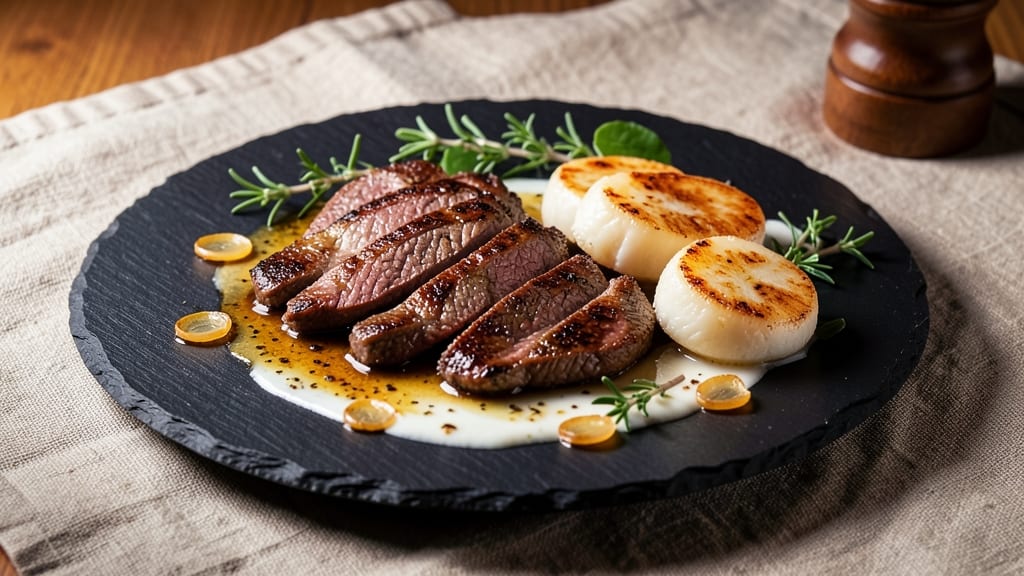
This beef and scallops recipe delivers restaurant-quality results with perfect seared crispness and a velvety wine sauce that ties everything together. The key lies in balancing tender beef strips and delicate scallops—cooked just long enough to achieve that golden crust while keeping the centers silky.
I've perfected this technique over years of testing, ensuring every bite offers contrast between the rich beef and briny scallops.
The foundation starts with high-heat searing to develop deep caramelization on both proteins, followed by a reduction of white wine, shallots, and fresh herbs that creates a luxurious sauce.
What makes this dish truly special is the timing—scallops cook in minutes while beef develops flavor gradually, and the sauce comes together in under 15 minutes. This is the kind of meal that transforms a weeknight dinner into something memorable.
By the time you plate it, you'll have perfectly seared beef strips with crisp edges and tender centers, alongside scallops that remain plump and delicate. The wine sauce—bright with garlic and thyme—ties everything together, creating a harmonious balance of flavors.
Serve with a side of creamy risotto or grilled asparagus to complete the experience.
This recipe is designed for confidence—no advanced techniques required, just precise timing and attention to heat control. The result is a dish that feels indulgent yet approachable, perfect for impressing guests or treating yourself to a special meal at home. Let's get started on creating this elegant yet achievable dinner.
Ingredients for beef and scallops
Restaurant-quality searing and velvety wine sauce start with these carefully selected ingredients.
| Ingredient | Amount | Notes |
|---|---|---|
| Flank Steak 🥩 | 1 lb | Trimmed of fat, sliced thinly against grain |
| Dry-Seared Scallops 🦑 | 12 whole | Pat dry, 1-inch diameter preferred |
| White Wine 🍷 | 1 cup | Dry variety like Sauvignon Blanc |
| Shallots 🧅 | 4 whole | Minced finely, about 0.25 cup |
| Garlic Cloves 🧄 | 4 cloves | Minced, not pressed |
| Fresh Thyme 🌿 | ¼ cup | Leaves only, stems discarded |
| Unsalted Butter 🧈 | 4 tbsp | Cold, cut into 4 pieces |
| Vegetable Oil 🫒 | ½ cup | High smoke point for searing |
| Beef Stock 🍲 | ½ cup | Low sodium preferred |
| Fresh Lemon Juice 🍋 | 1 tbsp | From 1 small lemon |
| Kosher Salt 🧂 | 1 ½ tsp | Diamond Crystal preferred |
| Ground Black Pepper 🌶️ | ½ tsp | Freshly cracked |
| Heavy Cream 🥛 | ¼ cup | Optional for sauce richness |
The flank steak is non-negotiable for this dish—its lean texture sears beautifully while staying tender. Look for well-marbled cuts at specialty butchers or the seafood counter, where they often carry high-quality flank. For scallops, dry-packed, 1-inch diameter are ideal; avoid wet-packed varieties that release excess moisture. Fresh thyme and shallots elevate the sauce, so purchase from the produce section rather than pre-minced jars—freshness makes all the difference. The white wine should be dry and crisp; Sauvignon Blanc or Pinot Grigio work perfectly, but avoid anything oaky or overly fruity.
No heavy cream? Substitute with an equal amount of coconut cream for richness without dairy. Short on beef stock? Low-sodium chicken stock works in a pinch, though the flavor profile will shift slightly. If you can't find fresh thyme, dried thyme at one-third the amount suffices, but the aroma won't be as vibrant. For scallops, shrimp or mussels can replace half the quantity, though cooking times will vary—shrimp needs 2-3 minutes per side, while mussels should steam open in 5-7 minutes. The butter must be cold for proper searing; cut it into small pieces so it melts gradually into the sauce.
Prep the scallops and beef immediately before cooking—they lose texture when exposed to air. Store any unused wine in a cool, dark place for up to 3 months, and keep fresh herbs wrapped in damp paper towels in the fridge for 5-7 days. The sauce reheats beautifully; simply warm it gently on the stove with a splash of water or stock to restore its silky texture. For leftovers, portion into airtight containers and refrigerate for up to 3 days, or freeze for 2 months. The beef and scallops should be consumed fresh, as they don't reheat well.
Why You'll Love This Recipe
- I’ll be real: scallops can be pricey, but here’s the trick—use just a handful to stretch the dish. The flank steak does the heavy lifting, so you’re getting that restaurant-quality taste without breaking the bank. Leftovers? Even better cold the next day, sliced thin in a salad.
- One-Pan Magic: I swear by this recipe when I’m too tired to scrub a million dishes. The steak and scallops sear right in the same pan—no extra pots, no fuss—just that golden crust on the scallops and caramelized shallots sticking to the bottom. Honestly, it’s the kind of meal that makes me feel like a chef without the cleanup.
- Wine Glass Worthy: That splash of white wine transforms everything. The acidity cuts through the richness of the steak while the garlic and shallots build layers of flavor—savory, bright, and just a little funky. It’s the kind of dish that makes you pour an extra glass because you need to taste it again.
- Date Night Ready: Between us, this recipe is my go-to for impressing someone without stressing. The scallops feel fancy (they’re supposed to be), but the steak keeps it hearty and satisfying. No one will guess it took me less than 40 minutes to pull it together.
Step-by-step instructions for perfectly seared beef and scallops
This method delivers restaurant-quality results with precise timing and technique.
Prepare the Flank Steak and Scallops
Begin by slicing the 1 lb flank steak thinly against the grain into ¼-inch thick strips. Pat the slices dry with paper towels—this ensures maximum sear. Season both sides generously with 1.5 tsp kosher salt and 0.5 tsp ground black pepper, pressing the seasoning into the meat so it adheres.
For the 12 whole dry-seared scallops, pat them completely dry with paper towels as well. This step is critical—any moisture will prevent proper browning. Arrange the scallops on a plate, season lightly with salt and pepper, and let them sit at room temperature for 15 minutes before cooking. Room temperature proteins sear more evenly and cook through faster.
Sear the Flank Steak and Scallops
Heat 0.5 cup vegetable oil in a large skillet over medium-high heat until it shimmers but doesn't smoke. Add the flank steak strips in a single layer, leaving space between each piece. Sear for 1-2 minutes per side until they develop a deep golden-brown crust. Remove the steak and set aside on a plate, tented loosely with foil to keep warm.
In the same skillet, increase heat to high and add the 12 whole dry-seared scallops. Sear for 1-2 minutes per side until they develop an opaque center and golden-brown crust. They should release easily from the pan when ready. Transfer the scallops to the same plate with the steak, keeping them warm.
Build the Wine and Shallot Sauce
Reduce heat to medium and add 4 tbsp cold unsalted butter to the skillet, letting it melt and foam. Add 4 whole minced shallots and 4 cloves minced garlic, cooking for 1-2 minutes until softened and fragrant. Pour in 1 cup white wine, scraping up any browned bits from the bottom of the pan with a wooden spoon. This deglazing step captures all the flavor from the searing process.
Simmer the wine mixture for 3-4 minutes until reduced by half. Stir in 0.25 cup fresh thyme leaves and 0.5 cup beef stock, then add 1 tbsp fresh lemon juice. Let the sauce simmer for another 2-3 minutes until slightly thickened. If using, stir in 0.25 cup heavy cream for added richness, but omit if you prefer a lighter sauce.
Finish and Serve
Return the seared flank steak and scallops to the skillet, spooning the wine sauce over them. Toss gently to coat, ensuring the scallops and steak are fully immersed in the sauce. Let everything heat through for 1-2 minutes, then transfer to a serving platter.
Serve immediately, garnished with additional fresh thyme leaves if desired. The steak should be tender with a perfect sear, and the scallops should be crispy on the outside with a silky interior. The wine sauce should be velvety and rich, perfectly balancing the bold flavors of the beef and delicate sweetness of the scallops.
Pro Tips For Making Beef And Scallops
- SEAR THE STEAK FIRST: Don’t wait for the scallops to be perfect—get that flank steak screaming hot in the pan before touching the seafood. I used to hold back, but a quick 2-3 minute sear on high heat builds a crust that holds up through the wine reduction. (Yes, even if it means flipping the steak less than you’d like—it’s worth it.)
- PAT THE SCALLOPS DRY: Wet scallops steam instead of sear. Grab paper towels and press hard on both sides—no mercy. I learned this after a batch turned out bland and sad, and now I double-check with a quick rub between my fingers. Wet residue is the enemy of a perfect crust.
- DEGLAZE WITH COLD WINE: After searing, pour in the white wine while the pan is still hot, but don’t rush—let it bubble for 30 seconds first. Then add the shallots and garlic. Cold wine cuts through the fat better and keeps the sauce from turning bitter. (I used to dump it all in at once and wonder why my sauce tasted flat.)
- REST THE STEAK UNDER FOIL: Slice that flank steak before serving? No. Tent it with foil and let it rest for a solid 5 minutes—this keeps it juicy while you finish the scallops. I skipped this once and ended up with dry, chewy beef. (Your future self will thank you.)
Pro cooking tips for this recipe
Heat Control Secrets
For perfect searing, your pan must reach 400-450°F—this is where the Maillard reaction happens, creating that golden crust. I use a cast-iron skillet (like Lodge) because it retains heat so well.
Place the pan over high heat for 3-5 minutes before adding oil—this ensures even cooking. A thermometer probe (like ThermoWorks) helps confirm the right temperature. 🔥
Timing the Scallops
Scallops cook in a flash—1-2 minutes per side—so have everything prepped before you start. I like to sear them in batches to avoid crowding the pan, which drops the temperature and steams instead of searing.
Use tongs to flip them gently, and watch for that opaque center—it means they're done. Overcooking turns them rubbery, so stay alert!
Deglazing Like a Pro
After removing the proteins, don't walk away! Immediately pour in the 1 cup white wine and scrape the browned bits from the pan with a wooden spoon. These bits are packed with flavor—this is called fond.
Let the wine reduce by half (3-4 minutes) before adding other ingredients. This step transforms a simple pan sauce into something luxurious. 🍷
Butter Basics
Use cold butter for the sauce—it melts gradually and adds richness without burning. I cut 4 tbsp unsalted butter into small cubes so it melts evenly. Add it to the pan after deglazing, then let it foam for 30 seconds before adding aromatics.
This creates a silky texture that coats every bite beautifully.
Sauce Thickening
If your sauce is too thin, simmer it uncovered for 2-3 extra minutes—the alcohol will evaporate, thickening it naturally. For extra body, stir in 0.25 cup heavy cream at the end, but only if you prefer a richer sauce.
The beef stock adds depth, so don't skip it—it balances the acidity from the wine and lemon juice.
Resting and Plating
Let the seared proteins rest for 2-3 minutes before plating—they'll stay warm while you finish the sauce. I like to arrange the beef strips and scallops on a warm platter, then spoon the sauce over them in an artistic drizzle.
Garnish with fresh thyme leaves for a pop of color and aroma. Serve immediately for the best texture and flavor. ✨
Nutrition facts
Frequently asked questions
Can I substitute shrimp for scallops in this recipe?
Yes, but you'll need to adjust cooking times! Shrimp cooks faster than scallops—aim for 2-3 minutes per side until they turn opaque. Use 16-20 count shrimp (peeled and deveined) instead of 12 scallops to match the portion size. For best results, pat them completely dry before searing, just like scallops.
How do I prevent the flank steak from becoming tough?
Slicing against the grain is key—this shortens the muscle fibers for tender bites. Also, don't overcook! The steak should reach 130-135°F internally (medium-rare) for perfect tenderness. Remove it from heat just before it reaches your target temp, as it'll carryover cook. Let it rest 5 minutes before slicing.
What's the best white wine to use if I don't have Sauvignon Blanc?
Look for a dry, crisp white wine with moderate acidity—Pinot Grigio or Chardonnay (un-oaked) work well. Avoid sweet or heavily oaked varieties, as they'll overpower the dish. If using Chardonnay, choose one with lower alcohol content (12% ABV or less) to prevent a harsh flavor.
Can I make this recipe ahead of time?
Only the sauce component! Prepare the wine reduction and store it in the fridge for up to 3 days. Reheat gently on the stove, adding a splash of water or stock to restore its silky texture. However, sear the beef and scallops fresh—they lose their perfect texture when reheated. Assemble everything just before serving for best results.
Why did my scallops turn rubbery?
Overcooking is the most common cause—scallops cook in 1-2 minutes per side max! They're done when the center turns opaque and pulls away from the pan. Also, check your heat—too low will steam them instead of searing. Always use a clean, dry pan and pat scallops completely dry before cooking.