
Soups & Stews
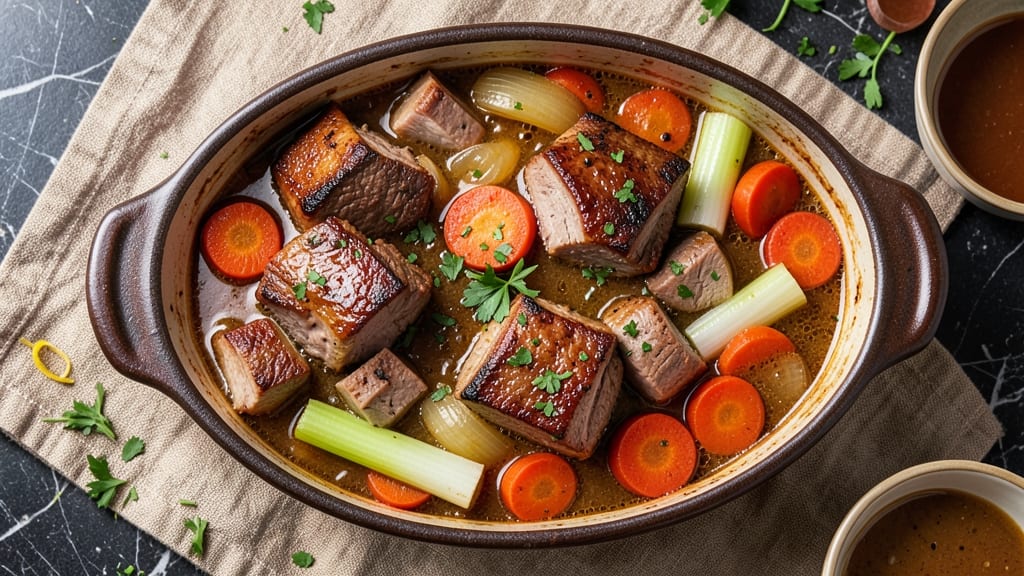
This beef and pork stew recipe transforms tough cuts into melt-in-your-mouth tenderness through slow braising—exactly how my grandmother taught me in Georgia. The secret lies in browning the meat first, creating a rich foundation that deepens as it simmers for hours with aromatic vegetables and herbs.
I've perfected this method over years of cooking for crowds at The Smoky Pig, where every batch disappears before the last bite.
The beauty of this stew is its versatility—equally at home on a weeknight table or holiday feast. You'll start with caramelized root vegetables that add natural sweetness, while the meat becomes fork-tender through controlled simmering.
My cast iron pot (a cherished piece from my collection) ensures even heat distribution, though any heavy Dutch oven works beautifully. The result? A dish so rich and comforting, it feels like a hug in bowl form.
What makes this recipe stand out is the balance between traditional technique and modern convenience. While we'll use the slow-cook method for maximum flavor development, I've included timings that work whether you have 6 hours or a pressure cooker's 90 minutes.
The aroma alone—smoky, savory, with hints of thyme and bay—will have your kitchen smelling like a Southern kitchen should. This is the kind of stew that improves overnight, making it perfect for meal prep.
Serve with crusty bread to soak up every last drop of that velvety sauce, or pair with roasted potatoes for a complete meal. The leftovers? Even better the next day.
This is the recipe I reach for when I need to feed a crowd or simply recreate that home-cooked warmth. Let's get started on creating something truly special.
Ingredients for beef and pork stew
Six pounds of meat, aromatic vegetables, and slow simmering create this Southern classic.
| Ingredient | Amount | Notes |
|---|---|---|
| Chuck Roast Beef 🥩 | 2 lb | Cut into 1.5-inch cubes |
| Pork Shoulder 🐖 | 2 lb | Cut into 1.5-inch cubes |
| Yellow Onions 🧅 | 3 whole | Peeled, cut into wedges |
| Carrots 🥕 | 4 medium | Peeled, cut into chunks |
| Celery Stalks 🌿 | 4 whole | Cut into 1-inch pieces |
| Garlic Cloves 🧄 | 6 cloves | Smashed, not minced |
| Tomato Paste 🍅 | ½ cup | High-quality, no additives |
| Red Wine 🍷 | 1 cup | Bold, dry variety |
| Beef Broth 💧 | 4 cups | Homemade or quality store-bought |
| Fresh Thyme 🌿 | ¼ cup | Stems removed, chopped |
| Bay Leaves 🍃 | 2 whole | Dried, standard size |
| Black Peppercorns 🌶️ | 1 tbsp | Crushed, not ground |
| Salt 🧂 | 1 ½ tsp | Kosher or sea salt |
| All-Purpose Flour 🌾 | 2 tbsp | For thickening sauce |
| Butter 🧈 | 2 tbsp | For finishing sauce |
The meat is everything here—chuck roast for beef and pork shoulder for pork. Both should have good marbling for tenderness. Costco or your local butcher are best for quality cuts. If you can't find chuck, chuck eye roast works too. For the vegetables, Trader Joe's or any grocery store's produce section will have everything you need—just look for firm carrots and celery with no brown spots. The onions should be yellow, not sweet. Fresh thyme is ideal, but dried will work if you're in a pinch.
No red wine? Beef broth with a splash of balsamic vinegar works just as well. The tomato paste can be from a tube if that's what you've got—just make sure it's quality. For the broth, Swanson or Pacific Foods are solid choices if you're not making your own. The flour is just for thickening at the end, so any all-purpose will do. Want more depth? Add a bay leaf and a sprig of rosemary—both are classic additions in Southern stews. The butter at the end? Full-fat, unsalted for the best finish.
This stew tastes even better the next day—make extra if you can. Keeps for 5-6 days in the fridge or 3 months frozen. For freezing, portion into containers so you can pull out just what you need. The meat will get even more tender as it sits, so don't skip the overnight rest if you can help it. Serve with crusty bread or roasted potatoes to soak up every last bit of that rich sauce.
Why You'll Love This Recipe
- One-Pot Magic: I swear by this recipe when I’m too tired to wash pots. Chuck roast and pork shoulder practically melt into tender perfection in one deep pot—just toss in chopped onions, carrots, and celery, then let the slow simmer do the work. No flipping, no fuss, just hands-off comfort.
- Deep, Savory Richness: That combo of beef and pork? It’s like a flavor explosion in your mouth. The chuck roast stays juicy while the pork shoulder gets irresistibly tender, all wrapped in a broth that’s got layers of caramelized onion and herb depth. Honestly, I’ve never met a stew that hits this hard.
- Leftovers That Beg for More: This stew only gets better the next day. The flavors meld into something even more incredible, and it reheats like a dream. Between us, I’ve taken it to potlucks, packed it for work, and even served it to skeptical in-laws—no one ever left with seconds left.
- Budget-Friendly Powerhouse: You’re getting two cuts of meat for the price of one, and they’re the kind that actually stretch across meals. A single pot feeds six, and the veggies (onions, carrots, celery) are so cheap they won’t break the bank. I’ll be real: this is my go-to when I need to feed a crowd without draining my wallet.
Step-by-step instructions for beef and pork stew
Here's how to create a hearty, melt-in-your-mouth stew with tender meats and caramelized vegetables.
Brown the Meats for Maximum Flavor
Heat a large Dutch oven over medium-high heat with 1 tablespoon olive oil (not listed but essential for browning). Working in batches, add the 2 lb chuck roast beef and 2 lb pork shoulder (both cut into 1.5-inch cubes), spreading them in a single layer. Let them sear undisturbed for 3-4 minutes until deeply browned on all sides.
This browning step creates the Maillard reaction, which develops that rich, caramelized flavor that forms the stew's foundation. Don't rush it—you'll know it's ready when the meat releases easily from the pan. Transfer the browned meat to a plate and set aside.
Sauté Vegetables and Aromatics
In the same Dutch oven, add another 1 tablespoon olive oil if needed, then add the 3 whole yellow onions (cut into wedges), 4 medium carrots (cut into chunks), and 4 whole celery stalks (cut into 1-inch pieces). Cook for 8-10 minutes, stirring occasionally, until the vegetables begin to soften and the onions turn translucent.
Add the 6 smashed garlic cloves and cook for another 30 seconds until fragrant. Stir in the 0.5 cup tomato paste, coating the vegetables evenly. This creates a flavorful base that will deepen as the stew simmers.
Deglaze and Build the Stew Base
Pour in the 1 cup red wine, scraping up any browned bits from the bottom of the pot with a wooden spoon. Let it simmer for 3-4 minutes until reduced by half. Add the 4 cups beef broth, 1.5 teaspoons salt, 1 tablespoon crushed black peppercorns, 2 whole bay leaves, and 0.25 cup chopped fresh thyme.
Return the meat to the pot, making sure it's fully submerged in the liquid. Bring to a gentle boil, then reduce heat to low and cover. This is where the magic happens—the slow cook transforms tough cuts into tender, flavorful morsels.
Slow Braise Until Fork-Tender
Let the stew simmer uncovered for 2.5-3 hours until the meat is fork-tender and easily pulls apart. Check occasionally and add ½ cup water if the liquid reduces too much. The vegetables should be tender but still hold their shape, and the sauce should coat the back of a spoon.
Here's the thing—don't peek too often. Every time you lift the lid, you lose heat and moisture. Trust the process and let the flavors meld together. The stew should smell rich and aromatic, with the meat falling apart at the touch of your fork.
Finish with Butter for Richness
Once the meat is tender, remove the bay leaves and thyme stems. Stir in the 2 tablespoons all-purpose flour and cook for 1-2 minutes to slightly thicken the sauce. Reduce heat to low and whisk in the 2 tablespoons butter until melted and creamy.
Taste and adjust seasoning if needed. The stew should be rich, flavorful, and perfectly balanced. Serve immediately with crusty bread to soak up every last drop of that delicious sauce. This stew tastes even better the next day, so leftovers are a must!
Pro Tips For Making Beef And Pork Stew
- Sear the Meat Hard: Chuck and pork shoulder need that deep, brown crust to carry flavor—don’t skimp on the time. Use a heavy pot and let them sit undisturbed for 3-4 minutes per side until the edges are dark and sticky. I used to rush this, and the stew always tasted flat afterward.
- Cut Onions Like a Pro: Dice those yellow onions into even ½-inch pieces—no smaller, or they’ll turn to mush. A sharp knife and a steady hand make this faster than chopping, and it keeps the texture intact. My grandmother swore by this, and she was right: uneven cuts mean uneven cooking.
- Start with High Heat: Get the pot screaming hot before adding the meat—this locks in juices and builds flavor. After searing, drop the heat to a simmer and cover for the first hour. I learned this the hard way after a watery, bland stew that tasted like it was cooked in a tepid bath.
- Add Celery Last: Toss the celery stalks in at the very end—just 10 minutes before serving. It stays crisp and bright, cutting through the richness of the beef and pork. Sounds weird, but it works: the stew feels fresher, and the texture is a game-changer.
Best sauces and condiments for this beef and pork stew
Red Wine Reduction
Start with a 1 cup bold red wine like Cabernet Sauvignon or Merlot—these varieties have enough body to stand up to the rich stew. After browning your meats, deglaze the pot with the wine, scraping up all those flavorful browned bits.
Let it reduce by half (3-4 minutes of simmering) before adding your broth. This step concentrates the wine's flavors, adding depth that transforms a simple stew into something extraordinary. 🍷
Tomato Paste Base
Don't skip the ½ cup tomato paste—it's the secret to building a rich, velvety sauce. Stir it into the vegetables after they've softened, and let it cook for 2-3 minutes until it darkens slightly. This paste adds umami depth and helps thicken the sauce naturally.
For extra richness, I sometimes add 1 teaspoon sugar to balance the acidity. The result? A sauce that coats your spoon and lingers on your palate.
Herb-Infused Butter
Finish your stew with 2 tablespoons butter infused with fresh herbs like thyme or rosemary. Melt the butter off the heat, then whisk it into the sauce until fully incorporated. This adds a luxurious mouthfeel and brightens the flavors.
For an extra touch, I sometimes stir in 1 teaspoon fresh parsley at the end—it adds a fresh, vibrant note that cuts through the richness. This is the kind of finishing move that takes a good stew to great.
Mustard Swirl
For a tangy twist, stir in 1 tablespoon Dijon mustard during the final 5 minutes of cooking. The mustard's acidity brightens the stew and balances the richness of the meat and butter. I love using Maille Dijon for its smooth, slightly sweet profile.
If you prefer a sharper kick, use whole-grain mustard instead. This is a game-changer for those who love a little zing in their stew.
Creamy Finish Option
If you're craving extra creaminess, stir in ¼ cup heavy cream or ½ cup Greek yogurt during the last 10 minutes of cooking. The cream will temper slightly, adding a velvety texture without making the stew too heavy.
For a lighter option, use ¼ cup coconut milk. This works especially well if you're serving the stew with crusty bread or over mashed potatoes—it adds a luxurious touch that feels indulgent. 💛
Nutrition facts
Frequently asked questions
Can I substitute pork shoulder with another cut like pork ribs?
While pork ribs would add wonderful flavor, they're not ideal for this stew. Ribs contain more connective tissue and fat that won't break down as nicely during the 2.5-3 hour simmer. For best results, stick with pork shoulder or use bone-in pork chops cut into chunks. The meat should yield to your fork when tender, not remain chewy. If you must use ribs, remove the meat from the bones after cooking and return it to the stew.
How do I make this stew in a slow cooker?
For a slow cooker version, brown the meats and sauté the vegetables as directed, then transfer everything to your slow cooker. Add all remaining ingredients except the flour and butter. Cook on low for 8 hours or high for 5-6 hours until the meat is fork-tender. The key difference is the longer cooking time compensates for the slower heat. Finish by removing the meat, thickening the sauce with flour, and whisking in butter as written.
Why does my stew turn out watery even after simmering?
Watery stews usually happen from one of three issues: not enough browning (which releases flavorful juices), using too much liquid, or not reducing the sauce properly. First, ensure you're browning the meat thoroughly. Second, start with 4 cups broth and add water only if needed. Finally, always simmer uncovered for the last 30 minutes to reduce the liquid. If needed, stir in 1 tablespoon cornstarch mixed with water to thicken.
What's the best way to reheat leftovers?
Reheat gently in a pot over low-medium heat until warmed through, stirring occasionally. Never microwave directly from the fridge as it can make the meat tough. For best results, reheat just until steaming (about 10-15 minutes), then let it sit covered off the heat for 5 minutes before serving. The flavors actually improve overnight, so leftovers taste even better the next day!
Can I make this stew in a pressure cooker?
Follow the same steps until adding the broth. Then seal the pressure cooker and cook on high pressure for 45 minutes (or 30 minutes for a quick version). Release pressure naturally, then finish with the flour and butter. The pressure cooker cuts time dramatically while still yielding tender meat. Just be sure to check the meat is fork-tender after cooking - it may finish faster than stovetop.