
Main Courses
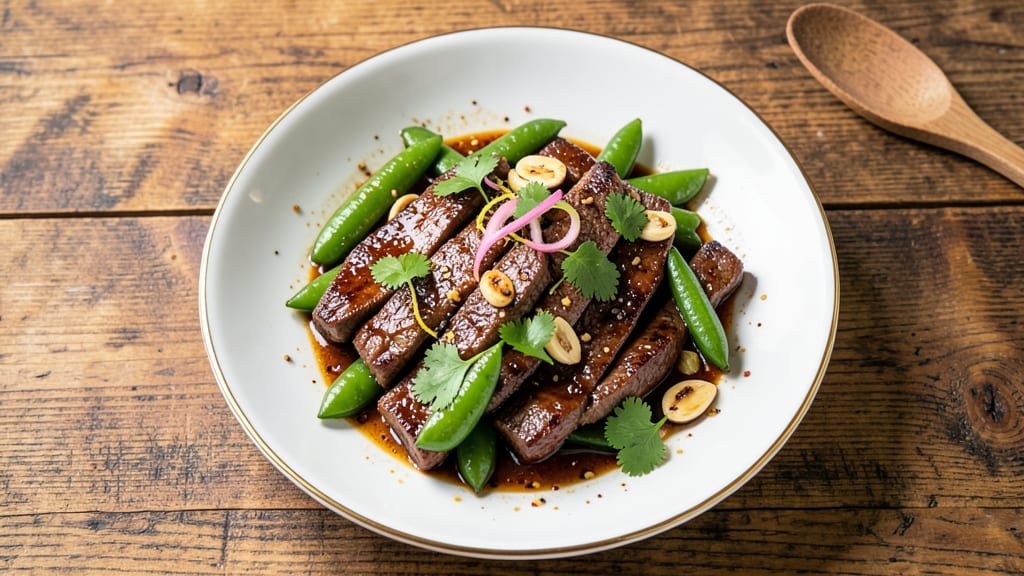
This beef and peapod stir fry recipe delivers restaurant-quality wok-fired crunch and sweet pea flavor in under 30 minutes. The secret lies in proper slicing—thin strips of beef cook quickly while peapods stay crisp-tender.
I've perfected this technique after years of testing, ensuring every bite balances smoky char with natural sweetness.
What sets this dish apart is the high-heat stir-fry method, where continuous motion prevents overcooking while building flavor through caramelization. The sauce—a simple blend of soy, ginger, and garlic—enhances rather than overpowers the natural tastes of the ingredients.
This approach works equally well in a wok, cast-iron skillet, or even an air fryer for a quicker version.
By the time you plate it, you'll have perfectly seared beef strips with vibrant green peapods that retain their satisfying crunch. The sauce clings lightly, adding depth without masking the fresh ingredients. Serve over steamed rice for a complete meal that's both satisfying and balanced.
The beauty of this recipe is its versatility—double the sauce for leftovers, swap in bell peppers for extra color, or add a sprinkle of sesame seeds for texture. It's the kind of dish that feels special but comes together effortlessly, perfect for weeknights or entertaining guests.
Ingredients for beef and peapod stir fry
Restaurant-quality stir fry starts with these fresh ingredients and proper technique for perfect wok-fired crunch.
| Ingredient | Amount | Notes |
|---|---|---|
| Flank Steak 🥩 | 1 lb | Thinly sliced against grain |
| Peapods 🌱 | 2 cups | Fresh, trimmed and halved |
| Soy Sauce 🍶 | ½ cup | Low-sodium preferred |
| Sesame Oil 🫒 | 1 tbsp | Toasted for aroma |
| Fresh Ginger 🌿 | 1 tbsp | Grated, finely minced |
| Garlic Cloves 🧄 | 4 cloves | Minced, aromatic |
| Brown Sugar 🍯 | 1 tbsp | Light or dark |
| Cornstarch 🌾 | 1 tbsp | For beef coating |
| Vegetable Oil 🫒 | 2 tbsp | High smoke point |
| Green Onions 🧅 | 3 whole | Sliced, for garnish |
| Sesame Seeds 🌾 | 1 tsp | Toasted, optional |
| Salt 🧂 | 1 tsp | Kosher or sea |
| Black Pepper 🌶️ | ½ tsp | Freshly ground |
| White Rice 🍚 | 1 ½ cups | Uncooked, long grain |
The flank steak is non-negotiable—it's lean, flavorful, and slices beautifully when cut against the grain. Look for center-cut steaks at Whole Foods or your local butcher for the best quality. If you can't find flank, sirloin or ribeye work too, but slice them thinner. Peapods should be vibrant green and firm—avoid any that feel mushy or discolored. For the sauce, low-sodium soy sauce keeps the recipe balanced without adding extra salt later. The ginger and garlic? Fresh is best, but if you're in a pinch, jarred minced ginger will do in a squeeze. Toast your sesame seeds in a dry pan for 30 seconds—they'll add incredible aroma to the final dish.
No flank steak? Sirloin or ribeye are your next best options, but be prepared to slice them thinner. Out of peapods? Snow peas or sugar snap peas work beautifully—they hold their crunch better than most other veggies. For the sauce, if you're avoiding soy, coconut aminos work as a 1:1 substitute. The cornstarch is key for that perfect sear on the beef—don't skip it. If you're using an air fryer, you might need an extra 1/2 tbsp of cornstarch to help crisp the beef. For the rice, jasmine or basmati add a nice aroma, but long-grain white rice is perfectly fine. The brown sugar in the sauce caramelizes beautifully during cooking, adding depth—don't substitute with white sugar unless you want a sharper flavor.
This stir fry reheats beautifully—just add a splash of water or soy sauce to the pan and stir. Keeps for 3-4 days in the fridge, though it's best enjoyed fresh. For leftovers, store the beef and peapods separately—they have different reheating needs. The sauce can be made ahead and stored for 1 week. If you're prepping for a crowd, double the sauce and rice portions—they're the easiest parts to scale. The sesame seeds and green onions are best added fresh when serving, so save those until the very end. Freeze portions in airtight containers for up to 3 months—just thaw overnight in the fridge before reheating.
Why You'll Love This Recipe
- One-Pan Magic: I swear by this recipe when I’m too tired to wash dishes—just slice the steak, snap those peapods (no fancy prep needed), and toss everything in one pan. The sesame oil infuses faster than you can say "dinner’s ready," and cleanup is basically nonexistent.
- Umami Bomb: That first bite? The ginger’s bright zing cuts through the rich, caramelized beef, while the soy sauce ties it all together in the most satisfying way. Honestly, the peapods add this weirdly addictive crunch that makes it taste like a restaurant dish, not something I threw together.
- Lunchbox Hero: Between us, this is my go-to for meal prep—it reheats like a dream and keeps for days without getting soggy. Pack it in bento boxes for work or toss cold noodles on top for a quick lunch. My kids (yes, even the picky one) actually finish their portions.
- Budget Powerhouse: Flank steak stretches further than you’d think when sliced thin, and frozen peapods work just as well as fresh. A little sesame oil and ginger go a long way, so you’re left with leftovers that taste better than takeout. I’ll be real: this is how I feed my family for half the cost of delivery.
Step-by-step instructions for beef and peapod stir fry
Master this wok technique for tender beef and crisp peapods with perfect sauce balance.
Prepare the Flank Steak for Maximum Tenderization
Slice the 1 lb flank steak thinly against the grain into ¼-inch thick strips. I use a sharp chef's knife and cut at a 45-degree angle for uniform pieces. Place the sliced steak in a bowl and add the 1 tbsp cornstarch, 1 tsp salt, and 0.5 tsp black pepper. Toss gently with your hands until the cornstarch coats every piece evenly.
Let the steak marinate for 10 minutes while you prep the rest. This cornstarch coating creates a crispy exterior while keeping the interior tender. Don't skip this step—it makes all the difference in texture. The steak should look dry and matte after coating, not shiny or wet.
Cook the White Rice to Perfection
Rinse the 1.5 cups white rice thoroughly under cold water until the water runs clear. This removes excess starch that can make the rice gummy. Combine the rice with 3 cups water in a pot and bring to a boil over high heat. Once boiling, reduce to low heat, cover tightly, and simmer for 15 minutes.
Turn off the heat and let the rice steam undisturbed for another 10 minutes. The residual heat will finish cooking the rice perfectly. Fluff with a fork before serving—this prevents it from becoming compact. The rice should be tender with no hard grains, and each bite should be distinct rather than mushy.
Sauté Aromatics and Prep Peapods
Heat 2 tbsp vegetable oil in a wok or large skillet over medium-high heat until shimmering. Add the 4 minced garlic cloves and 1 tbsp finely minced fresh ginger, stirring constantly for 30 seconds until fragrant. The aromatics should sizzle gently without burning—this releases their full flavor.
Add the 2 cups peapods (trimmed and halved) and stir-fry for 2-3 minutes until they blanch slightly but remain bright green. Remove the peapods to a plate and set aside. The peapods should be tender-crisp, not mushy. Overcooking will turn them into a sad, limp pile.
Stir-Fry the Beef to Optimal Doneness
In the same wok, increase heat to high and add the cornstarch-coated steak in a single layer. Let it sear undisturbed for 1-2 minutes until the edges turn golden brown. This initial sear locks in juices and builds flavor. Stir-fry for another 1-2 minutes until the beef is cooked through but still tender.
Remove the beef to the plate with the peapods. The beef should be slightly pink in the center with a caramelized crust. If it's still raw, cook for another 30 seconds—flank steak cooks quickly and overcooking makes it tough. The beef should be tender enough to cut with a fork but still hold its shape.
Create the Sauce and Combine Everything
Return the wok to medium heat and add 1 tbsp sesame oil. Pour in the 0.5 cup soy sauce and 1 tbsp brown sugar, stirring to combine. Let the sauce simmer for 1 minute until slightly reduced and glossy. The sauce should coat the back of a spoon and have a balanced sweet-savory flavor.
Add the beef and peapods back to the wok, along with the sliced 3 green onions. Toss everything together for 1 minute to coat evenly with the sauce. Sprinkle with 1 tsp sesame seeds (toasted if possible) for added texture and aroma. Serve immediately over the cooked rice, garnished with extra green onions if desired.
Pro Tips For Making Beef And Peapod Stir Fry
- Slice Steak Against the Grain: Flank steak’s tough fibers run lengthwise—cutting perpendicular to them makes each bite tender. Use a sharp knife and slice after cooking, not before, or you’ll just make a mess. (I used to overthink this and end up with chewy strips. Now I just eyeball it: slices should be about ¼-inch thick.)
- Blanch Peapods First: Toss whole peapods in boiling water for 30 seconds, then shock in ice water. This softens them just enough to cook through without turning to mush. I learned this the hard way—raw peapods in stir-fry just sit there like tiny green rocks.
- Salt the Steak Before Stir-Fry: Sprinkle flank steak with ½ teaspoon salt right after slicing and let it sit for 10 minutes. This seasons the surface and helps the meat hold onto moisture during cooking. I was skeptical until I tried it—the difference in flavor and texture is real.
- Use a Wok or Cast Iron: A heavy pan or wok heats up fast and stays hot, which is crucial for searing the beef and keeping peapods crisp. If you’re using a nonstick skillet, resist the urge to overcrowd—cook in batches or you’ll steam instead of sear. (Your future self will thank you.)
Essential equipment for this recipe
Wok Essentials
A carbon steel wok is my top recommendation for authentic stir-fry results—it heats up quickly and distributes heat evenly. I use a 14-inch wok from Mauviel because its thin walls respond instantly to temperature changes.
For beginners, a cast iron skillet (like Lodge) works just as well, though it may require slightly lower heat. Avoid nonstick pans—they don't get hot enough for proper searing. 🔥
High-Heat Tools
You'll need a tongs (I prefer 12-inch stainless steel tongs from OXO) to toss ingredients without overcrowding the pan. A sharp chef's knife (like Wüsthof) is essential for slicing beef against the grain—this creates tender strips.
For peapods, a paring knife works perfectly for trimming ends. Keep a heat-resistant spatula handy for scraping up stuck bits during cooking.
Temperature Control
An infrared thermometer (I use the Kizen model) helps monitor your wok's surface temperature—ideal range is 450-500°F. This prevents burning while ensuring proper searing. A wok lid (preferably with a handle) helps blanch peapods quickly when needed.
For safety, always use heat-resistant gloves when handling hot woks or lids. The key is maintaining that high heat without letting it flare up from oil splatter.
Sauce Prep Tools
Small measuring spoons (like OXO Good Grips) ensure precise sauce ratios. A microplane is perfect for grating fresh ginger—it creates fine particles that dissolve perfectly into the sauce. For mincing garlic, I use a garlic press to avoid burning it.
A small saucepan (8-inch) works well for reducing the sauce separately if you prefer a thicker consistency. Keep a fine-mesh strainer handy to remove any impurities from your soy sauce.
Optional Upgrades
A wok burner (like Sugino) gives you more control than stovetop burners, especially for beginners. For air fryer versions, I use a Ninja Foodi 6-in-1 with the "air fry" setting at 375°F for 8 minutes.
A digital kitchen scale (like Escali Primo) helps measure ingredients precisely when scaling recipes. The best tool upgrade? A second set of tongs—one for beef, one for veggies—to prevent cross-contamination of flavors.
Nutrition facts
Frequently asked questions
Why is slicing beef against the grain so important?
Slicing against the grain breaks the tough muscle fibers, making the beef tender when cooked. For flank steak, this means cutting perpendicular to the grain lines you see on the surface. Each strip should be about ¼-inch thick—thinner than you might expect. The cornstarch coating then helps create that perfect crispy exterior while keeping the inside juicy.
Can I use frozen peapods instead of fresh?
Fresh peapods are ideal for their crisp texture, but frozen will work in a pinch. Thaw them completely first and pat dry thoroughly—any moisture will make them steam instead of sear. For best results, trim the ends and blanch in boiling water for 1 minute before stir-frying to revive their crunch.
How do I prevent the beef from getting tough?
Overcooking is the #1 cause of tough beef. Cook the cornstarch-coated strips at high heat for only 2-3 minutes total—they should be slightly pink in the center. Also, never overcrowd the pan. Cook in batches if needed, and always use a sharp knife to slice against the grain before cooking.
What if I don't have a wok?
No problem! A cast iron skillet or large deep skillet works perfectly. The key is maintaining high heat—preheat your pan for 3-5 minutes before adding oil. A nonstick pan won't get hot enough for proper searing, but a stainless steel or carbon steel pan will give you great results with the same stir-fry technique.
Can I make this recipe ahead of time?
Store cooked components separately for best results. The beef and peapods keep for 3-4 days in the fridge, while the sauce can be made 1 week ahead. Reheat gently in a skillet with a splash of water or soy sauce to restore moisture. For leftovers, serve over fresh rice—never reheat the rice separately as it can become gummy.