
Soups & Stews
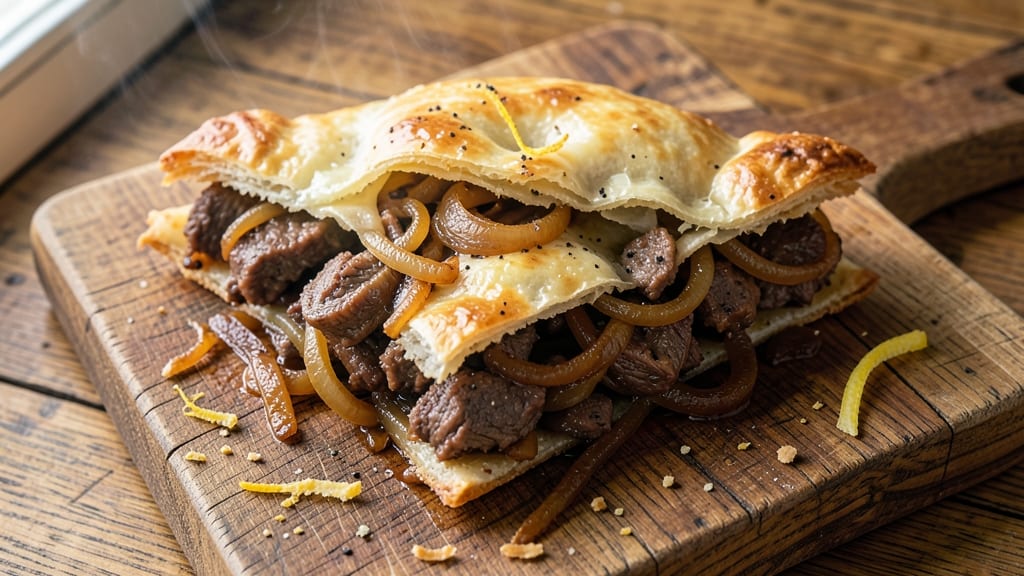
This beef and onion pasty recipe delivers restaurant-quality results with a flaky, golden crust that encases a hearty, savory filling. The secret lies in a well-balanced pastry dough—rich with butter and layered just enough to create those signature crispy, melt-in-your-mouth layers.
I’ve perfected this recipe over years of baking, ensuring the filling stays moist while the pastry achieves that ideal balance of flakiness and structure.
The filling is where the magic happens: tender beef and caramelized onions simmered with aromatic herbs and Worcestershire sauce create a rich, flavorful center that pairs perfectly with the buttery pastry.
What makes this recipe stand out is the foolproof technique for sealing the pasty—no leaks, no soggy edges—just a beautifully folded, vented package that bakes up golden and irresistible. The result is a dish that’s comforting, satisfying, and impossible to resist.
By the time it emerges from the oven, you’ll have a pasty with a perfectly crisp crust and a filling so flavorful it’ll disappear in minutes. The combination of tender beef, sweet onions, and aromatic herbs is encased in layers of buttery pastry that flake apart at the slightest touch.
This is the kind of dish that feels like a hug—warm, hearty, and full of nostalgia.
Serve it with a side of mashed potatoes or a simple salad to balance the richness, or enjoy it on its own as a satisfying meal.
The beauty of this recipe is its versatility—it’s perfect for a cozy weeknight dinner or a special occasion when you want to impress. Let’s get baking!
Ingredients for beef and onion pasty
Buttery pastry meets savory beef and caramelized onions in this foolproof recipe.
| Ingredient | Amount | Notes |
|---|---|---|
| All-Purpose Flour 🌾 | 4 cups | Sifted for flaky layers |
| Cold Unsalted Butter 🧈 | 1 cup | Cut into small cubes |
| Ice Water 💧 | ½ cup | Chilled for pastry |
| Ground Black Pepper 🌶️ | 1 tsp | Freshly ground preferred |
| Salt 🧂 | 1 tsp | Diamond Crystal preferred |
| Yellow Onions 🧅 | 2 large | Peeled and quartered |
| Beef Chuck Roast 🥩 | 1 ½ lb | Pre-cubed or diced small |
| Worcestershire Sauce 🍶 | 1 tbsp | High-quality preferred |
| Fresh Thyme Leaves 🌿 | 1 tbsp | Or 1 tsp dried thyme |
| Fresh Parsley Leaves 🌿 | ¼ cup | Chopped for garnish |
| Beef Stock 🍲 | ½ cup | Homemade or quality store-bought |
| All-Purpose Flour 🌾 | ¼ cup | For dusting work surface |
| Egg Wash 🥚 | 1 whole | Beaten with 1 tbsp water |
The flaky crust starts with cold butter—never skip chilling the dough. King Arthur or Gold Medal flour gives the best rise, but any all-purpose works. For the beef, chuck roast is non-negotiable—it stays tender while the onions caramelize. Look for yellow onions with dry skins (they caramelize better) at Trader Joe's or your local market. The Worcestershire sauce should be Lea & Perrins—anything cheaper lacks depth. Fresh thyme is ideal, but dried works at one-third the amount if you're in a pinch.
No Worcestershire? Soy sauce plus a splash of vinegar mimics the umami. Swap beef stock for vegetable stock if vegetarian, but the flavor won't be identical. The onions can be diced small for faster cooking or left in chunks for texture. For the pastry, butter should be ice-cold—cut it into tiny cubes and freeze for 10 minutes if your kitchen is warm. Pre-grated Parmesan? Skip it—it's full of anti-caking agents that ruin texture. Freshly grated is worth the effort.
Pastry dough keeps 2 days wrapped in plastic in the fridge or 3 months frozen. The filling can be prepped ahead and refrigerated for 24 hours before baking. For extra crispiness, brush the pasty with egg wash right before baking. Leftovers reheat beautifully—wrap in foil and bake at 375°F (190°C) for 10-15 minutes. Portion into single servings for easy reheating.
Why You'll Love This Recipe
- No-Fuss Dough: I swear by this butter-and-flour crust—just mix, fold in ice water, and roll it out once. No kneading, no waiting for dough to rise, and that flaky layer? Pure magic with just five minutes of your time.
- Rich, Savory Bite: The beef and onions caramelize right into the crust, so every forkful has that deep, meaty flavor wrapped in golden crispness. Honestly, the salt and pepper balance makes it taste like a pub meal without the fuss.
- Picnic or Potluck Star: These freeze like a dream—just bake straight from frozen—and they’re sturdy enough to pack for tailgates or office lunches. My coworkers still ask for seconds after three months.
- Budget Meal Maker: Ground beef and onions stretch into four pasties for pennies, and the dough uses pantry staples. Leftovers? Reheat in the oven until golden—no sad, soggy corners here. (Yes, even on a Tuesday night.)
Step-by-step instructions for beef and onion pasty
Here's how to craft a pasty with golden, flaky layers and tender beef filling every time.
Make the Pastry Dough
In a large mixing bowl, combine the 4 cups all-purpose flour and 1 tsp salt. Cut in the 1 cup cold unsalted butter using a pastry cutter or your fingers until the mixture resembles coarse crumbs with pea-sized butter pieces. This texture ensures maximum flakiness in the final pasty.
Gradually add the 0.5 cup ice water, 1 tablespoon at a time, mixing gently with a fork until the dough just comes together. Avoid overmixing—just until the dough holds when pressed. Turn it out onto a lightly floured surface and knead briefly (about 30 seconds) until smooth. Wrap tightly in plastic wrap and refrigerate for 30 minutes to firm up.
Prepare the Filling
In a large skillet, combine the 1.5 lb beef chuck roast (pre-cubed), 2 large yellow onions (peeled and quartered), 1 tbsp Worcestershire sauce, and 1 tbsp fresh thyme leaves. Cook over medium-high heat for 8-10 minutes, stirring occasionally, until the beef begins to brown and the onions soften.
Pour in the 0.5 cup beef stock and bring to a simmer. Reduce heat to medium-low and cook uncovered for 20-25 minutes until the beef is tender and most of the liquid has evaporated. The filling should be moist but not soupy. Season generously with 1 tsp ground black pepper and set aside to cool slightly.
Assemble the Pasties
Preheat your oven to 375°F. On a lightly floured surface, roll out half of the chilled pastry dough into a 12x15-inch rectangle (about ⅛-inch thick). Using a pastry brush, lightly coat the surface with water to help seal the layers.
Spread the cooled beef filling evenly over the pastry, leaving a 1-inch border around the edges. Sprinkle the 0.25 cup fresh parsley leaves over the filling. Roll up the pasty tightly from the long side, then pinch the seam to seal. Trim off any excess dough and set aside for the second pasty.
Seal and Bake
Repeat the rolling and filling process with the remaining dough to create a second pasty. Brush both pasties generously with the 1 whole egg wash (beaten egg with 1 tbsp water), focusing on the seams to ensure a good seal. Place the pasties seam-side down on a parchment-lined baking sheet.
Bake in the preheated oven for 40-45 minutes until the pasties are deep golden brown and the filling is bubbling through any small cracks. The internal temperature should reach 165°F when checked with a meat thermometer. Let rest for 10 minutes before slicing to allow the juices to redistribute.
Pro Tips For Making Beef And Onion Pasty
- CHILL THE BUTTER FIRST: I learned this the hard way—room-temperature butter in your pastry dough makes it greasy and tough. Cube that butter and pop it in the freezer for 15 minutes before mixing. Cold butter creates flaky layers that actually hold up during baking, so your pasty doesn’t turn into a sad, dense brick.
- SALT THE BEEF BEFORE SEASONING: Don’t wait until the end to salt your ground beef. Sprinkle it with a teaspoon of salt as soon as it hits the pan—it’ll break down the proteins better and keep the filling juicy. Skip this, and your onions will end up dry while the beef stays bland.
- DON’T OVERWORK THE DOUGH: This isn’t the time for a full-on kneading session. Once you mix the flour, butter, and ice water, stop as soon as it just holds together. Overmixing activates the gluten, and your pasty crust will turn chewy instead of tender. A quick fold or two is all you need.
- SEAL THE EDGES WITH WATER: After shaping your pasty, brush the top edge with a little ice water before folding it over. This glues the dough shut and prevents leaks—no more filling spilling out during baking. It’s a tiny step that saves a big mess.
Pro cooking tips for perfect results
Pastry Perfection
The secret to a flaky, golden crust lies in cold butter and minimal handling. Cut the butter into the flour using a pastry cutter or your fingertips until you see pea-sized pieces—this creates those signature layers.
I swear by King Arthur flour for its protein balance, but Gold Medal works too. Never skip chilling the dough—wrap it tightly and refrigerate for 30 minutes before rolling. 🧈
Roll the dough to ⅛-inch thickness for even baking, and keep it lightly floured to prevent sticking. Use a bench scraper to trim excess dough cleanly—this prevents messy edges.
For extra crispiness, brush the pasties with egg wash right before baking, focusing on the seams. A pizza wheel makes quick work of scoring the tops before baking.
Filling Mastery
Caramelizing the onions is non-negotiable—they should be deep golden brown before adding the beef. Use yellow onions with dry skins (they caramelize better) and cook them over medium-high heat for 8-10 minutes before adding the beef.
The Worcestershire sauce adds depth, but if you’re out, 1 tbsp soy sauce + ½ tsp vinegar works in a pinch. 🍶
Simmer the filling until the beef is tender but not dry—it should be moist but not soupy. Overcooking dries out the filling, so aim for 20-25 minutes on medium-low heat.
Season with freshly ground black pepper right before assembling—it brightens the flavors. Let the filling cool slightly before rolling to avoid melting the pastry.
Sealing Secrets
Moisten the dough edges with water before sealing—this creates a tight, leak-proof crust. Roll the pasties snugly but not too tightly, or they’ll crack. I like to pinch the seam every ½ inch to reinforce it.
For extra security, brush the seams with egg wash before baking. A small vent (cut with a sharp knife) prevents steam buildup, which can burst the pasty. 🔪
Bake at 375°F until the crust is deep golden brown and the filling reaches 165°F internally. Let them rest for 10 minutes—this lets the juices redistribute, so every bite is tender and flavorful. Slice with a serrated knife for clean cuts and maximum flakiness.
Equipment Upgrades
A pastry brush is a game-changer for egg wash and sealing edges. I also recommend a rolling pin with a handle (like the OXO Good Grips) for even pressure. For precision, a digital meat thermometer ensures the filling hits 165°F safely.
If you’re short on time, a food processor speeds up dough mixing—just pulse the butter and flour until crumbly. 💡
For large batches, use a half-sheet pan lined with parchment—it bakes evenly and makes cleanup easy. A pastry bag with a large star tip helps pipe filling neatly for uniform pasties. And always keep a small bowl of ice water nearby to dampen dough edges during assembly.
Nutrition facts
Frequently asked questions
Can I make this pasty without a food processor?
The dough can be made entirely by hand. Use a pastry cutter or your fingertips to cut the 1 cup cold butter into the flour until you see pea-sized pieces. Mix in the ice water 1 tablespoon at a time until the dough just holds together. The key is to keep everything cold and handle the dough minimally to maintain flakiness.
How do I prevent the pasty from leaking filling?
Sealing is everything! Brush the dough edges with water before folding, then pinch the seam tightly every ½ inch to create a strong barrier. For extra security, brush the seams with egg wash before baking. Also, make sure your filling isn't too wet—it should be moist but not soupy.
Can I use frozen beef instead of fresh?
Yes, but thaw it completely first in the refrigerator overnight. Frozen beef can release excess water during cooking, which may make your filling too wet. Pat the thawed beef dry with paper towels before cooking to help control moisture. For best results, use chuck roast that's been frozen for no longer than 3 months.
What's the best way to reheat leftovers?
Wrap the pasty tightly in foil and bake at 375°F (190°C) for 10-15 minutes until heated through. The foil prevents the crust from drying out. For a crispier reheat, remove the foil for the last 2-3 minutes of baking. Microwaving is possible but tends to make the pastry soggy—always use the oven method for best results.
Can I make individual pasties instead of two large ones?
Divide the dough into 4 equal portions (about 1 cup flour each) and roll each into a 6-inch circle. Place ½ cup filling in the center of each circle, fold into quarters, and pinch the edges tightly. Brush with egg wash and bake as directed. Individual pasties are perfect for meal prep or serving at gatherings.