
Soups & Stews
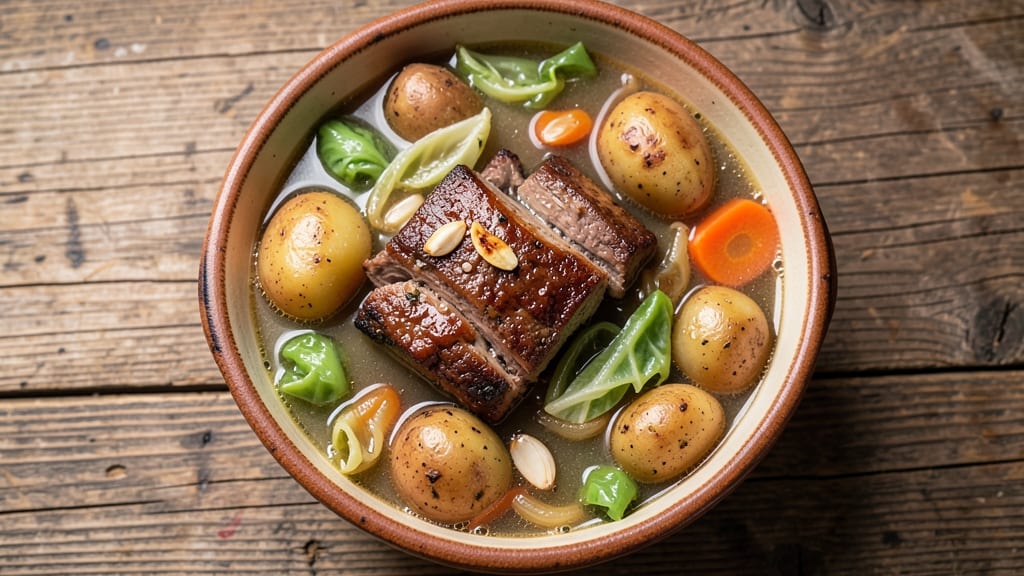
This beef and cabbage soup recipe with potatoes delivers the kind of hearty, comforting meal that warms you from the inside out—perfect for chilly evenings or lazy Sundays.
The secret lies in building layers of flavor through slow simmering, where tender beef, earthy cabbage, and creamy potatoes meld into a rich, savory broth that tastes even better the next day.
With just one pot to manage, you'll spend minimal time in the kitchen but maximum time enjoying the results.
The beauty of this recipe is its flexibility—whether you're using a stovetop, Dutch oven, or even a pressure cooker, the technique remains the same.
We start by browning the beef for deep, caramelized flavor, then let everything simmer together until the vegetables soften and the broth thickens just enough to coat each spoonful. The potatoes absorb the rich flavors while staying tender, and the cabbage adds a satisfying crunch that keeps the soup interesting.
By the time you're done, you'll have a steaming bowl of soup that's packed with protein, fiber, and warmth—ideal for feeding a family or meal prepping for the week.
The aroma alone will have everyone gathering around the table, and the first bite delivers that perfect balance of savory beef, slightly sweet potatoes, and peppery cabbage. This is comfort food at its finest, made even easier with a one-pot approach.
Serve it with crusty bread to soak up every last drop of that flavorful broth, or pair it with a simple green salad for a complete meal. The leftovers reheat beautifully, making this recipe a true workhorse for busy weeks.
Let's get started on creating this rustic, satisfying dish that feels like a hug in a bowl.
Ingredients for beef and cabbage soup recipe with potatoes
One-pot magic with beef, cabbage, and potatoes—just 14 ingredients for a soup that tastes like home.
| Ingredient | Amount | Notes |
|---|---|---|
| Beef Chuck Roast 🥩 | 2 lb | Pre-cubed or cut into 1-inch pieces |
| Yellow Onion 🧅 | 1 whole | Medium, diced |
| Carrots 🥕 | 4 medium | Peeled, chopped into 1-inch pieces |
| Russet Potatoes 🥔 | 2 lb | Peeled, cut into 1-inch cubes |
| Green Cabbage 🥬 | 1 small | Cored, cut into wedges |
| Garlic Cloves 🧄 | 4 cloves | Minced |
| Tomato Paste 🍅 | 2 tbsp | Smooth, not chunky |
| Beef Broth 💧 | 6 cups | Low-sodium preferred |
| Red Wine 🍷 | 1 cup | Dry, like Cabernet Sauvignon |
| Dried Thyme 🌿 | 1 tsp | Or 1 tbsp fresh |
| Bay Leaves 🌿 | 2 whole | Removed before serving |
| Salt 🧂 | 1 ½ tsp | Kosher or sea salt |
| Black Pepper 🌶️ | ½ tsp | Freshly ground |
| Olive Oil 🫒 | 2 tbsp | Extra-virgin preferred |
The beef is the backbone here. Chuck roast gives you that melt-in-your-mouth texture—sirloin stays tough. Grab it pre-cubed from the grocery store's meat counter to save time, or ask the butcher to cut it for you. I usually get mine from Costco when I'm making a big batch, but the regular supermarket chuck works great for a weeknight. Look for good marbling—those little white streaks mean more flavor. The cabbage? Green cabbage has the perfect peppery bite, but red works too if that's what's on sale. Just make sure it's firm and crisp, not wilted.
No red wine? Beef broth with a splash of balsamic vinegar does the trick. Fresh thyme is ideal, but dried works at one-third the amount. The tomato paste can be skipped if you're short, but it adds that deep, savory richness. For the carrots, baby carrots are perfect if you're in a hurry—just trim the ends. The potatoes? Russet potatoes hold up best to the long simmer, but Yukon Golds add a buttery touch. If you're using pre-cut potatoes, give them a quick rinse to remove excess starch. And the beef broth? Low-sodium is key—you can always add more salt at the end.
This soup tastes even better the next day—honestly, it's worth making extra. Keeps for 4-5 days in the fridge, or freeze portions for up to 3 months. I like to portion it into containers with a little extra broth on top to prevent freezing. The cabbage will soften more after reheating, which is fine—just add a splash of water or broth to loosen it up. For serving, I always keep a basket of crusty bread on hand. The aroma alone will have everyone rushing to the table.
Why You'll Love This Recipe
- One-Pot Wonder: I swear by this recipe because it’s literally one pot—no chopping boards, no extra pans, just dump-and-go. The beef chuck roast practically melts into tender shreds while the potatoes soften and the cabbage wilts perfectly, all in the same broth. (Yes, even on a Tuesday night.)
- Rich, Rustic Depth: That slow-cooked beef chuck? It’s the star—fall-apart tender with just enough chew, and the onions caramelize right in the broth for layers of sweetness. The carrots add a subtle crunch, but honestly? The real magic is the way the cabbage soaks up the savory juices like a sponge. (Between us, it’s dangerously addictive.)
- Leftovers That Shine: This soup only gets better the next day—flavors meld, broth deepens, and the potatoes absorb all that beefy goodness. I make a double batch on Sundays because reheating it is chef’s kiss (and way cheaper than takeout). Freeze half if you’re feeling extra, but trust me, you’ll eat it all.
- Budget-Friendly Powerhouse: Beef chuck roast stretches for miles, and cabbage? It’s practically free at the market. A single pot feeds four for under $15, and the leftovers stretch into lunches or a quick reheat for dinner. (My college self would’ve cried happy tears over this.)
Step-by-step instructions for beef and cabbage soup with potatoes
Here's how to create a rich, hearty soup with minimal cleanup—just one pot and 35 minutes of active time.
Sear the Beef Chuck Roast for Deep Flavor
Heat the 2 tablespoons olive oil in a large Dutch oven over medium-high heat. Add the 2 lb beef chuck roast in a single layer, working in batches if needed, and sear for 3-4 minutes per side until deep golden brown. This step develops that rich, caramelized flavor that forms the soup's foundation.
I press down gently on the beef pieces during the first minute to prevent them from curling and ensure even contact with the pan. Once browned, remove the beef and set it aside on a plate. You'll notice the oil will start to smoke slightly—that's perfect. Don't worry about cleaning the browned bits from the bottom; they'll become the flavor base for your soup.
Build the Flavor Base with Vegetables and Wine
In the same Dutch oven, add the diced yellow onion and chopped carrots. Cook for 5 minutes until the onions soften and become translucent. Add the minced garlic cloves and cook for another 30 seconds until fragrant—this is where the aromatics really wake up.
Stir in the 2 tablespoons tomato paste and cook for 1 minute to remove any raw taste. Pour in the 1 cup red wine and scrape up all those browned bits from the bottom of the pot. Let it simmer for 2 minutes until the wine reduces by half and the alcohol cooks off. This step transforms your soup from good to extraordinary.
Simmer the Soup Until Tender
Return the browned beef to the pot. Add the 6 cups beef broth, 1.5 teaspoons salt, 0.5 teaspoon black pepper, 1 teaspoon dried thyme, and 2 whole bay leaves. Bring to a boil, then reduce heat to low and cover partially. Let it simmer for 20 minutes—this gives the beef time to become fork-tender while keeping the broth flavorful.
Here's a key moment: After 15 minutes, add the cubed russet potatoes and cabbage wedges. The potatoes will absorb some of the broth and become creamy, while the cabbage will soften just enough to hold its shape. If the soup starts to reduce too much, add a splash of water to maintain the proper consistency.
Finish with Perfect Texture and Seasoning
Once the beef is fork-tender (you should be able to pierce it easily with a fork), remove the bay leaves and adjust the seasoning. Taste the broth and add more salt or black pepper if needed. The soup should be rich but not overly salty—remember, the beef contributes a lot of natural flavor.
Let the soup sit off the heat for 5 minutes before serving. This resting period allows the flavors to meld together and the potatoes to finish cooking slightly. Serve in deep bowls with crusty bread and a sprinkle of fresh parsley if you like. The result is a comforting, one-pot meal that's perfect for chilly days.
Pro Tips For Making Beef And Cabbage Soup Recipe With Potatoes
- Sear the Chuck Roast First: I learned this the hard way—skipping the sear means a bland broth. Pat the beef very dry, then hit it with high heat in your pot until it’s deep brown on all sides. That crust isn’t just for looks; it dissolves into the soup and adds layers of flavor your slow-cooked beef won’t otherwise deliver.
- Cut Potatoes in Even Slices: Uneven potatoes mean some mushy, some undercooked. Use a knife or mandoline to slice them all about ½-inch thick—thin enough to cook through but thick enough to hold shape. Pro tip: Soak them in cold water for 10 minutes first to remove excess starch, which keeps the soup from turning gluey.
- Salt the Water Generously: This isn’t the time to be shy. The soup’s base should taste like the sea when the potatoes and cabbage go in—not just seasoned, but salty. Trust me, you’ll adjust later if needed, but you can’t fix bland broth. Aim for about 1½ teaspoons of salt per quart of water, then taste as you go.
- Add Cabbage Late: Tossing cabbage in early turns it to mush. Wait until the potatoes are tender (about 15 minutes before the end) to add it in whole wedges or large chunks. It’ll soften just enough to be tender without falling apart—exactly how I like it. (Yes, even if you’re impatient like me.)
Essential equipment for beef and cabbage soup recipe with potatoes
Dutch Oven Essentials
A large Dutch oven is your best friend for this recipe—it holds heat beautifully and distributes it evenly. I swear by the Le Creuset 6-quart for its durable enamel coating and even heating, but a Lodge cast iron Dutch oven works just as well.
The deep sides prevent spills when stirring, and the heavy base maintains steady temperatures during the long simmer. If you don’t have one, a heavy-bottomed stockpot (like All-Clad) will work, though you might need to stir more often to prevent sticking. 🔥
Knife and Cutting Board
Invest in a sharp chef’s knife (I recommend Wüsthof or Shun) for chopping onions, carrots, and potatoes efficiently. A cutting board with a juicer groove (like OXO Good Grips) keeps your workspace tidy by catching drips.
For the cabbage, a serrated knife makes quick work of wedging through the core without slipping. Always keep your knives sharp—dull blades crush vegetables instead of cleanly slicing them, which affects texture in soups.
Measuring Tools
Precision matters when balancing flavors in soups. Use a stainless steel measuring cup for broth and wine (like OXO Good Grips) to avoid plastic odors transferring to your food.
For spices, a small spice scoop (or folded paper) ensures accurate measurements—1 teaspoon of thyme is different from 1 tablespoon. A kitchen scale (like Escali Primo) is optional but helpful for weighing beef in larger batches.
Don’t skip the measuring spoons for salt and pepper—they’re the secret to perfect seasoning.
Wooden Spoon and Ladle
A wooden spoon (preferably hickory or maple) is a must for stirring without scratching your Dutch oven. Avoid metal utensils during the simmering phase—they can react with acidic ingredients like wine or tomato paste.
For serving, a stainless steel ladle (like T-fal) helps portion out thick soups without spilling. I keep mine nearby to taste-test as I go, adjusting seasoning before the final resting period.
Instant-Read Thermometer
While not mandatory, an instant-read thermometer (like ThermoWorks Thermapen) ensures your beef reaches 160°F internal temperature for safe eating. It also helps gauge broth consistency—aim for 210°F if you prefer a slightly thicker soup.
I use mine to check the beef’s doneness mid-simmer, adjusting cook time if needed. For beginners, it’s a game-changer to avoid overcooking or undercooking the meat. 🌡️
Optional: Immersion Blender
If you prefer a smoother texture, an immersion blender (like Hamilton Beach) lets you blend the soup directly in the pot. Pulse for 10-15 seconds to achieve a velvety consistency without losing the hearty feel. Skip this if you love the rustic, chunky texture—this soup is delicious either way.
Just avoid blending the cabbage too much, or it’ll turn mushy. A quick blend at the end also helps emulsify the broth for a richer mouthfeel.
Nutrition facts
Frequently asked questions
Can I substitute beef with another protein in this soup?
For a lighter option, use chicken thighs (bone-in for flavor) or pork shoulder—both work beautifully. If you prefer plant-based, mushrooms (like cremini or portobello) or lentils add hearty texture. Just adjust cooking time: beef needs 20 minutes to tenderize, while chicken requires only 15 minutes. The broth will still develop rich flavors, just with a different protein profile.
Why does my cabbage turn mushy after simmering?
Overcooking is the usual culprit! Cabbage should simmer for just 15-20 minutes—any longer and it releases too much water, becoming limp. Add it later in the cooking process (after 15 minutes of simmering) and keep the heat at low-medium. For extra crunch, reserve a few cabbage wedges to add fresh at the end. Also, avoid cutting cabbage too small—2-inch wedges hold their shape better.
Can I make this soup in a slow cooker or Instant Pot?
Both work wonderfully! For a slow cooker, brown the beef first, then combine all ingredients (except potatoes) and cook on low for 6-7 hours or high for 3-4 hours. Add potatoes during the last 30 minutes. In an Instant Pot, sear the beef, then cook on high pressure for 20 minutes (natural release). The pressure cooker cuts time dramatically while keeping flavors intense. Just reduce broth by 1 cup if needed after cooking.
How do I prevent the potatoes from turning gluey?
Gluey potatoes happen when they break down too much. To avoid this, cut them into even 1-inch cubes and add them 15 minutes before the end of cooking. Also, use starchy potatoes like Russets (they hold up better than waxy varieties). If your soup seems too thick, stir in ½ cup water or broth to loosen it. Never overcrowd the pot—cook in batches if needed to maintain even heat distribution.
What's the best way to reheat leftovers?
Reheat gently on the stove over low-medium heat with a splash of water or broth to prevent drying out. Stir occasionally and keep it under 160°F to avoid overcooking the beef. Microwaving works too—cover with a damp paper towel and heat in 1-minute intervals, stirring between each. For best results, reheat only what you plan to eat immediately, as the texture changes with each reheating. The soup actually tastes better the next day!