
Main Courses
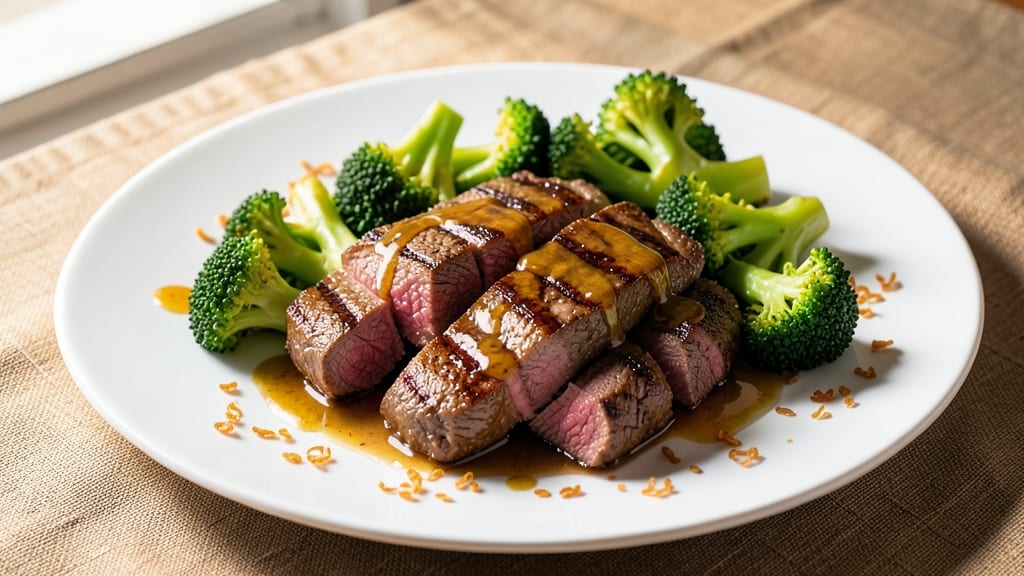
This beef and broccoli sirloin steak recipe delivers restaurant-quality results with just 20 minutes of active time—crispy edges on the steak, vibrant broccoli florets, and a silky soy butter glaze that ties everything together.
The secret lies in the wok-searing technique, which creates that signature caramelized crust while keeping the steak perfectly tender inside.
I developed this version after years of experimenting with different glaze combinations, and the soy butter version became my favorite because it adds a luxurious richness without overpowering the beef's natural flavor.
What makes this dish special is how it balances simplicity with professional techniques—no fancy equipment required, just a high-heat skillet or wok and a few pantry staples.
The broccoli gets just enough time in the pan to stay crisp-tender, while the steak develops those coveted crispy edges that hold up to the glossy sauce.
The sauce itself is a game-changer: a blend of soy sauce, butter, and a touch of honey creates a velvety glaze that coats every bite with umami depth and subtle sweetness.
By the time you plate this dish, you'll have perfectly seared sirloin steak with a caramelized crust, bright green broccoli that's still crisp, and a sauce so rich it'll make your taste buds sing.
It's the kind of meal that feels special enough for company but simple enough for a weeknight dinner. Serve it over steamed jasmine rice or noodles to soak up every last drop of that delicious glaze.
This recipe scales beautifully—whether you're cooking for two or feeding a crowd—and the leftovers reheat just as well as the first serving. The technique is foolproof once you get the hang of it, and the flavor combination is impossible to resist. Let's get cooking!
Ingredients for beef and broccoli recipe with sirloin steak
Pantry staples meet wok magic for this crispy, saucy steak and broccoli feast.
| Ingredient | Amount | Notes |
|---|---|---|
| Sirloin Steak 🥩 | 1 ½ lb | 1-inch thick slices, trimmed of fat |
| Broccoli Florets 🥦 | 2 cups | Fresh, trimmed into bite-sized pieces |
| Unsalted Butter 🧈 | ½ cup | Full-fat for richness, cubed |
| Light Soy Sauce 🥄 | ½ cup | Kikkoman preferred for balance |
| Honey 🍯 | 2 tbsp | Pure, for subtle sweetness |
| Sesame Oil 🫒 | 1 tbsp | Toasted, for aroma |
| Garlic Cloves 🧄 | 4 cloves | Minced, fresh for flavor |
| Fresh Ginger 🌿 | 1 tbsp | Grated, peeled, for zing |
| Vegetable Oil 🫒 | 2 tbsp | High smoke point for searing |
| Cornstarch 🌾 | 1 tbsp | For sauce thickening |
| Green Onions 🧅 | 2 whole | Sliced, for garnish |
| Salt 🧂 | 1 ½ tsp | Kosher, for seasoning |
| Black Pepper 🌶️ | 1 tsp | Freshly ground, for heat |
| Jasmine Rice 🍚 | 1 ½ cups | Uncooked, for serving |
The steak is where this dish shines. Sirloin gives you that perfect balance of tenderness and beefy flavor—ribeye or NY strip work too if you want richer cuts. Look for steaks with good marbling at Whole Foods or your local butcher; they'll slice them to your preferred thickness. If you're using pre-sliced steak from the grocery store, pat it dry before cooking for that crispy crust. The broccoli? Fresh florets are non-negotiable—frozen works in a pinch, but nothing beats the bright green crunch of fresh. Trim the stems and cut into even-sized pieces so they cook uniformly.
No soy sauce? Coconut aminos works in a pinch, though it'll taste slightly different. The butter in the sauce is crucial—full-fat only—it creates that luxurious silkiness. Short on honey? Maple syrup or agave at the same amount will keep things balanced. Sesame oil can be skipped if you're sensitive to its flavor, but trust me on adding it—it's what makes this taste authentically Asian-inspired. The cornstarch is key for thickening the sauce; if you don't have any, arrowroot powder works too. For the rice, jasmine is ideal, but basmati or even day-old rice will soak up the glaze beautifully.
This sauce reheats like a dream—just add a splash of water to loosen it up. Store leftovers in the fridge for up to 4 days, though I always make extra because it freezes perfectly for 3 months. The steak and broccoli can be prepped ahead and refrigerated separately, then quickly seared together when ready to serve. Garnish with those green onions right before eating—they add the final pop of freshness. Pro tip: If you're cooking for a crowd, double the sauce and keep it warm in a slow cooker on low heat.
Why You'll Love This Recipe
- One-Pan Magic: I swear by this—just one pan, no extra bowls. Sear the steak, toss in broccoli, and let the soy and honey work their magic while you stir. That butter finish? Pure lazy-day genius.
- Sweet-Savory Balance: The honey cuts through the richness of the steak, and the light soy keeps it bright. It’s not too sweet, not too salty—just that perfect harmony where every bite feels intentional.
- Weeknight & Date Night: Same recipe, different vibes. Throw it together for a Tuesday dinner with the kids (they’ll eat the broccoli, I promise) or dress it up with rice and a glass of wine for a fancy-ish night in.
- Budget-Friendly Luxury: Sirloin steak feels special without breaking the bank, and broccoli stretches across multiple meals. Leftovers reheat like a dream—crispy edges, tender beef, no one complains.
Step-by-step instructions for beef and broccoli sirloin steak
Here's how to create restaurant-quality beef and broccoli with perfectly seared steak and a glossy soy butter glaze.
Prepare the Steak and Rice
Slice the 1.5 lb sirloin steak into 1-inch thick strips, trimming any visible fat. Pat each piece dry with paper towels—this ensures a good sear later. While you work with the steak, rinse the 2 cups broccoli florets and trim away any tough stems. Set aside.
Rinse the 1.5 cups jasmine rice under cold water, then combine it with 3 cups water in a small pot. Bring to a boil, then reduce heat to low, cover, and simmer for 15 minutes until the water is absorbed. Keep the rice warm while you prepare the main dish. Here's the thing—properly cooked rice makes all the difference in this dish.
Sear the Steak to Crispy Perfection
Heat 2 tablespoons vegetable oil in a large wok or skillet over high heat until shimmering. Season the steak strips with 1.5 teaspoons salt and 1 teaspoon black pepper, then add them to the pan in a single layer. Let them sear undisturbed for 2 minutes—you'll see those beautiful caramelized edges form. Flip and sear the other side for another 2 minutes. The steak should be deep golden brown and slightly charred around the edges.
Remove the steak and set it aside on a plate. If the oil starts to smoke excessively, reduce the heat slightly—you want a hot sear without burning. This step is all about creating that crispy texture that makes this dish so satisfying. Don't skip the resting time; let the steak rest for 5 minutes before adding it back to the pan.
Stir-Fry the Broccoli and Aromatics
In the same wok, add 1 tablespoon vegetable oil and swirl to coat. Add the 2 cups broccoli florets and stir-fry for 3 minutes until bright green and just tender. Push the broccoli to one side of the pan, then add 1 tablespoon sesame oil, 4 minced garlic cloves, and 1 tablespoon grated fresh ginger. Stir for 30 seconds until fragrant—you should smell that garlic sizzling and the ginger releasing its zing.
Here's where it gets good: add the 0.5 cup light soy sauce and 2 tablespoons honey to the pan. Stir everything together and let it simmer for 1 minute until the sauce begins to thicken slightly. The broccoli should be tender-crisp with a glossy coating. If the sauce looks too thin, it's okay—we'll thicken it in the next step.
Create the Silky Soy Butter Glaze
Reduce the heat to medium and add the 0.5 cup cubed unsalted butter to the pan. Let it melt completely, then sprinkle in the 1 tablespoon cornstarch. Stir constantly for 1-2 minutes until the sauce thickens to a glossy, velvety consistency. You want it to coat the back of a spoon—this is what gives the dish that silky texture.
Return the steak strips to the pan and toss everything together for 1 minute, letting the steak absorb that rich, buttery sauce. The steak should be heated through but still tender. If the sauce seems too thick, add 1-2 tablespoons water to loosen it. Taste and adjust seasoning if needed—you might want to add a touch more soy sauce for balance.
Finish and Serve
Transfer the beef and broccoli to a serving platter and garnish with 2 sliced green onions. Serve immediately over the warm jasmine rice. The steak should be tender with crispy edges, the broccoli bright green and slightly crisp, and the sauce silky and flavorful. Each bite should deliver that perfect balance of sweet, savory, and umami.
For extra flair, drizzle a little extra sauce over the top before serving. This dish is all about contrasts—crispy steak, tender broccoli, and that luxurious sauce. Don't forget to save some of that delicious sauce for dipping the rice if you're feeling fancy!
Pro Tips For Making Beef And Broccoli Recipe With Sirloin Steak
- SEAR STEAKS IN BATCHES: Crowding the pan turns your sirloin into steamed beef. Work in single layers—no overlapping—and let each side get that deep golden crust before flipping. I used to rush this, and my steaks came out dull. Now I wait, and the flavor? Night and day.
- BLANCH BROCCOLI FIRST: Toss broccoli florets in boiling water for 30 seconds before stir-frying—it softens faster and keeps its vibrant green. Skip this, and you’ll end up with mushy florets fighting for space in the pan. (Yes, even if you’re impatient like me.)
- USE COLD BUTTER FOR SAUCE: Swirl in the unsalted butter at the end when it’s still sizzling, but let it cool slightly first. Cold butter emulsifies better with the soy-honey mix, giving you a glossy, cohesive sauce instead of greasy clumps. I learned this after scrapping three batches of lumpy sauce.
- SALT THE STEAK EARLY: Pat the sirloin dry, then season it before searing—at least 15 minutes ahead. Salt draws out moisture, so the crust forms properly. I was skeptical until I tried it: the difference in texture is like comparing cardboard to velvet. (Your future self will thank you.)
Essential equipment for beef and broccoli recipe with sirloin steak
High-Heat Skillet
A 14-inch cast iron skillet or carbon steel wok is your best friend for this recipe. Cast iron retains heat exceptionally well, creating that perfect sear on the steak.
I love my Lodge 10.25-inch cast iron skillet—it's heavy enough to handle high heat without warping, and the seasoning gets better over time. If you don’t have cast iron, a stainless steel wok works great too, just make sure it’s well-seasoned.
For weeknight cooking, a non-stick skillet can work, but be cautious—it won’t give you that caramelized crust. 🔥
Tongs and Spatula
You’ll need tongs for flipping the steak and a heat-resistant spatula for stirring the broccoli and sauce. I keep a pair of OXO Good Grips tongs and a stainless steel turner in my kitchen—they’re durable and easy to handle.
The tongs help you flip the steak without losing those precious caramelized edges, while the spatula ensures you scrape up every last bit of flavor from the pan. Pro tip: Keep a small bowl of water nearby to dip the spatula in if the sauce starts to stick.
Measuring Tools
Precision matters when it comes to the sauce. A small measuring spoon set and a liquid measuring cup are essential for accurate measurements. I use KitchenAid stainless steel measuring spoons—they’re sturdy and easy to read.
For the cornstarch, a 1-tablespoon measure ensures you get the right amount to thicken the sauce properly. Don’t eyeball it; the sauce won’t thicken correctly if you over or under-measure.
A digital kitchen scale can also be handy if you want to be extra precise with ingredients like butter or honey. 💡
Cutting Board and Knife
A sharp chef’s knife and a cutting board are non-negotiable for prepping the steak and broccoli. I swear by my Victorinox 8-inch chef’s knife—it’s sharp out of the box and stays that way with proper care.
For the steak, you want to slice it into 1-inch thick strips; for the broccoli, trim the florets into even-sized pieces so they cook uniformly. A small offset knife or paring knife comes in handy for mincing garlic and ginger.
Investing in a good knife will make prep faster and safer. ✨
Mixing Bowl
A medium-sized mixing bowl is useful for tossing the broccoli with sauce before plating. I use a stainless steel bowl because it’s easy to clean and doesn’t retain odors. If you’re prepping ahead, this is where you can mix the sauce ingredients before adding them to the pan. Just
Optional: Thermometer
While not essential, a meat thermometer ensures your steak reaches the perfect internal temperature. I use an instant-read thermometer like the Thermoworks ThermoPop—it’s fast and accurate. For sirloin, aim for 135°F for medium-rare, then let it rest to reach 140°F. If you’re new to cooking steak, this tool takes the guesswork out of doneness. It’s a small investment that makes a big difference in confidence and flavor. 🌡️
Nutrition facts
Frequently asked questions
Can I substitute ribeye or NY strip for the sirloin?
Ribeye or NY strip will work beautifully—they're richer and more marbled, so they'll add extra flavor and tenderness. Just reduce the cooking time by 30 seconds per side since these cuts cook faster. For ribeye, you might want to trim more fat to avoid excess grease in the pan. The sauce will still cling perfectly to the meat.
How do I keep the broccoli crisp-tender?
Timing is everything! Stir-fry the broccoli for exactly 3 minutes over high heat—no more, no less. Cut all florets to similar size so they cook evenly. If using frozen broccoli, thaw and pat completely dry first. The key is high heat and constant movement—don't let it sit in the pan too long or it'll turn mushy.
What's the best way to reheat leftovers?
Reheat in a skillet over medium heat with 1 tablespoon oil and 2 tablespoons water to loosen the sauce. Stir constantly for 3-4 minutes until warmed through. For extra crispiness, sear the steak pieces for 1 minute after adding them back to the pan. The sauce reheats beautifully—just add a splash of water if it thickens too much.
Can I make this gluten-free?
Yes! Replace the soy sauce with tamari or coconut aminos (use ½ cup for best flavor balance). Check that your cornstarch is certified gluten-free if needed. The rest of the recipe remains unchanged. The sauce will still be rich and flavorful—just slightly different in depth. For extra umami, add 1 teaspoon gluten-free fish sauce to the sauce.
Why did my sauce turn out too thick?
This usually happens when the cornstarch cooks too long or you didn't add enough liquid. For next time, reduce the heat to medium-low when adding the cornstarch, and stir constantly. If the sauce thickens too much while cooking, immediately add 1-2 tablespoons water or broth to loosen it. The sauce should coat the back of a spoon but still be pourable.