
Soups & Stews
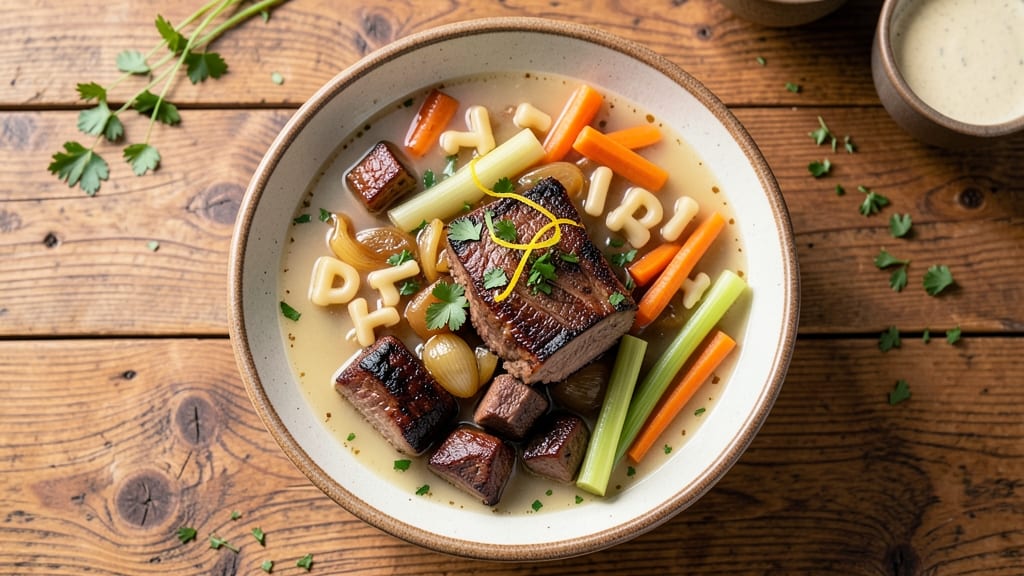
This beef alphabet soup recipe delivers the ultimate bowl of homemade comfort—tender beef, chewy noodles, and vibrant vegetables simmered in rich broth. The name comes from the alphabet-shaped pasta that gives it both charm and texture, but you can use any small pasta if needed.
What sets this version apart is the balance of savory beef, hearty vegetables, and the perfect al dente noodle—all ready in just 30 minutes without sacrificing depth of flavor.
The secret to restaurant-quality soup at home lies in the simmering technique: browning the beef first develops deep, meaty flavor, while low-and-slow cooking transforms tough cuts into tender pieces.
I use a mix of carrots, celery, and onions for the classic "holy trinity" base, but feel free to add peas, corn, or even spinach for extra nutrition. The broth builds richness as it simmers, creating a comforting embrace around every ingredient.
By the time you're ready to serve, you'll have a steaming bowl packed with tender beef, chewy noodles, and bright vegetables—each bite delivering that satisfying mix of textures and flavors.
The aroma alone will have everyone gathering around the table, and the leftovers reheat beautifully for days of cozy meals. This isn't just soup; it's a warm hug in a bowl that works for weeknight dinners or special occasions alike.
For extra appeal, garnish with fresh parsley or a sprinkle of black pepper, and serve with crusty bread to soak up every last drop of that savory broth.
The beauty of this recipe is its flexibility—you can make it on the stovetop, in a slow cooker, or even an Instant Pot, all while keeping the homemade comfort intact. Let's get started on creating your own bowl of warmth.
Ingredients for beef alphabet soup
Pantry staples plus a few fresh veggies—this soup comes together faster than you'd think.
| Ingredient | Amount | Notes |
|---|---|---|
| Beef Chuck Roast 🥩 | 1 ½ lb | Cut into 1-inch cubes |
| Alphabet Shaped Pasta 🍝 | 8 oz | Or any small pasta |
| Yellow Onion 🧅 | 1 whole | Diced, medium size |
| Carrots 🥕 | 3 medium | Peeled, sliced into rounds |
| Celery Stalks 🧄 | 3 whole | Thinly sliced, strings removed |
| Garlic Cloves 🧄 | 4 cloves | Minced, fresh preferred |
| Beef Broth 💧 | 6 cups | Low-sodium preferred |
| Tomato Paste 🍅 | 2 tbsp | Smooth, not chunky |
| Dried Parsley 🌿 | 1 tbsp | Or 2 tbsp fresh chopped |
| Bay Leaves 🌿 | 2 whole | Remove before serving |
| Salt 🧂 | 1 ½ tsp | Kosher or sea salt |
| Black Pepper 🌶️ | ½ tsp | Freshly ground preferred |
| Olive Oil 🫒 | 2 tbsp | For browning beef |
The beef is where the magic happens. Chuck roast gives you that deep, meaty flavor without breaking the bank. Most grocery stores carry it pre-cut, but if you're buying a whole roast, ask the butcher to cube it for you—1-inch pieces cook evenly. I grab mine from Costco when I'm making a big batch, but the regular supermarket stuff works fine for a weeknight dinner. Look for good marbling if you're picking your own cut. The alphabet pasta? Trader Joe's has it year-round, but any small pasta like ditalini or orzo works just as well—it's all about that chewy texture.
No beef broth? Chicken broth plus 1 tbsp soy sauce gets you close. Fresh parsley is ideal but dried works at one-third the amount. The tomato paste can be any brand—Rao's or Muir Glen are solid choices. If you're using fresh herbs, chop them finely so they distribute evenly. The carrots and celery can be baby or regular—just make sure they're fresh. Wilted veggies make for a bland soup. The onion and garlic are your flavor base, so don't skip browning them until they're golden. That's where the depth comes from.
This soup tastes even better the next day—3-4 days in the fridge, no problem. Freezes beautifully for up to 3 months if you want to prep ahead. I always make a double batch because leftovers mean easy lunches. Store it in airtight containers, and the broth stays rich and flavorful. Garnish with extra parsley or a crack of black pepper right before serving—it makes all the difference. Serve with crusty bread to soak up every last drop of that savory broth.
Why You'll Love This Recipe
- One-Pot Wonder: I swear by this recipe when I’m too tired to deal with multiple pans. Toss everything—beef, alphabet pasta, veggies—into one pot, and let the slow simmer do the work. No chopping like a maniac, no fussing over layers.
- Rich, Hearty Bite: That beef chuck roast? It falls apart into tender shreds that soak up the broth like a sponge. The alphabet pasta adds fun texture, but honestly, the real star is the deep, savory flavor from the onions and carrots caramelizing together.
- Kid-Approved Fun: Between us, my kids will eat anything if it’s shaped like letters. The alphabet pasta makes this soup feel special—no sad faces when they see their favorite shapes floating in the broth. (Yes, even on a Tuesday night.)
- Budget-Friendly Leftovers: A whole chuck roast feeds my family for days, and the soup only gets better the next day. I freeze portions for lazy evenings, and the veggies stretch every bite without breaking the bank. Minimal cost, maximum satisfaction.
Step-by-step instructions for beef alphabet soup
This hearty soup comes together faster than you'd think—rich beef flavor meets tender veggies and chewy noodles.
Brown the Beef for Deep Flavor
Heat the 2 tbsp olive oil in a large Dutch oven over medium-high heat. Add the 1.5 lb beef chuck roast cut into 1-inch cubes, working in batches if needed to avoid crowding. Brown the beef on all sides until it develops a deep mahogany crust—this takes about 5-6 minutes total. You want that caramelized exterior to build rich flavor into the broth.
Once browned, transfer the beef to a plate and set aside. Don't drain the Dutch oven—those browned bits are pure flavor. If the pan looks dry, add a splash of beef broth to deglaze and scrape up any stuck-on bits. This step is non-negotiable for that restaurant-quality depth.
Sauté the Vegetable Base
In the same Dutch oven, add the diced yellow onion, sliced carrots, and thinly sliced celery stalks. Cook over medium heat for 5-6 minutes, stirring occasionally, until the vegetables soften slightly and the onion becomes translucent. You're not trying to fully cook them yet—just breaking them down so they infuse the broth.
Add the 4 minced garlic cloves and cook for 30 seconds until fragrant. Here's where the magic happens—the garlic should smell pungent and toasty, not burnt. If it starts to darken too quickly, reduce the heat slightly. Stir in the 2 tbsp tomato paste and cook for another 1 minute to deepen the color and flavor.
Simmer the Beef and Vegetables
Return the browned beef to the Dutch oven. Pour in the 6 cups beef broth, then add the 1.5 tsp salt, 0.5 tsp black pepper, 1 tbsp dried parsley, and 2 whole bay leaves. Bring to a boil, then reduce heat to low, cover partially, and let it simmer for 1 hour. You want the beef to become fork-tender—when you pierce a piece with a fork, it should offer minimal resistance.
After 45 minutes, check the beef again. If it's not quite tender, add ½ cup water to the pot and continue simmering. The broth should reduce slightly, concentrating the flavors. The vegetables will soften as they cook, but we'll add fresh ones later for texture contrast.
Cook the Pasta and Finish
While the beef simmers, prepare the 8 oz alphabet shaped pasta according to package directions for al dente texture—usually 8-10 minutes in boiling salted water. Drain and set aside, reserving ½ cup pasta water in case you need to adjust consistency later.
Once the beef is tender, remove the 2 bay leaves (they'll be tough) and use two forks to shred the beef into bite-sized pieces. Return the beef to the broth and stir in the cooked pasta. Simmer uncovered for 3-4 minutes to heat through and let the flavors meld. Taste and adjust seasoning—you might need a pinch more salt or pepper depending on your broth.
Serve with Warm Comfort
Ladle the soup into bowls, making sure each serving gets a generous mix of beef, vegetables, and pasta. The alphabet noodles add fun texture while holding up well to the hearty broth. Garnish with extra dried parsley if you like, and serve immediately with crusty bread to soak up every last drop of that rich, savory broth.
This soup tastes even better the next day as the flavors continue to develop, but it's so comforting fresh off the stove that you'll want to eat it immediately. The combination of tender beef, sweet carrots, earthy celery, and chewy noodles makes it the ultimate homemade comfort dish.
Pro Tips For Making Beef Alphabet Soup
- SEAR THE ROAST FIRST: I learned this the hard way—skipping the sear means flavorless broth. Pat the beef chuck dry, then hit it with high heat in a Dutch oven until deep brown on all sides. That crust locks in juices and builds depth that no bouillon cube can replace.
- CUT VEGETABLES UNIFORM: Tiny celery stalks and uneven carrots turn to mush while the beef cooks. Dice the onion into ¼-inch pieces, slice carrots into ½-inch chunks, and cut celery into ¼-inch rounds—consistent sizes guarantee they stay crisp instead of turning to soup sludge.
- SALT THE BROTH LATE: Adding salt early dilutes the flavor as the broth reduces. Wait until the beef has cooked down and the vegetables are tender, then taste and adjust—this keeps the seasoning balanced and the meat properly seasoned, not swimming in brine.
- USE PASTA WATER: Dumping dry alphabet pasta into the soup often leaves it gummy. Cook the pasta separately in salted water, drain, then toss it in the hot broth with a splash of that starchy water—it coats the noodles perfectly and prevents them from absorbing all the liquid.
Common mistakes when making this recipe
Skipping the Browning
Browning the beef might seem like an extra step, but it's where the deep, meaty flavor comes from. If you skip this and just add raw beef to the pot, your soup will taste bland and watery. The Maillard reaction—those beautiful browned bits—creates complex flavors that infuse into the broth.
I've made this mistake early on, and trust me, the difference is night and day. Take the 5-6 minutes to brown the beef in batches if needed—it's worth it. 🔥
Using Low-Quality Broth
Don't cut corners with your broth. Store-bought low-sodium broth is fine, but avoid anything with artificial flavors or preservatives. If you're using homemade broth, make sure it's well-seasoned with herbs and vegetables. I've ruined perfectly good soups by using weak broth—it's the foundation of your soup.
For an extra boost, add 1 tsp Worcestershire sauce or a splash of soy sauce to your broth for umami depth. The broth should be rich and flavorful enough to stand on its own.
Overcooking the Pasta
Alphabet pasta (or any small pasta) should be cooked just until it's al dente—firm to the bite. If you overcook it, the pasta turns mushy and loses its texture, making the soup gummy. Cook the pasta separately and add it to the soup just before serving.
This keeps it chewy and prevents it from absorbing too much of the broth. I always reserve some pasta water to adjust the soup's consistency if needed. A 1-minute difference in cooking time can make a huge difference in texture. ✨
Ignoring the Deglazing Step
After browning the beef, those flavorful browned bits stick to the bottom of the pan. If you don't deglaze with a splash of beef broth, you're losing precious flavor. Scrape up those bits with a wooden spoon and stir them into the broth—they'll dissolve and add depth.
This step is quick but critical. I've seen home cooks skip it, and the soup just doesn't taste as rich or complex. Take the 30 seconds to deglaze—it's a game-changer. 💫
Underseasoning the Soup
Taste your soup before serving—it's the only way to know if it needs more salt, pepper, or herbs. Many home cooks are afraid to season enough, but this soup should be bold and savory.
Start with the 1.5 tsp salt and 0.5 tsp black pepper called for, but don't be afraid to add more. A pinch of red pepper flakes or a splash of lemon juice can also brighten the flavors.
I always adjust seasoning right before serving, so I can taste the final product. The goal is a well-balanced, flavorful bowl of comfort. 💡
Adding Too Many Vegetables
While it's tempting to load up on veggies, adding too many can dilute the beef flavor and make the soup watery. Stick to the classic onion, carrot, and celery base, and consider adding just one or two extra vegetables like peas or spinach at the end.
Overcrowding the pot also slows down cooking and can lead to unevenly cooked ingredients. I've made the mistake of adding too many veggies, and the soup ended up tasting more like a vegetable stew than a beef soup. Balance is key—keep the beef as the star. 🥕
Nutrition facts
Frequently asked questions
Can I use ground beef instead of beef chuck roast?
Yes, but with adjustments! Ground beef works well, but it won't have the same tender texture. Use 1 lb lean ground beef and brown it thoroughly over medium-high heat for 4-5 minutes until fully cooked. The soup will be heartier, but the beef will be more finely textured. For extra richness, add 1 tsp soy sauce to the broth while simmering.
How do I make this in a slow cooker?
Brown the beef first, then transfer everything (including broth and veggies) to your slow cooker. Cook on low for 6-7 hours or high for 3-4 hours. Add the pasta during the last 30 minutes of cooking. The slow cooker method enhances the beef's tenderness and lets flavors meld beautifully. Just check the beef's doneness after 4 hours on low.
What can I add to make it more kid-friendly?
Blend in ½ cup pureed carrots for sweetness, or stir in 1 cup frozen peas during the last 10 minutes of cooking. For protein, add ½ cup cooked elbow macaroni along with the alphabet pasta. Serve with a side of buttered noodles or toast strips for dipping. Kids love the fun shapes and familiar textures!
Can I make this soup gluten-free?
Use gluten-free beef broth and swap alphabet pasta for gluten-free pasta shapes like orzo or small gluten-free penne. Check labels for cross-contamination warnings. The recipe remains the same otherwise—just ensure all ingredients are certified gluten-free. The flavor stays rich and satisfying.
Why does my soup taste bland?
Most likely, you skipped browning the beef or used weak broth. Always brown the meat first for deep flavor, and use a quality low-sodium broth. Boost umami by adding 1 tsp Worcestershire sauce or ½ tsp soy sauce to the broth. Taste as you go and adjust salt/pepper at the end—this soup should be bold and savory!