
Main Courses
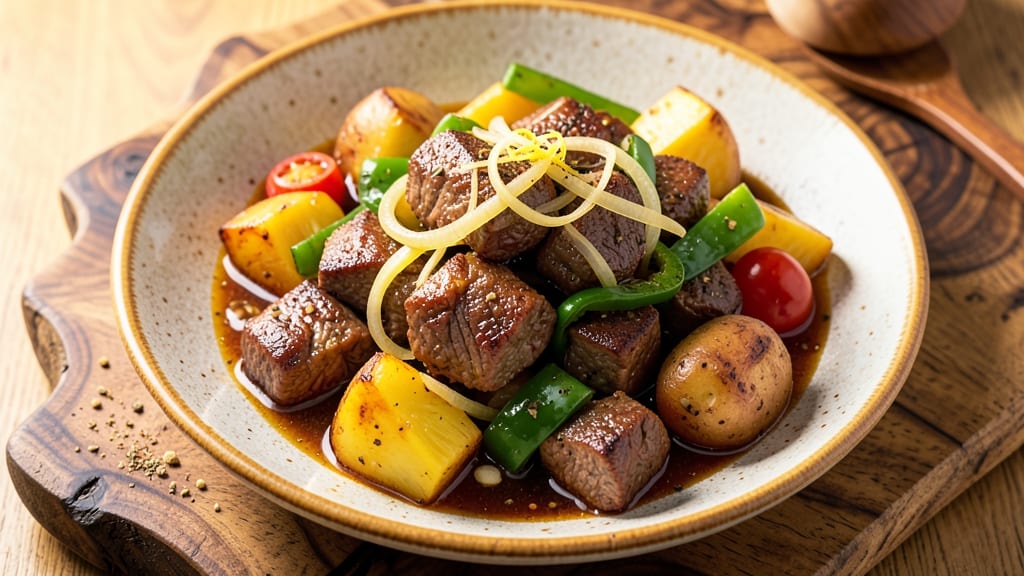
This Mama Sita-inspired beef afritada delivers the tender, caramelized beef bites and sweet-tangy pineapple-tomato sauce that makes Filipino comfort food unforgettable.
The secret lies in slow-braising beef until it practically melts in your mouth while balancing the natural sweetness of pineapple with the acidity of tomatoes—a technique passed down through generations.
What sets this version apart is the proper browning of the beef and the layered flavors that develop during the long simmer.
Unlike many adapted recipes, this version stays true to its roots with a rich, slightly thickened sauce that coats every bite of beef and pineapple. The process requires patience—beef needs time to tenderize, and the sauce must reduce properly—but the result is a dish that tastes like home.
I've included all the essential elements: bell peppers for crunch, potatoes for heartiness, and just the right amount of soy sauce and vinegar to balance the sweetness.
By the time you serve this dish, your kitchen will smell like a Filipino family gathering, and every forkful will deliver perfectly tender beef with just the right amount of caramelization, sweet pineapple chunks, and a sauce that's neither too sweet nor too acidic.
The potatoes absorb all the delicious flavors, making this a complete meal that's hearty enough for a weeknight dinner or a special occasion.
Serve with steamed white rice to soak up every last drop of that flavorful sauce. This recipe delivers the same comfort and satisfaction you'd find in a traditional Filipino home kitchen—just with the added convenience of making it at home. Let's get cooking!
Ingredients for beef afritada recipe mama sita
Pineapple, tomatoes, and tender beef—this Filipino classic needs just 15 ingredients for pure comfort food magic.
| Ingredient | Amount | Notes |
|---|---|---|
| Beef Chuck Roast 🥩 | 2 ½ lb | Cut into 1.5-inch cubes |
| Fresh Pineapple Chunks 🍍 | 2 cups | Fresh or canned in juice |
| Yellow Onions 🧅 | 2 whole | Thinly sliced, about 2 cups |
| Green Bell Peppers 🌶️ | 2 whole | Sliced into strips |
| Medium Russet Potatoes 🥔 | 3 whole | Peeled, cut into chunks |
| Tomatoes 🍅 | 4 whole | Ripe, quartered |
| Garlic Cloves 🧄 | 6 cloves | Minced |
| Soy Sauce 🍶 | ½ cup | Regular or light |
| Cane Vinegar 🍯 | ¼ cup | White or apple cider |
| Tomato Paste 🍅 | ¼ cup | Smooth, not chunky |
| Olive Oil 🫒 | ¼ cup | Extra-virgin preferred |
| Salt 🧂 | 1 ½ tsp | Kosher or sea salt |
| Ground Black Pepper 🌶️ | 1 tsp | Freshly ground |
| Bay Leaves 🌿 | 2 whole | Dried |
| Fresh Thyme Leaves 🌿 | ¼ cup | Or 1 tsp dried |
The beef is everything here. Chuck roast is the gold standard—it stays tender while the sauce caramelizes, but chuck eye or sirloin work too if that's what you find. Cut it into even 1.5-inch cubes so it cooks uniformly. I grab mine from Costco when I'm feeding a crowd, but the regular supermarket chuck works just fine for this. Look for good marbling—it's what keeps the meat juicy. If you're buying a whole roast, ask the butcher to cube it for you (they'll do it for free).
Fresh pineapple is ideal, but canned pineapple in juice (not syrup) saves time—just drain it well. The tomatoes should be ripe but firm; Roma or vine-ripened hold up better than slicers. No green bell peppers? Red or yellow work too, but green gives that classic Filipino color. The tomato paste can be the squeeze tube kind from Trader Joe's—it's perfect for this. For the vinegar, cane vinegar is traditional, but apple cider or white vinegar both work. The thyme? Fresh is best, but dried at one-third the amount gets you close.
This sauce tastes even better the next day, so make extra. It keeps for 5 days in the fridge, and freezes beautifully for 3 months. I portion mine into containers with rice so lunches are ready to grab. The potatoes will soften as they sit, so if you're prepping ahead, reheat gently with a splash of water. The pineapple chunks stay fresh for days in the sauce—just stir them back in when reheating.
Why You'll Love This Recipe
- One-Pot Magic: I swear by this recipe because it’s all in one pot—no chopping boards full of mess. The beef chucks away while the onions caramelize, pineapple sweetens, and potatoes soak up the sauce like sponges. Twenty minutes of hands-off time, and dinner’s basically making itself.
- Sweet-Savory Balance: That tangy tomato base with pineapple chunks? It’s the kind of flavor combo that makes you pause mid-bite. The beef stays tender, the bell peppers add a crisp bite, and the potatoes? They turn fluffy without falling apart. Honestly, it’s the rare dish where every ingredient matters.
- Weeknight Workhorse: This feeds a crowd but won’t break the bank—perfect for game nights or lazy Sundays. Leftovers reheat like a dream (yes, even the potatoes stay decent), and I’ve packed it for work lunches when I’m too tired to think. Between us, it’s my go-to when I don’t want to stress.
- Budget Beef Boost: Chuck roast is cheap but feels special here—the slow cook in the sauce makes it melt-in-your-mouth tender. Pineapple and bell peppers add freshness without costing a fortune, and potatoes stretch the meal further. Took me three tries to get the sauce right, but now it’s my secret weapon for stretching groceries without sacrificing flavor.
Step-by-step instructions for beef afritada recipe Mama Sita
Here's how to create Mama Sita's signature tender beef braise with sweet pineapple and tangy tomatoes.
Prepare the Beef and Vegetables
Cut the 2.5 lb beef chuck roast into 1.5-inch cubes - this size ensures even cooking and tender results. Pat them dry with paper towels to help them brown properly. In a large bowl, combine the beef cubes with 1.5 tsp salt, 1 tsp ground black pepper, 0.25 cup fresh thyme leaves, and 0.5 cup soy sauce. Toss gently to coat the beef completely and let it marinate for 15 minutes at room temperature.
While the beef marinates, prepare the vegetables. Thinly slice the 2 whole yellow onions (about 2 cups total) and slice the 2 whole green bell peppers into strips. Peel and cut the 3 whole medium russet potatoes into 1-inch chunks. Quarter the 4 whole tomatoes and mince the 6 cloves garlic. Keep all prepared ingredients separate until ready to use.
Sear the Beef for Maximum Flavor
Heat 0.25 cup olive oil in a large Dutch oven or heavy pot over medium-high heat until shimmering. Working in batches to avoid crowding, sear the marinated beef cubes for 2-3 minutes per side until they develop a deep golden-brown crust. This step is crucial - it locks in juices and creates that rich, caramelized flavor that makes this dish special.
As each batch of beef browns, remove it from the pot and set aside. In the same pot, add the sliced yellow onions and green bell peppers, cooking for 4-5 minutes until they begin to soften. Add the minced garlic cloves and cook for 30 seconds until fragrant. This aromatic base will form the flavor foundation of your afritada.
Build the Pineapple-Tomato Braise
Return all the browned beef to the pot. Stir in the 0.25 cup tomato paste, spreading it evenly over the beef and vegetables. Cook for 2 minutes to toast the tomato paste slightly, deepening its flavor. Then pour in the 0.25 cup cane vinegar and 0.5 cup soy sauce, scraping up any browned bits from the bottom of the pot - these contain concentrated flavor.
Add the 2 cups fresh pineapple chunks, 3 whole medium russet potatoes, 4 quartered tomatoes, 2 whole bay leaves, and any accumulated juices from the beef. Stir gently to combine, then bring the mixture to a simmer. The liquid should come about halfway up the beef cubes - if it's too thin, add 2-3 tablespoons water. Cover the pot and reduce heat to low.
Slow Braise Until Tender
Let the afritada simmer uncovered for 1 hour, stirring occasionally. You'll notice the beef gradually releases its juices into the sauce, creating that signature rich, glossy coating. After 1 hour, check the tenderness of the beef - it should be fork-tender but still have a slight bite. If the sauce has reduced too much, add 2-3 tablespoons water to maintain moisture.
Continue simmering for another 30-45 minutes until the beef is completely tender and the potatoes are easily pierced with a fork. The sauce should be thick and flavorful, with the sweetness of pineapple perfectly balanced by the tangy tomatoes. Taste and adjust seasoning if needed - you might want to add a pinch more salt or a splash more vinegar to balance the flavors.
Rest and Serve
Once the beef is perfectly tender and the sauce has thickened to your liking, remove the 2 whole bay leaves and discard them. Let the afritada rest for 10 minutes before serving. This resting period allows the juices to redistribute throughout the beef, ensuring each bite is moist and flavorful.
Serve the beef afritada hot, family-style, with steamed rice or crusty bread to soak up that delicious sauce. The combination of tender beef, sweet pineapple, and tangy tomato sauce creates a perfect balance of flavors that's sure to become a family favorite. Enjoy immediately while the beef is at its most tender and the sauce is at its peak flavor!
Pro Tips For Making Beef Afritada Recipe Mama Sita
- Sear the Chuck First: The beef won’t fall apart if you give it a 5-minute head start in a screaming-hot pan with oil—no rush, let it brown deep before you even think about adding onions. I learned this the hard way when my first batch turned out mushy; the Maid of Honor’s recipe relies on that crust for flavor.
- Cut Potatoes in Uniform Chunks: No one wants a pot full of uneven potatoes—stick to 1.5-inch cubes so they cook at the same pace and don’t turn to mush while the beef rests. (Yes, even if you’re impatient like me.) Use a knife or a mandoline if you’re feeling fancy, but a ruler works just as well.
- Add Pineapple Late: Tossing in pineapple too early means it’ll stew into oblivion, losing its bright sweetness and turning mushy. Hold off until the last 15 minutes—just like Mama Sita’s original, where the fruit stays juicy and tangy, cutting through the richness of the beef.
- Deglaze with Vinegar First: Skip the water and start with ¼ cup white vinegar when deglazing—it cuts through the browned bits faster and adds a subtle tang that balances the sweetness. Then add the tomatoes and broth. This isn’t the prettiest method, but it’s the tastiest, and your sauce will taste deeper for it.
Common mistakes when making this dish
Skipping the Sear
Skipping the sear is the biggest mistake I see—it's what gives afritada its deep, caramelized flavor. When you skip browning the beef, you lose that rich, almost sweet crust that develops from the Maillard reaction.
Instead of tender, flavorful beef, you'll end up with pale, bland cubes swimming in sauce. I always work in batches to avoid crowding the pan, and I never rush this step. Trust me, those golden-brown bits are worth the extra time. 🔥
Using the Wrong Cut
Not all beef cuts work equally well. Chuck roast is the traditional choice because it stays tender during long cooking, but I've seen people use leaner cuts like sirloin that turn out tough.
If you must substitute, go for chuck eye or round roast—they have enough fat to stay moist. Cut the beef into 1.5-inch cubes for even cooking; smaller pieces will dry out, while larger ones won't cook through.
Overcrowding the Pot
Crowding the pot with too much beef at once causes the temperature to drop, leading to steaming instead of searing. This results in soggy beef and a watery sauce.
Work in batches—I usually sear half the beef at a time—and give yourself enough time between batches to clean the pot if needed. A Dutch oven is perfect for this because it holds heat well, but even a heavy pot works if you're patient.
Ignoring the Vinegar
The 0.25 cup cane vinegar is crucial for balancing the sweetness of the pineapple and tomatoes. Some recipes skip it or use too little, leaving the dish cloyingly sweet. If your sauce tastes too mild, add a splash more vinegar—just 1-2 teaspoons at a time—and taste as you go.
The vinegar also helps tenderize the beef slightly during the long simmer. Don't fear the tang; it's what makes this dish shine.
Rushing the Braise
Afritada is a slow-cooked dish, and rushing it leads to tough beef and a thin sauce. The beef needs 1.5-2 hours total to become fork-tender, and the sauce must reduce gradually to develop depth.
I've seen people walk away from the stove too soon, only to end up with a watery, flavorless mess. Keep the heat at a gentle simmer, and resist the urge to speed things up—patience is key here.
Skipping the Rest
Letting the afritada rest for 10 minutes before serving might seem like a small detail, but it's essential. This step allows the juices to redistribute throughout the beef, ensuring each bite is moist and flavorful.
If you skip it, the beef will release its juices onto your plate instead of staying inside where they belong. Serve it immediately, but give it that short rest first—it makes all the difference. ✨
Nutrition facts
Frequently asked questions
Can I substitute canned pineapple for fresh?
Yes, you can use canned pineapple in juice (not syrup) to save time. Drain it well first to avoid making the sauce too watery. Fresh pineapple adds a brighter flavor, but canned works perfectly when properly drained. For best results, choose chunks with minimal added water.
How do I make this dish spicier?
Add 1-2 teaspoons of ground black pepper or include 1-2 slices of fresh chili (like siling labuyo) when building the sauce. For a smoky kick, add 1/2 teaspoon smoked paprika with the tomato paste. Always taste as you go—Filipino flavors can handle heat, but balance is key!
Can I make this in an Instant Pot?
Yes! Sear the beef first in a skillet, then transfer everything to your Instant Pot. Use the High Pressure setting for 35 minutes followed by a 10-minute natural release. The sauce may need thickening with a cornstarch slurry after cooking. The Instant Pot version cooks faster but requires careful monitoring to avoid overcooking.
What's the best way to reheat leftovers?
Reheat gently in a saucepan with 2-3 tablespoons water over medium-low heat for 5-7 minutes, stirring occasionally. Microwaving can make the sauce watery. For best texture, reheat just until warmed through—this dish tastes even better the next day as flavors meld!
Is this dish suitable for meal prep?
Store in airtight containers in the fridge for 5 days or freeze for 3 months. The flavors actually improve overnight. When reheating, add a splash of water or broth to prevent drying. It reheats beautifully and makes great lunches—just serve with freshly steamed rice.