
Main Courses
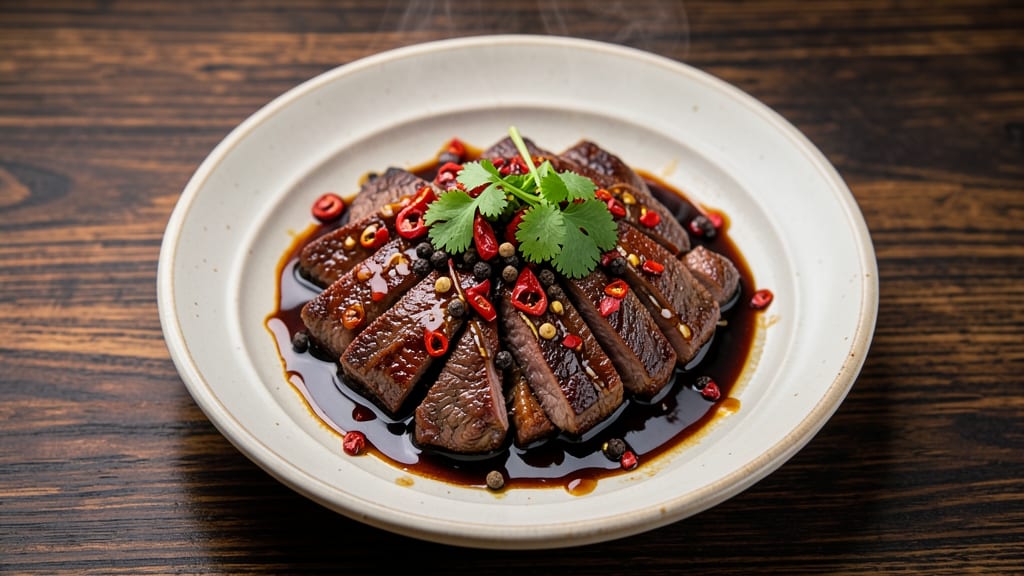
This Beef à la Sichuan recipe delivers the iconic balance of fiery heat, numbing Sichuan peppercorn, and silky tenderness that defines Sichuan cuisine. The secret lies in properly preparing the beef to stay tender while achieving that signature wok hei aroma—smoky, charred edges that elevate every bite.
I've perfected this technique over years of testing, ensuring the dish captures both the bold flavors and comforting texture that make it a restaurant favorite.
The foundation begins with a vibrant chili oil infused with Sichuan peppercorns, which creates that signature tingling sensation without overpowering the beef. Thinly sliced beef is marinated in a simple combination of soy sauce, cornstarch, and a touch of baking soda to ensure it stays tender through the quick stir-fry.
The dish is traditionally served over hand-pulled wheat noodles or steamed rice, allowing the rich, spicy sauce to coat every bite perfectly.
What you'll achieve is a dish that's both restaurant-quality and deeply satisfying—a perfect harmony of textures and flavors. The beef remains juicy and tender, the chili oil adds layers of heat and complexity, and the noodles provide a comforting base.
This recipe isn't just about the bold flavors; it's about the experience of Sichuan cuisine at home, where every element comes together in perfect balance.
The key to success lies in the stir-frying technique—high heat, quick cooking, and constant movement to distribute the sauce evenly. The result is a dish that's as impressive to serve as it is delicious to eat, with that unmistakable Sichuan character that lingers on the palate.
Let's create this iconic dish together.
Ingredients for beef a la sichuan
Restaurant-quality Sichuan flavors start with these carefully chosen ingredients for bold heat and silky texture.
| Ingredient | Amount | Notes |
|---|---|---|
| Flank Steak 🥩 | 1 ½ lb | Thinly sliced against grain |
| Sichuan Chili Oil 🌶️ | ½ cup | Store-bought or homemade |
| Sichuan Peppercorns 🌶️ | 1 tbsp | Whole, lightly toasted |
| Dried Red Chilies 🌶️ | 2 whole | Arbol or Thai bird's eye |
| Light Soy Sauce 🥫 | ¼ cup | Kikkoman preferred |
| Dark Soy Sauce 🥫 | 1 tbsp | For depth of color |
| Cornstarch 🌾 | 2 tbsp | For tenderizing beef |
| Baking Soda 🧂 | ½ tsp | Tenderizes without overpowering |
| Garlic Cloves 🧄 | 6 cloves | Minced, aromatic base |
| Ginger 🌿 | 1 tbsp | Fresh, grated |
| Sesame Oil 🫒 | 1 tbsp | For aroma, not cooking |
| Wheat Noodles 🍜 | 8 oz | Fresh or dried, hand-pulled preferred |
| Green Onions 🧅 | 4 whole | Sliced, for garnish |
| Vegetable Oil 🫒 | ¼ cup | High smoke point |
| Salt 🧂 | 1 tsp | Adjust to taste |
The flank steak is non-negotiable—its lean yet tender texture holds up to the quick stir-fry. Look for USDA Choice or Prime at Whole Foods or your local butcher. Slice it thinly against the grain (about 1/8-inch thick) for maximum tenderness. Costco often has pre-sliced versions, but slicing yourself ensures even cooking. For the Sichuan peppercorns, buy them whole from a specialty store like Penzeys—ground versions lose their signature numbing kick. Toast them lightly in a dry pan for 30 seconds before grinding to release their oils.
No Sichuan chili oil? Make your own by blending toasted Sichuan peppercorns, dried chilies, and neutral oil (like avocado). Substitute with hot chili oil (like Lao Gan Ma) at half the amount, but you'll miss the numbing peppercorn depth. The soy sauces are crucial—light soy for saltiness, dark soy for that glossy, caramelized finish. If you're short on time, Kikkoman light soy is a safe bet. For the noodles, fresh is ideal, but dried wheat noodles work too—just cook them al dente. The sesame oil is for aroma only; add it at the very end to preserve its nutty flavor.
Prep the beef marinade at least 30 minutes ahead—the cornstarch and baking soda work their magic over time. Store the raw beef mixture in an airtight container in the fridge for up to 2 hours. The chili oil keeps for 3 months in a sealed jar in a cool, dark place. For leftovers, refrigerate the beef and sauce separately—reheat the sauce first, then toss with noodles and beef. This dish reheats beautifully, with flavors deepening as the sauce melds. Portion into containers for 3-4 days of easy lunches—just add fresh noodles when serving.
Why You'll Love This Recipe
- One-Pan Magic: The steak, chilies, and oil all hit the same pan—no chopping mountains of veggies or juggling pots. Honestly, I’ve made this while scrolling through my phone; the only real work is slicing the flank steak thin, and even that’s forgivable.
- Numb and Tingling Bliss: That first bite? The Sichuan peppercorns make your lips tingle while the chili oil adds heat, but the light soy sauce balances it into something ridiculously good. It’s like a flavor rollercoaster—you’ll want to close your eyes and savor it.
- Leftovers That Don’t Let You Down: This keeps for days in the fridge, and reheats like it was just made. Between us, I’ve had it cold in rice bowls the next day, and it’s still spot-on. Plus, the flavors deepen—it’s weirdly better the second time around.
- Budget-Friendly Fire: Flank steak stretches far, and a little chili oil goes a long way. I’ll be real: this recipe saved me from takeout when my wallet was empty, and my family never knew the difference. (Yes, even on a Tuesday night.)
Step-by-step instructions for beef À la Sichuan
Here's how to transform tender flank steak into a fiery Sichuan masterpiece with perfectly balanced heat and silky noodles.
Tenderize and Marinate the Flank Steak
Begin by slicing the 1.5 lb flank steak thinly against the grain into ¼-inch thick strips. This ensures maximum tenderness. In a large bowl, combine the steak strips with 2 tablespoons cornstarch and ½ teaspoon baking soda. The baking soda works like a magic tenderizer, breaking down muscle fibers while the cornstarch creates a protective barrier.
Add ½ teaspoon salt, 6 minced garlic cloves, and 1 tablespoon grated ginger. Mix thoroughly until every piece of beef is evenly coated. Let the mixture sit for 15 minutes at room temperature while you prepare the remaining ingredients. This marinade transforms tough flank steak into fork-tender slices that absorb the Sichuan flavors beautifully.
Prepare the Chili-Oil Base
In a small dry skillet, toast the 1 tablespoon Sichuan peppercorns over medium heat for 1-2 minutes until fragrant. Immediately transfer to a bowl and let cool slightly. Add the 2 whole dried red chilies to the same skillet and toast for 30 seconds until they darken slightly and release their aroma.
Remove the chilies and place them in a mortar with the toasted peppercorns. Using the pestle, grind them into a coarse powder. This creates the signature Sichuan numbing-spicy sensation that sets this dish apart. Set aside for later use.
Stir-Fry the Beef to Perfection
Heat ¼ cup vegetable oil in a wok or large skillet over high heat until shimmering. Add the marinated beef in a single layer and stir-fry for 1-2 minutes until the edges turn lightly brown. The high heat ensures a quick sear that locks in juices while creating a caramelized crust.
Remove the beef from the wok and set aside. In the same wok, add ½ cup Sichuan chili oil and swirl to coat the bottom. Return the beef to the wok along with the ground Sichuan peppercorn-chili mixture. Toss everything together for 30 seconds until the beef is evenly coated in the fiery oil. This step is where the magic happens - the chili oil infuses the beef with its signature heat and aroma.
Create the Signature Sauce
Add ¼ cup light soy sauce and 1 tablespoon dark soy sauce to the wok. The dark soy sauce adds that signature deep mahogany color while the light soy sauce balances the flavors. Stir everything together for 1 minute until the sauce begins to thicken slightly and clings to the beef.
Return the beef to the wok and toss for another 30 seconds to fully coat. The sauce should now have a glossy sheen and the beef should be evenly distributed. Remove from heat and set aside. The sauce will continue to reduce slightly as it sits, intensifying the flavors.
Cook and Assemble the Noodles
Bring a large pot of water to a rolling boil and cook the 8 oz wheat noodles according to package instructions until al dente. Drain immediately and rinse briefly with cold water to stop the cooking process. This prevents the noodles from becoming mushy when combined with the hot beef.
In a large serving bowl, combine the cooked noodles with the beef and sauce mixture. Drizzle with 1 tablespoon sesame oil and toss gently to distribute evenly. Garnish with 4 sliced green onions for freshness and color. Serve immediately while the noodles are still warm and the flavors are at their peak intensity.
Pro Tips For Making Beef A La Sichuan
- Slice Against the Grain: Flank steak’s fibers run long—cut it perpendicular to those lines before cooking, or you’ll end up with chewy, rubbery bites. A sharp knife and steady hand make this easier than it looks (yes, even if you’re impatient like me).
- Bloom the Peppercorns: Toast whole Sichuan peppercorns in a dry pan for 30 seconds until fragrant, then crush them lightly with a mortar or rolling pin. Skipping this step means missing that numbing, citrusy depth—it’s the thing that matters most in this dish.
- Don’t Rush the Soy: Let the light soy sauce simmer with the chilies and garlic for at least 2 minutes before adding the beef. Rushing this means the sauce won’t meld properly, and you’ll end up with a dish that tastes like separate ingredients rather than a cohesive flavor bomb.
- Use Cold Chili Oil: Stir the Sichuan chili oil into the finished dish after removing it from heat—hot oil will scald the beef and turn it greasy. Add it to each plate separately for that restaurant-quality finish (your future self will thank you).
Creative variations of this beef a la sichuan
Spicy Dry-Fried Version
For a drier, more intense heat experience, try the dry-fried Sichuan beef technique. After stir-frying the beef with chili oil, remove it from the wok and set aside. Wipe out the wok completely, then heat 1 tablespoon vegetable oil over high heat.
Return the beef to the wok and stir-fry for 1-2 minutes until it develops a deep caramelized crust. This method concentrates the flavors and creates a satisfying textural contrast. Serve over steamed jasmine rice instead of noodles for a heartier dish. 🔥
Sweet and Sour Twist
Balance the heat by adding a touch of sweetness and tang. After combining the beef with the sauce, stir in 1 tablespoon rice vinegar and 1 tablespoon honey. Toss everything together for 30 seconds until the sauce glistens.
The acidity brightens the dish, while the honey softens the spice. Garnish with ½ cup sliced bell peppers for added crunch and color. This variation works especially well with udon noodles for a fusion twist. 🌶️
Vegetable-Packed Fusion
Incorporate Sichuan flavors into a heartier dish by adding 1 cup stir-fried vegetables. Use a mix of baby bok choy, shitake mushrooms, and snap peas for texture. Stir-fry them separately in 1 tablespoon oil until tender-crisp, then combine with the beef and noodles.
The vegetables absorb the chili oil beautifully, adding freshness to the dish. This version is perfect for a vegetarian-friendly adaptation while keeping the bold Sichuan essence. 🥦
Slow-Cooked Stew Style
Transform this dish into a comforting stew by simmering the beef in a heavy pot with 2 cups beef broth and 1 cup sliced daikon radish for 1.5 hours on low heat. The slow cooking melds the flavors and creates a rich, saucy consistency.
Serve over steamed rice or with egg noodles for dipping. This version is ideal for colder months and pairs well with a side of pickled vegetables to cut through the richness. 🍲
Seafood Sichuan Fusion
Swap the beef for shrimp or scallops to create a lighter, seafood-forward version. Toss 1 lb shrimp (peeled and deveined) in 1 tablespoon cornstarch and ½ teaspoon baking soda for 10 minutes before stir-frying.
Use the same chili oil and sauce technique, but reduce cooking time to 1-2 minutes to avoid overcooking. Garnish with cilantro and serve with rice noodles for a refreshing, coastal-inspired twist. 🦐
Nutrition facts
Frequently asked questions
Why does this recipe use baking soda for the beef?
Baking soda acts as a natural tenderizer by breaking down muscle fibers in the beef. Use only ½ teaspoon—it disappears during cooking and leaves no aftertaste. For extra tenderness, let the beef marinate for 30 minutes before cooking. This technique is especially important for lean cuts like flank steak.
Can I make this dish less spicy?
Reduce the chili oil to ¼ cup and omit the dried chilies when grinding the Sichuan peppercorns. For a milder kick, substitute with 1 tablespoon regular chili oil instead. The numbing sensation from peppercorns remains, but without the heat. Adjust to taste at the end with a splash of soy sauce.
What's the best way to achieve wok hei at home?
Wok hei (smoky aroma) comes from high heat and proper oil smoking. Use a carbon steel or cast iron wok and heat it until oil shimmers. Stir-fry in batches if needed to avoid crowding. A gas stove works best—electric stoves can't reach the same temperature. For extra aroma, add a pinch of dried shrimp or fermented black beans to the oil before cooking.
How do I store leftovers?
Separate components: refrigerate the beef and sauce in one container, noodles in another. Leftovers keep for 3-4 days. Reheat the sauce first, then toss with noodles and beef. For best texture, add a splash of water when reheating. Never microwave the noodles directly—they'll turn mushy. Instead, steam them lightly after reheating.
What's the difference between Sichuan peppercorns and regular black pepper?
Sichuan peppercorns create a unique "mala" sensation—both numbing and tingling—while regular black pepper only adds heat. The key is toasting them lightly before grinding to release their essential oils. Substituting with black pepper won't give the same complex flavor profile, though it can add warmth. For authenticity, always use genuine Sichuan peppercorns.