
Main Courses
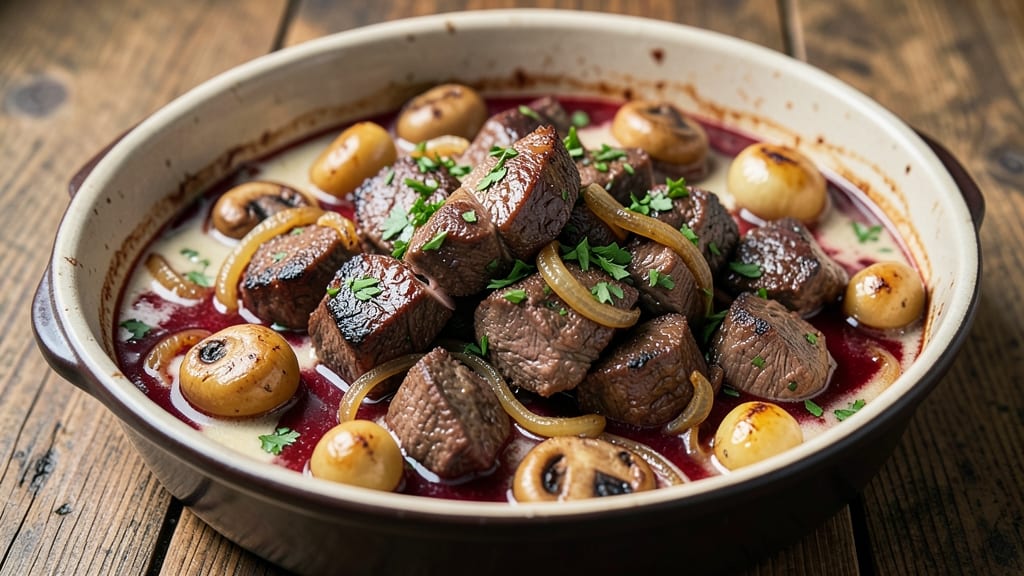
This basic beef bourguignon recipe transforms tough cuts into melt-in-your-mouth perfection through slow cooking and wine reduction—a technique that builds depth and richness in every bite. The key lies in proper browning and patience, where red wine transforms into a velvety sauce that clings to tender beef and vegetables. I've refined this method over years to ensure authentic French flavors without requiring advanced skills.
Start with beef chuck roast, cut into generous chunks for even cooking, then brown deeply in a heavy pot to develop that signature caramelized crust. Deglazing with wine captures all those flavorful browned bits, forming the foundation of your sauce.
Mushrooms, onions, and carrots join later, absorbing the wine's depth as they simmer for hours, creating a harmonious balance of textures and flavors.
The result is a dish where tender beef practically falls apart in your mouth, swimming in a sauce that's rich yet balanced, with just enough acidity from the wine to cut through the richness.
The aromas alone—warm spices, caramelized onions, and simmering wine—will transform your kitchen into a French bistro. This is comfort food at its finest, perfect for chilly evenings or special occasions.
Serve with crusty bread to soak up every last drop of that luxurious sauce, or pair with mashed potatoes for a hearty meal. The beauty of this recipe is its adaptability—make it ahead and let the flavors deepen overnight, or adjust the wine to your preference.
Let's create this classic dish that brings French bistro quality to your table.
Ingredients for basic beef bourguignon
The perfect balance of rich wine, tender beef, and aromatic vegetables—all in one pot.
| Ingredient | Amount | Notes |
|---|---|---|
| Beef Chuck Roast 🥩 | 2 lb | Cut into 1.5-inch chunks |
| Red Wine 🍷 | 2 cups | Bold, dry variety like Cabernet Sauvignon |
| Beef Broth 💧 | 1 ½ cups | Low-sodium preferred |
| Yellow Onions 🧅 | 2 whole | Sliced into 1/2-inch pieces |
| Carrots 🥕 | 3 whole | Cut into 1-inch chunks |
| Cremini Mushrooms 🍄 | 8 oz | Quartered if large |
| Garlic Cloves 🧄 | 4 cloves | Minced for depth |
| All-Purpose Flour 🌾 | 2 tbsp | For browning beef |
| Fresh Thyme 🌿 | 2 sprigs | Or 1 tsp dried thyme |
| Fresh Rosemary 🌿 | 1 sprig | For aromatic depth |
| Tomato Paste 🍅 | 1 tbsp | For richness |
| Olive Oil 🫒 | 2 tbsp | High-quality for browning |
| Salt 🧂 | 1 ½ tsp | Kosher or sea salt |
| Black Pepper 🌶️ | 1 tsp | Freshly ground |
| Bay Leaves 🍃 | 2 whole | For subtle flavor |
The beef is everything here. Chuck roast with good marbling gives you that melt-in-your-mouth texture, but don't skip the browning step—this is where all the flavor happens. Costco or Whole Foods usually have great cuts, but any butcher will trim it for you if you ask. For the wine, Cabernet Sauvignon or Merlot are classic, but whatever bold red you have open works. Pro tip: let the wine breathe for 10 minutes before using—it makes a noticeable difference. The mushrooms? Cremini or baby bella add earthiness, but white buttons work in a pinch if that's what you've got.
No red wine? Beef broth with 1 tbsp balsamic vinegar gets you close, though the sauce won't have that same depth. Fresh thyme and rosemary are ideal, but dried at one-third the amount works if you're in a bind. The tomato paste might sound like overkill, but that one tablespoon adds a meaty, umami punch that balances the wine's acidity. For the carrots, baby carrots work perfectly—no need to peel or chop them. And if you're short on time, pre-minced garlic from a jar is fine (just drain it well).
This dish tastes even better the next day—honestly, the flavors meld so much more. Keeps for 4-5 days in the fridge, or 3 months frozen. I always double the recipe and freeze half because it's perfect for lazy weeknights. To reheat, just warm it gently on the stove with a splash of broth—never microwave, or the sauce gets gloppy. Leftovers? Crusty bread is mandatory for soaking up that sauce.
Why You'll Love This Recipe
- No Wine Wastage: I keep a cheap bottle of red for this—just enough to braise the chuck roast until it’s fall-off-the-bone tender. That same wine transforms into a rich, silky sauce, so you’re not pouring it down the drain. (Between us, it’s the only time I let myself splurge on a mid-range bottle.)
- Weeknight-Friendly Braise: Honestly, the hardest part is remembering to check it after two hours. Toss in onions, carrots, and a splash of broth, then let the oven do the work while you answer emails or fold laundry. The slow cook turns tough beef into melt-in-your-mouth bites—zero babysitting required.
- Leftovers That Shine: This dish tastes better the next day, which is a rare win. I’ll be real: my kids actually ask for it reheated over mashed potatoes or toasted baguette. Even the veggies hold up, so you’re not scrambling for sides.
- Budget Beef Boost: A chuck roast is cheaper than steak, but it delivers restaurant-quality depth. The wine and broth stretch into a sauce that feels luxurious without breaking the bank. Plus, it feeds four for under $20—my secret weapon for impressing guests without stress.
Step-by-step instructions for beef bourguignon
Here's how to make this classic French stew with tender beef and rich wine sauce.
Brown the Beef Thoroughly
Heat the 2 tablespoons olive oil in a large Dutch oven over medium-high heat until shimmering. Working in batches, add the 2 lb beef chuck roast cut into 1.5-inch chunks, letting each piece develop a deep brown crust before removing to a plate. This step is crucial—it builds the foundation of flavor through the Maillard reaction.
Don't crowd the pan or the temperature will drop, preventing proper browning. You'll know it's ready when the beef releases easily from the pan and has a rich, caramelized color. Season the browned beef with 1.5 teaspoons salt and 1 teaspoon black pepper before setting it aside.
Sauté the Vegetables and Aromatics
In the same Dutch oven, reduce heat to medium and add the 2 whole yellow onions sliced into ½-inch pieces. Cook for 5 minutes until softened and beginning to caramelize. Add the 3 whole carrots cut into 1-inch chunks and cook for another 5 minutes until they start to brown slightly.
Stir in the 8 oz cremini mushrooms (quartered if large) and cook for 4-5 minutes until they release their moisture and begin to brown. Add the 4 cloves minced garlic, 2 sprigs fresh thyme, 1 sprig fresh rosemary, and 2 whole bay leaves, stirring for 30 seconds until fragrant. This aromatic base will infuse the entire dish with depth.
Deglaze and Develop the Sauce
Sprinkle the 2 tablespoons all-purpose flour over the vegetables and stir well to coat everything evenly. Cook for 1 minute to remove the raw flour taste. Pour in the 2 cups red wine and scrape up all the browned bits from the bottom of the pot—this is where all the flavor hides.
Let the wine reduce by half (about 5 minutes) before stirring in the 1 tablespoon tomato paste and 1.5 cups beef broth. Bring to a gentle simmer, then return the beef to the pot, making sure it's submerged in the liquid. Cover and transfer to the oven preheated to 325°F.
Slow Cook Until Tender
Bake for 2 to 2.5 hours until the beef is fork-tender and pulls away from the bone easily. The sauce should thicken as it cooks, coating the beef and vegetables beautifully. If the liquid reduces too much before the beef is tender, add a splash of water or broth to maintain the proper consistency.
Here's the thing—patience is key. The beef needs time to break down into tender, melt-in-your-mouth pieces. Check for doneness by inserting a fork—it should slide in with minimal resistance. The internal temperature should reach 203°F for perfect tenderness.
Finish and Serve
Once the beef is tender, remove the pot from the oven and let it sit uncovered for 10 minutes to allow the sauce to thicken slightly. Discard the thyme and rosemary sprigs, then adjust seasoning if needed. This dish tastes even better the next day as the flavors continue to meld.
Serve the beef bourguignon hot over mashed potatoes, egg noodles, or crusty bread to soak up every last bit of that rich, wine-infused sauce. The combination of tender beef, caramelized vegetables, and velvety sauce makes this a comforting meal that's perfect for chilly evenings.
Pro Tips For Making Basic Beef Bourguignon
- SEAR THE ROAST LONG ENOUGH: That crust isn’t just for looks—it’s what holds the meat together when it braises. I used to rush this step, and my chuck would turn out fork-tender but flavorless. Take your time: 4-5 minutes per side until deep brown, even if it means the pan smokes a little. (Yes, even if you’re impatient like me.)
- SWEAT THE ONIONS UNTIL SOFT: Raw onion chunks in your bourguignon? That’s a shortcut to a mushy mess. Cook them low and slow—10-12 minutes—until they’re translucent and just starting to caramelize. Skip this, and your dish will taste like you just chopped onions and walked away. (Prove me wrong.)
- DEGLAZE WITH THE WINE STRAIGHT AWAY: As soon as you remove the roast, pour in that red wine and scrape every last bit of browned bits from the pan. Those bits are pure flavor, and letting them sit will make your sauce taste dull. Use a wooden spoon—it’s the only tool that works here. (Your future self will notice.)
- ADD THE BROTH GRADUALLY: Dumping all the beef broth at once dilutes the wine’s depth. Start with half, let it simmer 10 minutes, then add the rest. This builds layers of flavor instead of a watery stew. (And no, you can’t just “fix it later” with extra salt.)
Wine and beer pairings for these flavors
Red Wine Essentials
For authentic flavor, use a bold, dry red wine like Cabernet Sauvignon or Merlot—these varieties have enough tannins and acidity to stand up to the beef. I recommend a bottle with at least 12% alcohol and noticeable fruit notes (think black cherry or plum).
Avoid sweet wines like Port or Zinfandel—they'll make your sauce cloying rather than balanced. 🍷
If you're using a wine you've already opened, let it breathe for 10 minutes before adding it to the pot. This helps mellow out any harsh flavors. Pro tip: decanting for 30 minutes before cooking enhances the wine's complexity even more.
For an extra layer of depth, add 1 teaspoon balsamic vinegar to the sauce during the final 15 minutes of cooking.
French Classic Pairings
Pinot Noir from Burgundy is the traditional choice for beef bourguignon—its earthy notes complement the mushrooms and thyme beautifully. Look for a Bourgogne Pinot Noir from the Côte Chalonnaise region for the best value. If you can't find Pinot Noir, Syrah or Grenache work well too, as their peppery notes add a nice contrast to the richness.
Avoid heavy, oaky whites or bold reds like Cabernet Sauvignon—they'll overpower the delicate wine sauce. Instead, opt for wines with moderate tannins and bright acidity to cleanse your palate between bites.
I like to serve the dish with a glass of the same wine used in cooking—it creates a seamless flavor experience.
Beer Alternatives
If you prefer beer, a dark ale or porter works surprisingly well—just use 2 cups of the same beer you'd drink. The malty sweetness and roasted notes from Guinness or Samuel Adams Black Lager add a unique depth to the sauce.
For a lighter option, Belgian-style dubbel brings caramel and spice notes that pair beautifully with the beef.
Never use a light lager or pilsner—they lack the body and complexity needed to complement the dish. If you go the beer route, reduce it by half before adding the broth to concentrate the flavors. I've even used red ale with success—just ensure it's not too hoppy or bitter.
Non-Alcoholic Options
For a non-alcoholic version, substitute the wine with 2 cups beef broth plus 1 tablespoon balsamic vinegar and 1 teaspoon red wine vinegar. The acidity helps mimic the wine's brightening effect.
You can also use 1 cup cranberry juice mixed with 1 cup beef broth for a fruity twist that works surprisingly well with the mushrooms and thyme.
For extra depth, add 1 teaspoon soy sauce or 1 tablespoon tomato paste to the sauce during the final 30 minutes of cooking. This adds umami richness that compensates for the missing wine complexity. The result won't be identical, but it's still delicious and satisfying.
Nutrition facts
Frequently asked questions
Can I use a different cut of beef instead of chuck roast?
For best results, stick with chuck roast—it has the perfect fat-to-lean ratio for tenderizing during slow cooking. However, you can substitute with stew beef or brisket (cut into similar-sized chunks). Avoid lean cuts like sirloin or filet mignon—they won't become tender enough. If using brisket, trim excess fat first.
What if I don't have a Dutch oven?
A heavy-bottomed pot with a tight-fitting lid works perfectly—just ensure it's large enough to hold all ingredients without overcrowding. If your pot isn't oven-safe, transfer the beef and sauce to an oven-safe dish after browning. The key is maintaining even heat distribution for proper braising.
How do I know when the beef is fully tender?
The beef should be fork-tender with minimal resistance when pierced—it should practically fall apart. Check the internal temperature with a meat thermometer: it should reach 203°F. If the sauce reduces too quickly, add ¼ cup beef broth to maintain moisture without overcooking the beef.
Can I make this dish in a slow cooker?
Brown the beef and vegetables first, then transfer everything to a 6-quart slow cooker with the wine and broth. Cook on low for 8 hours or high for 5-6 hours. The slow cooker method is even more hands-off, letting the beef become incredibly tender. Just add a splash of broth if the sauce gets too thick.
Why does my sauce taste too acidic?
This usually happens if the wine hasn't reduced enough or if you used a very acidic wine. Let the sauce simmer uncovered for 10-15 minutes to evaporate excess acidity. For balance, stir in 1 teaspoon sugar or ½ teaspoon baking soda (sparingly) to neutralize the acid. A splash of heavy cream at the end can also help round out flavors.