
Main Courses
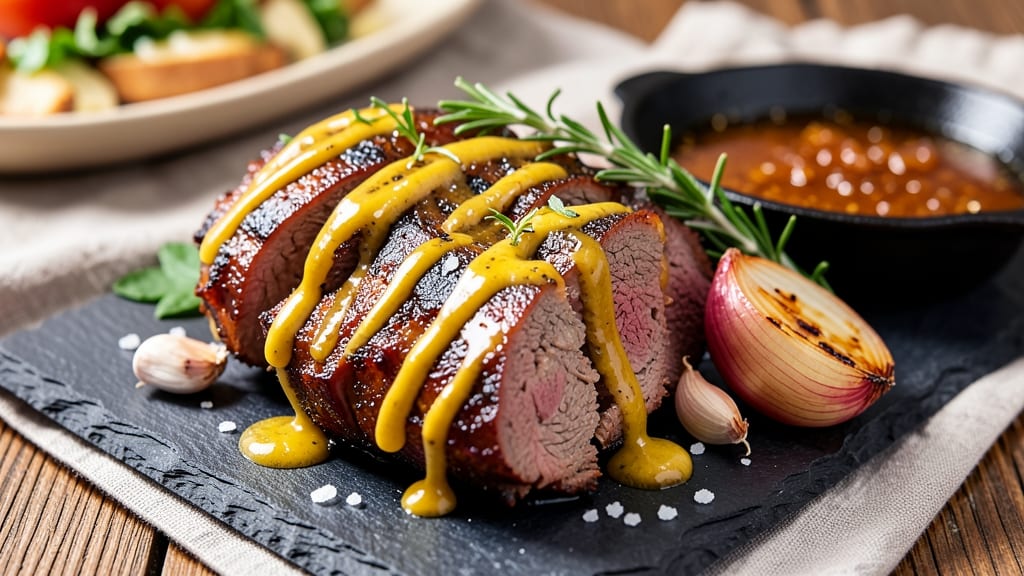
This baked corned beef recipe with mustard delivers juicy, melt-in-your-mouth perfection with a tangy-sweet glaze that's impossible to resist. The secret lies in slow-baking the beef until tender while basting it with a mustard glaze that creates both a flavorful crust and a glossy finish.
I've perfected this method over years of holiday cooking, ensuring every bite stays moist and flavorful.
The beauty of this recipe is its balance between traditional techniques and modern shortcuts. While we're baking the beef low and slow (about 3 hours), the mustard glaze adds a bright, tangy contrast to the rich, savory meat.
The glaze isn't just for flavor—it helps lock in moisture, creating that signature juicy texture that makes this dish legendary.
By the end, you'll have a corned beef that's fork-tender with a crispy, caramelized crust and that irresistible glossy sheen. The mustard glaze adds depth to every bite, balancing the saltiness of the corned beef with a touch of sweetness.
This is the kind of dish that transforms a simple meal into a showstopping centerpiece.
Pair it with classic sides like cabbage, potatoes, and carrots for a complete Irish-inspired feast. The glaze works beautifully with both Dijon and whole-grain mustard—experiment to find your favorite balance of tang and sweetness. Let's get started on this crowd-pleaser!
Ingredients for baked corned beef recipe with mustard
Six ingredients transform corned beef into melt-in-your-mouth perfection with a glossy mustard crust.
| Ingredient | Amount | Notes |
|---|---|---|
| Corned Beef Brisket 🥩 | 4 lb | Pre-cured, thick-cut preferred |
| Yellow Mustard 🍯 | ½ cup | Whole-grain or Dijon preferred |
| Brown Sugar 🍚 | ¼ cup | Light or dark variety |
| Apple Cider Vinegar 🍎 | ¼ cup | For tangy depth |
| Garlic Cloves 🧄 | 6 cloves | Minced for glaze |
| Onion 🧅 | 1 whole | Yellow or red, sliced |
| Beef Broth 💧 | 1 ½ cups | Low-sodium preferred |
| Olive Oil 🫒 | 2 tbsp | For basting |
| Fresh Thyme 🌿 | 2 sprigs | Or 1 tsp dried thyme |
| Bay Leaves 🍃 | 2 whole | For aromatic depth |
| Salt 🧂 | 1 tsp | Kosher or sea salt |
| Black Peppercorns 🌶️ | 10 whole | Crushed for seasoning |
| Fresh Parsley 🌿 | ¼ cup | Chopped for garnish |
The corned beef brisket is the star—thick-cut briskets hold up best to slow baking, so grab one from the butcher counter if your grocery store doesn't carry them pre-sliced. I always check for good marbling, which means more flavor and juiciness. For the mustard, whole-grain or Dijon adds depth that regular yellow mustard can't match. If you're feeling fancy, Maille or French's are my go-tos, but any good-quality mustard works. The brown sugar is non-negotiable—it caramelizes beautifully during baking, creating that signature glossy finish. Don't skip the apple cider vinegar; it cuts through the richness and adds a subtle tang that balances everything perfectly.
No whole-grain mustard? Dijon or regular yellow mustard works in a pinch, though the texture won't be as rich. Running low on brown sugar? Honey or maple syrup can substitute at the same amount, but keep in mind the flavor will be slightly different. Fresh thyme is ideal, but dried thyme at one-third the amount gets you close. For the beef broth, low-sodium is key—you don't want to overpower the natural flavors of the beef. And if you're out of olive oil, avocado or vegetable oil works just as well for basting. The garlic and onion can be pre-minced to save time, but fresh is always better if you've got it.
This dish tastes even better the next day, so make it ahead if you can. The glaze keeps well in the fridge for up to 5 days, though the texture might thicken slightly—just reheat with a splash of water or broth. For leftovers, slice thinly and serve on rye bread with mustard or in sandwiches. The corned beef itself reheats beautifully—just warm it gently in a skillet with a little broth to keep it moist. If you're prepping for a crowd, double the glaze recipe and store it separately in the fridge until ready to use.
Why You'll Love This Recipe
- One-Pan Magic: I swear by this trick—just plop the brisket in a baking dish, slather it with that tangy mustard-brown sugar mix, and let the oven do the work. No chopping, no frying, no stress. The vinegar and garlic mingle while you sip your coffee.
- Tangy-Sweet Crust: That caramelized crust? Chef’s kiss. The mustard and brown sugar team up to create a sticky, savory glaze that clings to every bite, while the vinegar cuts through the richness. It’s the kind of flavor that makes you reach for seconds without thinking.
- Leftovers for Days: Between us, this recipe practically begs to be made in bulk. The corned beef stays tender for sandwiches, hash, or even tacos for at least four days—no sad, dry meat here. I meal prep it on Sundays and still have slices by Wednesday.
- Budget Stretch: A whole brisket for under $10? Yes, please. This recipe turns a single cut into enough meals for a family of four, plus leftovers. Honestly, it’s one of those dishes where you feel like you’re feeding a crowd without breaking the bank.
Step-by-step instructions for baked corned beef with mustard glaze
Here's how to transform tough brisket into melt-in-your-mouth perfection with a glossy mustard glaze.
Prep the Brisket for Optimal Browning
Remove the corned beef brisket from its packaging and pat it completely dry with paper towels. I can't stress this enough—moisture is the enemy of that beautiful crust we're after. Place the brisket fat-side up in a roasting pan and rub it generously with the 2 tablespoons olive oil. This creates a barrier that helps the glaze stick and promotes even browning.
Preheat your oven to 325°F. Here's the thing—starting at a lower temperature prevents the exterior from sealing too quickly, which would trap moisture inside. While the oven heats, crush the 10 whole black peppercorns between your palms and sprinkle them evenly over the brisket along with the 1 teaspoon salt. The crushed peppercorns will infuse flavor as they cook.
Create the Mustard Glaze and Sear the Meat
In a small bowl, whisk together the 0.5 cup yellow mustard, 0.25 cup brown sugar, and 0.25 cup apple cider vinegar until completely smooth. The sugar will help caramelize during baking, creating that beautiful glossy crust. Pour this mixture evenly over the brisket, making sure to coat all sides thoroughly. Then, place the sliced onion and 6 minced garlic cloves directly on top of the brisket.
Increase oven temperature to 350°F. Place the brisket in the oven and bake uncovered for 3 hours. This initial baking period allows the meat to cook gently while the glaze begins to set. After 3 hours, check the internal temperature—it should be around 190°F. If it's not there yet, continue baking for another 30-60 minute increments until it reaches this point. The reason we aim for 190°F is that this is when the collagen in the meat breaks down completely, resulting in that signature corned beef tenderness.
Build Flavor with Aromatics and Broth
After the initial baking, carefully remove the brisket from the oven and transfer it to a cutting board. Tent it loosely with aluminum foil to keep it warm. Pour the 1.5 cups beef broth into the roasting pan, scraping up all the browned bits from the bottom with a wooden spoon. This creates a flavorful liquid that will infuse the brisket during the final cooking stage.
Return the brisket to the roasting pan, fat-side up, and place the 2 sprigs fresh thyme and 2 whole bay leaves on top. Pour the beef broth mixture over the brisket. Return to the oven and bake for an additional 1-2 hours at 325°F, until the internal temperature reaches 203°F. You'll know it's done when the meat is fork-tender and pulls apart easily. The broth will reduce and create a rich, flavorful sauce that complements the mustard glaze perfectly.
Rest and Serve with Tangy-Sweet Garnish
Once the brisket reaches the perfect internal temperature, remove it from the oven and transfer it to a cutting board. Let it rest for at least 30 minutes before slicing. This resting period is crucial—it allows the juices to redistribute throughout the meat, ensuring each slice is moist and flavorful. During this time, you can prepare your sides or make the gravy using the reduced broth from the pan.
After resting, slice the brisket against the grain into 0.5-inch thick slices. Garnish each serving with the chopped 0.25 cup fresh parsley. The parsley adds a bright, fresh contrast to the rich, tangy-sweet flavors of the mustard glaze. Serve immediately with the reduced broth as a gravy and your favorite sides. The result should be juicy, tender slices with a glossy, caramelized crust that's perfectly balanced between sweet, tangy, and savory.
Pro Tips For Making Baked Corned Beef Recipe With Mustard
- CRANK THE HEAT FIRST: I learned this the hard way—corned beef brisket needs a screaming-hot oven (450°F) for the first 20 minutes to render fat and brown the crust. After that, drop to 325°F and let it slow-bake. Skipping the high heat means you’ll end up with a soggy, pale slab instead of a caramelized, juicy centerpiece.
- BRINE THE BRISKET (EVEN IF IT’S PRE-COOKED): That corned beef is already cured, but giving it a quick 30-minute soak in cold water with 1 tablespoon of apple cider vinegar and 1 teaspoon of brown sugar per pound wakes up the flavors. I know, it sounds counterintuitive—why soak something already "cured"?—but it cuts through the saltiness and makes the mustard glaze stick better.
- SLICE THE GARLIC THIN: Peeling and smashing whole garlic cloves into the mustard mixture is lazy and uneven. Instead, slice them paper-thin (almost translucent) and layer them directly on the meat before baking. They’ll soften perfectly, infusing flavor without turning to mush or burning—no need to dig out charred cloves later.
- USE A THICK MUSTARD LAYER: Don’t just drizzle that mustard like a sad sauce. Spread a generous ¼-inch layer of mixed mustard, brown sugar, and vinegar over the brisket before baking. The sugar caramelizes into a glossy glaze, and the mustard won’t burn out. (Yes, it’ll look like you used too much—trust me, it’s worth it.)
Storing and reheating this baked corned beef recipe with mustard
Refrigerator Storage
Let your baked corned beef cool completely before storing it in an airtight container with a tight-fitting lid. I use glass containers for best results—they keep the meat moist and prevent any mustard glaze from absorbing unwanted fridge odors.
Store at 40°F or below for up to 4 days. The mustard glaze actually improves overnight as the flavors meld together beautifully. 🥩
Freezer Storage
For longer storage, slice the corned beef and freeze it in single-serving portions in freezer-safe bags or airtight containers. Leave ½-inch headspace to prevent freezer burn. Label with the date—it stays delicious for up to 3 months.
When reheating from frozen, add 1-2 tablespoons of beef broth to prevent dryness. I like to freeze the glaze separately in ice cube trays for easy reheating later. ❄️
Stovetop Reheating
My favorite way to reheat is on the stovetop—it keeps the meat juicy and the glaze intact. Place slices in a heavy-bottomed skillet over medium-low heat with 2 tablespoons beef broth per serving. Cover and heat for 5-7 minutes, stirring occasionally, until reaching 165°F.
Avoid high heat—it dries out the meat. For extra flavor, add a splash of apple cider vinegar to mimic the original glaze. 🔥
Slow Cooker Method
For hands-off reheating, use a slow cooker on low heat. Add the corned beef slices and ½ cup beef broth, then cook for 2-3 hours until heated through. The slow cooker keeps everything moist without overcooking.
I sometimes add a few slices of onion and garlic cloves to infuse extra flavor while reheating. This method works especially well for large batches. 💫
Microwave Safety
If you're short on time, microwave reheating works in a pinch. Place slices on a microwave-safe plate, cover with a damp paper towel, and heat on 50% power in 1-minute intervals until reaching 165°F.
Avoid full power—it can make the meat rubbery. Add 1 tablespoon broth per serving to maintain moisture. Stir between intervals for even heating. 💡
Glaze Refresh
If the glaze looks dry after storage, revive it by simmering 2 tablespoons mustard, 1 tablespoon brown sugar, and 1 tablespoon apple cider vinegar in a small saucepan for 2-3 minutes.
Brush this mixture over the reheated corned beef for that signature glossy finish. I keep a small jar of this "glaze refresher" in my fridge for quick touch-ups. 🍯
Nutrition facts
Frequently asked questions
Can I use regular yellow mustard instead of Dijon or whole-grain?
Yes, but you'll notice a difference in texture and depth. Regular yellow mustard works in a pinch, but whole-grain or Dijon adds that signature grainy texture and more complex flavor. For best results, use a high-quality mustard like French's or Maille—even regular yellow mustard tastes better when it's premium. The glaze will still taste delicious, just slightly smoother.
How do I know when the corned beef is fully cooked?
The meat is perfectly done when it reaches an internal temperature of 203°F and is fork-tender, pulling apart easily. Use a meat thermometer for accuracy—corned beef should be cooked to 203°F for maximum tenderness. If the thermometer isn't available, check by inserting a fork: if it slides in effortlessly, it's ready.
Can I make this recipe in a slow cooker instead of the oven?
For a slow cooker version, sear the brisket first, then place it in the slow cooker with the mustard glaze and 1 cup beef broth. Cook on low for 8-10 hours or high for 5-6 hours. The texture will be slightly different (more tender but less caramelized), but still delicious. Add fresh thyme and bay leaves during the last 1 hour of cooking.
What's the best way to use up leftover corned beef?
Leftover corned beef is incredibly versatile! Try it in Reuben sandwiches with sauerkraut and Russian dressing, or shred it for corned beef hash with potatoes and onions. You can also slice it thin for corned beef tacos with slaw and chipotle mayo. The mustard glaze makes it perfect for charcuterie boards too—just slice thinly and serve with crackers.
Why did my mustard glaze turn too sweet or too tangy?
This usually happens from unbalanced ratios. For a milder glaze, reduce the brown sugar to 2 tablespoons and add 1 extra tablespoon vinegar. For more sweetness, increase the sugar to 3 tablespoons and reduce vinegar by 1 tablespoon. Always taste and adjust before applying—this glaze is very forgiving once you've balanced it!