
Main Courses
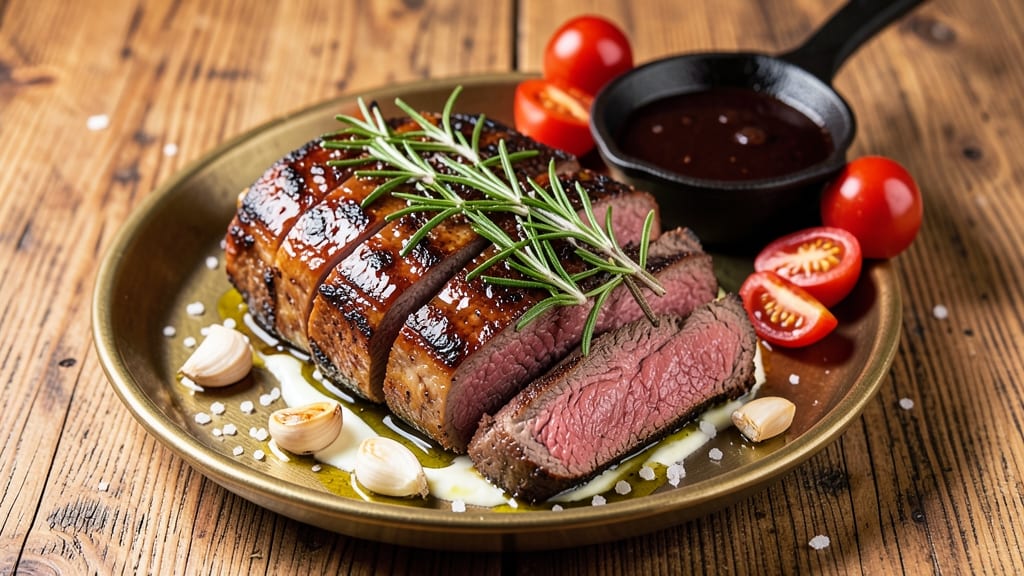
This awesome roast beef recipe transforms simple ingredients into a showstopping centerpiece with tender, melt-in-your-mouth beef and a rich, golden herb crust. 🔥 The secret lies in a perfect balance of slow cooking and precise timing—whether you prefer classic French au jus poaching or a modern reverse sear technique.
I’ve perfected this method over countless holiday dinners, ensuring even home cooks achieve restaurant-quality results without the fuss.
What sets this roast apart is the crusty herb crust that forms during the final minutes of roasting, adding texture and depth to every bite. We’ll use a blend of fresh rosemary, thyme, and garlic to create an aromatic crust that locks in juices while building flavor.
The au jus method—poaching the beef in its own juices—guarantees a moist, flavorful interior that’s impossible to resist.
By the time you’re done, you’ll have a perfectly cooked roast with a crispy exterior and a tender, juicy interior, all resting in a pan filled with golden, savory au jus.
This recipe works beautifully with brisket, prime rib, or sirloin, giving you the flexibility to choose your ideal cut. The rich, herby crust and velvety sauce make it ideal for special occasions or when you want to impress guests without stress.
Pair it with roasted potatoes, Yorkshire pudding, or a red wine reduction for a complete meal that feels luxurious yet achievable. The key to success? Patience and precision—every step is designed to ensure your roast beef is flawless from start to finish.
Let’s get started on creating a dish that will have everyone asking for seconds.
Ingredients for awesome roast beef
Six ingredients transform into a restaurant-worthy roast with golden crust and velvety au jus.
| Ingredient | Amount | Notes |
|---|---|---|
| Prime Rib Roast (Ribeye or Sirloin) 🥩 | 4 lb | Center-cut, bone-in preferred |
| Fresh Rosemary 🌿 | ½ cup | Finely chopped, stems removed |
| Fresh Thyme 🌿 | ¼ cup | Leaves only, stems discarded |
| Garlic Cloves 🧄 | 8 cloves | Peeled, smashed for aroma |
| Extra-Virgin Olive Oil 🫒 | ¼ cup | For crust and basting |
| Diamond Crystal Kosher Salt 🧂 | 2 tbsp | Coarse grain preferred |
| Freshly Ground Black Pepper 🌶️ | 1 tbsp | Freshly cracked for intensity |
| Unsalted Butter 🧈 | ½ cup | Cold, cubed for crust |
| Beef Bone Broth 💧 | 2 cups | Homemade or high-quality store |
| Red Wine 🍷 | 1 cup | Bold dry variety like Cabernet |
| Yellow Onion 🧅 | 1 whole | Quartered for au jus base |
| Carrots 🥕 | 2 whole | Peeled, sliced for au jus |
| Fresh Parsley 🌿 | ⅛ cup | Chopped, for garnish |
The beef is non-negotiable—prime rib or sirloin with good marbling delivers the best results. Costco or Whole Foods carry excellent center-cut roasts, but your local butcher can trim it to your ideal size. Look for vibrant red meat with visible fat—this ensures juiciness. For the herbs, fresh is essential; dried won't give that aromatic crust. I always buy extra rosemary because it keeps for weeks in the freezer if wrapped tightly. The garlic should smell pungent, not musty—Trader Joe's sells great bulbs year-round.
No red wine? Beef broth with a splash of balsamic works in a pinch, though the acidity won't be identical. The butter matters—full-fat, unsalted creates the richest crust. For the au jus, homemade bone broth elevates the dish, but Pacific Foods or Imagine brands are solid shortcuts. Swap carrots for celery if you prefer, but the onion is crucial for sweetness. The parsley is just for garnish, so dried works if you're in a bind—just use half the amount. Fresh thyme is ideal, but dried at one-third the quantity gets you close.
This roast reheats beautifully—350°F for 20 minutes restores its glory. The au jus thickens as it cools, so reheat it gently with a splash of water. Store the beef wrapped in foil for 3-4 days in the fridge, or freeze for up to 3 months by vacuum-sealing. I always make extra au jus—it freezes perfectly for future gravies. The crusty herbs keep for 2 weeks in the freezer if you want to prep ahead.
Why You'll Love This Recipe
- Five-Ingredient Magic: The pantry staples you already have—olive oil, garlic, herbs—turn into something restaurant-worthy with zero fuss. Honestly, I swear by this: just sear, season, and let the oven do the work while you sip wine and pretend you’re a chef.
- Herb-Crusted Perfection: That rosemary-thyme crust? It’s the secret weapon—crispy, fragrant, and clinging to every bite like it’s been kissed by the Mediterranean sun. Between us, the garlic-infused edges are what make this dish dangerously addictive.
- Leftovers That Don’t Suck: Roast beef keeps like a champ, and this recipe actually tastes better the next day (yes, really). I’ll repurpose slices into sandwiches, salads, or even a quick stir-fry—no one ever complains when the fridge is stocked with this.
- Sunday Dinner, Tuesday Night: Fancy enough for company but unfussy enough for a lazy evening. My daughter picks out the fresh herbs at the store (because she’s dramatic like that), and we all gather around the table like it’s a special occasion—even on a Tuesday.
Step-by-step instructions for prime rib roast with herb crust
Here's how to transform your prime rib into a showstopping centerpiece with a golden crust and rich au jus.
👨🍳 Step 1: Prep the Roast and Create the Herb Crust
Remove the prime rib roast from the refrigerator 1 hour before cooking to bring it to room temperature. Pat it dry thoroughly with paper towels—this is non-negotiable for that perfect crust. In a small bowl, combine the 0.5 cup fresh rosemary, 0.25 cup fresh thyme, 8 smashed garlic cloves, 2 tbsp kosher salt, and 1 tbsp freshly ground black pepper. Pulse in a food processor until finely chopped, but not into a paste.
Transfer the herb mixture to a plate and rub it all over the roast, pressing firmly so it adheres. In a separate bowl, mix the 0.25 cup extra-virgin olive oil with the 0.5 cup cold cubed butter until well combined. Spread this mixture evenly over the herb crust, creating a thick, flavorful coating. Let the roast sit at room temperature for another 30 minutes while you preheat the oven.
🔥 Step 2: Sear and Roast to Perfect Medium-Rare
Preheat your oven to 450°F. Place the roast fat-side up on a rack in a roasting pan. Roast for 15 minutes to render the fat and set the crust. After 15 minutes, reduce the oven temperature to 325°F and continue roasting. For a 4 lb roast, this will take approximately 1 hour 15 minutes to 1 hour 30 minutes total, depending on your oven.
Here's the key: use a meat thermometer to check the internal temperature. For medium-rare, aim for 125°F in the thickest part of the roast. The roast is done when the thermometer reads 125°F and the crust is deeply golden brown. If the crust starts to darken too quickly, tent it loosely with foil to prevent over-browning.
🥘 Step 3: Prepare the Au Jus While Roasting
While the roast is cooking, prepare the au jus in the same roasting pan. After removing the roast, place the pan on the stovetop over medium-high heat. Add the 1 whole quartered yellow onion and 2 peeled, sliced carrots to the pan, scraping up all the browned bits from the bottom. Pour in the 1 cup red wine and deglaze the pan, scraping constantly with a wooden spoon to release all the flavor.
Add the 2 cups beef bone broth and bring to a simmer. Reduce the heat to low and let it cook uncovered for 15-20 minutes, until it reduces by about one-third and becomes syrupy. Strain the au jus through a fine-mesh sieve into a saucepan and keep it warm over low heat. If it thickens too much, whisk in a splash of water or broth to reach your desired consistency.
⏰ Step 4: Rest and Slice for Maximum Juiciness
Once the roast reaches the desired internal temperature, transfer it to a cutting board and let it rest for 15-20 minutes. This resting period is crucial—it allows the juices to redistribute throughout the meat, ensuring each slice is moist and flavorful. During this time, skim any excess fat from the au jus and season it with additional kosher salt and black pepper to taste.
Slice the roast against the grain into ½-inch thick slices. Arrange the slices on a warm platter, drizzle generously with the au jus, and garnish with the 0.125 cup chopped fresh parsley. Serve immediately with the au jus spooned over the top and alongside roasted vegetables or a simple green salad.
Pro Tips For Making Awesome Roast Beef
- USE A MEAT THERMOMETER: I learned this the hard way—guessing doneness with prime rib leads to overcooked, dry beef. For medium-rare (130°F internal temp), pull it out of the oven when the thermometer hits 125°F—it’ll rise 5°F while resting. No excuses, no second-guessing.
- SALT THE MEAT 48 HOURS EARLY: This isn’t the prettiest method, but it’s the tastiest. Generously coat your roast in kosher salt (about 1 teaspoon per pound) and let it sit uncovered in the fridge. The salt penetrates deeper, making every bite juicier—no extra seasoning needed before cooking.
- SKIP THE CROWDING IN THE PAN: After burning three batches, I finally figured out: don’t overfill the pan with aromatics. Use 3-4 smashed garlic cloves, 2 sprigs each of rosemary and thyme, and just enough olive oil to coat the bottom. Too much stuff = steam instead of sear, and you’ll end up with soggy herbs and bland beef.
- REST IT UNDER FOIL: I was skeptical until I tried it—resting the roast on a cutting board under foil (not on the counter) keeps it warm while letting the juices redistribute evenly. Give it a solid 10 minutes, or you’ll slice into a sad, dry mess. (Yes, even if you’re impatient like me.)
Dietary considerations for this awesome roast beef
Gluten-Free Adaptations
This roast beef recipe is naturally gluten-free, but the au jus requires attention to avoid cross-contamination. Use gluten-free beef broth (like Pacific Foods GF Beef Broth) and ensure your red wine is certified gluten-free.
The crust remains safe as long as you avoid flour-based seasoning blends. For extra security, check that your kosher salt and pepper are processed in gluten-free facilities. 🌾
Low-Carb/Keto Options
For keto-friendly roasting, skip the wine in the au jus and replace it with 2 cups gluten-free beef broth plus 1 tbsp balsamic vinegar for depth. The herb crust remains perfect—just omit any flour-based thickeners.
Serve with cauliflower mash instead of potatoes to keep carbs under 5g net per serving. The rich beef and au jus will satisfy cravings without the carbs. ⚡
Dairy-Free Modifications
Swap the butter in the herb crust for ½ cup dairy-free butter (like Miyoko's) or extra olive oil. The crust will still crisp beautifully, though it may be slightly softer.
For the au jus, ensure your broth is dairy-free (most are), and use olive oil instead of butter when finishing the sauce. The flavor remains luxurious without dairy. 🌱
Allergen-Friendly Tips
For nut allergies, verify all ingredients (especially broths) are nut-free. For egg allergies, no adjustments are needed—this recipe contains no eggs. Always check labels on store-bought broths and wines for hidden allergens. When in doubt, opt for homemade bone broth to control ingredients completely. Safety first! 💡
Vegetarian Substitutions
While this recipe centers on beef, you can create a vegetarian version using portobello mushrooms or king oyster mushrooms as the "roast." Marinate them in the same herb-oil mixture and roast at 400°F for 20-25 minutes.
Serve with the au jus (made with vegetable broth) and roasted vegetables. The texture won't be identical, but the flavors shine. 🍄
Nutrition facts
Frequently asked questions
What's the best cut of beef for this recipe?
For this herb-crusted roast beef, I recommend using a 4 lb center-cut prime rib (ribeye) or sirloin roast with good marbling. The fat content ensures juiciness, while the center-cut provides even cooking. Avoid flank steak or chuck roast—they're better for braising, not roasting.
Can I make this roast ahead of time?
Cook the roast 1-2 days ahead and refrigerate it wrapped in foil. Reheat at 350°F for 20 minutes before slicing. The au jus can be made 3 days ahead and reheated gently with a splash of water. For serving, warm the au jus separately and drizzle over fresh slices.
Why does the recipe call for resting the roast?
Resting for 15-20 minutes after roasting is crucial—it lets the juices redistribute throughout the meat instead of pouring out when sliced. Skipping this step results in dry meat. Place the roast on a warm cutting board and loosely cover with foil while resting.
How do I adjust cooking time for a different roast weight?
Use this rule: 15 minutes per pound at 325°F after the initial 15-minute 450°F sear. For a 3 lb roast, aim for 1 hour total (45 mins at 325°F). Always use a meat thermometer—125°F for medium-rare. Oven temps vary, so adjust based on your thermometer readings.
What if my roast turns out dry?
Dryness usually means overcooking or skipping the rest. For next time: Remove the roast earlier (aim for 120°F internal temp) and let it rest longer. If it's already dry, try slicing thinly and serving with extra au jus or a red wine reduction. Never overcook—beef continues cooking while resting!