
Main Courses
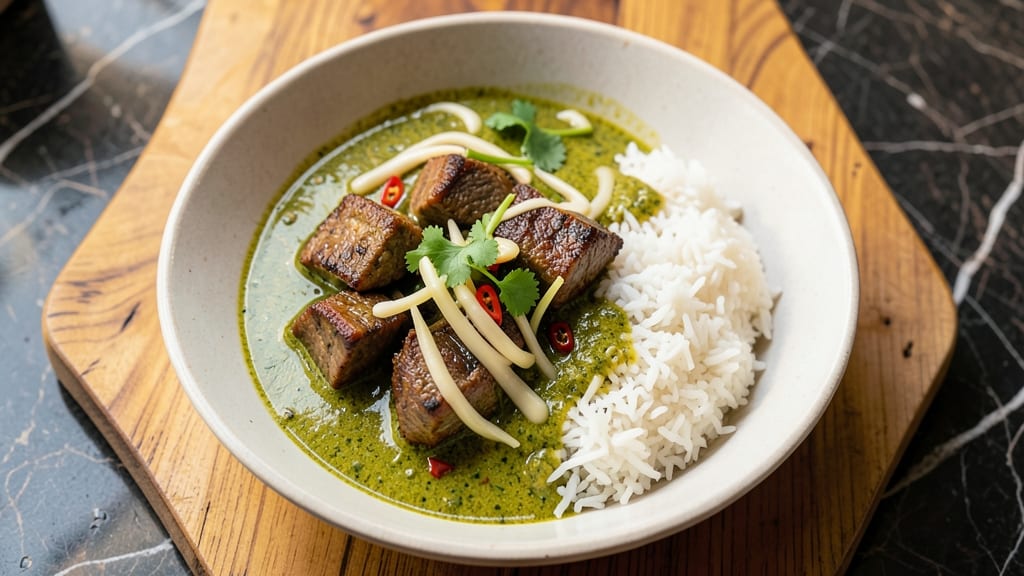
This authentic Thai green beef curry recipe delivers the bold, aromatic balance of traditional Thai cuisine in one flavorful pot. 🌟 The secret lies in homemade green curry paste—fresh galangal, lemongrass, kaffir lime leaves, and Thai chilies—simmered with tender beef until fork-tender.
I've perfected this version after years of studying regional techniques, ensuring the heat is balanced by coconut milk's creamy richness. What sets this recipe apart is the layered complexity achieved through proper paste preparation and slow cooking.
Unlike many shortcut versions, this method builds depth by blooming whole spices and letting the curry develop its signature fragrant aroma. The result is a dish that transports you straight to Bangkok's bustling street markets.
By the time you serve this curry, you'll have tender beef swimming in a vibrant green sauce that's creamy yet not overly rich. The herbs—Thai basil, cilantro, and fresh mint—add bright, fresh notes that cut through the coconut's richness. Each bite delivers perfect harmony between spicy, sweet, and savory elements.
Serve with jasmine rice and steamed bok choy for the full experience. The instructions walk you through every step to achieve restaurant-quality results at home, including proper paste preparation and balancing the heat. Let's create this authentic Thai masterpiece!
Ingredients for authentic thai green beef curry
This vibrant Thai green curry delivers restaurant-quality depth with just fifteen thoughtfully chosen ingredients.
| Ingredient | Amount | Notes |
|---|---|---|
| Beef Chuck Roast 🥩 | 1 ½ lb | Cut into 1-inch cubes |
| Coconut Milk 🥥 | 1 can | Full-fat, 13.5 oz can |
| Galangal Root 🌿 | 1 piece | 3-inch piece, peeled |
| Lemongrass 🌿 | 2 stalks | Bruised, bottom 4 inches |
| Kaffir Lime Leaves 🍋 | 4 whole | Bruised, stems removed |
| Thai Green Chilies 🌶️ | 4 whole | Seeds removed for mild heat |
| Garlic Cloves 🧄 | 6 cloves | Peeled, lightly crushed |
| Shallots 🧅 | 4 whole | Peeled, roughly chopped |
| Fish Sauce 🍶 | 2 tbsp | Red Boat preferred |
| Palm Sugar 🍯 | 2 tbsp | Or substitute brown sugar |
| Fresh Thai Basil 🌿 | ¼ cup | Stems removed, loosely packed |
| Cilantro 🌿 | ¼ cup | Chopped, for garnish |
| Fresh Mint Leaves 🌿 | ¼ cup | Chopped, for garnish |
| Vegetable Oil 🫒 | 2 tbsp | For cooking paste |
| Salt 🧂 | 1 tsp | Diamond Crystal preferred |
The galangal and kaffir lime leaves are the heart of this curry—freshness is non-negotiable. Asian markets carry the best quality, but if unavailable, substitute with a mix of ginger and lime zest (though nothing matches the authentic aroma). For galangal, look for firm, pale rhizomes with minimal blemishes. The lemongrass should be vibrant green with no brown spots—bruising it releases the oils that create that signature fragrance. If you can't find Thai green chilies, serrano peppers work in a pinch, but reduce the seeds for milder heat. The beef should be chuck roast for maximum tenderness—sirloin stays too tough for this slow-cooked method.
No fish sauce? Soy sauce plus a splash of lime juice mimics the umami, though purists will notice the difference. Palm sugar unavailable? Brown sugar or coconut sugar works equally well. The coconut milk must be full-fat—light versions won't deliver that creamy richness. For the herbs, fresh Thai basil is ideal, but regular basil stretches the recipe (use half the amount). The curry paste can be made ahead and frozen for up to 3 months—just thaw before using. If you're short on time, Maesri brand paste from Asian markets is a reliable shortcut, though homemade develops deeper flavor.
This curry tastes even better the next day as flavors meld—plan ahead. Store in an airtight container in the fridge for 4-5 days, or freeze portions for 3 months. The sauce thickens as it cools, so add a splash of water or coconut milk when reheating. Garnish with fresh herbs right before serving to preserve their vibrant color. For meal prep, portion into individual containers with jasmine rice—microwave for 2 minutes for a quick lunch. The aromatics (galangal, lemongrass, lime leaves) can be composted after use—no waste in this recipe.
Why You'll Love This Recipe
- Here’s what sold me: a cut of beef that’s forgiving and affordable, plus pantry staples like coconut milk and spices that stretch across multiple meals. I’ll make a double batch, freeze half, and still have enough for a week of easy dinners—no sad leftovers in sight.
- Foolproof Simplicity: I swear by this recipe because it’s the kind of dish that forgives mistakes—no fancy knife skills needed. The beef chuck roast practically melts into tender shreds while you simmer, and the galangal and lemongrass? Just bruise them slightly with the side of a knife. That’s it.
- Herb-Packed Magic: Honestly, the moment that first spoonful hits your tongue—bright, zesty, with a slow-building heat—you’ll understand why I keep a jar of galangal in my freezer. The kaffir lime leaves add this impossible-to-replicate citrusy depth, and the coconut milk balances it all into something dangerously addictive.
- Leftovers That Shine: Between us, this curry tastes better the next day. The flavors meld into something richer, and I’ve turned last night’s dinner into lunch wraps (with rice paper and fresh herbs) or a quick stir-fry with veggies. It’s my secret weapon for avoiding takeout.
Step-by-step instructions for authentic Thai green beef curry
Follow this traditional method to create a vibrant green curry with perfect balance between heat and aromatic herbs.
🍳 Step 1: Prepare the Green Curry Paste
In a mortar and pestle, grind the peeled galangal root into a fine paste. This aromatic root forms the base of authentic Thai green curry—its citrusy, peppery flavor is essential. Add the bruised lemongrass and bruised kaffir lime leaves, grinding until you achieve a thick, vibrant green paste with no large chunks remaining.
Transfer the paste to a small bowl and add the 6 cloves garlic, 4 whole shallots, and 4 whole Thai green chilies (seeds removed if you prefer mild heat). Using a wooden spoon, mash everything together until fully combined. This paste will develop the complex flavors that define this dish. Set it aside for now—it needs time to meld before cooking.
🔥 Step 2: Cook the Paste Until Fragrant
Heat the 2 tablespoons vegetable oil in a heavy-bottomed pot over medium heat. Add the green curry paste and cook for 8-10 minutes, stirring constantly, until the oil begins to separate from the paste and it becomes deeply fragrant. You'll notice the paste darken slightly and release its aromatic oils—this is when the flavors truly develop.
Be patient during this step. The paste should sizzle gently without burning. If it darkens too quickly, reduce the heat slightly. Once the paste is fragrant and the oil shimmers around the edges, you're ready for the next step. This aromatics foundation is what makes the curry authentically Thai.
🍳 Step 3: Sear the Beef and Build the Curry
Increase the heat to medium-high and add the 1.5 lb beef chuck roast cut into 1-inch cubes. Sear the beef for 3-4 minutes until it develops a golden crust on all sides. This step is crucial—it locks in juices and creates depth of flavor. Don't overcrowd the pot; work in batches if needed.
Once the beef is well-seared, pour in 1 cup of the coconut milk (reserve the remaining ½ cup for later) and add 1 teaspoon salt. Stir well to combine, then reduce the heat to low-medium. The curry will begin to simmer gently as the coconut milk incorporates into the paste. Let it cook uncovered for 15 minutes, stirring occasionally, until the beef begins to tenderize.
🥘 Step 4: Simmer to Perfect Tenderness
After the initial simmer, add the remaining ½ cup coconut milk, 2 tablespoons fish sauce, and 2 tablespoons palm sugar. Stir well to distribute the flavors evenly. The curry should now have a rich, velvety texture with the beef nearly falling apart. Simmer uncovered for another 20-25 minutes, stirring occasionally, until the beef is fork-tender with just a slight resistance.
Here's where the magic happens: the coconut milk should reduce slightly, creating a thick, aromatic sauce that clings beautifully to the beef. Taste and adjust seasoning—add more fish sauce for saltiness or palm sugar to balance the flavors. The curry should harmonize heat, sweetness, and umami perfectly. If it's too thick, add a splash of water to reach your desired consistency.
🍽️ Step 5: Finish with Fresh Herbs and Serve
Once the beef is tender, remove the pot from heat. Stir in the ¼ cup fresh Thai basil, ¼ cup cilantro, and ¼ cup fresh mint leaves. These herbs add a bright, fresh finish that cuts through the richness of the coconut milk and beef. Let the curry sit for 5 minutes to allow the flavors to meld completely.
Ladle the curry into serving bowls and garnish with additional fresh herbs if desired. Serve immediately with steamed jasmine rice to soak up every last drop of that fragrant green curry sauce. The balance of heat from the chilies, sweetness from the palm sugar, and umami from the fish sauce should be evident in every bite—this is authentic Thai green curry at its finest.
Pro Tips For Making Authentic Thai Green Beef Curry
- Char the Aromatics: Hit your wok or pan with high, dry heat until the lemongrass bruises, galangal darkens slightly, and kaffir lime leaves crisp at the edges—this unlocks their oils and flavors. I used to skip this step and wondered why my curry tasted flat; those few minutes of smoke are non-negotiable.
- Slice Galangal Thin: Shave the galangal root paper-thin with a knife or mandoline—thick chunks will sit like rubber in your curry. My grandmother swore by this, and she was right: the texture dissolves into the sauce instead of turning to mush.
- Simmer Slow, Not Boil: Once the coconut milk hits the pot, reduce to a bare simmer and let it work—no rushing. I learned this the hard way when my curry split into a greasy mess. A gentle bubble keeps the milk creamy and the beef tender.
- Use Two Cans of Coconut Milk: Start with one can to build the paste, then add the second later—this prevents curdling and keeps the sauce velvety. Sounds weird, but it works: the first can binds the spices, the second adds richness without breaking.
Creative variations of this recipe
Spicy Thai-Inspired Fusion
Transform this curry into a spicy Thai-Mexican fusion by adding 1 tbsp chipotle powder and 1 tsp ground cumin to the paste. Swap half the beef for shredded chicken thighs> and finish with pickled red onions and avocado slices.
The smoky chipotle deepens the heat while the cumin adds earthiness—trust me, it’s a crowd-pleaser! 🌶️
Vegetarian Green Curry
Replace the beef with 1 lb firm tofu (pressed and cubed) or chickpeas for a hearty vegetarian version. Add 1 cup bell peppers and 1 cup bamboo shoots for texture.
Boost umami with 1 tbsp soy sauce> instead of fish sauce. The tofu absorbs the flavors beautifully, and the veggies add freshness to balance the richness. 🥕
Coconut Milk Reduction
For a lighter version, reduce the coconut milk to ½ cup total and add ¼ cup vegetable broth> to maintain moisture. The sauce will be slightly thinner but still packed with flavor.
This works perfectly if you're watching calories or prefer a less creamy texture. Garnish with extra lime wedges to brighten the dish. 💛
Regional Variations
In Northern Thailand, this curry often includes kaffir lime zest> and a touch of turmeric for warmth. For a Southern Thai twist, add 1 tbsp shrimp paste> to the paste for a funkier profile.
Both versions keep the green color but adjust the depth of flavor—experiment to find your favorite! 🗺️
Sweet and Tangy Twist
Balance the heat by adding 1 tbsp tamarind paste> to the simmering curry. The tangy-sweet contrast elevates the dish, especially if you prefer a milder heat level. Pair with a mango-lime salad to complement the flavors. This variation is inspired by street food stalls in Chiang Mai. 🍈
Make-Ahead Adaptations
Double the recipe and freeze half for later—just thaw overnight in the fridge before reheating. For meal prep, store components separately: cook the beef and sauce ahead, then reheat and stir in fresh herbs before serving.
This keeps the herbs vibrant and the curry tasting fresh, even after days in the fridge. ⏰
Nutrition facts
Frequently asked questions
Why does authentic Thai green curry have a green color?
The vibrant green color comes from kaffir lime leaves and fresh Thai green chilies—both are essential for the authentic flavor. The lime leaves add citrusy aroma while the chilies provide heat. Using dried herbs or wrong chilies (like red) will change both color and taste dramatically.
Can I substitute galangal with ginger?
While ginger works in a pinch, it's not the same—galangal has a citrusy, peppery flavor that's crucial for authentic taste. If you must substitute, use equal parts ginger plus 1 teaspoon lime zest> to mimic the galangal's brightness. For best results, find fresh galangal at Asian markets.
How do I adjust the heat level?
For milder heat, remove seeds from all chilies and reduce quantity by half. For extra spice, add 1-2 extra chilies> or a pinch of Thai bird's eye chili powder> at the end. Always taste before serving—you can reduce heat by adding more coconut milk, which naturally cools the dish.
What's the best way to store leftovers?
Store in an airtight container> in the fridge for 4-5 days> or freeze for 3 months>. The sauce thickens when cold, so add a splash of water or coconut milk when reheating. Always reheat gently on low heat—never microwave directly from frozen. Garnish with fresh herbs right before serving to keep them vibrant.
Why is my curry too thin or too thick?
Thin curry? Simmer uncovered for 10-15 extra minutes> to reduce. Too thick? Add 2-3 tablespoons water or coconut milk> while stirring. The ideal consistency should coat the back of a spoon but still be pourable. Remember, coconut milk thickens as it cools—always check before serving.