
Main Courses
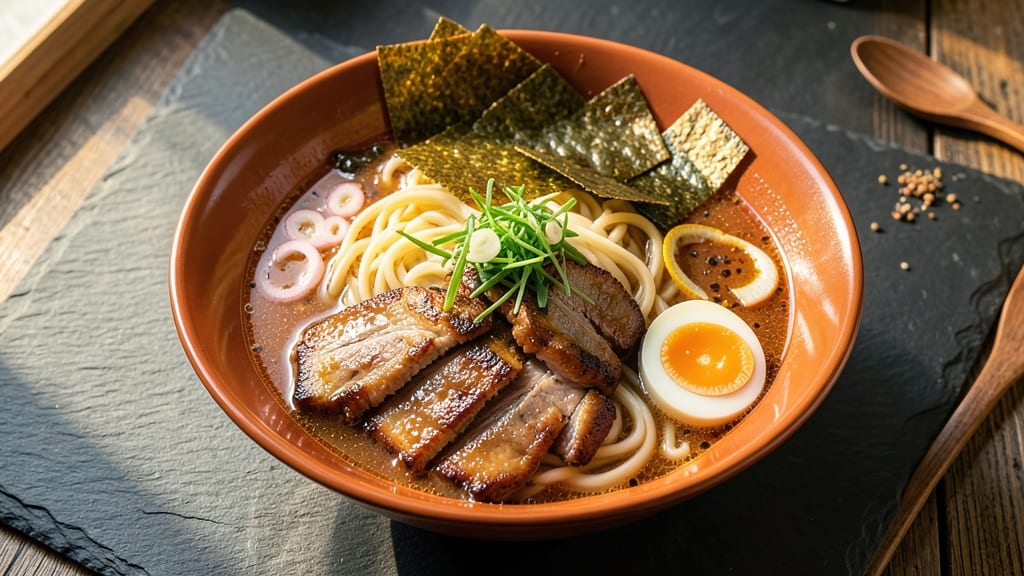
This authentic Japanese beef ramen recipe delivers the soul-warming comfort of a Tokyo izakaya in your own kitchen, where rich pork broth meets tender beef and silky noodles. The secret lies in slow-simmered tonkotsu broth—creamy from hours of collagen extraction—and perfectly balanced chashu beef that melts in your mouth.
I’ve refined this recipe over years of studying traditional techniques, ensuring every bowl tastes like a labor of love rather than a shortcut.
The foundation of great ramen is patience: simmering pork bones until the broth achieves that signature velvety texture while developing deep umami flavors. Thinly sliced beef (chashu) adds sweetness from the marinade, while fresh toppings like ajitsuke tamago (marinated egg) and nori bring brightness and crunch.
This isn’t just ramen—it’s a restaurant-quality experience built on technique, not gimmicks.
What sets this recipe apart is the harmony of components: the silky noodles (preferably ramen-specific) absorb the broth without losing structure, while the toppings add layers of texture and flavor.
The broth’s richness is balanced by a touch of soy sauce and mirin, creating a perfect harmony of savory, sweet, and umami. Each bowl is a masterpiece of Japanese comfort food, designed to transport you to a bustling ramen shop.
For those craving modern twists, consider adding a drizzle of spicy miso or a hint of truffle oil—subtle enhancements that honor tradition while keeping the dish exciting. The key is precision: high heat for the noodles, gentle simmering for the broth, and careful timing for the beef.
Let’s create ramen that feels like home.
Ingredients for authentic japanese beef ramen
Pantry staples meet specialty ingredients for this restaurant-quality ramen experience.
| Ingredient | Amount | Notes |
|---|---|---|
| Pork Bones 🍖 | 3 lb | Marrow-rich for velvety broth |
| Chashu Beef 🥩 | 1 ½ lb | Thinly sliced, marinated |
| Ramen Noodles 🍜 | 1 package | Fresh or dried, ramen-specific |
| Ajitsuke Tamago 🥚 | 4 whole | Marinated soft-boiled eggs |
| Nori Sheets 🍣 | 4 sheets | Toasted, cut into strips |
| Fresh Ginger 🧅 | ½ cup | Julienned, skinless |
| Garlic Cloves 🧄 | 8 cloves | Minced, peeled |
| Soy Sauce 🍶 | ½ cup | Japanese, preferably Koikuchi |
| Mirin 🍶 | ¼ cup | Sweet cooking rice wine |
| Sesame Oil 🫒 | 1 tbsp | Toasted, for finishing |
| Green Onions 🧅 | ¼ cup | Sliced, white and green parts |
| Dried Shiitake Mushrooms 🍄 | 4 whole | Rehydrated, sliced |
| Chicken Stock 💧 | 2 cups | Homemade or high-quality |
| White Pepper 🌶️ | ½ tsp | Freshly ground |
| Sake 🍶 | ¼ cup | Dry, for marinade |
The pork bones are non-negotiable—marrow-rich pork femurs from a butcher shop give that signature velvety texture. Costco sells them pre-packaged, but ask your local butcher for 'pork knuckle bones' if you want extra collagen. The chashu beef? Top round or sirloin works best—thinly sliced against the grain after marinating overnight. For the ajitsuke tamago, Japanese marinated eggs from an Asian market save time, but homemade (with soy sauce, mirin, and sake) is worth the effort. The nori sheets should be lightly toasted before serving—just 10 seconds in a dry pan.
No pork bones? Chicken bones or even beef marrow bones can work in a pinch, though the flavor will differ. Short on mirin? Substitute 1 tbsp sugar plus 1 tbsp rice vinegar, but the authentic sweetness is worth tracking down. The shiitake mushrooms can be fresh, but dried are more flavorful—just rehydrate in hot broth. For the broth, homemade is ideal, but Kikkoman or Marukome tonkotsu store-bought broths are solid shortcuts. The ginger and garlic should be freshly minced—pre-minced jarred versions lack punch. And if you're feeling fancy, truffle oil in the finishing drizzle adds a modern twist.
Store the marinated chashu beef in the fridge for up to 3 days—it actually improves overnight. The broth can be made ahead and reheated gently, though it's best fresh. Ramen noodles? Keep them dry in an airtight container—they'll last months. The nori sheets freeze beautifully, and the ajitsuke tamago will keep for 1 week in the fridge. For a true izakaya experience, serve with pickled vegetables on the side and a cold beer—this ramen deserves the full treatment.
Why You'll Love This Recipe
- One-Pot Magic: I swear by this—simmer pork bones all day (or use a pressure cooker for 90 minutes), then toss in pre-sliced chashu and noodles. The broth builds itself while you do everything else.
- Umami Bomb: That chashu beef, marinated in soy and mirin, melts in your mouth while the pork bone broth delivers deep, savory layers. The ajitsuke tamago (marinated egg) adds a creamy, rich finish—trust me, every bite is a flavor upgrade.
- Weeknight Crowd-Pleaser: Between us, this feeds four easily—just double the noodles and eggs if needed. It’s the dish I make when friends drop by unannounced (or when I’m too tired to plan). The nori sheets add that instant "restaurant touch" without extra effort.
- Budget-Friendly Luxury: Pork bones and chashu stretch across three meals—freeze the extra broth for soups or rice dishes. Honestly, I spend $15 for ingredients that feel like a Michelin-starred experience, not a splurge. Leftovers taste even better the next day.
Step-by-step instructions for authentic Japanese beef ramen
Here's how to build a restaurant-quality ramen with deep umami broth and perfectly balanced flavors.
Prepare the Chashu Beef and Ajitsuke Tamago
Start by preparing the 1.5 lb chashu beef marinade in a bowl: combine 0.25 cup sake, 0.5 cup soy sauce, and 0.25 cup mirin. Add the sliced beef and let it marinate for at least 4 hours (overnight is best) in the refrigerator. This slow marinating ensures maximum tenderness and flavor penetration.
For the ajitsuke tamago, gently simmer 4 whole eggs in water for 6 minutes until just set. Transfer them to an ice bath to stop cooking, then peel and place in a bowl. Cover with a mixture of 0.25 cup soy sauce, 0.25 cup mirin, and 0.25 cup sake. Refrigerate for at least 2 hours to develop their signature marbled appearance and tangy flavor.
Create the Umami-Packed Broth
In a large pot, combine the 3 lb pork bones with 2 cups chicken stock. Add 0.5 cup fresh ginger (julienned), 8 cloves garlic (minced), and 4 whole dried shiitake mushrooms (rehydrated and sliced). Bring to a boil, then reduce heat to maintain a gentle simmer.
Skim off any foam that rises to the surface during the first 30 minutes of cooking. This ensures a clear, clean broth. Simmer uncovered for 3-4 hours until the pork bones are tender and the broth has reduced slightly, intensifying its rich flavor. The aroma should be deeply savory with notes of ginger and garlic—this is your signal that the broth is ready.
Cook the Chashu Beef and Prepare Toppings
Remove the chashu beef from the marinade and pat it dry. In a separate skillet, sear the beef over medium-high heat for 3-4 minutes per side until deeply browned. Transfer to a plate and tent with foil. Return the skillet to the heat and add 1 tbsp sesame oil, allowing it to shimmer before adding the beef back in. Simmer for 10 minutes to render fat and develop flavor.
While the beef cooks, prepare the toppings: slice the 4 sheets nori into strips, thinly slice the 0.25 cup green onions, and toast the 1 tbsp sesame oil lightly in a small pan for added aroma. Keep all toppings warm until serving.
Assemble the Ramen
Bring a pot of water to a rolling boil and cook the 1 package ramen noodles for 2 minutes less than the package instructions (they'll finish cooking in the hot broth). Drain and set aside. Ladle 2 cups of the pork broth into each bowl, then add the cooked noodles.
Top each bowl with 4 slices of chashu beef, 1 ajitsuke tamago, nori strips, and green onions. Finish with a drizzle of the reserved sesame oil and a sprinkle of 0.5 tsp white pepper. The contrast of textures—silky noodles, tender beef, marbled eggs, and crisp nori—will make every bite unforgettable.
Serve Immediately for Maximum Freshness
Serve the ramen piping hot, ensuring each bowl is topped with all components. The broth should coat the noodles beautifully, and the flavors should harmonize perfectly—savory, slightly sweet, and deeply umami. The ajitsuke tamago should have a delicate yolk that just begins to set, while the chashu beef should be tender yet hold its shape.
This is where the magic happens: the first sip should be rich and comforting, with layers of flavor that build with each bite. The key to authenticity lies in the balance—never overpowering any single element, but letting each component shine in its own right. Enjoy your homemade Japanese beef ramen, a dish that captures the heart of Japanese comfort food.
Pro Tips For Making Authentic Japanese Beef Ramen
- CHAR THE BONES LOW: Start your pork bone broth at a rolling simmer—no boil—and keep it there for at least 8 hours. I learned this the hard way after rushing a 4-hour broth and ending up with cloudy, weak stock. The collagen needs time to break down, and anything above a gentle simmer turns it into glue.
- TRIM CHASHU FAT LAST: Don’t cut off the fat from your chashu beef until you’re ready to slice. That rendered fat is what keeps the meat juicy and adds depth to the broth. I used to waste it, then realized it’s the non-negotiable flavor carrier in every bite.
- SALT THE AJITSUKE WATER HOT: Add the salt to your ajitsuke tamago (marinated egg) water while it’s still boiling, then let it cool gradually. Cold water first? Your eggs will turn out rubbery. My grandmother swore by this, and she was right—it guarantees that perfect creamy-yet-firm texture.
- TOAST NORI UNTIL CRISP: Dry-toast your nori sheets in a pan for 10-15 seconds per side until they’re just crisp enough to hold their shape. Overdo it, and they’ll burn; skip it, and they’ll turn soggy in the broth. Sounds weird, but it works—your future self will notice the difference.
Health benefits of this authentic japanese beef ramen
Protein Powerhouse
This beef ramen packs a serious protein punch with chashu beef as its star—each 1.5 lb portion provides about 120 grams of lean protein per serving. That's nearly double what you'd get in a typical chicken noodle soup!
The slow-cooked beef not only delivers muscle-building protein but also retains its natural iron and zinc content, which supports immune function and energy levels. 💪
Umami-Rich Broth Benefits
The signature pork broth isn't just flavorful—it's a nutritional powerhouse. The slow-simmered pork bones release collagen that supports joint health and gut integrity, while the ginger and garlic in the broth provide anti-inflammatory compounds that help reduce muscle soreness.
The broth's deep umami flavor comes from natural glutamates, which can even help satisfy cravings while keeping you full longer.
Balanced Macronutrients
This ramen delivers a perfect macronutrient trifecta: the silky ramen noodles provide complex carbohydrates for sustained energy, the beef offers high-quality protein, and the sesame oil drizzle adds healthy fats.
Together, they create a meal that stabilizes blood sugar and keeps you energized for hours—ideal for post-workout recovery or a satisfying lunch that won't leave you crashing.
Gut-Friendly Ingredients
The combination of fermented elements (like the ajitsuke tamago marinade) and fiber-rich toppings (nori sheets and shiitake mushrooms) makes this ramen surprisingly good for digestion. The probiotic benefits from the marinated egg and the prebiotic fiber from mushrooms create a gut-friendly duo that supports healthy microbiome balance.
Plus, the ginger in the broth acts as a natural digestive aid, helping prevent bloating.
Low-Calorie Comfort
Despite its rich flavors, this ramen can actually be surprisingly light—about 500-600 calories per serving when prepared properly. The secret is portion control: using just 2 cups of broth per bowl keeps calories in check while maintaining that satisfying depth of flavor.
The high protein and fiber content also help prevent overeating, making it a surprisingly balanced comfort food option.
Energy-Boosting Vitamins
Don't overlook the vitamin benefits! The shiitake mushrooms provide vitamin D (important for bone health) and B vitamins (essential for energy metabolism), while the green onions add vitamin K for blood clotting and bone strength.
Even the nori sheets contribute iodine, crucial for thyroid function. Every component works together to create a meal that nourishes your body while satisfying your soul. ✨
Nutrition facts
Frequently asked questions
Can I substitute chicken for the beef in this recipe?
While beef is traditional, you can absolutely use chicken! For best results, try thigh meat (dark meat stays juicier) and marinate it for 8-12 hours instead of 4. The flavor will be lighter but still delicious. For a closer match, use a mix of chicken and pork bones in the broth to maintain richness.
How do I make the broth richer without pork bones?
For a vegetarian version, use shiitake mushrooms, kelp, and mushroom powder> to build umami depth. Simmer 1 tbsp mushroom powder> and 1 sheet kombu> with the broth for 2 hours> before adding other ingredients. For meat lovers, beef marrow bones add incredible richness when simmered alongside pork.
What's the best way to store leftovers?
Store the broth separately from noodles and toppings. Broth keeps for 3 days> in the fridge or 3 months> frozen. Reheat gently—never boil—to preserve texture. Noodles should be cooked fresh when reheating, as they become mushy when stored. Toppings like chashu and ajitsuke tamago keep 3 days> refrigerated.
Why does my broth look cloudy?
Cloudiness usually means unskimmed impurities or insufficient simmering time. Skim foam during the first 30 minutes> of cooking, and simmer longer (4+ hours>) for clearer broth. If using chicken bones instead of pork, expect a naturally lighter, slightly cloudier appearance. For ultra-clear broth, strain through a fine-mesh sieve before serving.
Can I make this gluten-free?
Yes! Use tamari or gluten-free soy sauce in the marinade and broth. For noodles, opt for rice noodles> or certified gluten-free ramen noodles. Double-check all ingredients (like mirin and broth bases) for hidden gluten. The flavor will be slightly different but still authentic to your dietary needs.