
Main Courses
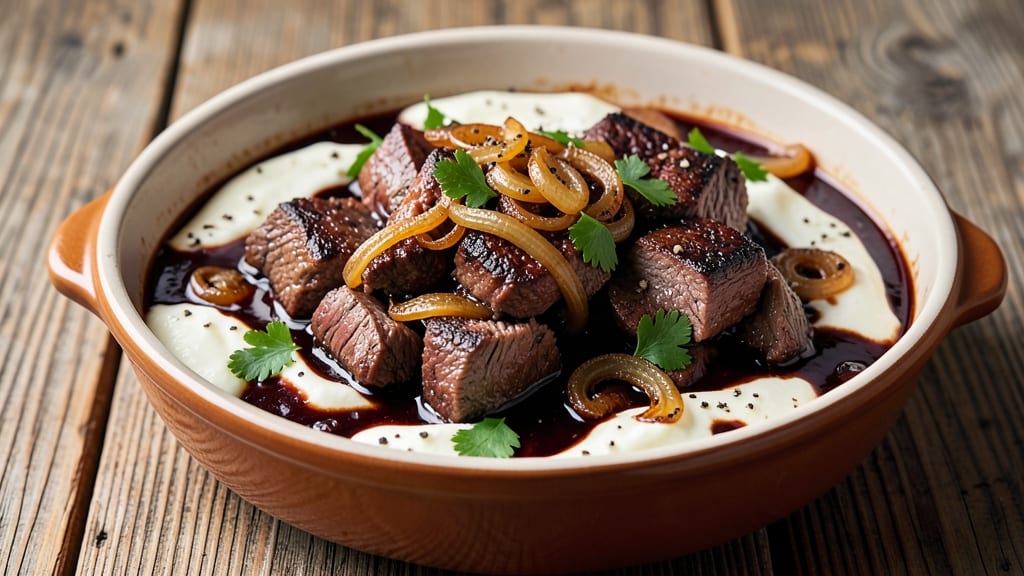
This authentic German beef stroganoff delivers the rich, smoky depth of Röstbraten tradition with a creamy Sauerrahm finish—nothing like the Russian version you might know. 🔥 The secret lies in slow-searing tender beef until perfectly caramelized, then simmering it in a sauce infused with Rauchpaprika and dark beer for that unmistakable German soul.
Every bite carries the warmth of a Bavarian kitchen, where hearty flavors meet homestyle comfort.
What sets this recipe apart is the balance of techniques: German-style searing for deep flavor, a touch of Worcestershire for umami, and Crème fraîche for that signature tangy creaminess.
Traditional egg noodles soak up the sauce beautifully, but for extra authenticity, try serving over Spätzle or crispy Semmelknödel—both staples in German home cooking. The dish is rich but never heavy, with fresh dill and crispy fried onions adding brightness and texture.
The result is a restaurant-quality stroganoff that feels like a home-cooked meal—golden, aromatic, and packed with layers of flavor. The beef stays tender while developing a rich crust, and the sauce clings to every noodle without being overly thick.
This is the kind of dish that warms a winter table or satisfies a craving for something hearty and familiar.
Perfect for family dinners or special occasions, this recipe scales easily for crowds while keeping the same depth of flavor. The method is straightforward, but the German techniques make all the difference. Let’s get cooking—your taste buds will thank you.
Ingredients for authentic german beef stroganoff
These hearty ingredients bring German comfort food to life with smoky depth and creamy richness.
| Ingredient | Amount | Notes |
|---|---|---|
| Beef Chuck Roast 🥩 | 1 ½ lb | Cubed, 1-inch pieces preferred |
| Yellow Onions 🧅 | 1 whole | Sliced, medium size |
| Garlic Cloves 🧄 | 4 cloves | Minced, fresh preferred |
| Rauchpaprika 🌶️ | 2 tbsp | Smoked paprika, essential for German flavor |
| Dark Beer 🍺 | 1 cup | Dunkel or Bock, chilled |
| Crème Fraîche 🧈 | 1 cup | Full-fat for authentic tang |
| Worcestershire Sauce 🍶 | 1 tbsp | For umami depth |
| Fresh Dill 🌿 | ¼ cup | Chopped, stems removed |
| Egg Noodles 🍝 | 8 oz | Fresh or dried, medium width |
| Unsalted Butter 🧈 | 3 tbsp | For searing beef |
| All-Purpose Flour 🌾 | 2 tbsp | For sauce thickening |
| Salt 🧂 | 1 ½ tsp | Diamond Crystal preferred |
| Black Pepper 🌶️ | ½ tsp | Freshly ground |
| Olive Oil 🫒 | 1 tbsp | For initial searing |
The beef is everything here—chuck roast gives that melt-in-your-mouth texture. Look for well-marbled cuts at Whole Foods or your local butcher. If you can't find chuck, sirloin works in a pinch, but it won't be as tender. The Rauchpaprika is non-negotiable for that authentic German smokiness—Penzeys or bulk bins at specialty stores have the best quality. Fresh dill? Buy more than you need—half goes in the sauce, half gets sprinkled on top at the end. The egg noodles should be fresh if possible, but dried works fine too.
No Rauchpaprika? Smoked paprika plus a pinch of liquid smoke gets you close. Out of dark beer? Substitute beef broth with a splash of soy sauce for depth. Fresh dill wilt fast, so dried dill at half the amount works if you're in a bind. The Crème fraîche is crucial—sour cream in a pinch, but it won't be as rich. For the Worcestershire, Lea & Perrins is the gold standard. And if you're feeling fancy, toast your flour in the butter before adding liquid for a deeper flavor.
This dish tastes even better the next day—make extra for leftovers. Store in an airtight container for 4-5 days in the fridge, or freeze for 3 months. The sauce thickens as it cools, so add a splash of milk when reheating. For serving, crisp up some fried onions (sauté in butter until golden) and scatter them on top—game-changer texture. The noodles absorb the sauce beautifully, so don't skip that step.
Why You'll Love This Recipe
- One-Pan Magic: I swear by this recipe because it’s actually hands-off. Sear the beef, toss in the onions and beer, then let it simmer—no flipping, no fuss. The Rauchpaprika does all the smoky work while you stir once or twice.
- Smoky Beer Hug: That dark beer isn’t just for flavor—it’s the secret. The malty depth cuts through the richness of the beef, and the Rauchpaprika? It adds this unmistakable smoky warmth that makes every bite feel like a hug. (Yes, even on a Tuesday night.)
- Leftovers That Win: This dish begs to be made extra. The flavors only get better the next day—perfect for lunches or when you suddenly remember you forgot to order takeout. Honestly, I’ve reheated mine three times and still crave it.
- Budget Beef Boost: Chuck roast is affordable, and a single cut feeds four. Pair it with mashed potatoes or crusty bread, and you’ve got a filling, restaurant-quality meal without breaking the bank. (My wallet thanks me weekly.)
Step-by-step instructions for authentic German beef stroganoff
Here's how to make this rich, smoky stroganoff with deep German flavors and tender beef.
🔥 Step 1: Sear the Beef in Two Batches
Heat the 1 tablespoon olive oil in a large Dutch oven over medium-high heat until shimmering. Pat the 1.5 lb beef chuck roast dry with paper towels and cut into 1-inch cubes. Work in two batches to avoid crowding—this ensures a proper sear instead of steaming.
Add half the beef to the pot and sear for 3-4 minutes until the edges are deep golden brown and the meat releases easily from the pan. Transfer to a plate and repeat with the remaining beef. You want maximum browning here—this builds flavor that carries through the entire dish. Keep the browned bits in the pot; they're pure flavor gold.
🍳 Step 2: Build the Smoky Base with Onions and Paprika
Reduce heat to medium and add 3 tablespoons unsalted butter. Toss in the 1 whole yellow onions (sliced) and cook for 5-6 minutes until softened and light golden—they should caramelize just enough to add sweetness. Add the 4 cloves garlic cloves (minced) and cook for 30 seconds until fragrant.
Stir in the 2 tablespoons rauchpaprika and cook for 1 minute until the spices bloom and fill your kitchen with that unmistakable smoky aroma. This is where the authentic German flavor comes from—don't skip it. If the onions start to brown too quickly, reduce heat slightly to prevent burning.
🍳 Step 3: Deglaze and Simmer with Beer and Worcestershire
Pour in the 1 cup dark beer and scrape up all those delicious browned bits from the bottom of the pot. Let it simmer for 3-4 minutes until reduced by about half. Add the 1 tablespoon Worcestershire sauce and stir well. The sauce should be rich and slightly thickened but still liquid enough to coat the back of a spoon.
Return all the seared beef to the pot and stir to coat in the sauce. Bring to a gentle simmer, then reduce heat to low. Cover and let it cook for 20-25 minutes, stirring occasionally, until the beef is fork-tender and the sauce has thickened slightly. You want the beef to melt in your mouth—this low-and-slow cooking achieves that perfect tenderness.
🥘 Step 4: Finish with Crème Fraîche and Fresh Dill
Remove the pot from heat and stir in the 1 cup crème fraîche and 0.25 cup fresh dill. The crème fraîche will give you that authentic tangy richness that sets this stroganoff apart from other versions. Taste and adjust seasoning with 1.5 teaspoons salt and 0.5 teaspoon black pepper—you might not need all of it, but have it ready.
Let the sauce sit off heat for 5 minutes to thicken slightly. The crème fraîche will melt into the sauce, creating that perfect velvety texture. The dill should be evenly distributed throughout—this is where the freshness comes in. If the sauce is too thick, stir in 1-2 tablespoons of the cooking liquid from the pot.
🍽️ Step 5: Cook Noodles and Assemble
While the stroganoff rests, cook the 8 oz egg noodles according to package directions until al dente. Drain and toss with 1 tablespoon olive oil to prevent sticking. The noodles should be hot when you serve them—this helps meld all the flavors together.
To serve, spoon the stroganoff over the noodles and garnish with additional fresh dill if desired. The beef should be perfectly tender, the sauce rich and slightly tangy, and the dill adding that bright freshness. This dish tastes even better the next day as the flavors meld further—so make extra if you can!
Pro Tips For Making Authentic German Beef Stroganoff
- SEAR THE BEEF FIRST: Walk away from the pan for 3 minutes after the first sear—this lets the crust set while you wipe the meat juices off the sides. I used to flip it too soon, and the beef ended up steaming instead of browning. A dark, caramelized crust is non-negotiable for German stroganoff; it’s what carries the smoky rauchpaprika flavor.
- SWEAT THE ONIONS LOW: Use a splash of the dark beer (about 2 tablespoons) to deglaze the pan while the onions are still cooking—this stops them from turning to mush. I learned this the hard way after burning three batches of onions that ended up gray and sad. Keep the heat at medium-low; patience here saves the dish.
- DON’T BOIL THE BEER: Simmer the beer into the sauce gently—if it boils hard, you’ll end up with a bitter, alcohol-forward mess. My grandmother swore by this: "Let it whisper, not scream." A slow reduction (about 10 minutes) concentrates the maltiness and balances the rauchpaprika’s smokiness.
- REST THE MEAT UNDER FOIL: After removing the beef from the pan, tent it loosely with foil and let it rest for 5-10 minutes. I know, I know—you want to slice it immediately. But skipping this step means dry, stringy meat. The residual heat keeps it tender while you finish the sauce. Trust the process.
Common mistakes when making great authentic german beef stroganoff
Overcrowding the Pan
Searing beef in one big batch is a rookie mistake that turns your stroganoff into a sad, steamed mess. I’ve seen this happen more times than I can count—beef releases moisture instead of developing that golden crust we want.
Always work in two batches to give each piece room to brown properly. Crowding also means the meat won’t get hot enough to kill bacteria, so you risk undercooked beef. Trust me, 5 minutes per batch is worth the wait for that perfect sear. 🔥
Skipping the Beer Reduction
Pouring in the beer and immediately adding the crème fraîche is where many recipes go wrong. The beer needs to reduce by at least half to concentrate its malt flavors and deepen the sauce. If you skip this step, your stroganoff will taste watery and lack that rich, smoky depth.
Let it simmer for 3-4 minutes—this is non-negotiable for authentic German flavor. A quick taste test will tell you when it’s ready.
Using Sour Cream Instead of Crème Fraîche
This is the cardinal sin of German stroganoff. Sour cream is too acidic and doesn’t have the same creamy, tangy richness that crème fraîche brings. The difference is night and day—crème fraîche melts into the sauce smoothly while adding a subtle sweetness.
If you’re in a pinch, mix ½ cup sour cream with ½ cup heavy cream, but it won’t be the same. For the best results, always use full-fat crème fraîche—it’s worth the splurge.
Undercooking the Beef
Tender beef is the soul of stroganoff, and rushing the cooking time is a fast track to disappointment. Chuck roast needs that 20-25 minute low-and-slow simmer to break down properly. I’ve seen people pull it out at 15 minutes thinking it’s done, only to end up with chewy, tough meat.
Use a meat thermometer—beef should reach 195°F internal temperature for that melt-in-your-mouth texture. Patience here makes all the difference.
Ignoring the Dill
Fresh dill isn’t just garnish—it’s the bright, herbal note that cuts through the richness of the stroganoff. Skipping it or using dried dill (without adjusting the amount) will leave your dish flat. Always add ¼ cup chopped fresh dill to the sauce and reserve another 2 tbsp for garnishing.
The freshness elevates every bite, so don’t treat it as an afterthought. It’s the secret to that restaurant-quality finish.
Not Resting the Sauce
Stirring in the crème fraîche and serving immediately is a common mistake that results in a broken sauce. The crème fraîche needs 5 minutes off heat to meld with the other ingredients and thicken properly. If you skip this step, the sauce will look curdled and taste uneven.
Let it sit—this short wait ensures a silky, velvety texture that’s worth the effort. Think of it as the final touch that ties everything together. ✨
Nutrition facts
Frequently asked questions
What makes this German beef stroganoff different from Russian versions?
This recipe uses Rauchpaprika for smoky depth and Dunkelbier (dark beer) instead of sour cream, creating a richer, maltier flavor profile. The German version also incorporates Worcestershire sauce for umami and finishes with Crème fraîche for a tangy creaminess—unlike the Russian style, which relies more on mustard and heavy cream. The beef is also seared differently to mimic German Röstbraten techniques.
Can I substitute dark beer with something else?
Yes! If you don’t have dark beer, use 1 cup beef broth + 1 tablespoon soy sauce for depth. For a non-alcoholic option, try 1 cup apple cider + 1 tablespoon balsamic vinegar. The key is balancing sweetness and acidity—avoid light beers like lager, as they won’t add the same malt richness. The beer reduction step is critical for flavor concentration.
What’s the best cut of beef for this recipe?
Chuck roast is ideal—it’s flavorful and breaks down beautifully during slow cooking. Sirloin works in a pinch (though it’s leaner), but avoid tough cuts like flank steak. For extra tenderness, ask your butcher to trim excess fat. The 1-inch cubes ensure even cooking, and searing them properly is key to that German-style crust.
How do I make this stroganoff ahead of time?
This dish tastes even better the next day! Let it cool completely, then store in an airtight container for 4-5 days in the fridge. For freezing, cool the sauce completely, then freeze for up to 3 months. Reheat gently on low heat, stirring in 1-2 tablespoons of water or broth if the sauce thickens too much. The flavors meld beautifully overnight.
What sides pair best with German beef stroganoff?
For authenticity, serve with Spätzle (German egg noodles) or Semmelknödel (bread dumplings). Other great options include buttery Kartoffelpüree, roasted Brussels sprouts with bacon, or a crisp German rye bread to soak up the sauce. Avoid heavy sides like mashed potatoes—they’ll make the dish too filling.