
Main Courses
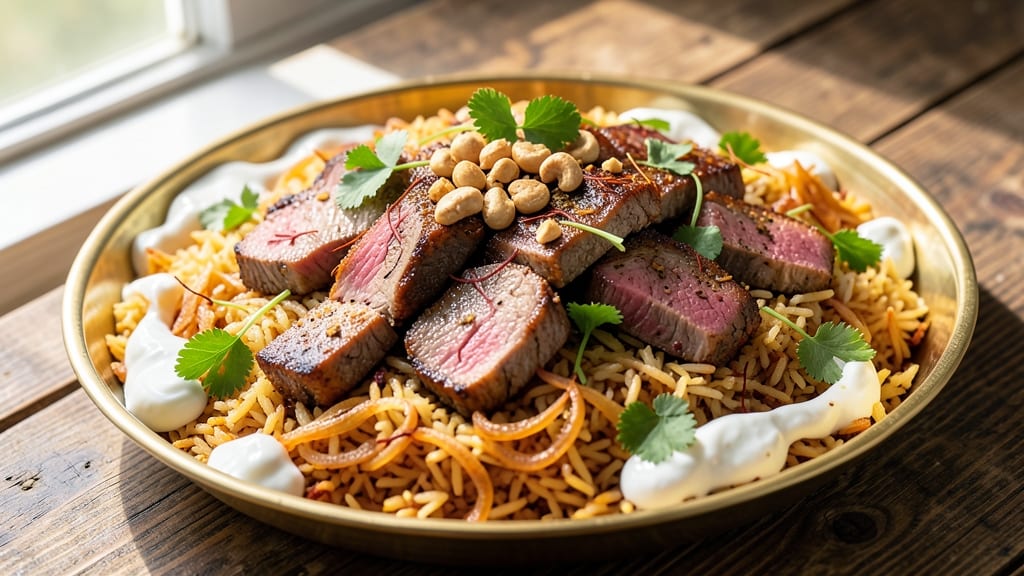
This authentic beef biryani recipe transforms a simple meal into a fragrant, layered masterpiece that tastes like a restaurant classic. 🌟 The secret lies in the marinade—a blend of yogurt, ginger, garlic, and warm spices that tenderizes the beef while infusing it with deep, aromatic flavors.
Unlike shortcut versions, this method builds layers of complexity through slow cooking and careful layering of basmati rice, saffron-infused milk, and caramelized onions.
What sets this recipe apart is the dum cooking technique, where the biryani is sealed and steamed to perfection, creating a dish that’s as visually stunning as it is delicious.
The beef remains tender and juicy, while the rice absorbs the rich, spiced broth, resulting in grains that are separate yet cohesive—a hallmark of authentic biryani. Every bite delivers a harmonious balance of smoky, spiced beef, fragrant saffron rice, and crispy fried onions.
Perfect for special occasions or a flavorful weeknight dinner, this biryani is designed to impress without requiring advanced skills. The layered presentation—with vibrant colors and textures—makes it ideal for gatherings, while the rich, spiced flavors ensure it’s a crowd-pleaser.
Whether you’re a beginner or an experienced cook, this recipe delivers restaurant-quality results at home.
Serve with cooling raita or a side of mirchi ka salan to balance the richness, and garnish with fresh mint and cilantro for a touch of freshness. The aroma alone will have everyone anticipating the first bite—trust me, it’s worth the effort. Let’s get started!
Ingredients for authentic beef biryani
Layered spices, tender beef, and fragrant saffron rice—this authentic biryani delivers restaurant-quality depth.
| Ingredient | Amount | Notes |
|---|---|---|
| Beef Chuck Roast 🥩 | 2 lb | Cut into 1.5-inch cubes |
| Plain Whole Milk Yogurt 🥛 | 1 cup | Full-fat preferred |
| Fresh Ginger 🌿 | 2 tbsp | Finely grated |
| Garlic Cloves 🧄 | 6 cloves | Crushed, not minced |
| Basmati Rice 🍚 | 2 cups | Long-grain, uncooked |
| Saffron Threads 🌼 | ¼ tsp | High-quality strands |
| Onions 🧅 | 2 whole | Red or brown, thinly sliced |
| Medium Tomatoes 🍅 | 3 whole | Pureed or finely chopped |
| Ghee 🧈 | ½ cup | Clarified butter |
| Ground Cumin 🌿 | 1 tbsp | Freshly toasted |
| Ground Coriander 🌿 | 1 tbsp | Freshly ground preferred |
| Turmeric Powder 🌶️ | 1 tsp | Bright yellow |
| Cinnamon Sticks 🌿 | 2 whole | Lightly crushed |
| Cardamom Pods 🌿 | 6 whole | Lightly crushed |
| Cloves 🌿 | 4 whole | Lightly crushed |
| Black Cardamom Pods 🌿 | 2 whole | Lightly crushed |
| Bay Leaves 🍃 | 2 whole | Fresh preferred |
| Fresh Mint Leaves 🌿 | ½ cup | Chopped, for garnish |
| Fresh Cilantro 🌿 | ¼ cup | Chopped, for garnish |
| Salt 🧂 | 1 ½ tsp | Diamond Crystal preferred |
The beef is non-negotiable for texture—chuck roast stays tender through slow cooking, while leaner cuts turn tough. Look for well-marbled meat at Indian specialty stores or the butcher counter, where they often carry cuts like this. Fresh ginger and garlic are essential; frozen won't deliver the same aromatic punch. For the yogurt, full-fat Greek-style works best, but plain whole milk yogurt is traditional. If you can't find basmati rice, ponni or jeera sada from Indian markets are excellent substitutes—they hold up better to the dum cooking.
No fresh saffron? Saffron-infused milk can be made ahead by steeping 1/4 tsp saffron in 1/4 cup warm milk for 10 minutes. Substituting tomato puree for whole tomatoes works in a pinch, but the texture differs slightly. For the spices, toast whole spices in ghee before grinding—this deepens their flavor dramatically. If you're short on time, pre-ground spices work, but reduce the amount by 1/3. The onions should caramelize until golden brown; don't rush this step—it builds the biryani's sweet, complex base. For the rice, rinse until the water runs clear to remove excess starch, which prevents clumping during cooking.
The marinated beef keeps for 2 days in the fridge, while the cooked biryani reheats beautifully—just warm gently with a splash of water to restore moisture. Store leftovers in airtight containers with a layer of plastic wrap pressed directly on the surface to prevent drying. For longer storage, freeze portions for up to 3 months. The dum cooking method creates steam that infuses the rice with beef flavors, so don't skip sealing the pot—this is what makes it authentic. Garnish with fresh mint and cilantro just before serving to brighten the dish with a citrusy contrast.
Why You'll Love This Recipe
- One-Pot Magic: I swear by this trick—marinate the beef chuck overnight in yogurt, ginger, and garlic, then dump everything into one pot with the rice. Less cleanup, more flavor, and zero stress.
- Layered Flavor Bomb: That yogurt marinade does the heavy lifting—tenderizing the beef while infusing it with bright ginger and garlic. The basmati rice soaks up all the juices, turning every bite into a fragrant, melt-in-your-mouth experience.
- Budget Stretch: Beef chuck roast is forgiving and affordable, and a single pot feeds four with room to spare. I’ve made this for $15 and had enough for lunches all week—no takeout needed.
Step-by-step instructions for layered beef biryani
Master the art of biryani with this traditional layering technique and aromatic spice blend.
👨🍳 Step 1: Marinate the Beef with Yogurt and Spices
Cut the 2 lb Beef Chuck Roast into 1.5-inch cubes and place them in a large bowl. In a small bowl, mix together the 1 cup Plain Whole Milk Yogurt, 2 tbsp Fresh Ginger, 6 cloves Garlic Cloves (crushed), 1 tbsp Ground Cumin, 1 tbsp Ground Coriander, 1 tsp Turmeric Powder, and 1.5 tsp Salt. Pour this marinade over the beef and massage it in until every piece is thoroughly coated.
Cover the bowl and refrigerate for at least 4 hours, or ideally overnight. This long marinating time ensures the beef absorbs the yogurt and spices deeply, resulting in tender, flavorful meat. The yogurt also helps tenderize the beef through its natural enzymes, while the spices infuse the meat with authentic biryani aromatics.
🍳 Step 2: Prepare the Rice and Saffron Infusion
Rinse the 2 cups Basmati Rice thoroughly under cold water until the water runs clear. Soak the rice in fresh water for 30 minutes, then drain. In a small bowl, steep the 0.25 tsp Saffron Threads in ¼ cup warm water for 10 minutes to release its vibrant color and delicate aroma. Set this saffron infusion aside for later.
In a large pot, combine the drained rice with 4 cups water (twice the volume of rice) and bring to a boil. Once boiling, reduce heat to low, cover, and simmer for 10 minutes. The rice should be 70% cooked at this stage—it will finish cooking during the biryani process. Remove from heat and let it sit covered for 5 minutes before fluffing gently with a fork.
🥘 Step 3: Cook the Beef with Aromatic Whole Spices
Heat 0.25 cup Ghee in a heavy-bottomed pot over medium heat. Add the 2 whole Onions (thinly sliced) and cook until golden brown, about 8-10 minutes. Add the 3 whole Medium Tomatoes (pureed or finely chopped) along with the 2 whole Cinnamon Sticks, 6 whole Cardamom Pods, 4 whole Cloves, 2 whole Black Cardamom Pods, and 2 whole Bay Leaves. Cook for 5-7 minutes until the tomatoes soften and the spices release their fragrance.
Add the marinated beef to the pot and cook for 5 minutes to seal the exterior. Pour in 1 cup water and bring to a simmer. Cover and cook on low heat for 45-50 minutes, stirring occasionally, until the beef is fork-tender and the liquid has reduced. Remove the whole spices and set the beef aside with its cooking liquid.
🥘 Step 4: Layer the Biryani with Ghee and Herbs
In a large, deep oven-safe dish (or heavy pot), spread half of the 70% cooked rice as the first layer. Arrange half of the cooked beef evenly over the rice, then drizzle ¼ cup Ghee evenly over the top. Sprinkle half of the 0.5 cup Fresh Mint Leaves and 0.25 cup Fresh Cilantro (chopped) over the beef layer.
Repeat with the remaining rice and beef, finishing with another drizzle of ¼ cup Ghee and the remaining herbs. Pour the saffron infusion evenly over the top layers. The ghee will create a fragrant seal that locks in moisture and flavor during cooking.
🔥 Step 5: Dum Cook and Rest for Maximum Flavor
Cover the dish tightly with aluminum foil and seal the edges with water to create an airtight seal. Place over medium-low heat and cook for 20 minutes. Then, increase heat to medium-high and cook for another 10 minutes, allowing the steam to build pressure inside. Remove from heat and let it rest for 15 minutes—this resting period allows the flavors to meld completely.
Uncover and fluff the biryani gently with a fork, mixing the layers slightly to distribute the ghee and juices. Garnish with additional Fresh Mint Leaves and Fresh Cilantro for a vibrant finish. Serve immediately with raita or a simple cucumber salad to complement the rich, spiced beef and fragrant rice.
Pro Tips For Making Authentic Beef Biryani
- Marinate Meat Overnight: I learned this the hard way—skipping the overnight soak means tough, flavorless beef. Use 1 cup plain yogurt, 1 tbsp ginger-garlic paste, and 1 tsp turmeric per pound of chuck roast. Cover and refrigerate 12+ hours (yes, even if you're impatient like me).
- Layer Rice Wet-Dry-Wet: The thing that matters most is how you stack the rice. Start with a thin layer of partially cooked rice, then beef, then another layer of rice—this time dry. Finish with a final wet layer and yogurt. This keeps the bottom from turning mushy while the top stays fragrant.
- Steam Don’t Boil the Rice: I used to boil basmati like pasta, and it ruined the texture. Instead, parboil for 60% of the package time, then drain and spread on a tray to stop cooking. The rice should be al dente—firm enough to hold its shape when layered.
- Use Ghee Not Oil: Sounds weird, but it works: replace half the oil with ghee for that signature biryani aroma. Heat 2 tbsp ghee until it smells nutty (not smoking), then add whole spices. Ghee’s high smoke point means deeper flavor without burning. (Your future self will thank you.)
Regional styles of these flavors
Hyderabadi Style
This version from Hyderabad features a dum cooking method with a layered presentation that includes fried onions and birista (a spiced, fried rice topping). The beef marinade here often includes dried fenugreek leaves (kasuri methi) and a pinch of asafoetida (hing) for depth.
The rice is partially cooked before layering, then steamed with the beef in a sealed pot. Garnish with boiled eggs and fried cashews for extra texture. 🌟
Lucknowi Awadh
Known for its rich, creamy texture, Lucknowi biryani incorporates yogurt-marinated beef cooked with whole spices like mace and nutmeg, which are harder to find but worth seeking out. The rice is often parboiled with saffron milk and layered with caramelized onions and fried onions on top.
Serve with mirchi ka salan (a spicy chili curry) and boondi raita (a yogurt-based raita with fried gram flour pearls).
Kolkata Style
Bengali biryani, or Kolkata-style, is lighter and less spicy than its South Indian counterparts. The beef is marinated with mustard oil (instead of ghee) and poppy seeds for a distinct flavor. The rice is cooked with potatoes and peas, giving it a heartier texture.
The dish is finished with fried onions and lemon wedges for brightness. This version is perfect for those who prefer a milder, potato-infused twist. 🍋
Malabar (Kerala)
Kerala’s biryani stands out with its use of coconut milk in the rice and tender coconut water in the beef marinade. The beef is often cooked with kerala curry leaves and black pepper, adding a unique aroma.
The rice is layered with fried coconut and garnished with curry leaves and grated coconut. Serve with avial (a coconut-yogurt stew) or parippu curry (split pea curry) for a South Indian feast.
Modern Fusion Twist
For a contemporary take, try adding smoked paprika or chipotle powder to the beef marinade for a smoky depth. Swap basmati rice for jasmine rice and infuse the milk with vanilla bean for a subtle sweetness.
Top with crispy fried shallots and pickled onions for a tangy crunch. This fusion keeps the biryani’s soul intact while adding a global twist that modern palates love. 🌶️
Nutrition facts
Frequently asked questions
Can I substitute beef with chicken or lamb in this recipe?
For chicken, use 2 lbs boneless thighs and reduce the marinating time to 2-3 hours (chicken cooks faster). For lamb, opt for 2 lbs shoulder and marinate overnight—lamb benefits from longer marinating. Adjust cooking time: chicken needs 30-35 minutes after searing, while lamb requires 1-1.5 hours on low heat. The layering technique remains the same!
What’s the secret to perfectly fluffy biryani rice?
The key is cooking the rice to 70% doneness before layering—this prevents mushiness. Use basmati rice (or ponni rice for authenticity) and rinse until water runs clear to remove excess starch. For extra fluffiness, add 1 tbsp ghee to the cooking water, and never stir the rice after the initial boil. The dum cooking steams it to perfection!
Can I make biryani ahead of time?
Yes! Assemble the biryani (without final cooking) up to 12 hours ahead and refrigerate. When ready to cook, seal and steam as directed. For leftovers, store in airtight containers with plastic wrap pressed against the surface to lock in moisture. Reheat gently with a splash of water—microwaving dries it out. Biryani actually tastes better the next day as flavors meld!
Why does my biryani turn out dry?
Dry biryani usually means overcooking or poor sealing. Ensure your pot is airtight—use foil sealed with water or a tight lid. For extra moisture, add ¼ cup water before sealing. Avoid peeking while cooking! If using a heavy pot, reduce heat to low-medium to prevent burning. The dum method relies on trapped steam—patience is key!
What’s the best way to serve beef biryani?
Pair it with cooling sides to balance the richness: boondi raita (yogurt with fried gram flour pearls), mirchi ka salan (spicy chili curry), or a simple cucumber-onion salad. Serve with lemon wedges and mint chutney for brightness. For presentation, garnish with fried onions and extra cilantro. Traditionalists add pao (Indian bread) or steamed rice on the side!