
Side Dishes
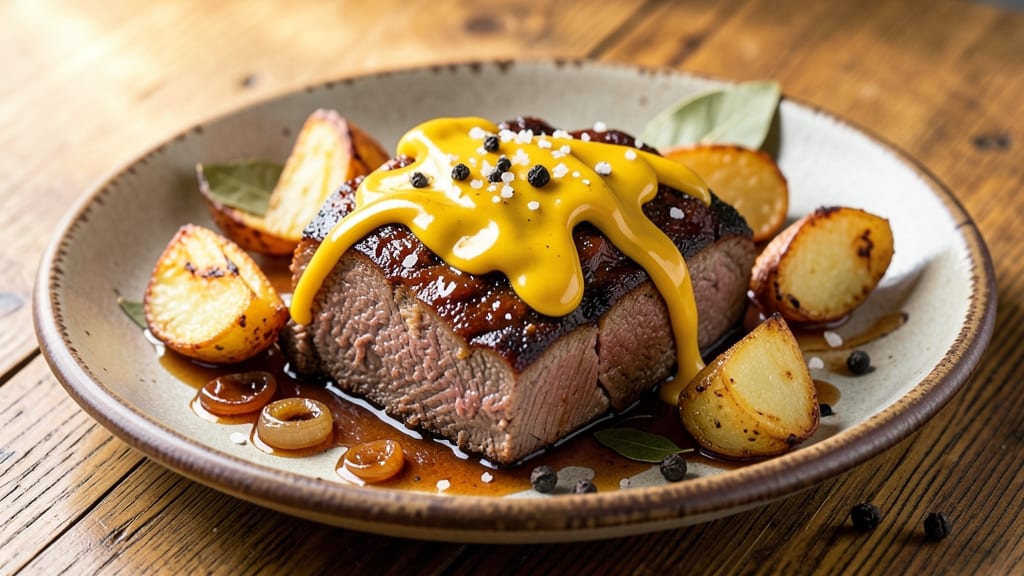
This Australian corned beef recipe delivers the rich, spiced perfection that makes it a centerpiece at family gatherings and holiday tables. 🔥 The secret lies in a carefully balanced brine—sweet, savory, and aromatic—that transforms tough beef into melt-in-your-mouth tenderness.
Unlike traditional methods, this version incorporates a touch of pickled spices for depth, a nod to Australia’s love of bold flavors. What sets this recipe apart is the pickle-braised technique, which ensures juicy, fall-apart texture without drying out the meat.
The slow cooking process infuses every bite with a harmonious blend of mustard, garlic, and bay leaves, creating a dish that’s both nostalgic and refined. Perfect for special occasions or a comforting weeknight meal, this method delivers restaurant-quality results at home.
By the time you serve it, you’ll have a golden, tender slab of corned beef that’s richly seasoned and impossibly juicy. The aroma alone will have everyone anticipating dinner, while the texture—crisp edges and tender centers—makes every slice worth savoring.
Serve with classic sides like buttered cabbage or creamy mashed potatoes for the full Australian experience. Modern adaptations, like slow cooker methods, make this recipe even more accessible.
Whether you’re following tradition or putting your own spin on it, this is the corned beef that will become your new go-to for memorable meals.
Ingredients for australian corned beef
Sixteen ingredients for a dish that’s all about bold flavors and tender perfection.
| Ingredient | Amount | Notes |
|---|---|---|
| Beef Brisket or Chuck Roast 🥩 | 4 lb | Tough cut preferred for tenderness |
| Yellow Mustard 🍯 | ½ cup | Dijon or coarse grain preferred |
| Brown Sugar 🍚 | 1 cup | Light or dark variety works |
| Kosher Salt 🧂 | 1 cup | Diamond Crystal preferred |
| Black Peppercorns 🌶️ | 2 tbsp | Freshly ground for best flavor |
| Bay Leaves 🍃 | 4 whole | Fresh or dried, removed before serving |
| Garlic Cloves 🧄 | 8 cloves | Minced for even distribution |
| Apple Cider Vinegar 🍎 | ¼ cup | For tangy depth |
| Pickle Juice 🥒 | 1 cup | From pickled beets or gherkins |
| Whole Grapefruit 🍊 | 1 whole | Juiced, peel and seeds removed |
| Cloves 🌿 | 4 whole | For aromatic depth |
| Allspice Berries 🌶️ | 1 tbsp | Crushed for warm spice notes |
| Water 💧 | 4 cups | For brine solution |
| Yellow Onion 🧅 | 1 whole | Quartered for braising |
| Carrots 🥕 | 4 whole | Baby carrots work too |
The beef cut is everything here—brisket or chuck roast is non-negotiable for that melt-in-your-mouth texture. Costco or local butcher shops usually have these cuts pre-cut, but if you're buying whole, ask for a well-marbled piece. The pickled spices (grapefruit juice, vinegar, and pickle juice) are what give this Australian twist its signature depth. I always grab organic grapefruit from the store—it’s sweeter and more aromatic. For the spices, Penzeys or bulk bins are your best bets if you want to splurge on quality, but the regular grocery store stuff works fine if it’s fresh.
No grapefruit juice? Orange juice with a splash of lemon gets you close, though it’ll lack that unique bitterness. Short on pickle juice? Substitute with extra vinegar and a pinch of salt. The mustard is key—Dijon or coarse grain adds texture, but smooth mustard works if that’s what you’ve got. The allspice berries can be tricky to find, but ground allspice at half the amount is a decent swap. For the vegetables, whatever’s in season works—carrots and onions are just there to soak up flavor, not steal the show.
This dish tastes even better the next day, so plan ahead. The corned beef keeps for 5 days in the fridge, and you can freeze portions for up to 3 months. I like to slice it thin against the grain and pack it in containers with a little bit of the braising liquid—game-changer for leftovers. Store the brine separately if you’re not using it all at once. The vegetables? Use them up in a quick soup or stir-fry—they’re packed with flavor after braising.
Why You'll Love This Recipe
- One-Pot Magic: I swear by this—just the brisket, mustard, and a sprinkle of brown sugar in a pot, simmered low. No chopping, no fuss, and the flavor builds right in the liquid. Honestly, I’ve made it while scrolling through my phone. That’s how easy.
- Sweet-Savory Crunch: The brown sugar caramelizes into this sticky, golden crust on the outside while the inside stays tender. That yellow mustard? It cuts through the richness like a bright little hug. Between us, it’s the kind of bite that makes people ask, “What’s in this?”
- Leftover Heaven: This recipe practically begs for seconds—then thirds. I’ve turned the next day’s slices into sandwiches, hash, or even fried rice. The meat stays juicy for days, and honestly? That’s my kind of meal prep. No sad, dry leftovers here.
- Budget Hero: A whole brisket or chuck roast feeds my family for days without breaking the bank. Kosher salt and peppercorns? Pantry staples. Brown sugar? Probably already there. It’s the kind of dish that makes grocery day feel like a win. Plus, the more you make, the cheaper it gets.
Step-by-step instructions for Australian corned beef
This isn't your grandma's boiled beef—we're making tender, spiced perfection with a pickle-braised twist.
🍳 Step 1: Create the Spiced Brine and Prep the Meat
In a large non-reactive pot, combine the 4 cups water, 1 cup kosher salt, 1 cup brown sugar, 0.5 cup yellow mustard, 0.25 cup apple cider vinegar, 1 cup pickle juice, 8 cloves garlic cloves (minced), 4 whole cloves, 1 tbsp crushed allspice berries, and 4 whole bay leaves. Stir until the sugar and salt fully dissolve—this creates our flavor-packed brine.
Meanwhile, trim any excess fat from the 4 lb beef brisket or chuck roast, leaving about ¼-inch fat cap. Rub the meat generously with the brine mixture, pressing it into all surfaces. Place the beef in a resealable plastic bag and refrigerate for 12-24 hours—this ensures deep flavor penetration and tender results. Real talk: Don't skip this step, even if you're eager to cook. The wait makes all the difference.
🥘 Step 2: Build the Pickle-Braised Pot
After brining, remove the beef from the bag and pat it dry. In the same pot you used for the brine (no need to clean it—the fond adds flavor), add 1 whole quartered yellow onion and 4 whole carrots. Sear them over medium-high heat for 5 minutes until they begin to soften and develop color.
Add the brined beef back to the pot, fat-side up. Pour in 1 cup fresh grapefruit juice (from the whole grapefruit, strained) and enough water to cover the beef by about 1 inch. The liquid should reach roughly halfway up the beef. Here's the thing—this pickle-braised liquid creates that signature tangy depth Australian corned beef is famous for.
🔥 Step 3: Braise to Juicy Perfection
Bring the liquid to a gentle simmer over medium-low heat. The key here is patience—cover the pot and let it cook for 2.5-3 hours until the beef is fork-tender. You'll know it's ready when a knife slides in easily and the internal temperature reaches 203°F (use a meat thermometer for accuracy).
During the last 30 minutes, check the liquid level occasionally and add hot water as needed to keep the beef covered. The vegetables should be tender but not falling apart. Don't be tempted to rush this—low and slow is what transforms tough cuts into melt-in-your-mouth beef. I press down gently on the beef with a spoon during the last hour to help it absorb all that delicious braising liquid.
⏰ Step 4: Rest and Slice for Maximum Juiciness
Once the beef reaches 203°F, remove it from the pot and transfer to a cutting board. Tent loosely with foil and let it rest for 20-30 minutes. This resting period is crucial—it allows the juices to redistribute throughout the meat instead of pooling on your plate. If you skip this, you'll end up with dry slices.
While the beef rests, strain the braising liquid through a fine-mesh sieve to remove any solids. You'll have about 2 cups of rich, tangy liquid—perfect for serving over mashed potatoes or with crusty bread. Once rested, slice the beef against the grain into ¼-inch thick slices. Each piece should be so tender it practically falls apart with a gentle tug, not so soft it disintegrates.
🍽️ Step 5: Serve with Confidence
Arrange the sliced beef on a warm platter and ladle the strained braising liquid generously over the top. Garnish with additional minced garlic cloves and cracked black pepper for a pop of color. The result should be beef that's rich, juicy, and packed with that signature tangy depth from the pickle-braised technique.
Serve immediately with the braising liquid spooned over each portion. This isn't just corned beef—it's a showstopper that delivers on that "juicy perfection" promise. Pair it with classic sides like buttered cabbage or creamy mashed potatoes to complete the meal. Leftovers? Store in the braising liquid for up to 3 days—the flavors only get better with time.
Pro Tips For Making Australian Corned Beef
- Trim the Fat First: Slice off the thickest layer of external fat before cooking—it’s not just about presentation. I learned this the hard way when a greasy crust turned my pan into a smoking disaster. Aim for about ¼-inch fat left; it adds flavor but won’t ruin your pan or slow the cooking.
- Salt the Meat Overnight: Don’t just sprinkle salt before cooking—rub it in and let the brisket or chuck sit uncovered in the fridge for at least 12 hours. My grandmother swore by this, and she was right: the salt penetrates deeper, and the crust forms faster without sticking. (Yes, even if you’re impatient like me.)
- Start Hot, Finish Slow: Sear the meat over high heat until the mustard-brown sugar crust is deep golden—about 3-4 minutes per side. Then, drop the heat to medium-low and cover with foil. After burning three batches, I finally figured out that rushing the sear = a pale, soggy crust. Patience here makes all the difference.
- Use a Meat Thermometer: Pull the corned beef at 195°F (90°C)—not when it looks done. I used to guess, and the results were either dry or undercooked. The internal temp is non-negotiable, especially for brisket. Let it rest 10 minutes under foil before slicing, or you’ll lose all that juicy goodness.
Essential equipment for this dish
Braising Pot Essentials
Start with a heavy-bottomed Dutch oven—I swear by the Le Creuset 6-quart—to handle the long braising time without hot spots. The deep sides prevent overflow from the tangy pickle-braised liquid.
A non-reactive pot (stainless steel or enamel) is crucial because acidic ingredients like vinegar and pickle juice can corrode aluminum. 🔥
Precision Tools
Invest in a meat thermometer (I use ThermoWorks Smoke) to nail that 203°F internal temp—no more guessing! A fine-mesh sieve (like OXO Good Grips) is perfect for straining the braising liquid cleanly.
For slicing, a sharp 8-inch chef's knife (I love Wüsthof) cuts through the tender meat like butter when you slice against the grain.
Slow Cooker Adaptation
For hands-off cooking, use a 6-quart slow cooker (like Hamilton Beach) on LOW for 8-10 hours. The same brine and vegetables work—just add 1 cup water to the pot after searing.
The slow cooker maintains the pickle-braised tang while keeping the beef tender. Pro tip: Skip the searing step and add raw onions/carrots directly to the slow cooker.
Must-Have Extras
A kitchen scale (I prefer OXO Good Grips) ensures accurate measurements for the brine ingredients, especially the 1 cup kosher salt and 1 cup brown sugar. For the grapefruit juice, a handheld juicer (like OXO Good Grips) extracts every last drop.
Don’t forget resealable plastic bags (like Ziploc) for the overnight brine—they save space in your fridge.
Budget-Friendly Swaps
No Dutch oven? A large stainless steel stockpot (like All-Clad) works just fine. Skip the fancy thermometer and use a digital instant-read thermometer (like Thermapen) for accuracy. For slicing, a serrated bread knife (like Mercer Culinary) handles the job if you don’t have a chef’s knife.
The key is precision, not expensive tools—just the right ones for the job. 💡
Nutrition facts
Frequently asked questions
Why does this recipe use grapefruit juice instead of traditional corned beef spices?
Grapefruit juice adds a bright, citrusy depth that balances the rich, spiced flavors—it's a signature touch in Australian-style corned beef. The acidity tenderizes the meat while the natural bitterness cuts through the fat, creating that signature tangy profile. Think of it as nature's version of a tangy glaze!
Can I make this in a slow cooker instead of a Dutch oven?
Use a 6-quart slow cooker on LOW for 8-10 hours—just skip the searing step and add raw onions/carrots directly. The pickle-braised liquid works perfectly in a slow cooker, though you may need to add 1 extra cup of water to prevent burning. The hands-off method keeps the beef just as tender!
What's the best way to store leftovers?
Slice the beef thin against the grain and store it in an airtight container with some of the braising liquid. It keeps for 5 days in the fridge or 3 months frozen. The liquid prevents drying out—just reheat gently in a pot with a splash of water or broth. The flavors actually improve overnight!
Can I substitute brisket with another beef cut?
Chuck roast is the next best option—it has enough marbling for tenderness. Avoid lean cuts like sirloin as they won't become as juicy. For 3-4 lb cuts, adjust cooking time to 2-2.5 hours instead. The key is choosing a well-marbled piece with some fat to keep it moist during braising.
How do I know when the beef is fully cooked?
Use a meat thermometer to check for 203°F internal temperature—this ensures melt-in-your-mouth tenderness. The beef should also feel soft when pressed with a fork. If you don't have a thermometer, look for a fork-tender texture and clear juices when pierced. Never rely on color alone!