
Main Courses
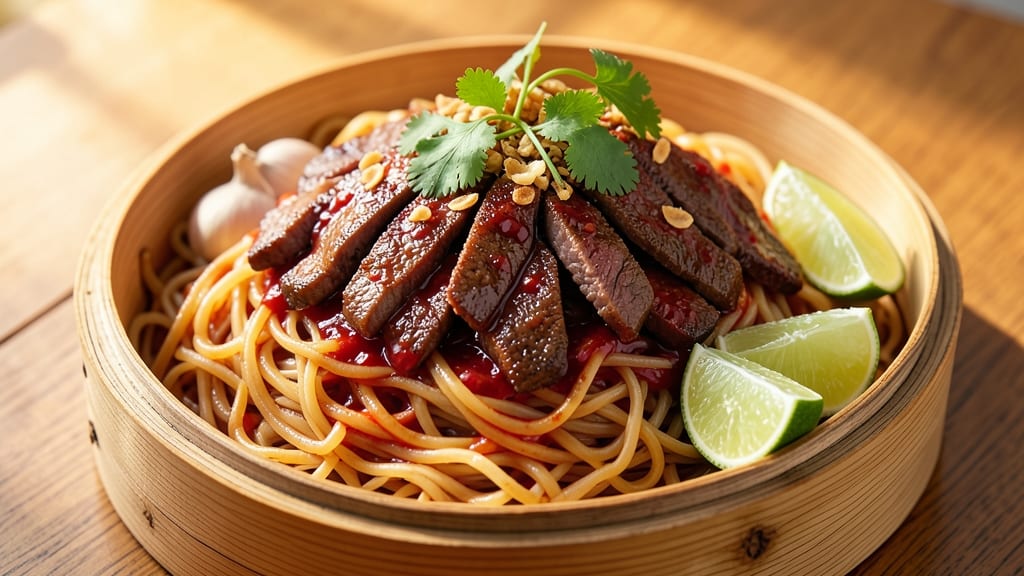
This Asian spicy beef noodle recipe delivers restaurant-quality wok heat in every bite—where tender beef strips meet fragrant chili-lime broth and chewy rice noodles.
The secret lies in a bold marinade of fish sauce, garlic, and chili flakes that transforms simple flank steak into melt-in-your-mouth perfection, while a quick-simmered broth balances fiery spice with bright citrus notes.
I developed this after craving that perfect harmony of smoky, tangy, and umami flavors that make these noodles irresistible.
The dish starts with quick-cooked beef seared to juicy tenderness, then tossed with a sauce that’s both complex and easy to assemble—just stir together fish sauce, lime juice, soy sauce, and a touch of sugar for balance.
Rice noodles soak up the aromatic broth while staying chewy, creating the ideal texture contrast. Garnishes like fresh herbs, crushed peanuts, and lime wedges add freshness that cuts through the heat, making every bowl feel special.
What sets this recipe apart is its versatility—adjust the spice level to your preference, swap in lemongrass or coconut milk for a Thai-inspired twist, or keep it simple with a classic Vietnamese-style broth.
The result is a dish that’s restaurant-worthy yet simple enough for weeknight dinners, with flavors that linger long after the last bite. Ready in under 30 minutes, it’s the perfect solution for a bold, satisfying meal.
Serve immediately with extra lime and fresh herbs on the side, or pack leftovers for a quick lunch—just reheat the broth separately to keep the noodles from turning mushy.
This recipe proves you don’t need fancy techniques to create a dish that tastes like it came from a bustling street-side stall. Let’s get cooking!
Ingredients for asian spicy beef noodle
Bold marinade, tender beef, and chewy noodles—this wok heat combo delivers restaurant flavors at home.
| Ingredient | Amount | Notes |
|---|---|---|
| Flank Steak 🥩 | 1 lb | Thinly sliced against grain |
| Rice Noodles 🍜 | 8 oz | Stir-fry variety, uncooked |
| Fish Sauce 🍶 | 2 tbsp | Red Boat preferred |
| Soy Sauce 🥫 | 2 tbsp | Kikkoman or similar |
| Fresh Lime Juice 🍋 | ½ cup | From 2-3 limes |
| Garlic Cloves 🧄 | 6 cloves | Minced finely |
| Chili Flakes 🌶️ | 1 tbsp | Adjust for heat |
| Granulated Sugar 🍚 | 1 tbsp | Balances flavors |
| Vegetable Oil 🫒 | 2 tbsp | High smoke point |
| Fresh Cilantro 🌿 | ¼ cup | Chopped for garnish |
| Crushed Peanuts 🥜 | ¼ cup | For topping |
| Green Onions 🧅 | 4 whole | Thinly sliced |
| Salt 🧂 | 1 tsp | Kosher preferred |
| Black Pepper 🌶️ | ½ tsp | Freshly ground |
The beef is everything here. Flank steak cuts against the grain for tender strips—ask your butcher to slice it thin if you're not comfortable doing it yourself. Red Boat fish sauce is worth the splurge for that authentic umami punch, but Red Boat Red or any reputable brand works. Garlic? Fresh is non-negotiable—the pre-minced stuff loses flavor fast. I grab mine from the Asian market where it's often cheaper and fresher. For the noodles, rice noodles from the Asian aisle (like Sen Mei) are ideal—they stay chewy when cooked properly.
No fish sauce? Soy sauce plus a dash of Worcestershire gets you close, though it won't be identical. Short on lime? Lemon juice works in a pinch, but the citrus balance is different. The chili flakes can be swapped for fresh Thai chilies (seeds in for heat, out for mild). Sugar substitute? Honey or maple syrup works, but the flavor profile shifts slightly. Pro tip: Toast your crushed peanuts in a dry pan for 2-3 minutes—they get nuttier and add more flavor. The cilantro? Fresh only—dried just won't cut it here.
Prep the marinade ingredients first—they'll wait while you cook. The beef cooks fast (2-3 minutes max), so have everything ready. Leftover broth? Freeze it for up to 3 months—it reheats beautifully. Store cooked noodles in the fridge for 3 days (reheat broth separately), or freeze the whole dish for 2 months. Garnishes like lime and herbs keep best in the fridge for 5 days—wrap herbs in damp paper towels to keep them fresh longer.
Why You'll Love This Recipe
- 20-Minute Prep: I swear by this—just slice the flank steak thin, toss in a bowl with fish sauce and lime while the noodles soak. No chopping, no fuss, and the steak practically cooks itself in the hot pan. Honestly, I’ve made it while scrolling through my phone.
- Umami Bomb: That combo of fish sauce, soy, and lime? It’s the kind of flavor that sticks with you. The beef gets this perfect chew, and the noodles soak up the sauce like a sponge—salty, tangy, and just spicy enough to make you reach for seconds.
- Lunchbox Hero: Between us, this is my go-to for meal prep. Pack the steak and noodles separately, then reheat with a splash of water—still tastes fresh hours later. My kids grab it for school lunches, and I bring it to work when I’m too tired to cook.
- Budget Power Move: Flank steak stretches far when sliced thin, and rice noodles cost pennies. A single batch feeds four for under $12, and leftovers reheat like a dream. I’ll be real: it’s my way to eat fancy without breaking the bank.
Step-by-step instructions for Asian spicy beef noodle recipe
Here's how to make this fiery, fragrant dish that balances bold heat with bright citrus notes.
🍳 Step 1: Marinate and Slice the Flank Steak
Slice the 1 lb flank steak thinly against the grain into ¼-inch strips. This creates tender, bite-sized pieces that cook quickly in the wok. Place the sliced steak in a bowl and mix with 1 tbsp soy sauce, 1 tsp salt, and 0.5 tsp black pepper. Let it marinate for at least 15 minutes - I usually do this while I prep everything else. The acidity from the soy sauce helps tenderize the meat while adding depth of flavor.
Here's the thing - don't skip marinating even if you're short on time. The flavors penetrate better and the steak develops more texture when cooked. If you're really pressed, even 5 minutes helps, but 15 minutes gives you that restaurant-quality result.
🍳 Step 2: Cook the Rice Noodles Just Right
Boil 4 cups of water in a pot and add the 8 oz rice noodles. Cook for exactly 3 minutes - they should be soft but still slightly firm to the bite. Drain immediately and rinse under cold water to stop the cooking process. This prevents them from turning mushy when they hit the wok later.
I know it seems weird to undercook them, but trust me - noodles finish cooking in the residual heat of the wok. Overcooked noodles turn to mush when you toss them with everything else. Spread them on a plate and lightly toss with 1 tbsp vegetable oil to prevent sticking while you finish cooking the beef.
🔥 Step 3: Build the Spicy Chili-Lime Sauce
Heat the remaining 1 tbsp vegetable oil in a wok or large skillet over high heat until shimmering. Add the 6 cloves minced garlic and stir for 30 seconds until fragrant - don't let it brown or it'll turn bitter. Add 1 tbsp chili flakes and stir for another 10 seconds to toast them slightly and release their aroma.
Pour in the 0.5 cup fresh lime juice and 1 tbsp granulated sugar, stirring constantly. The sugar helps balance the acidity while the lime brightens everything up. Let this mixture simmer for 2 minutes until it reduces slightly and becomes syrupy. This is your flavor foundation - the sauce that ties everything together.
🍳 Step 4: Cook the Beef and Combine Everything
Push the sauce to one side of the wok and add the marinated steak strips. Cook for 1-2 minutes until they're no longer pink in the center but still have a slight bite. The high heat ensures they stay tender rather than turning tough. Toss the steak with the sauce and cook for another 30 seconds to coat everything evenly.
Add the cooked rice noodles and toss vigorously for 1-2 minutes until everything is well combined and the noodles are heated through. Here's where it gets fun - the residual heat from the wok finishes cooking the noodles perfectly while absorbing all those amazing flavors. If the mixture seems too dry, add 1-2 tablespoons of water to loosen it up.
🥘 Step 5: Finish and Garnish
Remove from heat and stir in the 2 tbsp fish sauce. This adds that signature umami depth that makes Asian flavors sing. Taste and adjust seasoning - you might want to add a bit more lime juice if it's too salty or more sugar if it needs sweetness.
Divide the noodles among 4 bowls and top each serving with 1 tbsp crushed peanuts, 1 tbsp chopped fresh cilantro, and 1 green onion sliced thinly. The peanuts add crunch while the cilantro and green onions bring freshness to cut through the heat. Serve immediately while everything is piping hot and the flavors are at their peak!
Pro Tips For Making Asian Spicy Beef Noodle
- Slice Against the Grain: Flank steak’s tough fibers need a fight—cut it thin (¼-inch max) and slice against the grain after cooking. I used to skip this, and my noodles ended up chewing like boot leather. A sharp knife and patience here save your jaw later.
- Soak Noodles in Hot Water: Skip the boiling pot—soak rice noodles in hot (not boiling) water for 5-7 minutes until pliable but still slightly firm. Over-soaking turns them mushy, and under-soaking makes them chewy. Drain and rinse with cold water to stop cooking.
- Balance the Sauce Slowly: Start with half the fish sauce and soy sauce, then taste. The heat from chili (if using) and lime juice will mellow over time, so add more later if needed. I’ve ruined batches by dumping everything in at once—now I adjust in stages.
- Use Cold Lime Juice: Fresh lime juice straight from the fridge cuts through the richness better than warm juice. The cold also helps balance the heat if the dish feels too sharp. (Yes, it’s weird, but it works—I promise.)
Best sauces and condiments for this asian spicy beef noodle
Chili-Lime Base
The foundation of this dish is the chili-lime sauce, where fresh lime juice (not bottled) and chili flakes create that signature tangy heat. I like to toast the chili flakes in the wok for 10 seconds before adding lime juice—this enhances their aroma without burning.
The 1 tablespoon granulated sugar balances the acidity, but you can swap it for honey if you prefer a floral note. For extra depth, add 1 teaspoon grated ginger while building the sauce—it rounds out the sharpness beautifully. 🌶️
Umami Boosters
Fish sauce is non-negotiable here—it delivers that salty, fermented umami that defines Asian flavors. I use Red Boat because its clean taste doesn’t overpower, but any reputable brand works. If you’re avoiding fish sauce, soy sauce + a dash of Worcestershire (½ teaspoon) mimics the depth, though it won’t be identical. For a richer finish, stir in 1 teaspoon oyster sauce after cooking—it adds a luxurious, slightly sweet contrast to the spice. Trust me, this small tweak elevates the dish to another level. 🍶
Herb and Crunch Garnishes
Fresh cilantro and green onions aren’t just garnishes—they’re flavor anchors. Chop the cilantro just before serving to preserve its bright aroma, and slice the green onions thinly so they add a crisp bite.
For crunch, toast crushed peanuts in a dry pan for 2-3 minutes until golden—they’ll taste nuttier and complement the heat. Swap peanuts for fried shallots if you prefer a sweeter crunch, or add bean sprouts for a fresh, peppery contrast. 🥜
Broth Variations
This recipe uses a quick chili-lime sauce, but you can transform it into a full broth-based dish by simmering 2 cups beef or chicken broth with 1 stalk lemongrass, 1-inch ginger, and 1 Thai chili for 10 minutes.
Strain and use this instead of the lime sauce—it adds a fragrant, herbal depth perfect for a Vietnamese-style bún bò. For a Thai-inspired twist, blend ½ cup coconut milk into the sauce for creaminess, then top with lime wedges and Thai basil. 🌿
Sweet and Tangy Add-Ins
Balance the heat with sweet and tangy elements like hoisin sauce (1 tablespoon) or plum sauce (2 teaspoons) stirred into the final dish. These add a glossy, slightly sweet coating that clings to the noodles.
For a smoky note, drizzle with 1 teaspoon chili oil (like Lao Gan Ma) after serving—it adds a fiery, aromatic finish. If you love fruit in savory dishes, toss in ½ cup julienned cucumber or mango slices for a refreshing contrast. 🍈
Spice Level Control
Adjust heat to your preference: reduce chili flakes to ½ tablespoon for mild, or double it for extra kick. For smoky heat, add ½ teaspoon smoked paprika to the marinade.
If you love fresh chilies, mix in 1 minced Thai chili (seeds in for heat, out for mild) while building the sauce. For a cooling counterpoint, serve with sliced cucumber or a side of mango salsa—the cold, sweet crunch tames the fire beautifully. 🔥
Nutrition facts
Frequently asked questions
Can I use regular wheat noodles instead of rice noodles?
You can absolutely try it! Wheat noodles like udon or ramen will hold up better to the spicy sauce, though they won't have that signature chewy texture. For best results, use udon noodles (they're heartier) and cook them for 2 minutes less than package instructions to prevent mushiness. The flavors will still be delicious, but the texture will be different.
How do I make this recipe less spicy?
Start by reducing the chili flakes to ½ tablespoon or swap them for ½ teaspoon mild paprika. For extra cooling power, add 1 tablespoon hoisin sauce or 1 teaspoon honey to the final dish. Serve with sliced cucumber or a side of mango salsa to balance the heat naturally.
What's the best way to store leftovers?
Keep the noodles and beef separate from the sauce to prevent sogginess. Store cooked noodles in an airtight container in the fridge for 3 days, and reheat the sauce separately. For freezing, package the sauce and beef together (they freeze well for 2 months), then cook fresh noodles when ready to eat. Always reheat the sauce first to maintain texture.
Can I make this dish ahead of time?
Yes! Prep everything except the noodles: marinate the beef, make the sauce, and chop garnishes. Store components separately in the fridge for 2 days. When ready to serve, cook the noodles fresh and assemble everything just before eating. The flavors actually improve when components rest overnight—just reheat the sauce thoroughly before combining.
What beef cuts work best for this recipe?
Flank steak is ideal for its tenderness when sliced thin, but sirloin or ribeye work too. Avoid tougher cuts like chuck—they won't become tender enough. For extra flavor, use pre-marinated beef from the Asian market (like char siu or bulgogi mix) and skip the initial marinade step.