
Main Courses
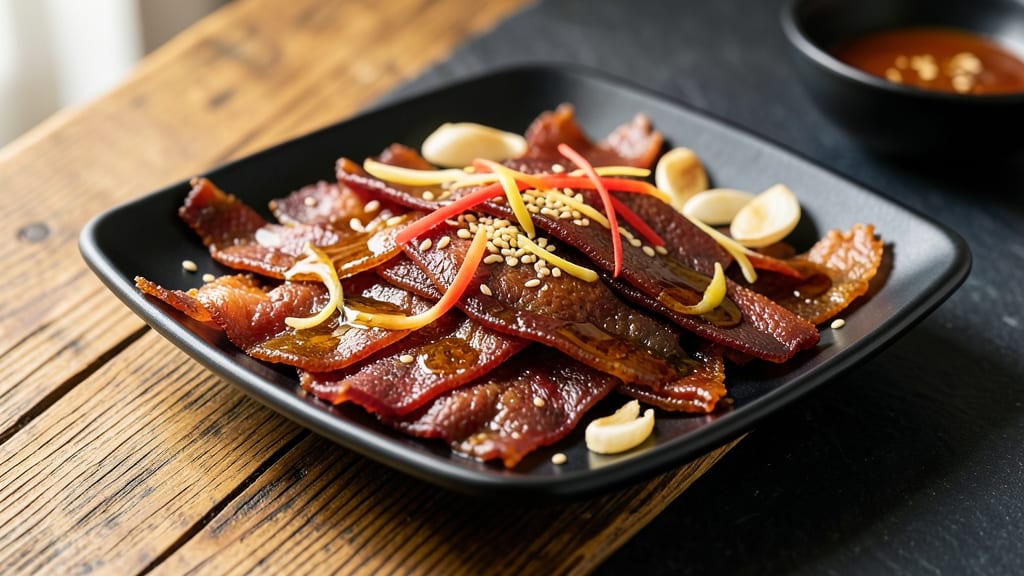
This Asian beef jerky recipe transforms tough cuts of beef into crispy, savory-sweet chews using your dehydrator—no smoker required. The secret lies in a marinade that balances sweet soy sauce, aromatic ginger, and a touch of sesame oil for depth, while precise dehydration creates that perfect chewy texture.
I developed this method after testing countless variations, and it consistently delivers restaurant-quality jerky at home.
The marinade does the heavy lifting here, with a blend of soy sauce, brown sugar, fish sauce, and garlic that infuses the beef with layers of umami and caramelized sweetness.
Thinly sliced against the grain ensures tender bites, while dehydrating at 160°F for 4 hours guarantees crispy edges without drying out the center. This recipe works with any lean cut—flank steak, top round, or even pre-cooked beef for extra safety.
What you’ll end up with is jerky that’s crispy on the outside and chewy on the inside, with a flavor profile that’s both familiar and exciting—think sweet, smoky, and slightly spicy all at once.
The marinade’s complexity shines through, making this jerky perfect for snacking, hiking trips, or gifting. It’s also a great way to use up beef that might otherwise go to waste.
For best results, marinate the beef overnight for maximum flavor penetration, and store finished jerky in an airtight container for up to two weeks. The dehydrator method ensures consistent results every time, and the flavors only deepen as the jerky sits. Let’s get started on your next batch!
Ingredients for asian beef jerky recipe dehydrator
Sweet, savory, and perfectly crispy—this Asian beef jerky transforms simple ingredients into addictive chews.
| Ingredient | Amount | Notes |
|---|---|---|
| Lean Beef (Flank Steak or Top Round) 🥩 | 1 ½ lb | Thinly sliced against grain |
| Soy Sauce 🍶 | ½ cup | Low-sodium preferred |
| Brown Sugar 🍚 | ½ cup | Light or dark variety |
| Fish Sauce 🍶 | 2 tbsp | Red Boat brand recommended |
| Sesame Oil 🫒 | 1 tbsp | Toasted sesame oil preferred |
| Fresh Ginger 🌿 | 2 tbsp | Grated, aromatic |
| Garlic Cloves 🧄 | 4 cloves | Minced, aromatic |
| White Wine Vinegar 🍶 | 1 tbsp | Or apple cider vinegar |
| Ground Black Pepper 🌶️ | 1 tsp | Freshly ground preferred |
| Sesame Seeds 🌾 | 1 tbsp | Toasted for garnish |
| Red Pepper Flakes 🌶️ | ½ tsp | Adjust for heat preference |
| Kosher Salt 🧂 | 1 tsp | For seasoning |
The beef is everything here. Flank steak or top round are your best bets—lean but flavorful. Look for cuts with good marbling at Costco or your butcher shop. If you're using pre-cooked beef, pat it dry first—moisture is the enemy of crispy jerky. Slice thinly against the grain (about 1/8-inch thick) for that signature chewy texture. I always marinate mine overnight, but if you're short on time, 4 hours minimum still works wonders. The soy sauce and fish sauce combo is non-negotiable for that authentic umami punch—Red Boat brand is my go-to for fish sauce, but any good quality will do.
No sesame oil? Avocado oil at half the amount works in a pinch, but you'll lose that nutty depth. Fresh ginger and garlic are ideal, but powdered ginger at one-third the amount saves time. The red pepper flakes can be swapped for gochugaru (Korean chili flakes) if you're feeling adventurous. For the brown sugar, coconut sugar gives a slightly caramelized flavor that's hard to beat. Pro tip: Toast your sesame seeds in a dry pan for 30 seconds before sprinkling—they'll add an extra layer of crunch. And if you're worried about fish sauce being too strong, start with 1 tbsp and adjust to taste after marinating.
Marinated beef keeps in the fridge for up to 3 days before dehydrating—flavor only gets better with time. Once dehydrated, store your jerky in an airtight container with parchment paper to prevent sticking. It'll stay crispy for 2 weeks at room temperature or 3 months in the freezer. The first batch might be your favorite—double the recipe while you're at it. And if you're feeling extra fancy, package some in vacuum-sealed bags for gifts. Trust me, this jerky disappears faster than you can say 'crispy chew!'
Why You'll Love This Recipe
- No-Fuss Prep: I slice the beef thin—like a professional butcher, not a surgeon—then toss it in a bowl with soy sauce, brown sugar, and fish sauce. Honestly, the hardest part is waiting for the dehydrator to finish, not the marinating.
- Umami Bomb: That combo of soy, fish sauce, and sesame oil? It’s savory, salty, and just a little funky—like a cross between beef jerky and a takeout stir-fry. The brown sugar caramelizes into a sticky, addictive crust that makes every bite worth the wait.
- Snack Attack Ready: I keep a stash in my gym bag, my desk drawer, and my kids’ lunchboxes. It’s perfect for road trips, hiking, or when I’m too lazy to open a full meal—just grab and go, no reheating needed.
- Budget Stretch: A pound of flank steak goes a long way when sliced thin, and the marinade costs pennies. I make big batches, freeze extras, and never pay full price for jerky again—plus, it’s way tastier than store-bought.
Step-by-step instructions for Asian beef jerky
Here's how to transform lean beef into crispy, savory-sweet jerky using your dehydrator.
Prep the Beef for Perfect Texture
Start with the 1.5 lb lean beef (flank steak or top round) and freeze it solid for 30 minutes. This makes slicing against the grain much easier. Use a sharp knife or meat slicer to cut the beef into ¼-inch thick strips—thinner than traditional jerky for faster dehydrating and extra crispiness.
Lay the strips on a plate and let them sit at room temperature for 15 minutes to slightly relax the fibers. This prevents curling during dehydration. While they're resting, prepare your marinade—this is where all the flavor magic happens.
Mix the Flavor-Packed Marinade
In a large bowl, combine the 0.5 cup soy sauce, 0.5 cup brown sugar, 2 tbsp fish sauce, 1 tbsp sesame oil, 2 tbsp freshly grated ginger, 4 minced garlic cloves, 1 tbsp white wine vinegar, 1 tsp ground black pepper, 0.5 tsp red pepper flakes, and 1 tsp kosher salt. Whisk until the brown sugar dissolves completely—this ensures even flavor distribution.
The marinade should be thick but pourable. If it's too thick, add 1-2 tablespoons of warm water to loosen it. This blend creates that perfect balance of sweet, salty, umami, and just a hint of heat that defines Asian jerky. Taste it—you want it bold but not overpowering.
Marinate and Prep for Dehydrating
Place the beef strips in a resealable plastic bag and pour the marinade over them. Seal the bag and massage the marinade into the beef, coating every strip thoroughly. Refrigerate for at least 4 hours, but overnight is ideal if you have time. The longer it marinates, the deeper the flavor penetration.
After marinating, remove the beef and pat it dry with paper towels—this is crucial for crispiness. Arrange the strips on dehydrator trays, leaving ½-inch space between each piece. They'll shrink as they dry, but you want them to have room to crisp without sticking together.
Dehydrate to Crispy Perfection
Set your dehydrator to 160°F and let it preheat for 10 minutes. Arrange the beef strips on the trays in a single layer, ensuring they don't overlap. Place the trays in the dehydrator and set the timer for 4 hours, but check them after 3 hours—this is when the magic happens.
After 3 hours, the jerky should be firm but still slightly pliable. Flip each piece and return to the dehydrator for the remaining time. You're aiming for jerky that's completely dry to the touch with a deep mahogany color and crisp edges. If it's not crispy enough after 4 hours, extend the time in 30-minute increments until it reaches your desired texture.
Cool and Finish with Sesame Seeds
Once fully dehydrated, remove the jerky from the dehydrator and let it cool completely on a wire rack. This prevents condensation from making the jerky soggy. While it cools, toast 1 tbsp sesame seeds in a dry skillet over medium heat for 2-3 minutes until golden and fragrant.
Sprinkle the toasted sesame seeds over the cooled jerky just before serving. These add a delightful crunch and nutty aroma that complements the savory-sweet flavors. Store any leftovers in an airtight container for up to 2 weeks—though they'll likely disappear much faster!
Pro Tips For Making Asian Beef Jerky Recipe Dehydrator
- Trim Thin, Not Perfect: Slice your flank steak or top round against the grain to ¼-inch thickness—no need for surgical precision, but don’t let strips exceed ⅜-inch or they’ll dry unevenly. I used to obsess over even edges, but jerky’s texture hides imperfections—just keep it consistent.
- Marinate Cold, Then Warm: Let the beef soak in the soy-fish-sugar mix overnight in the fridge, then pull it out and let it sit at room temp for 30 minutes before dehydrating. The cold start keeps the meat tender, while the warm-up ensures the marinade clings better—no sticky messes on your dehydrator trays.
- Skip the Crowding: Overlap strips by no more than 50%—any tighter and the edges won’t dry properly, leaving you with chewy bits. I learned this after a batch where half the jerky tasted like undercooked meat. Space them like shingles on a roof.
- Sesame Oil Last: Drizzle the sesame oil after the beef is already in the dehydrator—it burns fast and turns bitter if heated too long. A light coat (just enough to glisten) adds flavor without overpowering. Trust me, the last thing you want is nutty, acrid jerky.
Pro cooking tips for this recipe
Marinade Mastery
The marinade is where the magic happens, so don't skimp on time or ingredients. I always let the beef soak overnight for maximum flavor infusion, but if you're short on time, at least 4 hours works wonders.
The soy sauce and fish sauce combo is non-negotiable—it delivers that authentic umami punch that defines Asian flavors. Use Red Boat brand fish sauce for the best quality, but any good brand will do.
For extra depth, add 1 tsp of five-spice powder to the marinade for a warm, aromatic twist. 🌶️
Pro tip: If your marinade seems too thick, loosen it with 1-2 tablespoons of warm water to ensure even coating. And always taste the marinade before applying—it should be bold but not overpowering.
The brown sugar caramelizes during dehydration, adding a subtle sweetness that balances the savory notes perfectly. Don't substitute with white sugar; the molasses in brown sugar is key for that rich flavor.
Slicing Secrets
Freezing the beef solid for 30 minutes before slicing makes all the difference—it keeps the strips from curling during dehydration. Use a sharp knife or meat slicer to cut ¼-inch thick strips against the grain. Thinner slices dehydrate faster and result in extra crispy jerky.
If you're using a knife, angle it slightly to create even slices. For extra precision, a mandoline slicer with a meat attachment works like a dream. ✨
After slicing, let the strips rest at room temperature for 15 minutes before marinating. This relaxes the muscle fibers, preventing curling and ensuring even drying. Pat the beef very dry with paper towels before dehydrating—moisture is the enemy of crispy jerky.
The drier the beef, the better the final texture. I like to use two layers of paper towels to soak up every bit of excess liquid.
Dehydrator Settings
Set your dehydrator to 160°F—this is the sweet spot for crispy edges without drying out the center. Preheat for 10 minutes to ensure consistent temperature. Arrange the beef strips on trays with ½-inch space between each piece—they'll shrink as they dry, but you want them to crisp without sticking.
If your dehydrator has adjustable racks, place the trays in the middle position for even airflow. 🌡️
Check the jerky after 3 hours—it should be firm but still slightly pliable. Flip each piece and return to the dehydrator for the remaining 1 hour. The goal is jerky that's completely dry to the touch with a deep mahogany color and crisp edges.
If it's not crispy enough after 4 hours, extend the time in 30-minute increments until perfect. Over-dehydrating can make jerky brittle, so keep an eye on it.
Crispy Finish
Once fully dehydrated, let the jerky cool completely on a wire rack—this prevents condensation from making it soggy. While it cools, toast 1 tbsp sesame seeds in a dry skillet over medium heat for 2-3 minutes until golden and fragrant.
Sprinkle them over the cooled jerky just before serving for a delightful crunch and nutty aroma that elevates the flavors. 💫
For extra crispiness, broil the jerky for 1-2 minutes in the final step—just watch it closely to avoid burning. Store leftovers in an airtight container with parchment paper to prevent sticking.
It'll stay crispy for 2 weeks at room temperature or 3 months in the freezer. Double the recipe while you're at it—this jerky disappears faster than you can say "crispy chew!"
Nutrition facts
Frequently asked questions
Can I use pre-cooked beef for this Asian jerky?
Pre-cooked beef works perfectly and is actually safer for beginners. Use fully cooked, chilled beef like top round roast or flank steak that's been cooked to 165°F and sliced ¼-inch thick. Just pat it extra dry before marinating to ensure crispy results. The flavor will be slightly milder than raw jerky but still delicious.
What if my dehydrator doesn't go up to 160°F?
No problem! Use the highest setting available (usually 155°F or 165°F) and adjust the time accordingly. If your dehydrator only goes to 145°F, extend the drying time to 5-6 hours and check frequently. The key is to reach 140°F internal temperature for safe jerky—use a meat thermometer to verify.
How do I prevent the jerky from sticking to the dehydrator trays?
Line your dehydrator trays with parchment paper or use silicone dehydrator sheets for easy removal. If you notice sticking, try lightly oiling the trays with sesame oil before adding the beef. Never skip the cooling step—letting jerky cool completely on a wire rack prevents condensation that causes sticking.
Can I make this jerky spicier or sweeter? Easily! For more heat, add 1-2 extra tbsp of red pepper flakes or ½ tsp of gochugaru to the marinade. For extra sweetness, increase the brown sugar to ⅔ cup or add 1 tbsp of honey.
Why did my jerky turn out rubbery instead of chewy?
Rubbery jerky usually means it was over-dehydrated or sliced too thick. For perfect chewiness, stick to ¼-inch slices and dehydrate at 160°F for 4 hours max. If your jerky feels dry, try reducing the time by 30 minutes next time. Also ensure your beef was properly marinated and patted very dry before dehydrating.