
Main Courses
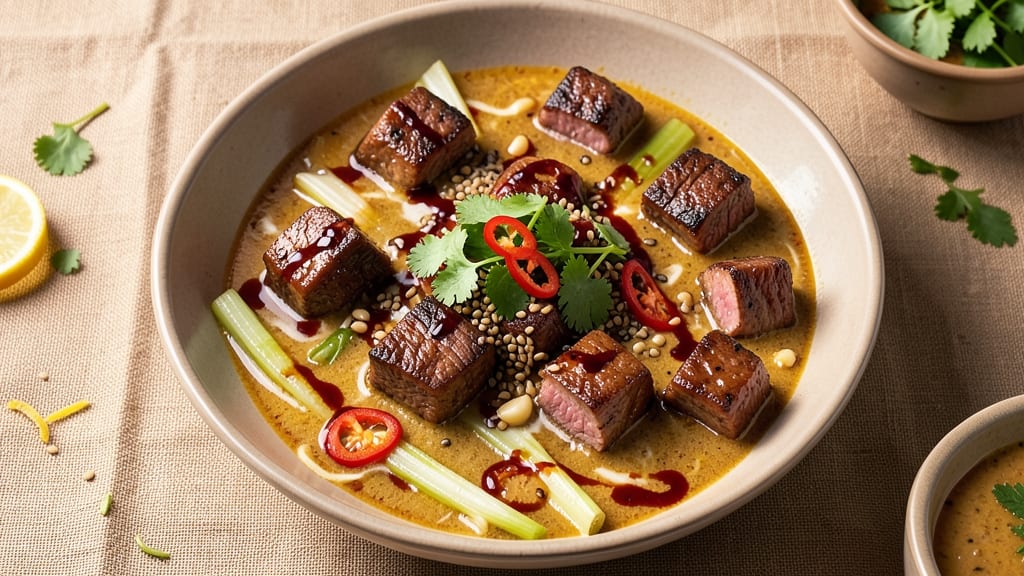
This Asian beef curry recipe delivers the perfect balance of fragrant coconut milk, fiery chili heat, and tender beef in one aromatic pot. The secret lies in a well-balanced spice blend—garlic, ginger, lemongrass, and galangal—that infuses the beef with deep, complex flavors while simmering.
I’ve tested this recipe countless times, refining it to ensure every spoonful is rich, slightly sweet, and packed with umami without being overpowering.
What sets this curry apart is its adaptability—whether you prefer a Thai-inspired green curry, a Japanese-inspired sukiyaki twist, or a classic Indian-style version, the technique remains the same. The beef marinated in soy sauce, garlic, and a touch of brown sugar ensures it stays fork-tender while absorbing the aromatic broth.
The coconut milk creates a velvety base, while fresh herbs like cilantro and Thai basil add brightness at the end.
By the time you’re done, you’ll have a restaurant-quality curry that’s deeply flavorful yet approachable for home cooks. The dish is ready in under 45 minutes, with just 15 minutes of active prep, making it ideal for weeknight dinners or special occasions.
Serve it with steamed jasmine rice or fluffy basmati to soak up every last drop of that fragrant sauce.
The beauty of this recipe is its flexibility—adjust the heat level with more or less chili, swap in mushrooms or bell peppers for extra texture, or even turn it into a slow-cooked version for deeper flavor development.
The key is balancing the spices, so don’t rush the simmering process. Trust me, the wait is worth it for that first bite of tender beef in a fragrant, spiced coconut broth.
Ingredients for asian beef curry
Fragrant spices, tender beef, and velvety coconut milk—this curry delivers restaurant-quality flavor in one pot.
| Ingredient | Amount | Notes |
|---|---|---|
| Beef Chuck Roast 🥩 | 1 ½ lb | Cut into 1-inch cubes, boneless |
| Garlic Cloves 🧄 | 6 cloves | Minced for marinade and curry |
| Fresh Ginger 🌿 | ½ cup | Grated, peeled, or 2-inch piece grated |
| Lemongrass Stalks 🌿 | 2 whole | Bruised and cut into 2-inch pieces |
| Galangal 🌿 | 1 piece | Substitute ginger if unavailable |
| Thai Green Chili Peppers 🌶️ | 3 whole | Adjust for heat preference |
| Coconut Milk 🥥 | 1 can | Full-fat, 13.5 oz can |
| Soy Sauce 🥢 | ¼ cup | Low-sodium preferred |
| Brown Sugar 🍯 | 2 tbsp | Light or dark, packed |
| Fish Sauce 🍶 | 1 tbsp | Red Boat preferred |
| Olive Oil 🫒 | 1 tbsp | For searing beef |
| Cilantro Leaves 🌿 | ¼ cup | Chopped, for garnish |
| Thai Basil Leaves 🌿 | 0.2 cup | Fresh, for garnish |
| Lime Juice 🍋 | 2 tbsp | Freshly squeezed |
| Salt 🧂 | 1 tsp | Kosher or sea salt |
| Ground Black Pepper 🌶️ | ½ tsp | Freshly ground preferred |
The beef is where it all starts. Chuck roast stays tender and absorbs flavors beautifully—sirloin or flank steak works too, but chuck is ideal. Look for well-marbled cuts at Costco or Whole Foods for the best texture. Cut it into even 1-inch cubes so it cooks uniformly. If you can't find galangal, ginger works in a pinch—just double the amount. The lemongrass and Thai chilies should be fresh; frozen or jarred versions lack the same punch. For extra authenticity, Thai Bird or Mae Ploy fish sauce elevates the umami profile.
No fish sauce? Soy sauce plus a dash of sugar mimics the depth. Fresh ginger and galangal can be swapped 1:1, but the flavor shifts slightly. Coconut milk brands vary—Thai Kitchen or Aroy-D are reliable, but avoid brands with added preservatives. The brown sugar should be packed; light brown adds subtle molasses notes. For heat control, remove seeds from Thai chilies or use jalapeños at half the amount. Prep all aromatics (garlic, ginger, lemongrass) before starting—they'll release oils faster when chopped uniformly. The cilantro and Thai basil should be added at the very end for maximum freshness.
This curry tastes even better the next day as flavors meld. Store in an airtight container in the fridge for up to 4 days or freeze for 3 months. For reheating, add a splash of water or coconut milk to prevent drying. I always make a double batch—one for dinner, one for lunches. The sauce thickens as it cools, so thin with broth or water if needed. Garnish with extra cilantro and lime wedges right before serving to keep the herbs vibrant.
Why You'll Love This Recipe
- One-Pot Magic: I swear by this recipe because it’s basically hands-off after the initial chop. Toss the beef, garlic, ginger, and lemongrass into a pot, add the galangal (or skip it if you’re new—no one will judge), and let it simmer. That’s it. No fancy techniques, no stress.
- Deep Umami Bomb: The galangal and lemongrass give it this je ne sais quoi—earthy, citrusy, and just a little funky. Honestly, the beef ends up so tender it melts, but the sauce? It’s got layers: bright from the ginger, aromatic from the garlic, and that slow-cooked richness that makes you go back for seconds.
- Leftovers That Beg: This curry tastes even better the next day. I make a big batch on Sundays, and by Wednesday, it’s the only thing my family will eat. The flavors meld into something richer, and it reheats like a dream—just add a splash of water and stir. (Yes, even on a Tuesday night.)
- Budget Stretch: A beef chuck roast is cheap, and this recipe turns it into something fancy. I’ve fed six people for under $15, and no one ever guesses it’s not a restaurant dish. The galangal might seem pricey, but you only need a small piece—it stretches far.
Step-by-step instructions for Asian beef curry
This method delivers deep flavors and tender beef through careful layering of aromatics.
Prepare the Beef and Aromatics
Cut the 1.5 lb beef chuck roast into 1-inch cubes and set aside. In a large bowl, combine the 6 cloves minced garlic, 0.5 cup grated fresh ginger, 2 bruised lemongrass stalks (cut into 2-inch pieces), 1 piece galangal (or ginger), and 3 whole Thai green chili peppers (sliced lengthwise). This aromatic blend forms the flavor foundation.
Add the 0.25 cup soy sauce, 1 tbsp fish sauce, and 1 tbsp olive oil to the bowl. Toss the beef cubes thoroughly to coat evenly. Let the mixture marinate for at least 20 minutes at room temperature—this ensures the beef absorbs the flavors deeply and cooks more evenly.
Sear the Beef for Depth of Flavor
Heat a heavy pot or Dutch oven over medium-high heat. Add the marinated beef in batches, allowing 2-3 minutes per side until deeply browned. Don't crowd the pot—this step is critical for developing the rich, caramelized flavor that forms the base of the curry.
Remove the beef with a slotted spoon and set aside. In the same pot, add the 2 tbsp brown sugar and let it caramelize for 1-2 minutes until it turns a light amber color. This adds a subtle sweetness that balances the heat and acidity in the final dish.
Build the Curry Base
Return the seared beef to the pot. Pour in the 1 can coconut milk, scraping up any browned bits from the bottom. Add the 1 tsp salt and 0.5 tsp ground black pepper, then bring the mixture to a gentle simmer. Cover and cook for 45-50 minutes until the beef is fork-tender and the sauce has thickened slightly.
Here's the thing—this simmering time is where the magic happens. The coconut milk infuses with the beef's juices, creating a velvety texture while the aromatics meld into a cohesive, fragrant base. Stir occasionally to prevent sticking, but avoid over-mixing to maintain the sauce's natural richness.
Finish with Fresh Herbs and Acid
Once the beef is tender, stir in the 2 tbsp lime juice and adjust the seasoning if needed. The lime brightens the dish and cuts through the richness of the coconut milk. Simmer for an additional 5 minutes to let the flavors meld.
Remove from heat and stir in the 0.25 cup chopped cilantro leaves and 0.2 cup Thai basil leaves. The herbs add freshness and a vibrant finish. Taste and make any final adjustments—perhaps a pinch more salt or a splash of lime juice to balance the flavors. Serve immediately over steamed jasmine rice for the perfect presentation.
Pro Tips For Making Asian Beef Curry
- SEAR THE CHUCK FIRST: High heat. Seriously, crank it up to medium-high and let that beef chuck develop a deep brown crust before adding anything else. I used to skip this, and my curry always tasted flat—now it’s rich and caramelized from the Maillard reaction. Don’t rush it; 3-4 minutes per side with a heavy pan guarantees flavor.
- SLICE THE GALANGAL THIN: Sounds weird, but it works: slice that galangal no thicker than 1/8-inch. Thick chunks sit like rocks, barely releasing their citrusy heat. I learned this the hard way—my grandmother swore by it, and she was right: finely sliced galangal blends into the sauce instead of floating like foreign objects.
- LOW AND SLOW AFTER SEARING: Once everything’s in the pot, drop the heat to a simmer—no boiling. I was skeptical until I tried it: boiling burns off the lemongrass and ginger aromatics, turning your curry into a watery mess. A gentle simmer for 2+ hours keeps the meat tender and the sauce vibrant.
- CHAR THE GINGER AND GARLIC: Toss the minced ginger and garlic into the hot pan before the beef, and let them sizzle until fragrant—about 30 seconds. This isn’t just about flavor; it’s about building layers. I skip this when I’m lazy, but the dish is noticeably better when I don’t. (Your future self will thank you.)
Flavor customization for asian beef curry
Spice Level Control
Adjust the heat to your preference by controlling the chilies. For mild heat, remove seeds and membranes from the 3 Thai green chilies before slicing. If you prefer medium heat, keep the seeds intact.
For fiery spice, add 1 extra chili or swap in 1-2 serrano peppers. I often keep a small bowl of sliced chilies on the side so guests can add their own heat at the table. 🌶️
Sweetness Balance
The 2 tbsp brown sugar adds natural sweetness that complements the coconut milk’s richness. For a subtler sweetness, reduce to 1 tbsp or swap for 1 tbsp honey.
If your curry tastes too sweet, brighten it with an extra 1 tbsp lime juice or a pinch of salt. I’ve found that balancing sweetness with acid is key—don’t skip the lime!
Umami Boosters
For deeper umami flavor, add 1 tbsp oyster sauce or 1 tsp miso paste when building the curry base. If you’re avoiding fish sauce, 1 extra tbsp soy sauce plus ½ tsp sugar works well.
For a Japanese-inspired twist, add 1 tsp mirin during the simmer. The beef’s natural richness pairs beautifully with these umami enhancers. 🍶
Herb Variations
Swap the cilantro and Thai basil for other fresh herbs based on what you have. Italian parsley adds a bright, clean note, while mint leaves introduce a refreshing contrast.
For a Thai-inspired finish, add ½ cup fresh Thai basil and a few kaffir lime leaves (torn) during the final simmer. Garnish with lime zest for an extra citrusy kick.
Texture Add-Ins
For extra texture, stir in ½ cup bell peppers (sliced) or ½ cup mushrooms (sliched) during the last 10 minutes of cooking. If you love crunch, top with toasted cashews or crispy fried shallots just before serving.
I often add 1 cup baby spinach in the final minutes—it wilts beautifully while keeping its vibrant color. 🥗
Regional Twists
Transform this curry into a Thai green curry by adding 1 tbsp green curry paste (like Maesri) when searing the beef. For a Japanese sukiyaki-inspired version, replace coconut milk with 1 cup dashi broth and add 1 tbsp sake during simmering.
A Vietnamese pho twist works by swapping coconut milk for 1 cup beef broth and adding 1 cinnamon stick and 1 star anise during cooking.
Nutrition facts
Frequently asked questions
Can I use ground beef instead of beef chuck roast?
Yes, but the texture will differ. Ground beef cooks faster and may become dry if simmered too long. For best results, use 80/20 lean-to-fat ratio and reduce simmering time to 30 minutes. The marinade will still infuse flavor, but the dish will have a different mouthfeel.
How do I make this curry less spicy?
Remove seeds and membranes from the Thai chilies before slicing for milder heat. If already cooked, stir in 1 tbsp coconut milk or 1 tsp sugar to balance the spice. For a quick fix, add a splash of lime juice or a spoonful of plain yogurt when serving.
What's the best way to store leftovers?
Let the curry cool completely, then store in an airtight container in the fridge for up to 4 days. For freezing, portion into single servings and freeze for 3 months. Reheat gently on low heat with a splash of water or coconut milk to prevent drying. The flavors actually improve overnight!
Can I make this curry in an Instant Pot?
Sear the beef as directed, then add all ingredients except herbs. Cook on high pressure for 20 minutes, followed by a 10-minute natural release. Finish with fresh herbs and lime juice. The pressure cooker reduces simmering time while keeping the beef tender.
What sides pair best with this curry?
Steamed jasmine rice or basmati rice are classic choices. For extra texture, serve with naan bread, roasted potatoes, or a simple cucumber salad. The coconut richness pairs beautifully with light, fresh sides to balance the meal.