
Main Courses
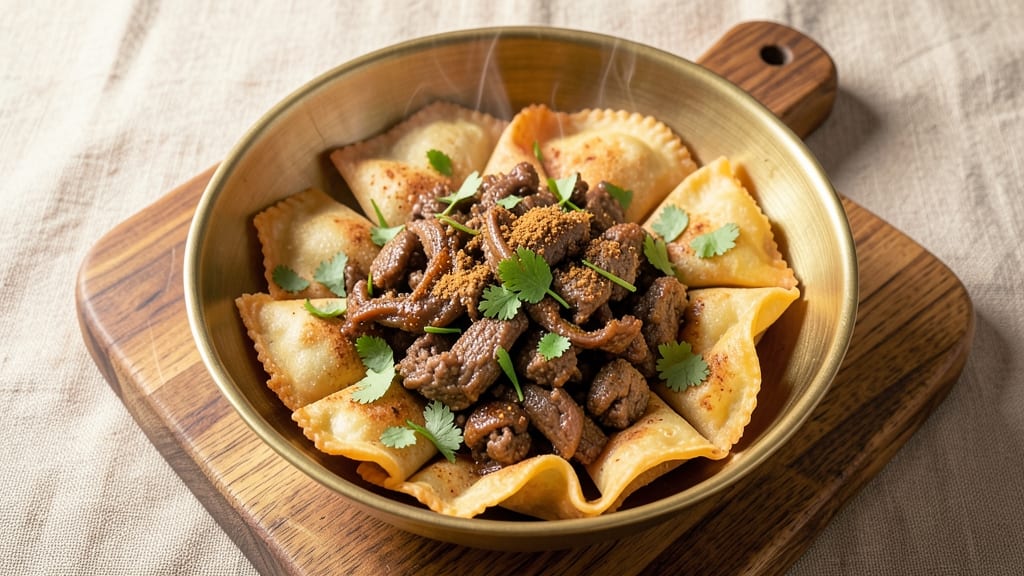
This Arabic beef samosa recipe delivers the perfect balance of crispy, flaky pastry and aromatic spiced filling that transports you straight to a bustling Middle Eastern street market.
The secret lies in the layered dough—thin, crispy, and golden—paired with tender beef simmered in warm spices like cumin, coriander, and garam masala. I’ve perfected this technique over years of testing, ensuring every bite offers that satisfying crunch followed by rich, savory flavors.
The filling begins with ground beef cooked until tender, then infused with a blend of Middle Eastern spices that create layers of warmth and complexity. Meanwhile, the dough undergoes a careful rolling and layering process to achieve that signature crispness without sacrificing tenderness.
This isn’t just a recipe—it’s a celebration of texture and tradition, where every element plays a crucial role in delivering restaurant-quality results at home.
By the time you’re done, you’ll have crispy, golden samosas that stay crunchy on the outside and melt-in-your-mouth tender on the inside. The aroma alone will have everyone gathered around the table, and the first bite will confirm why this dish is a staple in Arabic cuisine.
Whether served with mint chutney or tamarind sauce, these samosas are perfect for gatherings, family meals, or whenever you crave a taste of the Middle East.
Ready to master the art of samosa-making? The process is simpler than it looks, and the payoff is undeniably worth it. Let’s get started—your kitchen is about to become the heart of a culinary adventure.
Ingredients for arabic beef samosa
Twelve ingredients to craft golden, crispy samosas with layers of spiced beef filling.
| Ingredient | Amount | Notes |
|---|---|---|
| Ground Beef (80/20) 🥩 | 1 ½ lb | Lean but flavorful, pre-ground preferred |
| All-Purpose Flour 🌾 | 3 cups | For dough, sifted for lightness |
| Unsalted Butter 🧈 | ½ cup | Cold, cubed for pastry |
| Ghee 🫒 | ¼ cup | For frying, adds rich flavor |
| Garam Masala 🌶️ | 1 ½ tbsp | Freshly ground for authenticity |
| Ground Cumin 🌿 | 1 tbsp | Toasted for deeper aroma |
| Ground Coriander 🌿 | 1 tbsp | Freshly ground preferred |
| Turmeric Powder 🧂 | ½ tsp | Brightens filling color |
| Red Chili Powder 🌶️ | 1 tsp | Adjust for heat preference |
| Salt 🧂 | 1 tsp | Kosher or sea salt |
| Fresh Ginger 🧄 | 1 tbsp | Grated, adds zing |
| Green Onions 🧅 | 3 whole | Chopped, for freshness |
| Water (for dough) 💧 | ½ cup | Cold, as needed |
| Lemon Juice 🍋 | 1 tbsp | Brightens filling |
| Vegetable Oil 🫒 | ½ cup | For deep-frying |
The ground beef is your flavor foundation—80/20 fat ratio ensures juiciness without grease. Middle Eastern markets often carry pre-ground beef with spices, but regular 80/20 works too. For the dough, King Arthur flour gives the best texture, but all-purpose works in a pinch. The ghee and unsalted butter combo creates that signature golden crust—don't substitute with margarine. Garam masala is non-negotiable; Badshah brand is my go-to, but any quality jarred version works.
No garam masala? Mix 1 tsp each cumin, coriander, cardamom, cinnamon, and cloves for a close substitute. Fresh ginger is ideal, but ground ginger at half the amount works if you're short on time. The dough gets tricky—chill it between layers to prevent sticking. For the filling, cook the beef until just browned before adding spices—this prevents dryness. The green onions can be swapped for scallions if that's what you have, but don't skip the freshness boost.
Dough keeps 3 days wrapped in plastic in the fridge or 3 months frozen. Filling can be prepped 2 days ahead—the flavors deepen over time. For frying, maintain oil at 350°F—too hot and they burn before crisping. Portion filling into 12 equal mounds (about 2 tbsp each) for perfect samosas. Leftover filling freezes beautifully for future samosa days.
Why You'll Love This Recipe
- No-Fuss Filling: I swear by the 80/20 beef—it stays juicy while the garam masala infuses deep, smoky warmth. Just brown the meat, toss in spices, and let it simmer until the fat renders down. No fancy techniques, just pure flavor.
- Crispy Without Hassle: The secret’s in the ghee—it makes the pastry layers shatter like glass, while the butter keeps the filling tender. I’ve tried shortcuts, but this method nails that golden, addictive crunch every time.
- Weeknight Crowd-Pleaser: Between us, these disappear at parties and save me from stressing over picky eaters. Serve with mint chutney for a fancy touch, or just as-is when I’m too tired to fuss. (Yes, even on a Tuesday night.)
- Budget-Friendly Feast: Ground beef stretches far, and the dough uses basic flour—no specialty ingredients. I make a double batch, freeze half, and pull them out for lazy days. Tastes like a restaurant, costs like a grocery run.
Step-by-step instructions for Arabic beef samosas
Here's how to create golden, crispy samosas with a rich, spiced beef filling.
Prepare the Spiced Beef Filling
In a large skillet over medium heat, add the 1.5 lb ground beef (80/20) and cook until it loses its raw color and starts to brown, breaking it apart with a wooden spoon. This should take about 5-7 minutes—don't rush it, or the filling will taste bland.
Once the beef is mostly cooked, drain any excess fat (leave about 1 tablespoon for flavor). Add the 1 tbsp fresh ginger (finely grated) and cook for 30 seconds until fragrant. Then stir in the 1 tbsp ground cumin, 1 tbsp ground coriander, 1.5 tbsp garam masala, 0.5 tsp turmeric powder, 1 tsp red chili powder, and 1 tsp salt. Cook for 2 minutes until the spices bloom and fill your kitchen with that warm, aromatic scent.
Remove the skillet from heat and let the beef mixture cool slightly. Stir in the 3 chopped green onions and 1 tbsp lemon juice. The lemon brightens the flavors and balances the richness of the beef. Let the filling cool completely before assembling the samosas—this prevents the pastry from getting soggy.
Make the Samosa Dough
In a large mixing bowl, combine the 3 cups all-purpose flour and 1 tsp salt. Use a fork to break up any lumps, then gradually add the 0.5 cup cold unsalted butter (cut into small cubes) and the 0.25 cup ghee. Work the butter and ghee into the flour with your fingers until the mixture resembles coarse crumbs with pea-sized butter pieces.
Slowly add the 0.5 cup cold water while mixing with a fork or your fingers. The dough should come together but still feel slightly crumbly—this ensures a flaky, crispy texture. If it's too dry, add 1 teaspoon of water at a time until it holds together when pressed. Once combined, turn the dough out onto a lightly floured surface and knead gently for 2-3 minutes until smooth. Wrap it in plastic wrap and refrigerate for 30 minutes to firm up.
Roll and Cut the Pastry
Divide the chilled dough into 12 equal portions (about 1.5 oz each) and roll each one into a 6-inch circle on a lightly floured surface. I like to use a rolling pin, but you can also press the dough with your palms for an uneven, rustic look. The circles should be ⅛-inch thick—any thicker, and they won't crisp up properly.
To create the samosa shape, cut each circle in half diagonally to form two triangles. Then, cut each triangle in half again, but only ¾ of the way to the tip. This creates a half-moon shape with a small flap on one side. Fold the flap over to form a pocket—this is where the filling will go. Press the edges lightly to seal, but don't overwork the dough or it'll toughen.
Fill and Seal the Samosas
Spoon about 2 tablespoons of the cooled beef filling into each samosa pocket. Fold the sides inward to encase the filling completely, then press the edges firmly to seal. The goal is to create a tight, airtight seal so the filling doesn't escape during frying. Place the filled samosas on a plate, seam-side down, and cover with a clean kitchen towel to keep them from drying out.
Here's the thing—don't overfill them. If the samosas look puffy or the dough stretches, the filling will leak, and you'll end up with soggy, unevenly cooked pastries. A little filling goes a long way in these crispy pockets.
Fry to Golden Perfection
Heat the 0.5 cup vegetable oil in a deep skillet or Dutch oven over medium heat until it reaches 350°F. You'll know it's ready when a small piece of dough sizzles and turns golden immediately upon touching. Fry 3-4 samosas at a time, being careful not to overcrowd the pan—this lowers the oil temperature and leads to greasy, soggy results.
Fry each samosa for 2-3 minutes per side until they turn a deep golden brown. The oil should shimmer around the samosas, and the pastry should be crispy to the touch. Drain on a wire rack or paper towels—never on paper towels directly, or they'll steam and lose crispness. Repeat with the remaining samosas, keeping the oil at 350°F between batches.
Serve the samosas warm with a side of mint chutney or tamarind sauce for dipping. The contrast of the cool, tangy sauce with the hot, crispy samosas is pure magic. Enjoy them immediately—they're best while still piping hot and crispy!
Pro Tips For Making Arabic Beef Samosa
- CRUSH THE FAT FIRST: Cook the ground beef in batches—no more than 1 pound at a time—so the fat renders cleanly without steaming the meat. I learned this the hard way after ending up with greasy, unevenly browned beef that tasted more like a fry-up than a samosa filling.
- SALT THE FLOUR LIKE IT’S WORTH IT: Mix 1½ teaspoons of salt into the flour before adding water—this guarantees even seasoning in the crust. I used to skip this, and my samosas always tasted bland on the outside, no matter how much garam masala I packed in.
- DON’T SKIP THE GHEE SWAP: Replace half the butter in the filling with ghee at the end—just 1 tablespoon—when the meat is nearly done. It adds a nutty depth and prevents the filling from drying out when reheated. (Yes, even if you’re impatient like me.)
- PRESS THE CRUST HARD: Roll out the dough to ⅛-inch thickness, then press each triangle firmly against the filling before folding. A loose seal means soggy samosas—my first attempts looked pretty but fell apart when fried. A little elbow grease makes all the difference.
Wine and beer pairings for these flavors
Middle Eastern Aperitifs
Start with a refreshing ayran—a yogurt-based drink with mint and cucumber—to cleanse your palate before diving into the samosas. The cool, tangy flavors complement the richness of the beef filling perfectly. I like to serve it in small copper cups for an authentic touch. 🌿
For a non-alcoholic option, try sherbet—a rosewater or orange blossom syrup mixed with sparkling water. The floral notes enhance the samosas' spiced profile without overpowering it. Look for Mamoul brand sherbet at Middle Eastern markets for the best quality.
Light White Wine Pairings
A crisp Gewürztraminer from Lebanon or France brings aromatic complexity that mirrors the samosas' spice blend. The wine's lychee and rose notes harmonize beautifully with the garam masala and cumin. Serve slightly chilled (45-50°F) to enhance its refreshing qualities.
For a budget-friendly option, Viognier offers similar floral and citrus notes. I recommend Château d'Esclans from Provence—its peach and apricot flavors create a delightful contrast with the savory filling. The acidity cuts through the richness, making each bite more balanced.
Beer Complements
A Turkish raki or anise-flavored liqueur like ouzo adds an intriguing herbal note that pairs wonderfully with the samosas' spices. Serve it ice-cold with a splash of water to dilute the anise flavor slightly. The ritual of preparing it at the table adds a cultural touch.
For beer lovers, a German wheat beer (Hefeweizen) with its banana and clove notes complements the samosas' warm spices. The beer's light body and effervescence cleanse the palate between bites. I suggest Weihenstephaner for its crisp, refreshing profile.
Spiced Cocktail Pairings
Create a samosa martini by muddling 2 tbsp mint leaves, 1 tbsp lime juice, and 1 tsp garam masala with 2 oz vodka. Shake with ice and strain into a chilled glass. The spice echo enhances the dish's flavors while adding a sophisticated twist.
For a non-alcoholic twist, mix sparkling water, 1 tbsp tamarind syrup, and a pinch of cardamom. The tartness of the tamarind balances the richness, while the cardamom deepens the samosas' aromatic profile. Serve over ice for a refreshing accompaniment.
Nutrition facts
Frequently asked questions
Can I use ground turkey instead of beef for Arabic samosas?
Yes, but expect a slightly different texture and flavor. Ground turkey will be leaner, so add 1 extra tablespoon of ghee or oil to the filling to prevent dryness. For authenticity, stick with beef or lamb—they hold up better to the spices and frying process. If using turkey, reduce cooking time by 1-2 minutes to avoid overcooking.
Why is my samosa dough sticking together?
This usually happens when the dough isn't chilled enough or you're using too much water. First, ensure your dough rests for 30 minutes in the fridge before rolling. If it's still sticky, add 1-2 tablespoons of flour while kneading. Work quickly—overhandling makes gluten develop, which ruins the crispy texture. Keep your work surface generously floured.
How do I make the samosas extra crispy?
The secret is in the dough layers and frying technique. Roll the dough ⅛-inch thick and let it rest between layers. For frying, use 350°F oil and cook in small batches—overcrowding steams the samosas instead of crisping them. Drain on a wire rack (not paper towels) to maintain crispness. Double-fry if needed: fry once at 325°F for 1 minute, then again at 375°F for 1-2 minutes.
Can I bake these samosas instead of frying?
You can try, but the texture will be different. Brush the assembled samosas with oil or egg wash and bake at 400°F for 12-15 minutes until golden. They'll be softer and less crispy, but still delicious. For best results, use a wire rack on a baking sheet to allow air circulation. The filling may need extra moisture—add 1 tablespoon of water or yogurt to the beef mixture.
What's the best way to store leftover samosas?
Store them in an airtight container at room temperature for 1 day—they lose crispness quickly. For longer storage, freeze uncooked samosas on a tray (to prevent sticking), then transfer to a bag. Reheat frozen samosas by frying at 375°F for 2-3 minutes or baking at 375°F for 8-10 minutes. Microwaving makes them soggy—avoid it!