
Main Courses
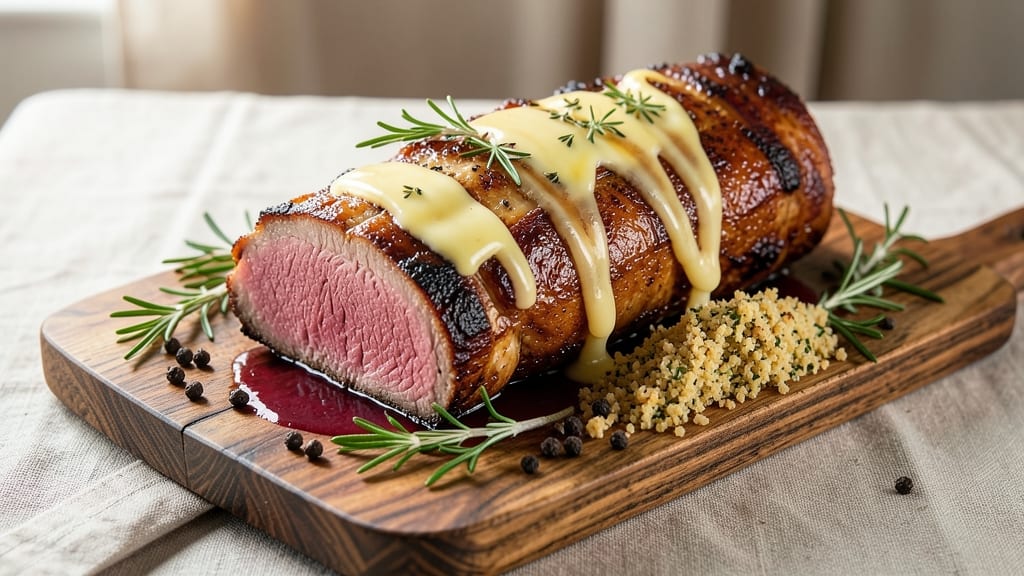
This Angus beef prime rib roast recipe delivers melt-in-your-mouth tenderness with a golden, buttery crust—no guesswork, just foolproof results. The secret lies in precise temperature control and a dry-brine technique that ensures juicy centers and perfect sear.
After years of perfecting this method, I’ve cracked the code for restaurant-quality prime rib at home, even for beginners.
What sets this apart is the reverse sear method, which guarantees even cooking without overcooking the exterior. Start with a low oven temperature to cook the meat slowly, then finish with a high-heat broil to create that coveted crust.
The result? A juicy, pink center with a caramelized exterior that holds up beautifully for slicing. Every bite stays tender, rich, and deeply flavorful.
Pair your prime rib with classic sides like horseradish cream sauce, roasted garlic mashed potatoes, or a crisp green salad to balance the richness. The crusty bread is essential for soaking up every last drop of those flavorful juices.
This isn’t just a holiday centerpiece—it’s a weeknight game-changer that impresses every time.
Ready in about 3 hours (including resting time), this recipe is designed for confidence. No fancy equipment needed—just patience and attention to temperature. Let’s get started on the perfect roast that’ll have everyone asking for seconds.
Ingredients for angus beef prime rib roast
Six ingredients transform raw prime rib into restaurant-quality perfection—juicy, buttery, and foolproof every time.
| Ingredient | Amount | Notes |
|---|---|---|
| Angus Beef Prime Rib Roast 🥩 | 6 lb | Bone-in, center-cut preferred |
| Kosher Salt 🧂 | 2 tbsp | Diamond Crystal preferred |
| Freshly Ground Black Pepper 🌶️ | 1 tbsp | Coarsely ground for texture |
| Unsalted Butter 🧈 | ½ cup | Cold, cut into small cubes |
| Fresh Rosemary 🌿 | ½ cup | Chopped, stems removed |
| Fresh Thyme 🌿 | ¼ cup | Leaves only, stems discarded |
| Garlic Cloves 🧄 | 8 cloves | Smashed, skin-on for flavor |
| Extra-Virgin Olive Oil 🫒 | 2 tbsp | High-quality, fruity variety |
| Yellow Mustard 🍯 | 1 tbsp | Dijon preferred for depth |
| Horseradish Cream Sauce 🧀 | 1 cup | Store-bought or homemade |
| Fresh Horseradish 🌶️ | ½ cup | Grated, for sauce variation |
| Heavy Cream 🥛 | ½ cup | Full-fat for richness |
| Fresh Parsley 🌿 | ¼ cup | Chopped, for garnish |
The Angus beef prime rib should be center-cut and bone-in—this ensures maximum tenderness and flavor. Source from a reputable butcher or high-end grocer like Whole Foods or Costco for premium quality. Look for rich marbling and a deep red color. If shopping online, Snake River Farms or Crowd Cow deliver dry-aged options that elevate this dish. The dry brine (kosher salt and pepper) is non-negotiable—it seasons deeply and prevents a soggy crust. Diamond Crystal kosher salt dissolves more slowly, so use it for optimal penetration. Fresh herbs should be bright green and firm—avoid wilted stems. Penzeys or local farmers markets are best for aromatic quality.
No Diamond Crystal salt? Morton kosher salt works, but use one-third more due to finer grain. Short on fresh rosemary? Dried rosemary at half the amount suffices, but toast it first for depth. Butter substitutes: olive oil or ghee can mimic richness, though texture differs slightly. For the horseradish cream sauce, pre-made versions (like Horseradish House) save time, but homemade with fresh horseradish and heavy cream delivers superior flavor. Mustard swaps: Dijon or whole-grain add complexity, while yellow mustard keeps it classic. The garlic can be roasted ahead for 10 minutes at 375°F (190°C) to mellow its bite—just smash the skins first for even cooking.
The prime rib should rest 15-20 minutes before slicing—this redistributes juices for maximum tenderness. Store leftovers airtight in the fridge for up to 5 days or freeze for 3 months (portion into individual servings for convenience). The herb butter (melted butter, herbs, garlic) can be prepped a day ahead and stored in the fridge—just reheat gently before basting. Horseradish sauce keeps 1 week refrigerated or 6 months frozen. For make-ahead meals, slice and reheat portions in a 350°F (175°C) oven for 10 minutes to maintain moisture. Never microwave—it turns the crust rubbery.
Why You'll Love This Recipe
- Five-Ingredient Magic: I swear, this recipe is foolproof—just the prime rib, salt, pepper, butter, and rosemary. That’s it. No fussing with fancy sauces or complicated techniques; the beef practically cooks itself while you sip wine and pretend you’re a sous chef.
- Butter-Basted Bliss: The moment you baste that rosemary-infused butter over the roast? Pure heaven. That crispy crust with the tender, melt-in-your-mouth center? It’s the kind of dish that makes people ask, “What’s in it?”—then take seconds anyway.
- Holiday or Tuesday: Between us, this roast feels like a special-occasion splurge but works for weeknights too. Serve it with mashed potatoes for a Sunday feast or slice it thin for sandwiches when you’re too tired to cook. It’s that adaptable.
- Leftovers Like Gold: One roast feeds a crowd, and the leftovers? Even better cold. Thinly sliced on toast with a sprinkle of flaky salt? My lunchbox secret weapon. (Yes, even on a Tuesday.)
Step-by-step instructions for buttery-crusted prime rib roast
Master this technique and you'll achieve a perfect balance of crispy exterior and melt-in-your-mouth tenderness.
Prepare the Prime Rib for Maximum Flavor and Crisp
Remove the prime rib from the refrigerator 2 hours before cooking to bring it to room temperature. This ensures even cooking throughout. Pat the roast dry with paper towels—moisture is the enemy of crispy crust. I use two layers of paper towels and press firmly to remove all surface moisture.
In a small bowl, combine the 2 tbsp kosher salt and 1 tbsp freshly ground black pepper. Rub this mixture all over the roast, including inside the bone cavity. The salt will draw out moisture initially, but this is essential for both flavor and that coveted crust. Let the seasoned roast rest uncovered on a wire rack for 30 minutes before roasting.
Create the Herb Butter Rub for Unmatched Flavor
While the roast rests, prepare the herb butter by combining the 0.5 cup unsalted butter (cut into small cubes), 0.5 cup chopped fresh rosemary, 0.25 cup fresh thyme, and the 8 smashed garlic cloves (skin-on) in a bowl. Mix well until the herbs are evenly distributed throughout the butter.
Spread this herb butter mixture evenly over the entire surface of the prime rib, pressing gently to adhere. The butter will melt slightly during roasting, creating a golden-brown crust while infusing the meat with aromatic flavors. This step is what separates good prime rib from exceptional prime rib.
Roast to Perfect Medium-Rare Doneness
Preheat your oven to 450°F. Place the roast fat-side up on a rack in a roasting pan. Roast for 20 minutes to sear the exterior and render some of the fat. After 20 minutes, reduce the oven temperature to 325°F and continue roasting.
For a 6 lb prime rib to reach medium-rare (internal temperature of 130°F), this will take approximately 1 hour 45 minutes to 2 hours. Use a meat thermometer inserted into the thickest part of the roast (avoiding the bone) to monitor the temperature. The roast is done when it reaches 130°F—it will continue to rise 5°F during resting.
Rest and Prepare the Horseradish Cream Sauce
Remove the prime rib from the oven and transfer it to a cutting board. Tent loosely with aluminum foil and let it rest for 30 minutes. This resting period allows the juices to redistribute throughout the meat, ensuring each slice remains moist and flavorful when sliced.
While the roast rests, prepare the horseradish cream sauce by combining the 1 cup horseradish cream sauce, 0.5 cup grated fresh horseradish, and 0.5 cup heavy cream in a saucepan. Warm gently over low heat for 3-4 minutes, stirring occasionally, until just heated through. Keep warm until ready to serve.
Slice and Serve with Elegant Presentation
After resting, slice the prime rib against the grain into ½-inch thick slices. The grain direction will be visible on the cut surface. Arrange the slices on a warm platter and drizzle generously with the warm horseradish cream sauce. Garnish with the 0.25 cup chopped fresh parsley for a pop of color and freshness.
Serve immediately with your choice of sides—roasted vegetables, creamy mashed potatoes, or a simple green salad. The prime rib should be juicy with a deep pink center, a crispy golden-brown crust, and a rich, herby flavor that carries through each bite. The horseradish cream sauce adds a tangy contrast that complements the richness of the beef perfectly.
Pro Tips For Making Angus Beef Prime Rib Roast
- Sear with a Lid: After searing your prime rib on high heat, slap a lid on the pan—no peeking. The trapped steam keeps the butter from burning while it bastes the meat, giving you that rich, glossy crust without turning your kitchen into a smokehouse. I learned this the hard way after nearly setting off the fire alarm.
- Salt the Butter: Mix a generous pinch of kosher salt into your softened butter before basting. The salt dissolves into the melted butter, so every brush coats the meat evenly—no dry patches, no missed spots. It’s the difference between "good" and "showstopper."
- Skip the Crowding: If you’re cooking multiple racks, resist the urge to stack them. Overcrowding drops the pan temperature, turning your sear into a sad, greasy steam bath. Work in batches—even if it means extra pans. Your crust will thank you.
- Rest Under Foil: After roasting, tent the prime rib loosely with foil and let it rest on a wire rack for 15–20 minutes. The foil keeps it warm while allowing air to circulate, so the juices redistribute without turning your slicing into a bloody mess. (Yes, even if you’re impatient like me.)
Perfect pairings for this dish
Classic Horseradish Cream
This tangy, creamy sauce is a must for prime rib—it cuts through the richness beautifully. Mix 1 cup store-bought horseradish cream (like Horseradish House) with ½ cup freshly grated horseradish and ½ cup heavy cream.
Warm gently over low heat for just 3-4 minutes—never boil, or it separates. For extra depth, add 1 tsp Dijon mustard and ½ tsp Worcestershire sauce. 🧀
Roasted Garlic Mashed Potatoes
Creamy, garlicky potatoes balance the prime rib perfectly. Boil 2 lbs Yukon Gold potatoes until tender, then mash with ½ cup unsalted butter, ½ cup whole milk, and 4 roasted garlic cloves (blended).
Season with 1 tsp salt and ½ tsp black pepper. For a restaurant touch, top with crispy fried shallots. 🥔
Crispy Smashed Potatoes
For a rustic twist, try smashed potatoes with rosemary and garlic. Boil 1 lb baby potatoes for 12 minutes, then smash flat with a glass. Roast at 425°F for 30 minutes with 2 tbsp olive oil, 1 tsp rosemary, and 2 minced garlic cloves.
The crispy edges soak up prime rib juices perfectly. 🌿
Wine Pairings
A bold red wine complements prime rib’s richness. I recommend a Cabernet Sauvignon (like Caymus Vineyards) for its dark fruit and tannins that stand up to the beef.
For a lighter option, try a Pinot Noir (like Meiomi)—its earthy notes contrast beautifully. Avoid heavy, oaky whites—they’ll clash with the dish’s depth. 🍷
Beer Pairings
For beer lovers, a dark ale (like Guinness) or stout adds malty sweetness that pairs well. If you prefer lighter options, a Belgian witbier (like Hoegaarden) with its citrusy notes cleanses the palate. Avoid hoppy IPAs—they can overpower the prime rib’s delicate flavors. 🍺
Fresh Herb Garnishes
Brighten the plate with fresh herbs. Sprinkle ¼ cup chopped parsley or thinly sliced chives over the sliced prime rib. For extra flair, add microgreens or edible flowers like nasturtiums. A drizzle of truffle oil (just ½ tsp) elevates the dish to gourmet status. ✨
Nutrition facts
Frequently asked questions
How do I know when my prime rib is done?
Use a meat thermometer to check the internal temperature. For medium-rare (the ideal doneness), aim for 130°F—it'll rise to 135°F while resting. Insert the probe into the thickest part, avoiding the bone. The reverse sear method ensures even cooking without overdoing the exterior.
Can I cook prime rib without a meat thermometer?
Yes, but it requires experience. For a 6 lb roast, cook at 325°F for about 1 hour 45 minutes to 2 hours after the initial 20-minute sear. Press the roast gently with your finger—it should feel springy, like pressing a firm mattress. The juices should run clear when pierced.
Why does my prime rib turn out dry?
Overcooking is the #1 cause! Prime rib cooks best low-and-slow, then gets a quick crust. Never skip the 30-minute rest—this lets juices redistribute. Also, avoid cutting into it too soon. If using a bone-in roast, remove it before checking doneness to get an accurate reading.
How far in advance can I prep the herb butter?
The herb butter can be made 1 day ahead and stored in the fridge. Just let it sit at room temperature for 15-20 minutes before spreading on the roast. For extra flavor, add 1 tsp Dijon mustard to the butter mixture. This shortcut saves time without sacrificing taste.
What's the best way to reheat leftover prime rib?
Slice leftovers and reheat in a 350°F (175°C) oven for 10-15 minutes with a splash of beef broth to keep them moist. Never microwave—it makes the meat tough. For crispy edges, broil for 2-3 minutes at the end. Store in an airtight container for up to 5 days.