
Soups & Stews
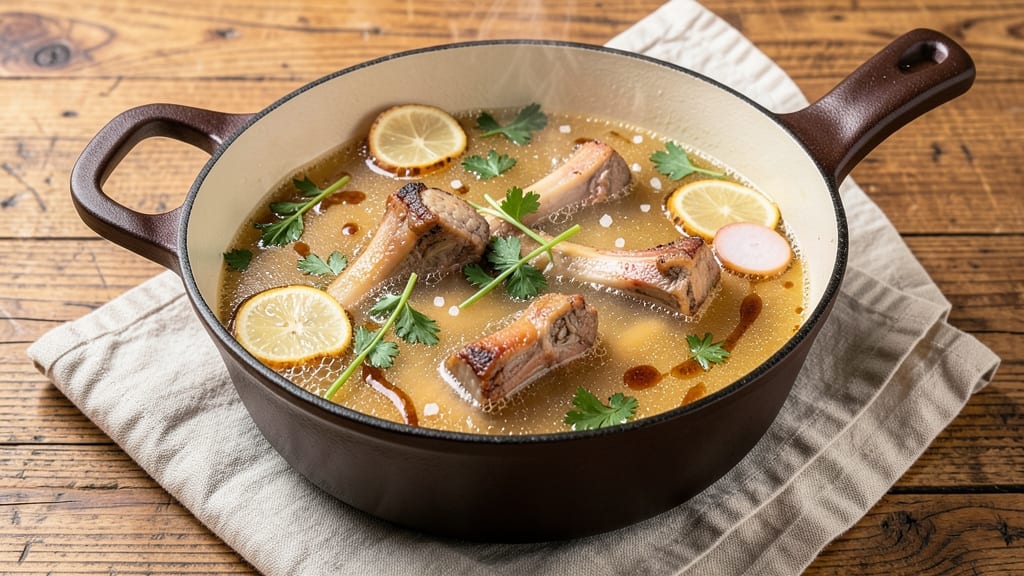
This AIP beef bone broth recipe delivers the healing benefits of gelatin-rich broth without compromising your strict dietary protocol. The slow-cooked elixir transforms raw beef bones into a nutrient-dense foundation for soups, stews, and gut-healing protocols—all while adhering to autoimmune-friendly guidelines.
I developed this method after realizing how difficult it was to find compliant bone broths that still packed the collagen and minerals needed for repair.
The process begins with carefully selected beef bones, simmered for 24 hours with apple cider vinegar to extract maximum minerals and gelatin. No nightshades, dairy, or non-compliant additives are used—just pure, healing ingredients that support joint health and digestion.
The result is a clear, rich broth that's perfect for sipping straight or as the base for AIP-friendly meals.
What sets this recipe apart is its clarity-approved status—no murky impurities or questionable ingredients. The gelatin content remains high thanks to precise cooking times and straining techniques, ensuring you get the full spectrum of healing benefits.
Store it properly, and you'll have a pantry staple that supports your health at every sip.
This isn't just another bone broth recipe—it's a foundational element for anyone following the Autoimmune Protocol. The method is straightforward but requires patience, as the long simmering time is essential for extracting all the beneficial compounds. Once mastered, you'll never need to compromise on quality again.
Ingredients for aip beef bone broth
Nine carefully selected ingredients transform raw bones into a clarity-approved, gelatin-rich AIP elixir.
| Ingredient | Amount | Notes |
|---|---|---|
| Beef Bones (Chuck or Neck) 🦴 | 4 lb | Raw, organic, joint-included preferred |
| Apple Cider Vinegar 🍎 | ½ cup | Raw, unfiltered for mineral extraction |
| Fresh Ginger Root 🧅 | 1 piece | 3-inch slice, peeled, organic preferred |
| Sea Salt 🧂 | 2 tbsp | Unrefined, Diamond Crystal preferred |
| Fresh Parsley Stems 🌿 | 1 cup | Organic, roots included for flavor |
| Coconut Aminos 🥢 | 1 tbsp | Gluten-free soy sauce alternative |
| Filtered Water 💧 | 12 cups | Enough to cover bones completely |
| Fresh Turmeric Root 🧡 | 1 piece | 1-inch slice, peeled, optional for color |
| Celery Stalks 🥬 | 4 whole | Organic, cut into 2-inch pieces |
| Coconut Oil 🥥 | 1 tbsp | Unrefined, for initial searing |
The bones are the foundation—chuck or neck bones provide optimal collagen and mineral extraction. Source from a trusted butcher or local farm to ensure organic, pasture-raised quality. The apple cider vinegar isn't just for flavor; it's essential for drawing out minerals from the bones during the 24-hour simmer. Look for raw, unfiltered vinegar at health food stores like Whole Foods or Sprouts—avoid pasteurized versions. Fresh ginger and turmeric add anti-inflammatory properties while enhancing flavor; organic produce ensures no pesticide residues that could compromise AIP compliance.
No coconut aminos? Seaweed seasoning provides a similar umami depth without nightshades. The parsley stems are non-negotiable—they add subtle sweetness and prevent bitterness during long cooking. For the celery, organic is mandatory due to high pesticide concentrations on conventional crops. The coconut oil for searing should be unrefined and virgin to preserve its nutritional integrity. If you're concerned about clarity, add an extra 1/2 cup filtered water to ensure proper straining later. All ingredients must be AIP-compliant—no nightshades, dairy, or additives.
This broth requires 24 hours of simmering for optimal gelatin extraction—plan accordingly. Store in glass jars with tight lids in the refrigerator for up to 5 days or freeze in 1-cup portions for 6 months. The gelatin content solidifies when chilled, so reheat gently to maintain clarity. For best results, use within 48 hours of simmering to preserve maximum nutritional benefits. Label with date—gelatin-rich broths degrade faster than traditional versions.
Why You'll Love This Recipe
- No-Chop Required: I swear by this—just toss in whole ginger knobs, apple cider vinegar, and parsley stems. The bones do all the work while you sip tea. Literally zero prep, just simmer.
- Deep Umami Magic: That vinegar-ginger combo? It pulls flavors out of the bones like no other method. Rich, slightly tangy, and so deeply savory it’ll make your soup games look weak by comparison.
- Weeknight Meal Hack: Freeze batches for instant flavor in soups, stews, or even rice bowls. I keep a jar in the fridge for quick weeknight dinners—no last-minute grocery runs needed.
- Budget Bone Gold: Beef neck bones are cheap, and this recipe stretches them into gallons. Honestly, I’ve made three big pots from one bag of bones—no waste, just pure nourishment for pennies.
Step-by-step instructions for AIP beef bone broth
This method delivers a nutrient-dense, gelatin-rich broth compliant with Autoimmune Protocol standards.
Prepare and Sear the Beef Bones
Begin by examining the 4 lb beef bones (chuck or neck) for any remaining meat or connective tissue. Using a sharp knife, trim away any excess fat while leaving the natural marrow intact—this enhances flavor and mineral extraction. Place the bones in a large stockpot and cover them completely with 12 cups filtered water. Add the 1 tbsp coconut oil and place the pot over medium-high heat.
Allow the water to come to a gentle boil, then reduce heat to maintain a rolling simmer. This initial simmering helps release impurities from the bones. After 10 minutes, skim off any foam or scum that rises to the surface using a fine-mesh skimmer or ladle. This step ensures your broth remains clear and free of cloudiness. Continue simmering uncovered for another 10 minutes to allow the bones to render their initial oils.
Add Aromatics and Acidic Components
While the bones simmer, prepare the aromatic vegetables and seasonings. Cut the 4 whole celery stalks into 2-inch pieces and peel the 3-inch slice of fresh ginger root. Remove the skin from the 1-inch slice of fresh turmeric root if desired, though it's optional for color. Add all these ingredients to the pot along with the 0.5 cup apple cider vinegar and 1 tbsp coconut aminos. The vinegar helps extract minerals from the bones, while the aminos add depth of flavor without gluten.
Return the heat to a gentle simmer and let the broth cook uncovered for 2 hours. This initial phase allows the aromatics to infuse the liquid and the bones to begin breaking down. Stir occasionally to prevent the ingredients from sticking to the bottom of the pot. The broth should develop a rich, amber hue and a subtle aroma of celery and ginger.
Incorporate Herbs and Salt for Depth
After 2 hours, add the 1 cup fresh parsley stems and 2 tbsp sea salt to the pot. The parsley stems contribute a bright, herbal note without overpowering the broth, while the sea salt enhances the umami flavor and supports mineral balance. Stir gently to distribute the herbs and salt evenly throughout the liquid. Reduce the heat to low to maintain a barely simmering state—this prevents the broth from becoming cloudy or developing a strong surface scum.
Continue cooking uncovered for an additional 8-12 hours, or until the broth has reduced by about one-third and the bones are tender enough to pull apart with a fork. The longer cooking time is critical for extracting collagen and gelatin, which give the broth its signature richness and healing properties. Check the broth periodically, adding 1-2 cups of filtered water if it reduces too much, but avoid over-diluting.
Strain and Finish the Broth
Once the broth has reached the desired consistency and the bones are fully tender, remove the pot from heat and let it cool slightly. Line a fine-mesh strainer with cheesecloth or a clean kitchen towel and place it over a large bowl or pitcher. Carefully ladle the broth through the strainer, pressing gently on the solids to extract as much liquid as possible without introducing sediment. Discard the strained solids, including the bones, vegetables, and herbs.
The resulting broth should be deep amber in color, with a gelatinous consistency when chilled. Taste and adjust the seasoning with additional sea salt if needed. Transfer the broth to airtight containers and refrigerate. Once cooled, the broth will develop a thick, jelly-like layer on top—this is the gelatin, a sign of a properly made, nutrient-rich broth. Store for up to 5 days in the refrigerator or freeze for longer storage.
Pro Tips For Making Aip Beef Bone Broth
- ROAST BONES FIRST: I learned this the hard way—skipping the roast step means your broth will taste more like a hospital cafeteria than a cozy kitchen. Chuck or neck bones get a 400°F oven blast for 30-40 minutes until they’re deep brown and crackling. That caramelization unlocks way more flavor than raw bones ever will.
- PEEL GINGER THICK: Thin slices of ginger burn fast and turn bitter—no one wants that in their broth. Use a spoon to scrape off just the outer skin, then slice the root into ½-inch chunks (peel left on). The thicker pieces stay aromatic longer without turning to mush.
- SIMMER, DON’T BOIL: That first 20 minutes of rapid bubbling is tempting, but you’ll end up with cloudy broth and wasted collagen. Once you add water and vinegar, reduce to a gentle simmer where bubbles break the surface occasionally. Cover loosely and let it do its thing—low and slow is the only way.
- STRAIN TWICE, STRAIN WELL: A fine-mesh sieve catches the good stuff, but a coffee filter or cheesecloth in the final pass removes the last of the grit. If you’re lazy (like me), at least use a double-layered sieve—your future self will notice the difference when sipping that first clean, golden sip.
Serving suggestions for leftovers
Sipping Straight
This AIP beef bone broth is so rich and flavorful that I often enjoy it straight from the jar—no additions needed. Simply warm 1 cup in a saucepan over low heat until steaming, then pour into a mug.
The gelatin content makes it naturally thick and satisfying, almost like a warm, savory tea. I sip it first thing in the morning to kickstart digestion or before bed to support overnight repair. 💛
Soup Base
Use this broth as the foundation for AIP-friendly soups like ginger-carrot soup or turmeric-chicken-free chowder. Simmer 1 cup broth with 2 cups chopped vegetables (like zucchini, carrots, or mushrooms) and 1 tbsp coconut oil for 20 minutes.
The broth’s depth of flavor carries through reheating without overpowering delicate ingredients. For extra protein, stir in 2 tbsp collagen peptides (AIP-compliant).
Grain Bowls
Elevate your grain bowls by using this broth as a cooking liquid for quinoa or millet. Replace water with 1 cup broth for every 1 cup dry grain, then simmer for 15 minutes. The result is a naturally seasoned, nutrient-dense base.
Top with roasted sweet potatoes, avocado slices, and fresh herbs like cilantro or basil for a balanced meal. The gelatin in the broth adds a subtle richness that rounds out the dish.
Cooking Protein
Braise AIP-compliant proteins like chicken thighs or pork chops in this broth for tender, flavorful results. Add 2 cups broth to a pot with 1 lb protein and simmer uncovered for 45-60 minutes until fork-tender.
The broth’s collagen content helps break down connective tissue, resulting in melt-in-your-mouth texture. Reserve the cooking liquid to make gravy or sauces—just reduce it by half over medium heat.
Gut-Healing Elixir
Blend 1 cup broth with 1 tbsp coconut oil, 1 tsp fresh ginger juice, and ½ tsp sea salt for a soothing gut-healing elixir. Warm the mixture gently and sip slowly—this combination supports digestion while providing anti-inflammatory benefits.
I keep a jar in my fridge for post-meal sips, especially after eating heavier AIP meals like lamb stew or beef liver. The gelatin in the broth helps repair the gut lining over time. ✨
Freezer-Friendly Meal Prep
Portion the broth into 1-cup ice cube trays and freeze. Once solid, pop out the cubes and store in a freezer bag for easy use. Thaw a cube in warm water for instant broth when cooking grains, sautéing veggies, or reheating meals.
This method prevents waste and ensures you always have AIP-compliant broth on hand. Label the bag with the date—frozen broth retains its gelatin and nutrients for up to 6 months.
Nutrition facts
Frequently asked questions
Can I use any beef bones for this AIP broth?
You'll get the best results with chuck or neck bones—these contain the highest collagen and marrow content for maximum gelatin extraction. Avoid bones with excessive meat clinging to them, as AIP rules prohibit animal proteins. If you can only find marrow bones, use 6-8 pounds instead to compensate for their lower collagen yield.
Why does the recipe call for apple cider vinegar?
The vinegar isn't just for flavor—it's essential for extracting minerals from the bones during the long simmer. The acid helps break down the bone matrix, releasing calcium, magnesium, and phosphorus. Use raw, unfiltered vinegar for optimal results; pasteurized versions won't work as effectively.
How do I know when the broth is done?
The broth is ready when it's reduced by about one-third and the bones pull apart easily with a fork. For maximum gelatin, aim for 24 hours total simmering time. The final broth should have a gelatinous consistency when chilled—this is your indicator of proper collagen extraction.
Can I make this broth in an Instant Pot?
While possible, the Instant Pot won't extract as much gelatin due to shorter cooking times. For best results, use the high pressure setting for 2 hours, then transfer to a slow cooker for an additional 12 hours on low. The long, gentle simmer is crucial for AIP-compliant gelatin content.
What if my broth turns cloudy?
Cloudiness usually means impurities weren't properly skimmed during the initial boil. To fix it, strain the broth through a cheesecloth-lined fine-mesh strainer again, then refrigerate. The gelatin will solidify, leaving clearer liquid underneath. For future batches, skim more aggressively during the first 10 minutes of simmering.